Replacement Cushions for Vintage Patio Furniture
Your vintage patio set deserves a second life. Learn how to measure, choose, and source replacement cushions that fit classic frames, preserve character, and handle the outdoors.
Explore Cushion OptionsWhy this guide matters: Vintage patio furniture is often built better than modern equivalents, but original cushions rarely survive decades of sun and rain. This guide walks you through restoration decisions step by step — from measuring odd-shaped frames to selecting weather-ready fabrics — so you can buy with confidence instead of guessing.
Why Vintage Patio Furniture Is Worth Restoring
Mid-century wrought iron, 1970s wicker, and 1990s resin sets share one trait: solid frames that outlast their fabric. Replacing the cushions is usually the only thing standing between a sturdy set and the landfill. Restoration also lets you keep a silhouette and patina that modern reproductions rarely match.
If your frame is rattan or wicker, start with our guide to replacement cushions for rattan furniture before ordering — the attachment methods differ from metal frames. For cast aluminum or wrought iron pieces, the measurement and fabric advice below applies directly.
Step 1: Identify Your Frame and Cushion Type
Before shopping, determine three things: the frame material, the cushion configuration, and whether the original cushions still exist. Each affects what you can buy.
Frame Materials You Will Likely Encounter
- Wrought iron and cast aluminum: Common in mid-century sets. Cushions typically rest on flat or slatted seats and tie at the back.
- Wicker and rattan: Popular from the 1970s onward. Curved arms and rounded backs often require contoured or custom cushions.
- Resin and PVC: Lightweight 1980s–1990s sets. Flat seat pans make off-the-shelf cushions easier to fit.
- Teak and hardwood: Older sets may use box cushions with piped edges. See our teak cushion guide for wood-specific care.
Cushion Configurations
Vintage sets usually fall into one of four cushion layouts. Knowing yours narrows the search immediately:
- Seat-only cushions: Flat pads, often 2–4 inches thick, with corner ties.
- Seat and back sets: Two-piece configurations, sometimes joined with a hinge or strap.
- One-piece curved cushions: Common on wicker and rounded frames; see curved outdoor furniture cushions.
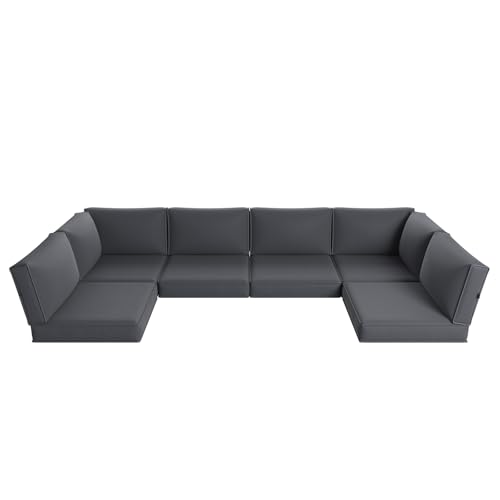
- Sectional or modular sets: Multiple seat and corner pieces; consult our sectional cushion guide.
Step 2: Measure Accurately (The Most Common Mistake)
Off-the-shelf cushions fail most often because of measurement drift, not quality. Use a soft tape measure and record every dimension in inches and centimeters. Photograph each piece beside the tape for reference.
What to Measure
- Seat width: Across the widest point of the seat pan, inside the arms.
- Seat depth: From the front edge to the backrest, following any slope.
- Cushion thickness: Measure your old cushion if available; otherwise 3–4 inches suits most vintage seats.
- Back height and width: For back cushions, measure the full visible area plus 1 inch of overlap.
- Corner radius: For curved frames, trace the shape on cardboard and cut a template.
If the original cushions are missing, measure the frame itself and subtract a half inch on each side so the cushion does not bind. For sets with unusual geometry, a curved outdoor sofa cushion specialist can work from photos and a template.
Step 3: Choose the Right Fabric and Fill
Fabric choice determines how long your investment lasts. Vintage aesthetics often call for canvas, stripes, or muted solids, but performance should come first.
| Fabric Type | Best For | Weather Resistance | Tier |
|---|---|---|---|
| Solution-dyed acrylic | Long-term outdoor use, color retention | Excellent — resists fading, mold, moisture | Premium / top-tier |
| High-grade polyester | Balanced durability and comfort | Very good with water-repellent finish | Mid-range |
| Canvas (treated) | Period-accurate vintage look | Good if re-treated annually | Essential tier |
| Olefin | Humid climates, quick-drying needs | Excellent moisture and mildew resistance | Mid-tier to premium |
| Untreated cotton | Indoor or covered porches only | Poor outdoors — mildews quickly | Not recommended outdoors |
Fill and Foam Options
Foam density matters as much as fabric. Entry-level cushions often use low-density polyurethane that flattens within a season. Mid-range and premium cushions use high-resilience foam, wrapped in polyester fiber for softness. For daily-use seating, look for foam rated at 1.8 lb/ft³ or higher. Quick-dry reticulated foam is worthwhile for uncovered patios.
Step 4: Decide Between Off-the-Shelf and Custom
Standard sizes fit flat-seat resin and aluminum sets well. Curved wicker, rounded daybeds, and unusually deep lounges usually need custom work. The table below summarizes the trade-offs.
| Option | Best For | Lead Time | Fit Accuracy |
|---|---|---|---|
| Off-the-shelf replacement sets | Standard rectangular seats, quick refresh | Days | Good if measurements match |
| Semi-custom (size ranges) | Slightly irregular frames, curved backs | 1–2 weeks | Very good |
| Fully custom with template | Antique, curved, or discontinued furniture | 3–6 weeks | Exact |
If your vintage set includes a three-piece configuration, our guide to replacement cushions for 3-piece outdoor patio furniture sets covers how to order matching pieces without mismatched dye lots.
Step 5: Restore the Frame While You Wait
New cushions look best on a clean frame. While your order is in production:
- Scrub metal frames with mild soap and a soft brush; touch up rust spots with rust-proof paint.
- Clean wicker with a soft brush and diluted vinegar; avoid soaking.
- Check welds, screws, and glides — replacement parts are often still available for classic brands.
- Apply a wood sealant to teak and hardwood frames before cushions arrive.
For a deeper refresh, our general outdoor furniture cushion guide covers cleaning routines and cover recommendations that extend cushion life.
Caring for Vintage-Style Replacement Cushions
Proper care keeps replacement cushions looking period-correct and performing for years:
- Brush off debris weekly; clean spills with mild soap and water, not harsh solvents.
- Stand cushions on edge to dry fully after rain — never stack wet cushions.
- Store cushions indoors or in a ventilated deck box during off-season months.
- Use breathable covers rather than plastic, which traps condensation.
- Rotate seat cushions monthly to distribute wear evenly.
Common Mistakes to Avoid
- Ordering before measuring: Always measure the frame, not just the old cushion.
- Ignoring the frame's slope: Seat cushions on sloped frames need a wedge cut or a thicker front edge.
- Choosing fabric by look alone: An untreated cotton print will mildew within a season outdoors.
- Forgetting tie-downs: Vintage frames often lack Velcro strips; specify ties or straps when ordering.
- Mismatching dye lots: Order all cushions for a set at once from the same fabric roll.
Ready to bring your vintage set back to life? Compare cushion options built for classic frames and outdoor durability.
View Cushion OptionsFrequently Asked Questions
How do I measure vintage patio furniture for replacement cushions?
Measure the seat width, depth, and thickness of your existing cushion or the furniture frame itself. For back cushions, measure height, width, and thickness. Use a soft tape measure and note any curves or unusual shapes. Photograph the furniture from multiple angles to share with custom makers.
Can I get custom cushions for discontinued vintage patio furniture?
Yes. Custom cushion makers can create replacements for discontinued or antique patio furniture using your measurements and photos. Many offer template kits so you can trace the exact shape. Expect longer lead times than off-the-shelf options.
What fabric is best for vintage patio furniture cushions?
Solution-dyed acrylic and high-grade polyester are excellent choices for outdoor use. They resist fading, mold, and moisture. For a period-accurate look, canvas and Sunbrella-style fabrics in retro patterns work well. Avoid untreated cotton, which mildews quickly outdoors.
How long do replacement patio cushions last?
Quality outdoor cushions typically last three to five years with proper care. Store them during off-season months, clean spills promptly, and use covers when not in use. Premium-tier cushions with solution-dyed fabric and high-density foam can last longer.
Are replacement cushions available for curved wicker frames?
Yes, though they usually require semi-custom or fully custom ordering. Trace the curve onto cardboard to create a template, then work with a maker experienced in curved cushions. Our guides on curved outdoor furniture cushions and wicker cushion replacement cover the process in detail.