Replacement Glass for Patio Table with Umbrella Hole: Complete Buying Guide
Your patio table frame is still solid, but the glass top is cracked, scratched, or missing. Before you order a replacement, understand tempered glass options, exact measurements, umbrella hole specifications, and fit requirements so the new top drops in perfectly.
A glass-top patio table is one of the most elegant ways to furnish an outdoor dining or lounge area. The clear surface keeps the view open, reflects light beautifully, and pairs well with almost any chair style. But glass also has one weakness: it can shatter, chip, or scratch after years of sun exposure, hail, fallen branches, or a simple accidental impact. When that happens, the frame is usually still in excellent condition — which is exactly why a targeted replacement glass for patio table with umbrella hole is such a practical solution rather than replacing the entire set.
This guide walks you through everything you need to order the correct replacement top with confidence: the only safe glass type, how to measure a frame you cannot take to a store, how the umbrella hole is specified and positioned, what thickness and edge finish to request, and how to install the new top without damaging the frame or the glass. If your table uses a sling or fabric seat rather than glass, our outdoor lounge chair replacement material guide covers that path instead.
1. Why Tempered Glass Is the Only Safe Choice for Patio Tables
Not all glass is equal, and the difference matters enormously on outdoor furniture. The three types you may encounter are:
- Annealed (standard) glass — ordinary glass with no special treatment. It breaks into large, sharp shards and is completely unsuitable for patio tables, especially any table with an umbrella hole where stress concentrates.
- Tempered glass — heat-treated and rapidly cooled so the outer surfaces are in compression. It is several times stronger than annealed glass of the same thickness and, critically, shatters into small granular cubes rather than dangerous shards. This is the standard for outdoor patio table tops.
- Laminated glass — two glass layers bonded with a plastic interlayer. It holds together when broken, which is good for windbreaks and railings, but it is heavier and less common for dining table tops. It can be a valid choice where local code or personal preference favors a held-together break pattern.
For any table with an umbrella hole, the glass must be tempered after the hole is cut. Tempering a sheet and then drilling a hole through it is not possible — the tempering process creates the internal stress pattern, and cutting afterward would cause the entire sheet to shatter. Reputable manufacturers cut and polish the hole first, then temper the finished piece. Always confirm this sequence with your supplier, and ask for documentation that the glass meets outdoor furniture safety standards.
2. How to Measure Your Patio Table Accurately
Glass replacement is a custom-fit purchase, and guessing wastes time and shipping. The frame itself is your measurement source — you do not need the old glass. Work through these steps carefully:
If the original glass is still intact but damaged, tracing its outline on paper and marking the hole center gives a useful cross-check. Write every number down and have a second person verify the measurements before ordering. For other patio table styles that may be easier to measure, our outdoor coffee table glass guide uses a similar method for smaller round tops.
3. Umbrella Hole Specifications and Placement
The umbrella hole is the defining feature of this replacement top, and it is where most ordering mistakes happen. A few details deserve attention:
Hole diameter
The glass hole should be slightly larger than the umbrella pole so the pole does not rub against the glass, which can create chips that later propagate. A common specification is 1.5 inches for a standard pole, but some poles are thicker. Measure your pole diameter and allow the fabricator to recommend the final hole size, typically about 1/8 to 1/4 inch larger than the pole.
Hole edge finish
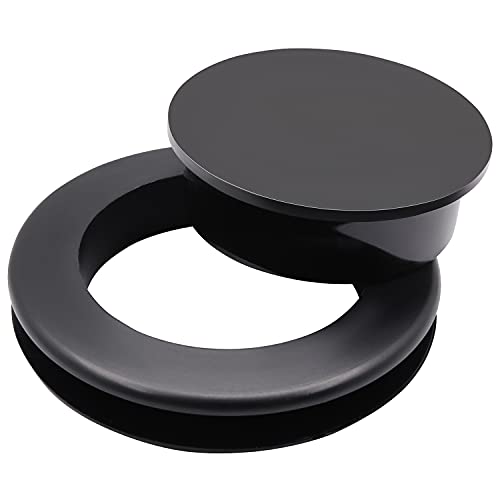
Insist on a polished or chamfered hole edge. A raw edge focuses stress and makes a crack much more likely. The hole should be flat and smooth all around, and the glass must be tempered after the hole is finished. On higher-end tops, the hole may be fitted with a plastic or metal grommet ring that cushions the pole and hides the edge; this is a worthwhile addition and often available as an accessory.
Hole center position
For round tables, the hole is almost always centered. For rectangular and oval tables, the hole sits at the center of the long axis and centered across the width. If your table has an offset umbrella, measure the offset and provide it explicitly. Do not assume standard placement.
Table with a separate umbrella hole in the frame
Some frames have a metal ring or hole built into the frame itself, and the glass hole simply aligns with it. In this case, verify both diameters match and that the glass hole is no smaller than the frame hole. If your frame uses a metal insert for the umbrella, mention it to the fabricator so the glass hole clears the insert as well as the pole. For tables that use a solid or alternative top, the same alignment logic applies to our replacement glass table top with umbrella hole reference page.
4. Glass Thickness and Edge Finish Explained
Thickness is a balance between strength, weight, and frame clearance. The table below summarizes the common options:
| Thickness | Typical Use | Notes |
|---|---|---|
| 5 mm tempered | Smaller round and square tables up to about 36 inches | Entry-level thickness for compact tables; lighter and easier to handle |
| 6 mm tempered | Most standard dining tables 36–48 inches | Mid-range sweet spot; widely available and fits most frame lips |
| 8 mm tempered | Large tables over 48 inches and oval tops | Premium thickness for span and stability; check frame lip depth first |
| 10 mm+ tempered | Oversized or commercial-grade tables | High-end tier; heavy, requires sturdy frame and careful handling |
Edge finish matters as much as thickness. The edge of a table top is exposed to chairs, elbows, and cleaning cloths, so request a flat-polished or slightly beveled edge. A polished edge resists chipping far better than a raw ground edge and looks better. For corner rounding, a small radius — typically 1 to 2 inches on square and rectangular tables — reduces the chance of an impact chip at the corner.
If your frame accepts a thicker top and you are weighing options, note that a mid-range 6 mm top is usually sufficient for typical residential dining, while 8 mm is the more reassuring choice for large oval or rectangular tables where the glass spans a wider unsupported area. Larger rectangular tables can also use the sizing logic in our replacement glass for rectangle patio table guide.
5. Choosing the Right Shape and Size
Replacement glass must match the frame opening, not the old glass if the old glass was itself a poor fit. Use the table below as a quick reference:
| Frame Shape | What to Measure | Common Fit Notes |
|---|---|---|
| Round | Inner diameter at two perpendicular points; hole center offset | Most round umbrella-hole tables have a centered hole; verify the frame rim is level |
| Square | Inner length, inner width, corner radius | Corners are usually rounded; an incorrect radius can leave visible gaps or prevent seating |
| Rectangle | Inner length, inner width, corner radius, hole offset from edges | Long spans benefit from 6–8 mm glass; confirm the frame has center support if over 60 inches |
| Oval | Long axis, short axis, hole center position along the long axis | Oval tops are often custom-cut; allow extra lead time and confirm the axis orientation |
If your existing frame is damaged but you want to keep the umbrella feature, some homeowners replace both the frame and the top. In that case, choose a frame with a wide, well-supported lip, and match the glass to the new frame's opening. For solid-surface alternatives, our outdoor table tops with umbrella hole overview explains the trade-offs between glass, composite, and metal tops.
6. Glass Tier Comparison
Replacement tops fall into a few practical tiers based on construction quality, edge finish, and included accessories. Use the tier names below to frame your comparison — these descriptors are consistent across PatioFocus buying guides.
| Tier | Best For | Typical Characteristics |
|---|---|---|
| Essential tier | Compact tables, short-season use | 5–6 mm tempered glass, standard polished edge, no grommet included |
| Balanced tier | Everyday residential dining tables | 6 mm tempered glass, beveled or flat-polished edge, optional grommet |
| Premium tier | Large rectangle and oval tables | 8 mm tempered glass, precision hole finish, grommet included, wider edge polish |
| High-end tier | Oversized or design-led setups | 8–10 mm tempered glass, custom radius corners, UV-resistant grommet, factory packaging |
Most homeowners are well served by a balanced or premium tier top. The step from essential to balanced mostly buys you a better edge finish and a more precisely finished hole, both of which extend the usable life of the glass. The step from balanced to premium adds thickness and tighter tolerances, which matters most on large tops where the unsupported span is greater.
7. Installation and Care Tips
Once the new top arrives, handle it with care and follow a simple installation routine:
- Inspect before installing. Check for chips along the edge and around the umbrella hole. A chip is a crack waiting to happen — report it to the supplier before installation.
- Clean the frame lip. Remove grit and old rubber pads, then fit new silicone or rubber pads at the contact points. These pads absorb vibration and prevent hard contact between glass and metal.
- Lower the top evenly. Two people should lower the glass flat, using suction cups if available. Do not tilt it through the frame opening.
- Fit the umbrella grommet. If a grommet is supplied, seat it around the hole before inserting the umbrella pole. This cushions the pole and protects the hole edge.
- Check stability. Press gently at the corners (on rectangular tops) or at points around the rim (on round tops). There should be no rocking. If it rocks, the frame is out of level — correct that rather than forcing the glass.
- Seasonal care. Cover the table when not in use, especially during hail season. Avoid placing hot objects directly on the glass, and clean with a mild soap solution and a soft cloth. Do not use abrasive pads around the umbrella hole.
If the original umbrella pole or base is worn, consider replacing the pole and base along with the top. A wobbly pole can strike the glass edge repeatedly and cause chips. For frames that use cushioned seating rather than glass, our guide on replacement outdoor dining chair cushions may be more relevant to your refresh plan.
Frequently Asked Questions
Ready to Order the Right Replacement Top?
You now have the full picture: tempered glass is the only safe option, the umbrella hole must be cut and finished before tempering, and the frame opening — not the broken glass — is your measurement source. Write down the inner dimensions, the lip depth, the pole diameter, and the exact hole center position, then compare available tops using the tier framework above. A correctly specified replacement glass will restore your patio table for many more seasons, and it is a far more efficient choice than replacing the entire set.
For related patio furniture restoration topics, explore our guides on replacement glass table tops for patio furniture and patio table tops with umbrella hole.