Replacement Tempered Glass for Patio Table: A Complete Buyer's Guide
A cracked or missing table top does not have to mean replacing the whole set. Learn how to source safe, correctly sized tempered glass for your patio table with confidence.
Why Tempered Glass Is the Only Safe Choice for Patio Tables
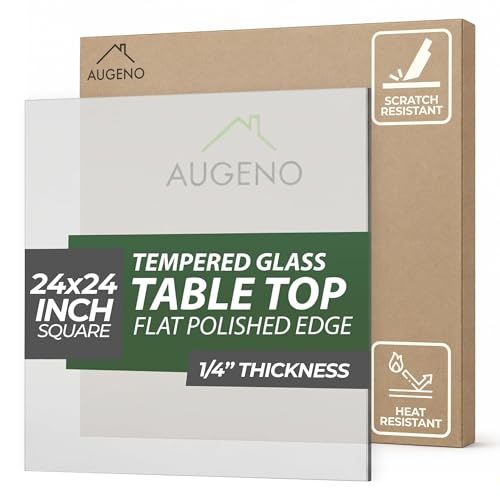
Tempered glass is heat-treated and then rapidly cooled, which creates internal compressive stress across the surface. The result is a sheet that is several times stronger than ordinary annealed glass against impact, thermal shock, and the everyday bumps of outdoor living. Just as importantly, when tempered glass does break, it shatters into small, relatively blunt granules rather than the long, razor-sharp shards produced by regular glass. For a surface that sits at knee height and often holds hot plates and drinks, that difference is not a luxury — it is a basic safety requirement.
Manufacturers of patio furniture specify tempered glass for this reason, and reputable glass suppliers will not cut, drill, or edge-finish tempered glass after it has been tempered. Every dimension, hole, and edge profile must be completed before the tempering process. That is why replacement glass is always made to order from your exact measurements rather than trimmed from a larger sheet. If you are replacing other components on the same set, the same principle of matching the original specification applies to replacement fabric for patio lounge chairs and similar wear parts.
Impact Resistance
Tempered glass withstands far greater impact than annealed glass of the same thickness, making it suitable for windy decks and busy family patios.
Safe Break Pattern
When it fails, tempered glass crumbles into small granules instead of dangerous shards, reducing the risk of serious cuts.
Thermal Shock Tolerance
Outdoor tables endure direct sun, cold nights, and hot dishes. Tempered glass handles rapid temperature changes that would crack ordinary glass.
Scratch and Wear Resistance
A quality tempered top resists the scuffs and etching that accumulate from plates, planters, and outdoor debris over the seasons.
How to Measure Your Patio Table for Replacement Glass
Accurate measurement is the single most important step in ordering replacement glass. A sheet that is even a few millimeters off can fail to seat in the frame, rattle in the wind, or crack under stress. Work from the table frame itself rather than the old broken glass, which may have warped or chipped at the edges.
- Measure the frame opening. For a round table, measure the diameter across the widest point of the lip where the glass rests. For a rectangular or oval table, measure the length and width at the widest points of the seating lip.
- Identify the edge profile. Note whether the frame holds the glass on a flat lip, in a recessed channel, or with clips. Measure the depth of any recess so the glass thickness fits flush.
- Record the umbrella hole. If your table has a center umbrella, measure the hole diameter in the frame and confirm it matches your umbrella pole plus any spacer bushing. If you are not certain whether you need a hole, read our guide to replacement glass for a patio table with an umbrella hole before ordering.
- Confirm the original thickness. Measure the old glass with calipers if any fragment is intact, or check the manufacturer specification. Most residential patio tables use tempered glass in the mid-range thickness of roughly 5mm to 6mm, but larger spans and premium sets may require thicker stock.
- Note corner radius and shape. Round tables, oval tables, and tables with clipped corners all require the correct template. A supplier will typically ask for a drawing or template for non-rectangular shapes.
Measurement Checklist Before You Order
- Frame opening measured at the widest point, in millimeters
- Glass thickness matched to the original specification
- Umbrella hole diameter confirmed, or absence of hole noted
- Edge finish specified (flat-polished or seamed) to match the frame
- Corner radius recorded for square or rectangular tables
- Shape template or drawing prepared for oval and round tables
- Frame clips, spacers, and bumpers inspected and replaced if worn
Choosing the Right Thickness and Quality Tier
Thickness is a function of span and intended use. A small bistro table can be safely served by a thinner tempered sheet, while a large dining table with a wide unsupported span needs thicker glass to resist flexing under the weight of dishes and elbows. The table below groups typical replacement glass options by market tier rather than by any figure, so the guidance stays useful regardless of where you shop.
| Tier | Typical Use Case | What to Expect |
|---|---|---|
| Entry-Level | Small bistro and side tables with short spans | Standard tempered sheet with seamed edges; solid choice for the tier when the frame is small and sheltered. |
| Mid-Range | Standard dining tables for four to six people | Thicker tempered stock with flat-polished edges; well-specified for the category and the most common replacement choice. |
| Premium | Large dining tables, oval and rectangular spans | Heavier tempered glass with refined edge polishing and tighter dimensional tolerances; a long-term investment for a frequently used table. |
| Commercial-Grade | Restaurant patios and high-traffic outdoor dining | Maximum thickness and durability for constant use; worthwhile investment where the table sees commercial duty cycles. |
If your table is rectangular, the span between supports matters more than overall surface area. A long, narrow top can flex more than a compact square of similar area, so match the thickness to the unsupported distance rather than the table's footprint. Our guide to replacement glass for a rectangle patio table covers span considerations in more detail.
Umbrella Holes, Edge Finishes, and Frame Fit
An umbrella hole must be drilled before tempering, and the diameter must match your pole plus any bushing. A hole that is too tight will stress the glass around the rim; one that is too loose lets the table shift and rattle. If your umbrella setup changes — for example, moving to a cantilever umbrella — you may prefer a solid top without a hole. In that case, review the options for a replacement glass table top for patio furniture that fits frames designed for solid surfaces.
Edge finish is the other detail that separates a professional result from a disappointing one. Flat-polished edges are smooth and safe to touch, while seamed edges are ground but not fully polished. Match the original finish where possible, and always specify that the edge is completed before tempering. For oval and round frames, confirm that the supplier can produce the correct curve rather than approximating it. Related round-table replacements are covered in our guide to round glass patio table with umbrella hole options.
Finally, inspect the frame hardware. Worn clips, missing bumpers, and loose spacers cause glass to crack even when the sheet itself is perfect. Replace any degraded hardware at the same time as the glass so the new top seats evenly and does not develop stress points.
Installation and Long-Term Care
Replacement glass should be carried with suction cups and set down evenly, never dropped onto one corner. Seat the glass fully into the frame lip, confirm that any umbrella hole aligns with the frame opening, and reinstall clips and bumpers according to the furniture maker's instructions. Allow the glass to settle for a day before placing heavy planters or using the table for dining.
For care, clean with a mild soap solution and a soft cloth, avoiding abrasive pads and ammonia-heavy cleaners that can dull the surface over time. Keep the umbrella closed during high winds, since a center-pole umbrella acts as a lever against the glass. In winter, remove the glass top if the manufacturer recommends it, or at minimum clear snow and ice rather than allowing it to accumulate unevenly. These habits extend the service life of the top and protect the investment you have just made.
Frequently Asked Questions
Can I replace patio table glass with regular glass?
No. Outdoor patio tables should use tempered glass, which is heat-treated for impact resistance and shatters into safer granular pieces rather than sharp shards. Regular annealed glass is unsafe for outdoor furniture and does not meet the durability expectations of patio use.
How do I measure for a replacement patio table glass top?
Measure the table frame opening at its widest points for diameter or length and width. Note any edge profile or inset lip the glass must rest on, and measure the umbrella hole diameter if your table has one. Always confirm the thickness of the original glass and check whether the replacement needs polished or flat-polished edges.
What thickness should replacement patio table glass be?
Most residential patio tables use tempered glass in the mid-range thickness of about 5mm to 6mm (roughly 3/16 to 1/4 inch). Larger table spans and commercial-grade furniture may use thicker glass. Always match or exceed the original manufacturer specification for the frame.
Does replacement glass need an umbrella hole?
Only if your patio table and umbrella setup requires it. If you use a center-pole umbrella, order a replacement glass top with a pre-drilled umbrella hole of the correct diameter. If you use a cantilever umbrella or no umbrella, a solid glass top without a hole is appropriate.
Can tempered glass be cut or drilled after purchase?
No. Tempering is a final process. Cutting or drilling tempered glass destroys its internal stress pattern and causes it to shatter. Every dimension and hole must be specified before the glass is tempered, which is why accurate measurement is essential.
Ready to find your replacement top?
Use the recommended products below to compare tempered glass replacement options that match your table size, shape, and umbrella configuration.