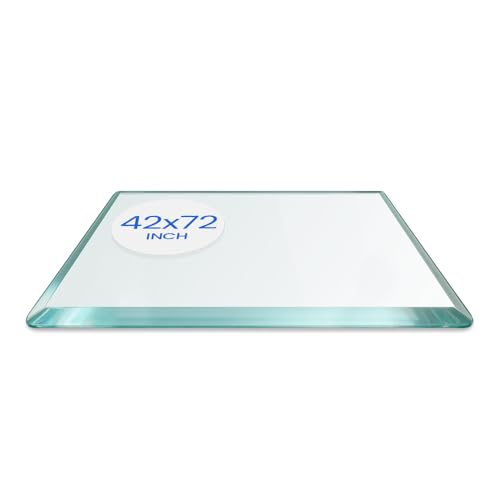
Replacement Glass for Rectangle Patio Table
Everything you need to know about choosing, measuring, and installing a new glass top for your rectangular outdoor dining table — so you can enjoy your patio again with confidence.
Explore the Buying GuideWhy this guide matters: A cracked or scratched glass top does not mean you need a new table. With the right measurements, the correct glass type, and a few safety checks, you can restore a sturdy rectangular patio table to full use. This guide walks you through every decision point so you can buy the right replacement glass the first time.
Why Replace the Glass Instead of the Whole Table
A rectangular patio table is often the centerpiece of an outdoor dining area. The frame — whether aluminum, wrought iron, steel, or resin wicker — usually outlasts the glass top by many years. Sun exposure, thermal stress, accidental impacts, and improper cleaning can cause glass to chip, crack, or shatter. When that happens, replacing only the glass is the most sensible path forward for most homeowners.
Replacing the glass preserves a frame you already know fits your space, keeps matching chairs and cushions in service, and avoids the logistics of disposing of a large piece of furniture. It is also a more sustainable choice. The key is to treat the replacement as a small engineering project: measure precisely, choose the right glass specification, and verify the frame is still sound.
If your table has an umbrella opening, the process differs slightly. You will want to review our guide to replacement glass for a patio table with an umbrella hole alongside this article, because the hole diameter and edge polishing requirements are additional variables.
Assess the Frame Before You Buy Glass
Before ordering anything, inspect the table frame carefully. Glass is only as safe as the structure holding it. Look for these conditions:
- Rim integrity: The lip or channel that supports the glass should be continuous, unbent, and free of deep corrosion. A frame with a bent rim will create pressure points that can crack new glass.
- Fasteners and welds: Check bolts, screws, and welded joints. Tighten or replace loose fasteners. Significant weld cracks on a metal frame usually mean the table should be retired.
- Rubber or plastic gaskets: Many tables use pads or a gasket between glass and frame. Worn gaskets should be replaced at the same time as the glass to prevent rattling and point loading.
- Level and stability: A wobbly table twists the frame and stresses glass. Fix leg glides or leveling feet first.
If the frame is solid, you are ready to measure. If you are also refreshing the seating around the table, our overview of replacement outdoor dining chair cushions can help you coordinate the finished look.
How to Measure a Rectangle Patio Table for Glass
Accuracy here is everything. Glass cannot be trimmed after tempering, and a top that is even a few millimeters too large will not seat in the frame. Measure in millimeters for the greatest precision, and record every number twice.
Step-by-Step Measurement Process
- Remove the old glass safely. Wear thick gloves and eye protection. If the glass is shattered, tape the surface in a grid pattern before lifting pieces, and never carry large shards against your body.
- Measure the frame opening. Measure the inside width and inside length of the frame channel where the glass rests. Take three measurements of each dimension — near both ends and in the middle — and use the smallest figure. Frames are rarely perfectly square.
- Measure the old glass if intact. If you have an unbroken original top, measure its exact width, length, thickness, and corner radius. This is the most reliable reference you can give a glass supplier.
- Note the corner radius. Many rectangular patio tables use rounded corners rather than sharp 90-degree points. Trace the corner curve on paper or use a radius gauge. Suppliers need this to cut a top that fits flush.
- Record the thickness. Use calipers if possible. Typical patio table glass falls in the 5 mm to 10 mm range, with 6 mm and 8 mm being common. Do not guess — the frame channel depth dictates the maximum thickness.
- Check for an umbrella hole. If present, measure the hole diameter and its distance from each edge. The hole center is rarely perfectly centered on all four sides.
A simple rule: if you are unsure about any dimension, order a template service or consult a local glass fabricator. A slightly undersized top that still covers the frame lip is far safer than an oversized one that will not seat. For tables where the top is a full slab rather than an inset, see our guide on replacement glass table tops for patio furniture for edge-treatment considerations.
Choosing the Right Glass Type
Not all glass is suitable for outdoor table tops. The right specification balances safety, durability, and appearance. Here is how the main options compare.
| Glass Type | Best For | Key Characteristics | Tier Guidance |
|---|---|---|---|
| Tempered glass | Most rectangular patio tables | Breaks into small blunt pieces; strong against impact and thermal stress; required by safety standards for table tops | Essential tier — the standard choice |
| Heat-strengthened glass | Large spans and shade structures | Stronger than annealed but breaks into larger shards; less common for residential tables | Mid-tier — specify only with professional advice |
| Laminated tempered glass | Families with children, windy exposures | Glass holds together if broken; reduced risk of loose shards; slightly heavier | Premium tier — top safety profile |
| Annealed (standard) glass | Not recommended for table tops | Breaks into large, sharp pieces; unsuitable for outdoor furniture | Avoid for this application |
| Tinted or frosted tempered glass | Sun-heavy patios, design accents | Reduces glare and heat gain; same safety as clear tempered; frosting hides scratches | Mid-range to premium depending on finish |
For nearly every rectangular patio table, tempered glass is the correct baseline. It is designed so that if it does break, it crumbles into small pieces rather than long blades. Laminated tempered glass raises the safety margin further and is a smart upgrade if the table sits where children play or where wind gusts are common.
Pay attention to edge finishing. A flat-polished edge is smoother to the touch and less prone to chipping than a simple ground edge. For tables with an umbrella opening, the inner edge of the hole should also be polished. Our article on replacement tempered glass for patio table goes deeper into the certification marks and quality signals to look for.
Thickness, Span, and Support
Thickness should be driven by the span between frame supports, not by guesswork. A long rectangular table with support only at the perimeter needs thicker glass than a shorter table with a center crossbar. As a general reference:
- Short spans with full perimeter support: 5–6 mm tempered glass is often sufficient.
- Medium rectangular tables: 8 mm tempered glass is a common, well-balanced specification.
- Large or long spans, or tables with minimal support: 10 mm tempered glass, or laminated tempered, provides a stiffer and safer surface.
If the original glass survived many seasons without flexing or rattling, matching its thickness is usually the safest approach. If it cracked from flexing rather than impact, consider going one step thicker or adding a center support.
Custom Cut vs Pre-Sized Replacement Tops
You generally have two paths: order a custom-cut top to your exact measurements, or find a pre-sized rectangular top that matches your frame. Custom cutting gives the best fit, especially for rounded corners and umbrella holes. Pre-sized tops can be a good fit for standard table sizes, but always verify the exact dimensions and corner radius before ordering.
When ordering custom, provide a dimensioned drawing or a template. Reputable fabricators will confirm whether the glass will be tempered after cutting — remember, tempered glass cannot be cut or drilled afterward, so all holes and edge work must be completed before the tempering process. If your table has an umbrella opening, the same principle applies to our guide on replacement glass table top with umbrella hole.
If you are also considering refreshing the cushions and slings around the table, the related article on replacement fabric for patio lounge chairs may be useful for a coordinated outdoor refresh.
Installation and Safety Checklist
Before and During Installation
- Two-person lift: Never carry a large glass top alone. Use suction-cup lifters for anything above a small bistro size.
- Protective gloves and eyewear: Wear cut-resistant gloves and safety glasses throughout handling.
- Clean the frame channel: Remove grit, old gasket residue, and rust flakes. Debris under glass creates point loads that lead to cracks.
- Install new gaskets or pads: Replace worn rubber supports so the glass rests evenly.
- Check the fit before final seating: Lower the glass gently and confirm it sits flat with even gaps on all sides. If it rocks, stop and investigate.
- Avoid over-tightening: If the frame uses retaining clips or screws, snug them rather than clamping hard. Glass needs room for minor thermal movement.
- Let it settle: After installation, avoid placing heavy loads on the table for the first day, and recheck the fit after the first week of temperature swings.
Once installed, protect the investment with simple habits: use coasters and placemats, avoid dragging dishes across the surface, and never place a hot grill pan directly on glass. Clean with a non-abrasive glass cleaner and a soft cloth. Avoid ammonia-heavy cleaners on tinted or frosted finishes.
Common Mistakes to Avoid
- Measuring only one end of the table. Frames are often slightly out of square. Always take multiple measurements and use the smallest.
- Ordering annealed glass because it is easier to source. Annealed glass is not appropriate for a table top; insist on tempered or laminated tempered.
- Ignoring the corner radius. Sharp corners on a top meant for rounded corners will not seat and can chip against the frame.
- Forgetting the umbrella hole offset. A centered hole in a top that needs an offset hole will misalign the umbrella and stress the glass.
- Skipping frame repairs. New glass on a bent or corroded frame is a short-lived fix.
- Carrying and installing solo. Most glass breakage during replacement happens during handling, not in normal use.
If your table style is closer to a coffee-height surface, the considerations differ slightly — see our guide on replacement glass for outdoor coffee table for span and thickness guidance specific to lower tables.
Frequently Asked Questions
Can I use regular window glass as a patio table top?
No. Standard window glass is annealed and breaks into large, sharp pieces. Patio table tops should use tempered glass, ideally laminated tempered for extra safety, because it is designed to crumble into small blunt fragments if it breaks.
How do I measure a rectangular table with rounded corners?
Measure the overall width and length at the widest points, then measure the straight portion of each edge and the radius of each corner. A simple method is to trace the corner curve on paper and bring the template to your glass supplier. Accurate corner radius is essential for a flush fit.
What thickness of glass do I need?
Most rectangular patio tables use 6 mm to 10 mm tempered glass. Match the original thickness if the old top performed well. Larger spans or frames with limited support benefit from 8 mm to 10 mm glass, or a laminated tempered top for added stiffness and safety.
Can tempered glass be cut or drilled after purchase?
No. Tempered glass is cut, drilled, and edge-polished before tempering. Any attempt to cut or drill it afterward will shatter the entire pane. All measurements, including umbrella holes and corner radii, must be finalized before the tempering step.
How do I know if my table frame can accept new glass?
Inspect the frame rim for bends, deep rust, or cracks, check that all fasteners are tight, and confirm the table sits level. Replace worn gaskets or pads. If the frame is structurally sound and the channel is intact, it can typically accept a new glass top.
Should I choose clear, tinted, or frosted glass?
Clear tempered glass is the classic choice and shows the table frame. Tinted glass reduces glare and heat on sun-heavy patios. Frosted glass hides scratches and fingerprints and offers a softer look. All three are available in tempered form; prioritize safety certification over finish.
Is laminated tempered glass worth the upgrade?
For households with children, pets, or windy exposures, laminated tempered glass offers a higher safety margin because the interlayer holds fragments together if the glass breaks. It is heavier, but the added peace of mind is a meaningful benefit for many families.
Final Buying Checklist
Before You Place Your Order
- Confirm the frame is structurally sound, level, and free of deep corrosion.
- Record width, length, thickness, corner radius, and umbrella hole diameter and offset — each measured at least twice.
- Choose tempered glass as the minimum specification; consider laminated tempered for higher safety.
- Decide on edge finish: flat-polished edges are smoother and more chip-resistant.
- Confirm the supplier will temper after cutting and drilling.
- Plan for a two-person installation with gloves, eye protection, and suction lifters if needed.
- Replace gaskets or support pads at the same time as the glass.
Ready to Restore Your Patio Table?
Browse our recommended replacement glass options and outdoor table accessories below to find the right fit for your rectangular patio table.
View Recommended Options