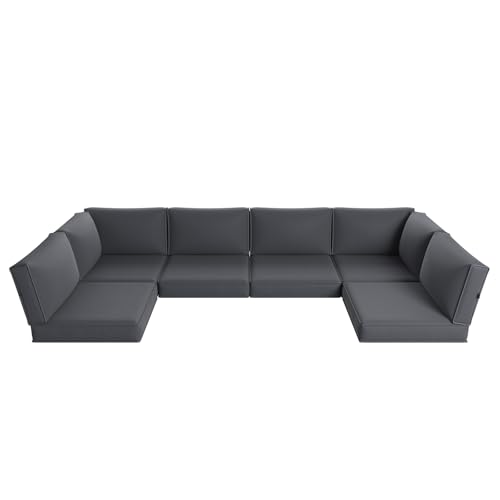
Replacement Outdoor Cushions for Sectional: The Complete Buyer's Guide
Your sectional frame is still solid, but the cushions have flattened, faded, or lost their water repellency. This guide walks you through sizing, fill types, fabric choices, and long-term care so you can restore comfort and style without replacing the entire set.
Why replacement cushions make sense: Outdoor sectional frames — whether aluminum, resin wicker, or steel — typically outlast their upholstery by several seasons. Replacing only the cushions preserves a frame you already trust, keeps waste out of landfills, and lets you update the look of your patio without a full furniture overhaul.
If your sectional uses sling-style seating rather than loose cushions, the approach is different — see our guides on replacement fabric for sling lounge chairs and replacement material for sling back chairs for those configurations.
1. Know Your Sectional Before You Shop
Sectionals come in several configurations, and each one changes how many cushion pieces you need and how they attach. Before browsing, identify which layout you own:
- L-shaped sectional: A long sofa section joined to a chaise or corner return. You will need seat cushions for each position plus back cushions that may be one long piece or segmented.
- U-shaped sectional: Two facing sections joined by a corner. Corner wedges often use a distinct cushion shape that must be ordered separately.
- Modular sectional: Individual armless chairs and corner units clip or bolt together. Cushions are usually uniform across modules, which simplifies ordering.
- Curved sectional: Cushions are trapezoidal or curved rather than rectangular, so template-based or custom orders are common.
Also note whether your cushions are attached (secured with ties, straps, or hook-and-loop fasteners) or loose. Attached cushions need matching attachment points on the replacement; loose cushions only need to match dimensions and thickness.
Quick compatibility check
- Count seat positions, corner wedges, and ottoman cushions separately.
- Note whether back cushions are one continuous piece or segmented per seat.
- Check for ties, straps, or snap connectors on the original covers.
- Confirm the frame material — resin wicker and aluminum frames accept standard cushion thicknesses, while some steel frames require thinner profiles.
2. How to Measure for Replacement Sectional Cushions
Accurate measurements are the single biggest factor in a successful replacement. A cushion that is even slightly too thick can make a sectional feel cramped, while an undersized seat cushion slides and bunches. Follow this sequence for every cushion position:
Measure seat width
Measure the clear space between the arms or side rails at the seat level. For corner wedges, measure the longest edge and the depth at the center.
Measure seat depth
Run the tape from the front edge of the seat frame to the backrest. Add nothing for overhang unless you want a slight front lip.
Measure back height
For back cushions, measure from the seat surface to the top of the back frame, then subtract a small allowance so the cushion does not tower over the frame.
Record thickness
Measure the original cushion at its thickest point. Most outdoor sectional seats fall in a standard range; note this so you can match the profile.
Measure twice and write everything down before ordering. If your sectional came with a specification sheet, cross-check your numbers against it. For cushions that wrap around a frame rather than sit on top, measure the frame perimeter as well.
3. Choosing the Right Fill for Outdoor Sectional Cushions
Fill determines how a cushion feels, how well it recovers after use, and how quickly it dries after rain. The table below compares the most common options using market-tier descriptors rather than any numeric figures.
| Fill Type | Tier Positioning | Best For | Trade-Offs |
|---|---|---|---|
| Standard polyurethane foam | Entry-level / essential tier | Occasional seating, covered porches | Compresses over time; slower to dry if soaked |
| Quick-dry foam with fiber wrap | Mid-range / balanced tier | Daily-use family sectionals | Good rebound; fiber wrap may shift slightly |
| High-density foam with bonded fiber | Premium / high-end tier | Frequent entertaining, uncovered patios | Firmer feel; heavier to move for storage |
| Closed-cell foam core | Luxury / professional-grade | Poolside and high-humidity climates | Minimal water absorption; most structured feel |
| Polyester fiber only | Starter tier | Back cushions and decorative accents | Soft but flattens faster under body weight |
A practical rule: match the fill tier to how often the sectional is used and how exposed it is. A covered porch with weekend use is well served by the balanced tier, while an uncovered poolside sectional benefits from closed-cell or high-density construction. Back cushions can use a softer fill than seat cushions without sacrificing support.
4. Fabric and Cover Options That Hold Up Outdoors
Fill gets the comfort right, but the cover decides how the cushion survives sun, rain, and mildew. Look for these characteristics when comparing replacement covers:
- Solution-dyed acrylic: Color is locked into the fiber rather than applied to the surface, so it resists fading across seasons. A common choice in the premium tier.
- Polyester with UV inhibitors: Widely used in the mid-range; performs well with periodic cleaning and reapplication of a water-repellent finish.
- Olefin: Naturally moisture-resistant and quick-drying; often found in balanced-tier covers and well suited to humid climates.
- Performance blends: Combine acrylic or olefin with a treated backing for stain resistance. Check that the backing is breathable, not a solid barrier that traps condensation.
Construction details matter as much as fiber content. Look for double-stitched seams, reinforced stress points at ties and handles, and zippers with protective flaps. A cushion cover with a hidden zipper is easier to remove for cleaning and replacement — and if your current covers are still in good shape but the fill has flattened, you can sometimes refresh the insert alone.
If your sectional shares a seating area with sling chairs or other outdoor pieces, keep fabric tone and texture consistent — our guide to replacement outdoor lounge chair cushions covers complementary options for lounge seating.
5. Coordinating Cushions Across Your Outdoor Seating
Replacement cushions are an opportunity to unify mismatched furniture. If your patio includes dining chairs or bar stools alongside the sectional, pull colors and textures from the same family:
- Use the same fabric line for sectional seats and replacement outdoor dining chair cushions to create a cohesive palette.
- If you have bar-height seating, coordinate with replacement seats for outdoor bar stools so the whole entertainment zone reads as one design.
- For waterproofing consistency, consider replacement waterproof cushions for outdoor furniture across all pieces exposed to direct rain.
- If your sectional sits on a deck with metal chairs, replacement seats for metal outdoor chairs can tie older pieces into the refreshed look.
6. Installation, Fit, and Break-In
New cushions often feel firmer than the worn originals. That is normal — most foam fills soften slightly over the first few weeks of use. To speed up the process, rotate seat cushions weekly during the first month so weight is distributed evenly.
Check attachment points before the first use. Ties should loop around the frame without excessive slack, and hook-and-loop strips should align with the frame pads. If you ordered loose cushions for a frame that originally used straps, consider adding grip tape or a non-slip mat beneath the seat cushions to prevent sliding.
7. Care and Maintenance for Long Cushion Life
Replacement cushions last longer when they are maintained on a simple seasonal rhythm:
- Weekly: Brush off debris and stand cushions on edge after rain so water drains from seams.
- Monthly during use season: Spot-clean with mild soap and water, rinse thoroughly, and air-dry completely before replacing on the frame.
- Seasonally: Deep-clean covers according to the manufacturer's instructions, check seams and zippers for wear, and reapply a fabric protectant if recommended.
- Before off-season storage: Ensure cushions are bone dry, then store in a breathable bag in a dry space. Avoid sealing damp cushions in plastic, which traps moisture and encourages mildew.
For frames with mesh or sling components that sit alongside the cushions, maintenance guidance in our replacement mesh seats for patio furniture article follows similar drying principles.
When to replace rather than repair
- Foam no longer rebounds after compression.
- Fabric tears at seams or shows staining that cleaning cannot lift.
- Water no longer beads on the surface after a protectant treatment.
- Zippers fail or attachment points tear away from the cover.
8. Frequently Asked Questions
Can I replace only the seat cushions and keep the back cushions?
Yes, as long as the back cushions are still supportive and the covers are intact. Many buyers replace seat cushions first because they bear the most weight and wear fastest. Match the new seat fabric to the existing back covers, or plan to replace both within a season for a uniform look.
How do I measure a corner wedge cushion?
Measure the two outer edges that meet at the corner, the inner edges that face the seating area, and the depth at the widest point. A simple sketch with all four side lengths plus thickness gives a cushion maker enough to work from.
Are replacement cushions sold as complete sets or individually?
Both formats exist. Complete sets suit modular sectionals with uniform seats, while individual cushions are better for L-shaped and U-shaped layouts with distinct corner and chaise pieces. Always confirm whether back cushions are included in a set listing.
What thickness should replacement sectional cushions be?
Match the original thickness when the frame has fixed arms or back panels, because a thicker cushion can prevent the seat from sitting flush. If the frame is open and the original cushions were thin, a modest increase in thickness can improve comfort without affecting fit.
Do replacement cushions come with ties or straps?
Many do, but not all. Check the product details for attachment type. If your frame relies on ties and the replacement lacks them, look for cushions with sewn-in ties or use a non-slip underlay to keep seats in place.
9. Final Checklist Before You Order
- Measurements recorded for every seat, back, corner, and ottoman position.
- Fill type matched to use frequency and weather exposure.
- Fabric chosen for UV and moisture resistance, with breathable backing.
- Attachment method confirmed against your frame.
- Color and texture coordinated with other outdoor seating.
- Care instructions read and a cleaning routine planned.
With those boxes checked, replacement cushions become a straightforward upgrade rather than a guessing game. Browse our recommended sectional cushion options below to compare fills, covers, and configurations side by side.