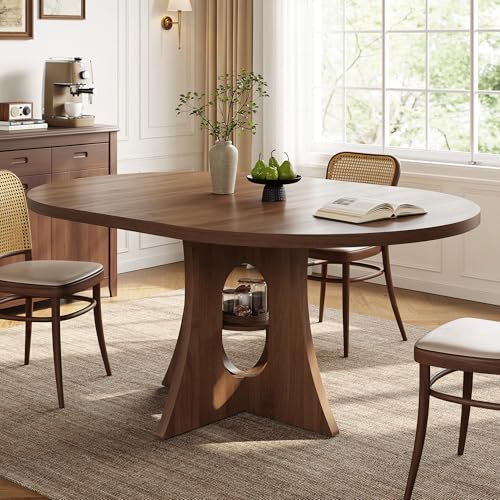
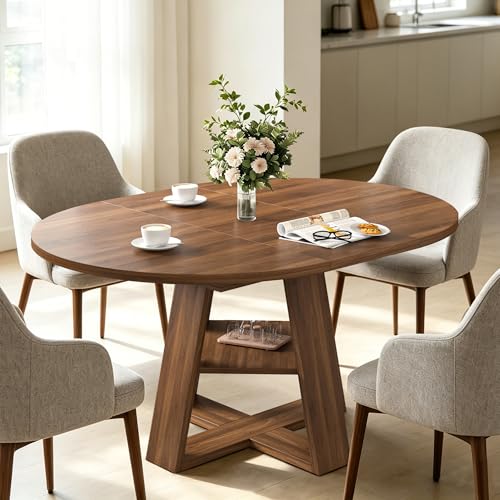
Round Dining Table with Leaf Seats 8: The Complete Guide
Everything you need to know before choosing a versatile round extendable dining table that comfortably seats eight — extension types, sizing, materials, and outdoor suitability explained.
START EXPLORINGWhy this guide matters: A round dining table with a leaf that seats 8 solves a common dilemma — you want the intimacy and flow of a round table for everyday use, but you also need to host larger gatherings. This guide walks you through how extension mechanisms work, what dimensions to look for, which materials suit indoor versus outdoor settings, and how to evaluate quality using universal tier descriptors rather than transient figures.
Why a Round Table with a Leaf Is a Smart Choice
Round dining tables are prized for their sociable layout — everyone can see and speak to everyone else without the awkward corner seating of rectangular tables. A leaf extension adds flexibility: the table stays compact for daily meals but expands when guests arrive. For households that entertain occasionally but do not want a permanent large footprint, this combination is hard to beat.
The key advantage is that a round dining table with leaf seats 8 keeps the circular conversation flow even when extended. Unlike rectangular extension tables that grow lengthwise and push the ends further apart, a round table maintains relatively even distances between diners. If you are still weighing shapes, our overview of round extension dining table options can help clarify the trade-offs.
- Space efficiency: Compact footprint when the leaf is stored or folded.
- Social layout: No head-of-table hierarchy; conversation flows naturally.
- Flexibility: Seats 4–6 daily, expands to accommodate 8.
- Design versatility: Works in traditional, modern, coastal, and farmhouse settings.
How the Leaf Extension Works
The term "leaf" covers several distinct mechanisms. Understanding the differences is essential because the mechanism affects durability, ease of use, and how much storage space you need.
1. Butterfly Leaf (Self-Storing)
A butterfly leaf folds in half and stores inside the table when not in use. You pull the table halves apart, unfold the leaf, and lock it into place. This is generally the most convenient design for frequent extending and is a hallmark of mid-range to premium tables. The hardware on top-tier models tends to be heavier and smoother than on entry-level versions.
2. Drop-Leaf
Drop-leaf tables have hinged sections that fold down at the sides. When both leaves are raised, the table expands. Drop-leaf designs are often found on smaller or space-conscious pieces and are common in starter-tier furniture. They are simple and reliable but usually do not extend as far as butterfly or refectory mechanisms.
3. Removable Leaf
A separate leaf panel is inserted into the center gap when needed. This is the most traditional approach. The leaf must be stored elsewhere, which is a consideration for compact homes. Removable-leaf tables can be found across all quality tiers, from essential-tier to luxury, with hardware quality being the main differentiator.
4. Refectory-Style Slide
Less common on round tables but worth noting: the tabletop slides apart on tracks and the leaf drops in. This mechanism is typically found on high-end and professional-grade furniture where smooth, heavy-duty operation is expected.
Sizing: What Diameter Do You Need to Seat 8?
The rule of thumb for comfortable dining is roughly 24 inches (about 60 cm) of table edge per person. For eight people, that means a circumference of about 192 inches (approx. 488 cm), which translates to a diameter of approximately 60–72 inches (152–183 cm) when fully extended. In practice, many round tables with a leaf seat 8 when the extended diameter reaches the upper end of that range.
Keep in mind that the base configuration of an 8-seat round table is usually 4 to 6 seats. The leaf adds the extra surface area needed for two more settings. Always confirm the extended dimensions — not just the closed dimensions — before committing.
| Configuration | Typical Seating | Extended Diameter Range | Best For |
|---|---|---|---|
| Round table, no leaf | 4–6 | 42–54 in | Daily meals, small households |
| Round table with one leaf | 6–8 | 54–66 in | Occasional entertaining |
| Round table with butterfly leaf | 8 | 60–72 in | Frequent hosting, larger families |
| Round table with double leaf | 8–10 | 66–80 in | Extended gatherings, holiday meals |
If you need a fixed-seat benchmark, our guide to a round outdoor dining table and chairs for 6 offers a useful comparison point for base seating capacity before extension.
Materials: Matching the Table to Your Setting
Material choice determines whether your table belongs indoors, on a covered porch, or fully outdoors. The extension mechanism is often the weak point in weather exposure, so pay close attention to how the hardware is protected.
Solid Wood (Teak, Acacia, Eucalyptus)
Solid wood brings warmth and a timeless look. Teak and eucalyptus are naturally weather-resistant and suit covered outdoor areas well. Acacia is a popular mid-range choice. Wood tables need periodic sealing or oiling to maintain their finish, especially if used outdoors. Entry-level wood tables often use thinner stock and simpler joinery, while premium pieces feature kiln-dried hardwood and reinforced joinery.
Powder-Coated Aluminum
Aluminum is lightweight, rust-resistant, and well suited to patios and decks. Powder coating adds a durable, weather-resistant finish. Aluminum tables are common in the mid-range to high-end outdoor segment. The extension tracks on aluminum tables should be stainless steel or similarly corrosion-resistant.
Resin and Composite
Resin and composite tables are essentially weatherproof and require minimal maintenance. They are typically found in the entry-level to mid-tier outdoor category. The extension mechanism on resin tables is often simplified; check that the leaf locks securely and that the table does not wobble when extended. For a broader view of durable synthetic options, see our coverage of resin outdoor furniture.
Glass and Metal
Glass tops on metal frames create a lighter visual footprint and are easy to wipe down. Tempered glass is essential for safety. Extension mechanisms on glass tables need careful design because the glass sections must be supported evenly. If you are considering glass, our notes on round glass top patio table and chairs provide additional context.
Can You Use a Round Leaf Table Outdoors?
Yes — but not every leaf table is built for the elements. The tabletop material may be weatherproof while the extension hardware is not, or vice versa. Look for tables explicitly rated for outdoor use, with sealed or stainless hardware and UV-resistant finishes.
- Check the mechanism rating: Some manufacturers rate the table for outdoor use but recommend storing the leaf indoors when not in use.
- Wind stability: Round tables catch wind differently than rectangular ones. A heavier base or the ability to anchor the table is important on exposed patios.
- Umbrella compatibility: If you plan to add shade, confirm whether the table has an umbrella hole and whether it remains accessible when the leaf is inserted. Our guide to a round outdoor dining table with umbrella hole explains the positioning considerations.
- Drainage: Flat surfaces can pool water. Slight surface texture or a subtle crown helps water run off.
For a dedicated outdoor setup, a round outdoor dining table with swivel chairs can pair well with an extendable table, giving guests easy entry and exit without moving the chairs far.
Quality Tiers: What to Expect at Each Level
Instead of focusing on transient figures, evaluate a round dining table with leaf seats 8 by its construction tier. The following descriptors are used consistently throughout this guide.
| Tier | Typical Characteristics | Best For |
|---|---|---|
| Entry-level | Simpler mechanisms, lighter frames, basic finishes. May require more careful handling when extending. | Occasional use, first outdoor setup, seasonal deployment |
| Mid-range | Solid build, smoother glides, better weather-resistant coatings, more consistent joinery. | Regular family use, mixed indoor-outdoor placement |
| Premium | Heavy-duty hardware, premium materials, refined finishes, robust leaf locking systems. | Frequent entertaining, exposed outdoor settings |
| Luxury / professional-grade | Commercial-grade mechanisms, precision joinery, long service life, exceptional stability when extended. | High-frequency hosting, hospitality-grade durability |
A mid-range model usually offers a noticeably smoother extension action than an entry-level one, while premium and luxury tiers focus on longevity and stability under repeated use. For outdoor tables, the tier often correlates with how well the hardware resists corrosion over multiple seasons.
Buying Checklist: What to Verify Before You Commit
- Extended dimensions: Confirm the diameter with the leaf inserted, not just the closed size.
- Seating clearance: Allow 24 inches of edge per person; check that chair arms fit under the table edge.
- Mechanism type: Butterfly for convenience, removable for tradition, drop-leaf for compact spaces.
- Hardware material: Stainless steel or sealed components for outdoor use.
- Leaf storage: Self-storing leaves save space; removable leaves need a storage plan.
- Stability when extended: A wide base or pedestal reduces wobble at full extension.
- Umbrella compatibility: If shade matters, verify hole placement and leaf interaction.
- Finish and maintenance: UV-resistant coatings for sun exposure; oiling schedule for wood.
- Assembly requirements: Some extension tables require two-person assembly; check the documentation.
- Warranty coverage: Confirm whether the extension mechanism is covered separately.
If you are comparing against a fixed round table, our overview of a round dining table with bench and chairs can help you weigh seating styles. For a different extension format, see the round extension dining table guide.
Pairing Chairs with an 8-Seat Round Table
When the table is extended to seat 8, chair placement becomes a practical concern. Round tables distribute chairs evenly around the perimeter, so armless chairs or low-profile arms work best. Swivel chairs can make entry and exit easier without sliding chairs back. If you are setting up outdoors, a round outdoor dining set with swivel chairs is a natural pairing.
Consider the chair height relative to the table apron. Standard dining height is around 28–30 inches; counter-height and bar-height tables require matching chair types. For an alternative layout, our notes on a round bar height outdoor table and chairs cover the taller configuration.
Ready to Compare Round Leaf Tables?
Explore our curated selection of round dining tables with leaf that seat eight, filtered for construction quality and outdoor suitability.
VIEW RECOMMENDED OPTIONSFrequently Asked Questions
How does a round dining table with a leaf seat 8 people?
A round table typically seats 4 to 6 people in its standard configuration. When the leaf is inserted, the table surface expands, allowing two additional place settings to be accommodated, reaching a total of 8 seats. The leaf is usually stored separately or folded underneath the tabletop.
What diameter should a round dining table be to seat 8 people?
For 8 people, a round table generally needs a diameter of around 60 to 72 inches when extended. As a rule of thumb, allow about 24 inches of table edge per person for comfortable dining.
Can a round dining table with a leaf be used outdoors?
Yes, provided the table is constructed from weather-resistant materials such as powder-coated aluminum, teak, or high-density resin. Always check that the extension mechanism is rated for outdoor use and store the leaf properly when not in use.
Are leaf extension mechanisms durable?
Durability depends on the mechanism type. Butterfly leaf mechanisms are typically the most robust for frequent use. Drop-leaf and self-storing designs vary in quality; mid-range and premium models generally use heavier-gauge hardware and smoother glides that hold up better over time.