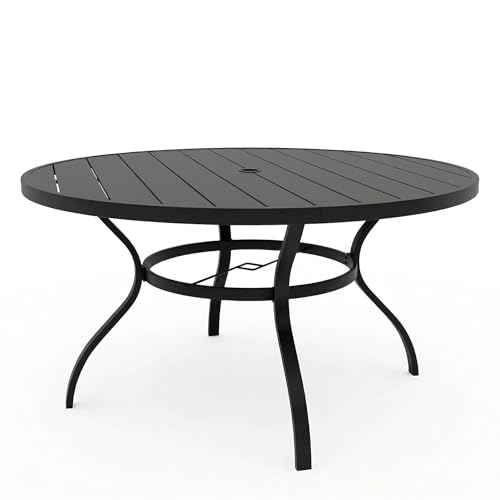
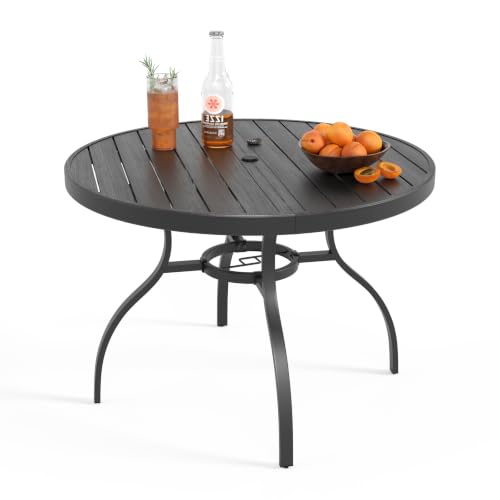
Round Metal Patio Table With Umbrella Hole: The Complete Buyer’s Guide
A round metal patio table with umbrella hole combines shade, durability, and timeless style. Learn how to choose the right size, metal, finish, and base so your outdoor dining area stays comfortable and stable season after season.
Why this guide matters: If you already know you want a round metal table with a built-in umbrella hole, the remaining questions are practical ones — which metal resists rust best, what diameter fits your chairs, how to keep the table stable under a breeze, and how the umbrella hole interacts with glass tops and table bases. This guide answers those questions in plain language so you can shop with confidence instead of guesswork.
Why Choose a Round Metal Table With an Umbrella Hole?
A round metal patio table with an umbrella hole solves three problems at once. The round shape encourages conversation because everyone faces the center, the metal frame handles weather far better than untreated wood, and the center hole lets you add shade without a separate freestanding umbrella base taking up floor space.
Round tables are especially effective on compact patios and balconies. There are no corners to walk into, and a 42-inch to 48-inch table can seat four people comfortably while leaving a walkway around the edge. Metal construction also means the table stays put in gusty conditions when paired with a proper weighted base.
Practical benefits you should expect from a well-made model include:
- All-weather resilience: powder-coated aluminum and cast aluminum resist rain, sun fading, and humidity far better than painted steel.
- Easy cleaning: smooth metal and glass surfaces wipe down in seconds after a meal.
- Umbrella integration: the center hole and collar keep the pole vertical and centered over the table.
- Long service life: a quality metal table is a long-term investment rather than a seasonal replacement.
If you are comparing frame styles, our overview of a round metal outdoor table with umbrella hole covers how outdoor-rated frames differ from indoor metal furniture. And if you prefer a different tabletop material, the round glass patio table with umbrella hole guide explains how glass tops change the look and maintenance routine.
Metal Types Compared
The metal you choose determines weight, rust resistance, and how much maintenance the table needs. Here is how the main options compare for a round patio table with an umbrella hole.
| Metal Type | Best For | Durability Notes | Maintenance Level |
|---|---|---|---|
| Powder-coated aluminum | Most climates; balconies and decks | Lightweight, rust-resistant, easy to reposition | Low — wipe and rinse |
| Cast aluminum | Windy patios; traditional styling | Heavier and very stable; excellent weather resistance | Low — occasional cleaning |
| Wrought iron | Permanent setups; classic gardens | Very heavy and rigid; requires a rust-proof finish | Moderate — inspect coating yearly |
| Steel with powder coat | Entry-level and mid-range options | Strong but vulnerable to chips and rust if coating fails | Moderate — touch up chips promptly |
| Stainless steel | Coastal and humid environments | Highly corrosion-resistant; heavier than aluminum | Low — periodic rinse |
Aluminum is the most practical default for homeowners who want a table they can move without help. A premium powder-coated aluminum frame is genuinely rust-proof in normal use, though scratches that expose bare metal should be touched up. Cast aluminum adds weight and molded detail, making it a top-tier choice for exposed patios. Wrought iron is the heaviest and most stable option, but only when the finish is intact — any bare spot becomes a rust point. Steel frames can perform well at entry-level and mid-range positions, but they demand more vigilance.
If your home has a distinctive decorative style, the rod iron furniture guide explains how ornate metal frames pair with landscaping and hardscaping.
Choosing the Right Table Diameter
Table size should be driven by seating capacity and clearance, not by the largest model that fits the patio. As a rule of thumb, allow about 24 inches of table edge per seated person and keep at least 36 inches of clearance between the table edge and walls, railings, or planters.
| Table Diameter | Typical Seating | Best For | Umbrella Consideration |
|---|---|---|---|
| 30–36 inches | 2–3 people | Balconies, bistro corners, small decks | Choose a compact umbrella with a smaller canopy |
| 40–44 inches | 4 people | Standard apartment and townhome patios | Most common size for standard umbrellas |
| 48–54 inches | 4–6 people | Family patios and covered porches | Pair with a heavier base for wind resistance |
| 56–60 inches | 6–8 people | Large decks and entertaining areas | Confirm the collar and base are rated for the larger canopy |
For a balanced look on a modest patio, a 42-inch round table with four chairs is the sweet spot. If you need to seat six regularly, look at the round outdoor dining table for 6 with umbrella hole options, which typically use a 54-inch top and a reinforced umbrella collar. For smaller spaces, the round outdoor dining table set for 4 format keeps the footprint compact without feeling cramped.
Measure twice: Tape a paper or cardboard circle of your intended diameter onto the patio, then place your chairs around it. This quick test reveals whether you have enough walking clearance before you commit.
The Umbrella Hole: Sizing and Compatibility
The umbrella hole is the detail that makes or breaks the purchase. Most patio umbrellas use a pole diameter between 1.5 inches and 2 inches, and most round metal tables are drilled to match. Before buying, measure the pole of the umbrella you own or plan to buy.
- Hole diameter: confirm the table’s hole matches your pole; an oversized hole lets the pole wobble, while an undersized hole will not accept the umbrella at all.
- Umbrella collar: the raised ring around the hole reinforces the metal and keeps the pole centered. A sturdy, welded collar is a sign of solid build quality.
- Through-table vs. above-table: some umbrellas pass through the hole and rest in a base beneath the table; others use a crank-lift mechanism that sits above. Check the table’s under-clearance for the first type.
- Base alignment: the umbrella base must sit under the table center. Measure the distance between the table legs to ensure the base fits between them.
If your existing tabletop is damaged or you are upgrading a frame you already own, replacement tops are available — see the guide to replacement outdoor table tops with umbrella hole and the specific replacement patio table top with umbrella hole options for a precise fit.
Stability, Bases, and Wind Safety
An umbrella acts like a sail. On an exposed patio, the combination of a lightweight table and a large canopy can tip in a strong gust. Stability comes from three factors working together: table weight, frame geometry, and the umbrella base.
- Choose a heavier metal for windy sites. Cast aluminum and wrought iron resist tipping far better than thin tubular steel.
- Use a weighted base rated for your canopy. A base that is too light for the umbrella size is the most common cause of tip-overs.
- Look for four wide-set legs. A wider stance spreads the load and prevents rocking on uneven pavers.
- Add leveling feet if the patio slopes. Small adjustable glides keep the table from wobbling and reduce stress on welds.
- Remove or close the umbrella during storms. No table and base combination is a substitute for common sense in high winds.
For high-wind locations, a low-profile base filled with water or sand provides meaningful extra weight, but check that the table’s under-frame has room for it. A round folding patio table with umbrella hole is convenient for storage but generally lighter, so pair it with a heavier base if the patio is exposed.
Tabletop Options and the Glass Question
Round metal tables typically come with one of four top styles: solid metal, punched or mesh metal, tempered glass, or a composite/resin insert. Each has trade-offs.
- Solid metal tops are the most durable and easiest to clean, but they can get hot in direct sun.
- Punched and mesh metal tops drain rainwater quickly and stay cooler, though small items can fall through the openings.
- Tempered glass tops look elegant and reflect light, but they need a protective cover and should be checked for chips after storms.
- Composite and resin inserts offer a wood-like look with better weather resistance than real wood.
Glass is a popular upgrade, and if you are matching a replacement to an existing frame, our guide to replacement tempered glass for patio table covers thickness and edge-finish considerations. For round tables specifically, the round glass top patio table with umbrella hole overview explains how the hole is cut and sealed to prevent chipping.
Heat tip: On a fully exposed patio, a light-colored metal top or a glass top stays noticeably cooler than a dark solid metal surface. If you plan to use the table bare-armed in summer, factor this in.
Quality Tiers Explained
Round metal patio tables fall into recognizable quality tiers. Understanding them helps you match the table to how hard it will be used.
| Tier | Typical Construction | Best For |
|---|---|---|
| Entry-level / starter tier | Thin tubular steel or light aluminum, basic powder coat, simple collar | Covered balconies, seasonal use, first patio setup |
| Mid-range / balanced tier | Thicker aluminum frame, reinforced umbrella collar, quality powder coat | Year-round residential patios in moderate climates |
| Premium / high-end tier | Cast aluminum or heavy-gauge wrought iron, welded joints, durable finish | Exposed patios, windy sites, long-term outdoor dining |
| Luxury / commercial-grade | Heavy cast construction, commercial-rated finishes, precision umbrella hardware | Hospitality settings and demanding residential use |
A mid-range aluminum table is usually the best value for a typical home patio, offering a smooth balance of weight, weather resistance, and umbrella stability. Stepping up to premium cast aluminum or wrought iron makes sense when the table will stay outside through storms and heat without a cover. Entry-level models are fine for covered spaces where the table is shielded from direct rain and wind.
Care and Maintenance
Metal patio tables are low-maintenance, but a few habits keep them looking new for years.
- Rinse weekly during pollen season. Pollen and dust trap moisture against the finish.
- Wash with mild soap and water. Avoid abrasive pads that dull the powder coat.
- Touch up chips immediately. A small bottle of matching touch-up paint prevents rust from spreading on steel and iron frames.
- Inspect the umbrella collar and welds each season. Loose hardware is easier to fix early.
- Cover the table when not in use. A fitted cover keeps debris out of the umbrella hole and protects glass tops.
- Store the umbrella during winter. The canopy and pole take the most weather stress; removing them preserves both the umbrella and the table.
If you are refreshing the seating that goes with the table, the guides to replacement outdoor dining chair cushions and replacement seats for metal outdoor chairs can help you restore an entire set rather than replacing it.
Final Buying Checklist
Run through this list before you place an order:
- Measure the patio, then mark the table diameter on the ground with tape or cardboard.
- Confirm the seat count you need and match it to a 42, 48, 54, or 60-inch top.
- Measure your umbrella pole and verify the table’s hole diameter and collar height.
- Check the metal type against your climate — aluminum for most homes, cast aluminum or wrought iron for exposed sites.
- Select an umbrella base rated for your canopy size, and confirm it fits between the table legs.
- Review the finish — a powder coat with a warranty is a good signal of build quality.
- Decide on a tabletop: solid metal for durability, mesh for drainage, glass for style.
- Plan storage: a cover for the table and a spot to stow the umbrella off-season.
Ready to compare specific models? Browse the wider selection of round outdoor patio tables with umbrella hole designs, or explore round aluminum patio tables with umbrella hole if lightweight, rust-resistant construction is your priority.
Frequently Asked Questions
What is the standard umbrella hole size on a round metal patio table?
Most round metal patio tables use a 1.5-inch to 2-inch umbrella hole, which fits the majority of standard patio umbrella poles. Always measure your umbrella pole before purchasing a table to confirm compatibility.
Which metal is best for a round patio table with umbrella hole?
Powder-coated aluminum is the best all-around choice for most climates because it is lightweight, rust-resistant, and easy to move. Wrought iron and cast aluminum are heavier and more stable, while steel requires diligent coating maintenance to prevent rust.
How do I keep a round metal patio table stable under an umbrella?
Use a weighted umbrella base rated for your table size, confirm that the table frame has a reinforced umbrella collar, and choose a heavier metal construction such as cast aluminum or wrought iron for windy locations.
Can a round metal patio table with umbrella hole stay outside in winter?
Aluminum and powder-coated metal tables can generally stay outside in winter, but moving them to a covered area or using a fitted cover extends their lifespan. Remove the umbrella and base before storms, and check for standing water that could pool in the hole.
Can I replace the tabletop instead of buying a whole new table?
Yes. If the frame is in good condition, replacement tops with umbrella holes are widely available in glass, composite, and metal. Check the frame’s top diameter and attachment points before ordering.
Ready to Complete Your Outdoor Dining Area?
Use the checklist above to narrow your options, then explore the recommended products below to compare features, materials, and umbrella compatibility side by side.