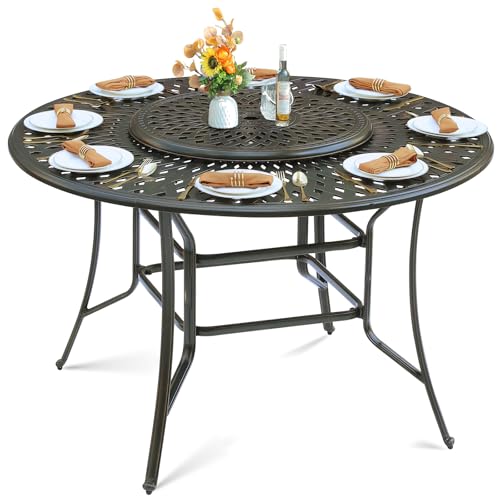
Round Outdoor Dining Table With Lazy Susan: The Complete Buyer's Guide
Everything you need to know about choosing a circular patio table with a rotating center tray — sizes, materials, base styles, seating capacity, and long-term care — so you can pick the right piece for the way you actually entertain outdoors.
Explore Recommended OptionsWhy this guide matters: A round outdoor dining table with a lazy susan solves two common patio problems at once. The circular shape lets everyone at the table see and reach each other without awkward corner seating, while the rotating center tray keeps shared dishes, condiments, and drinks within arm's reach. If you are in the research stage and want to understand how these tables are built before you commit, this guide walks you through every decision point.
What Is a Lazy Susan and Why Does It Belong on a Patio Table?
A lazy susan is a rotating circular tray mounted at the center of a tabletop. On a round dining table, it turns the middle of the surface into a shared serving zone. Instead of passing a salad bowl or a pitcher hand to hand, guests simply rotate the tray. That convenience matters more outdoors, where wind, uneven surfaces, and larger serving platters make passing items across the table clumsy.
On a patio table, the lazy susan also protects the tabletop finish. Heavy serving dishes rest on the rotating tray rather than being dragged across the surface, which reduces scratches on glass, resin, and painted metal finishes. Many models include a removable tray, so you can lift it off for cleaning or use the table without the centerpiece when you want a flat surface for crafts or board games.
The best outdoor lazy susan designs use a sealed bearing or a reinforced polymer ring rather than an open ball bearing. Sealed mechanisms resist dust, pollen, and rain, which are the three things most likely to make an outdoor rotating tray stiff over time.
Round vs Rectangular: Why the Circular Shape Wins for Alfresco Meals
Round tables are the natural fit for conversation-driven dining. Everyone faces the center, so there is no head of the table and no one stuck at a corner. On a patio, the shape also pays off in circulation: a circular footprint eliminates sharp corners that catch chairs, planters, and foot traffic on a tight deck.
For a deeper look at the broader category, you can compare options in our guide to round outdoor dining tables for six. If your space is compact, the smaller-format advice in our round outdoor dining table set for four guide is a useful companion to this page.
One practical caveat: round tables are less efficient at serving large platters than long rectangular tables. The lazy susan offsets that weakness by turning the center into a serving station, so a six-seat round table can handle family-style meals almost as smoothly as an eight-seat rectangular one.
Choosing the Right Size for Your Patio
Diameter drives everything: seating capacity, chair clearance, and how comfortable the table feels on your patio. Use the following sizing guide as a starting point.
| Table Diameter | Typical Seating | Best For | Clearance Needed |
|---|---|---|---|
| 36–42 inches | 2–4 people | Balconies, small patios, breakfast nooks | 36 inches around the edge |
| 44–48 inches | 4 people comfortably | Standard apartment patios and townhome decks | 36 inches around the edge |
| 54–60 inches | 5–6 people | Family patios and covered porches | 42 inches on the traffic side |
| 60+ inches | 6–8 people | Large decks with dedicated dining zones | 48 inches on the traffic side |
Measure the patio footprint before you fall in love with a table. A 60-inch round table needs a roughly 11-foot-wide zone once chairs are pulled out, so a narrow deck will feel crowded even if the table technically fits. For a six-seat setup where the lazy susan matters most, our round outdoor dining table set for six overview covers layout examples in more detail.
Measurement tip: Mark the table's footprint on your patio with painter's tape, then place your existing chairs around it. Pull each chair back as if a guest were getting up. If any chair bumps a rail, planter, or grill, drop down one diameter size.
Tabletop Materials Compared
The tabletop is the part that faces sun, rain, and food spills every day, so material choice has the biggest impact on how the table ages.
| Material | Market Position | Strengths | Watch-outs |
|---|---|---|---|
| Powder-coated aluminum | Mid-range | Rust-proof finish, lightweight, low upkeep | Can dent under heavy impact; surface may fade in intense UV |
| High-density resin / polywood | Essential tier | Weatherproof, no painting, consistent color | Heavier than aluminum; some styles look less refined |
| Teak and hardwoods | Premium | Warm appearance, ages gracefully, repairable | Needs periodic sealing or oiling to stay consistent |
| Tempered glass | Balanced tier | Clean modern look, easy to wipe, keeps table bright | Heavy; must be handled and stored carefully in winter |
| Cast aluminum or stone-look | Top-tier | Substantial feel, ornate detail, wind-stable | Heaviest option; harder to move for cleaning |
Glass-topped circular tables are a common pairing with a lazy susan because the rotating tray is visible and looks tidy. If that is your preference, our material notes on round glass patio tables with an umbrella hole cover tempered-glass care and thickness expectations. Aluminum tops are the all-rounder: they handle rain, do not need refinishing, and stay manageable to move when a storm is coming. Wood tops sit at the premium end and reward homeowners who do not mind a seasonal maintenance routine.
Base Styles: Pedestal, Trestle, and Four-Leg Frames
On a round table, the base determines legroom as much as the top does.
Pedestal base
A single central column with a weighted foot is the classic match for a lazy susan table. There are no corner legs to bump knees against, so every seat has full legroom. Pedestal tables also tend to be more stable in wind because the weight sits at the center. Look for a pedestal with a wide, weighted foot and a concealed bolt-down plate if the table will live on an open deck.
Trestle or X-frame base
Trestle bases suit larger diameters, where a single column may feel less substantial. They look architectural and pair well with rustic or farmhouse patios. The trade-off is that the frame occupies space under the table, which can limit how far chairs can tuck in.
Four-leg frame
Four-leg round tables are the most familiar and often the easiest to assemble. They are a strong match for compact diameters where a pedestal might feel tippy at the edge. On larger tables, check that the legs are set inward from the rim so guests do not kick them.
If swivel seating is part of your plan, our guide to round outdoor dining tables with swivel chairs explains how base style and chair motion interact.
Lazy Susan Mechanisms and What to Check
Not every rotating tray is built to the same standard. When you compare models, focus on these five points:
- Bearing type: A sealed stainless or polymer bearing resists grit and moisture far better than an open bearing.
- Tray retention: A recessed lip or low rail keeps serving dishes from sliding off as the tray turns.
- Removability: A lift-out tray makes cleaning straightforward and lets you use the full tabletop when needed.
- Load capacity: The tray should rotate smoothly under a full serving bowl, not just a salt shaker.
- Drainage: If the table stays outside, the tray and its mounting area should shed water rather than pooling it.
A well-made lazy susan turns with light fingertip pressure. If a display model feels stiff or wobbly, assume the mechanism is the weak point of the build.
Seating and Chair Pairing
Round tables pair naturally with armchairs, bistro chairs, and benches. For a four-seat setup, chairs with a curved back follow the table's shape and keep the walkway clear. For six seats, slimmer frames help avoid a crowded ring around the table.
Armchair clearance
Arms need roughly 7 inches of space between the chair and the table edge to slide in and out comfortably. Measure your widest chair before choosing a diameter.
Swivel chairs
Swivel seats make it easier to get up from a round table without pushing the chair back, which is a real benefit on tight patios.
Mixed seating
Pairing two chairs with a curved bench on one side works well on a round table and keeps the opposite side open for traffic.
Shade and Weather Considerations
Many round patio tables include a center umbrella hole, and a lazy susan changes how that hole is used. On some designs the rotating tray sits around the umbrella pole; on others the tray is offset or the table ships without an umbrella hole entirely. Decide early whether you want both features, because retrofitting an umbrella hole into a lazy susan table is rarely practical.
If shade is a priority, review the options in our guide to round outdoor patio tables with an umbrella hole and confirm the lazy susan and pole can coexist. For tables without a hole, a cantilever umbrella is the usual solution.
Wind is the other factor. A round top catches wind from every direction, so a weighted pedestal base or a table with a hollow base you can fill with sand is worth prioritizing on exposed decks. During off-season months, store the lazy susan tray indoors and cover the frame.
Care and Maintenance for Long-Term Performance
A lazy susan table is low-maintenance, but the rotating mechanism deserves a simple routine:
- Wipe after meals. Food residue that dries in the bearing track is the most common cause of stiff rotation.
- Clear the track monthly. Remove the tray and brush out grit, pollen, and leaf debris with a soft brush.
- Lubricate sparingly. Use only a manufacturer-approved lubricant, and only if rotation stiffens. Over-lubricating attracts dust.
- Cover in the off-season. A breathable cover protects both the tray and the tabletop finish from standing moisture.
- Inspect fasteners each season. Re-tighten the tray mount and base bolts at the start of the outdoor season.
For tabletop-specific care, the material guidance in our round glass and aluminum table articles applies here as well. Glass tops need careful seasonal storage, while powder-coated aluminum benefits from a simple soap-and-water wash rather than abrasive cleaners.
How to Decide: A Simple Buying Framework
Work through these questions in order, and the shortlist will narrow itself:
- How many people sit down regularly? Four or fewer points to a 42–48 inch top; five or six points to 54–60 inches.
- How much clearance does the patio allow? Tape out the footprint and test chair pull-out before committing.
- Will the table stay outside year-round? If yes, prioritize powder-coated aluminum, resin, or sealed hardwood over glass.
- Do you need shade? Confirm umbrella-hole compatibility with the lazy susan before buying.
- How much maintenance are you willing to do? Aluminum and resin are the lowest-effort choices; wood and glass ask for more attention.
Buyers who want a coordinated look often pair the table with a matching seating set. Our overview of the round outdoor dining set with swivel chairs is a useful reference for set-based shopping.
Frequently Asked Questions
What size round outdoor dining table with lazy susan should I choose?
A 42 to 48 inch round table generally seats four comfortably, while a 54 to 60 inch round table seats six. Choose a size that leaves at least 36 inches of clearance around the table for chair pull-out and walking space.
Is a lazy susan on an outdoor table practical?
Yes, when it is built with weather-resistant materials and a sealed bearing. A lazy susan keeps condiments, serving dishes, and drinks within reach so guests do not need to pass items across a wide round table.
Which tabletop material is best for a round patio dining table?
Powder-coated aluminum and high-density resin are the most weather-resistant options. Teak and other hardwoods offer a premium look with proper sealing, while tempered glass delivers a clean modern appearance but requires careful handling.
Can a round outdoor dining table with lazy susan fit on a small patio?
Yes. Round tables use floor space more efficiently than rectangular tables because there are no corners to navigate. A 42 inch round table with four chairs is a practical choice for compact balconies and small patios.
How do I maintain a lazy susan on an outdoor table?
Wipe the surface after meals, clear debris from the bearing track, and apply a manufacturer-approved lubricant if the rotation stiffens. Cover the table during long periods of disuse to protect the mechanism from grit and moisture.
Ready to Compare Real Options?
Review the recommended round outdoor dining tables with lazy susan below. Each listing highlights the build, material, and seating capacity so you can match a table to your patio and your guest list.
View Recommended Tables