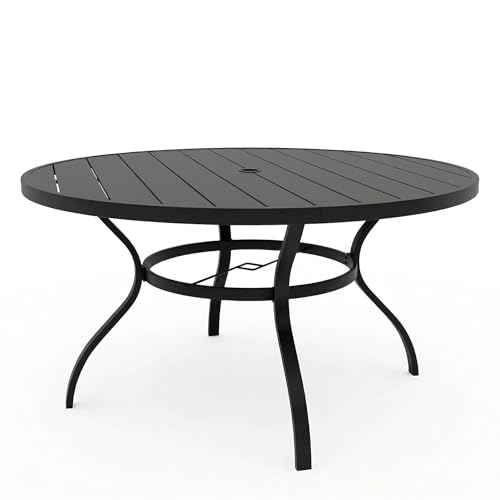
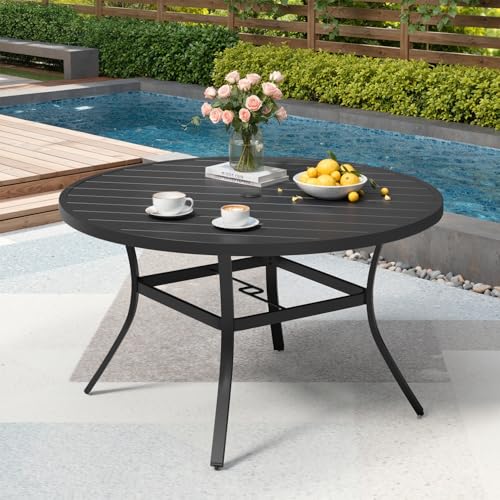
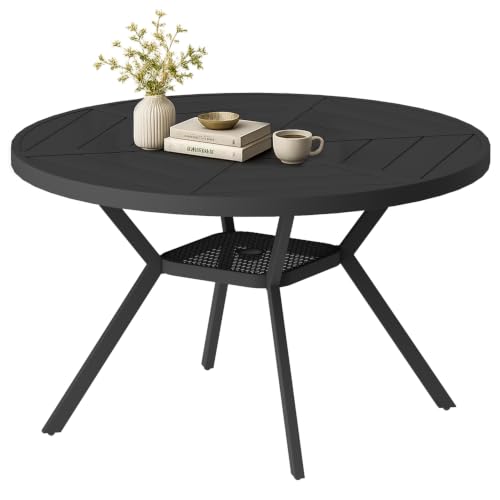
Round Patio Table for 6 with Umbrella Hole: The Complete Buyer’s Guide
A round table for six with a built-in umbrella hole is one of the most practical centerpieces you can add to an outdoor space. It seats a full household, keeps conversation flowing, and lets you add shade without sacrificing tabletop space. This guide walks through the sizing, materials, stability, and care details that matter most so you can choose with confidence.
Why a Round Six-Seat Table Works So Well Outdoors
A round table solves several outdoor dining problems at once. Because there is no head of the table, every guest has a comparable seat and can join the same conversation. The circular footprint also fits neatly into square patios, corner decks, and beside a pool, leaving walkways clear. When you add a center umbrella hole, the shade lands exactly where people sit rather than off to one side.
For households that regularly host five or six people, this size hits a sweet spot. It is large enough for a full meal service yet compact enough that it does not dominate a modest patio. If you are still comparing overall layouts, our overview of round patio furniture explains how circular pieces work together in a cohesive arrangement.
The umbrella hole itself is a small feature with a large payoff. It lets a freestanding umbrella run through the table center, so the canopy is anchored over the dining zone. That means fewer side tables, no tripping hazards from offset bases, and a cleaner visual line across your seating area.
Getting the Size Right: Diameter, Seating, and Clearance
Six adults need elbow room, and that requirement drives the diameter. A tabletop between 54 and 60 inches is the practical range. At the smaller end, six people can dine comfortably if the chairs are pulled in tight; at the larger end, there is room for serving pieces and a relaxed seating posture. Anything below 48 inches tends to feel cramped for a full six-person meal.
Chair placement matters as much as the tabletop. Allow roughly 24 to 30 inches of table edge per person, and leave at least 36 inches between the table edge and any wall, railing, or planter so chairs can slide back without blocking a path. On a compact deck, measure the swing of your chairs before committing.
Height is the other variable. Standard dining height is around 28 to 30 inches, which pairs with regular dining chairs. Counter-height and bar-height versions exist, but they change the chair requirements and the umbrella pole length. If you plan to match an existing chair set, confirm the seat height first. For a broader look at coordinated sets, see our guide to a round patio table and chairs for 6.
| Tabletop Diameter | Best For | Umbrella Match | Tier Guidance |
|---|---|---|---|
| 48 inches | Four to five diners, tight spaces | 7.5 to 9 ft | Entry-level to mid-range |
| 54 inches | Six diners, standard patios | 9 ft | Mid-range sweet spot |
| 60 inches | Six diners with serving space | 9 to 10 ft | Premium and high-end tier |
Material Choices and What They Mean for Longevity
The material determines how the table ages, how much it weighs, and how often it needs attention. Each option below is described by durability and maintenance rather than by any market figure.
Teak and Hardwood
Solid hardwood tables bring warmth and a substantial feel. Teak in particular resists moisture and develops a silver-gray patina if left untreated, or keeps its honey tone with periodic sealing. These are long-term investment pieces. A well-built teak table in the 60-inch range sits in the premium to luxury tier and can serve a household for decades. Our notes on a round teak outdoor dining table 60 inch cover the grain and joinery details worth checking.
Metal: Aluminum and Wrought Iron
Powder-coated aluminum is lightweight, rust-resistant, and easy to move for cleaning. Wrought iron is heavier and more rigid, which helps stability on windy decks, but it requires touch-up if the finish chips. Both handle an umbrella hole well because the metal frame can be reinforced around the opening. High-grade steel with a rust-proof finish is the durable standard to look for.
Resin, Plastic, and Wicker
Resin and high-density plastic tables are the practical choice for busy households and poolside use. They wipe clean, tolerate rain, and are light enough for one person to reposition. Wicker and rattan over an aluminum frame add texture and a softer look while keeping the structure weather-resistant. If low-maintenance is your priority, a round resin patio table with umbrella hole is a solid starting point.
Glass and Tabletop Inserts
A glass top on a metal or wicker base reflects light and keeps the visual weight low, which suits smaller patios. Tempered glass is the standard for safety. If the top is damaged or you are refreshing an existing base, a round patio table top with umbrella hole can restore the whole setup.
The Umbrella Hole: Fit, Pole Size, and Base Strategy
The umbrella hole is typically 1.5 to 2 inches in diameter, sized for standard poles. Before buying, confirm the hole diameter matches your umbrella pole, and check whether the table includes a plastic or metal ring insert that protects the finish around the opening. A slightly oversized hole with a collar is easier to live with than a tight fit that traps moisture.
Stability comes from the base, not the table. A table-mounted umbrella puts leverage on the center of the tabletop, so the base must be heavy enough for the canopy size and the prevailing wind. For a 9-foot umbrella, a weighted base filled with sand or water is the common approach; some premium tables include a reinforced center hub that distributes the load more evenly.
If you prefer not to thread a pole through the table at all, a cantilever umbrella can shade the same area from the side. Many buyers still prefer the center-hole design because it keeps the base out of the walking path and looks tidier. Our guide to a round patio table with umbrella hole expands on these trade-offs, and the round patio dining table with umbrella hole page compares dining-specific builds.
Fit check before you order: measure your umbrella pole diameter, confirm the table’s hole size, and verify that the base you plan to use is rated for your canopy width. A mismatched pole or an undersized base is the most common source of wobble.
Stability, Weight, and Wind Considerations
A six-seat table with an umbrella acts like a sail in a breeze. The table’s own weight helps, which is why heavier frames are favored on exposed decks. Look for a wide pedestal foot or four splayed legs that create a broad support polygon. Some tables include leveling feet, which are invaluable on older wooden decks that are not perfectly flat.
If your patio is windy, plan to close the umbrella when it is not in use. Even a well-weighted base cannot compensate for a full canopy in a gust. A vented canopy lets air pass through and reduces uplift. For tables without a center hole, a freestanding umbrella with a heavy base is the alternative, though it introduces a trip hazard that the through-table design avoids.
Care and Seasonal Maintenance
Routine care extends the life of any outdoor table. Wipe spills promptly, especially on wood and metal, and rinse the tabletop before storing or covering it for the season. Wood benefits from an annual sealant application if you want to preserve its color; metal frames need occasional touch-up where the coating wears. For a deeper routine, see our weatherproofing guide and the broader outdoor care section.
In winter, remove the umbrella, clean and dry the table, and use a breathable cover that fits without trapping condensation. If the table stays outside year-round, check the umbrella-hole ring and the center hub for standing water after storms. A round patio table cover with umbrella hole lets you leave the umbrella in place while protecting the top.
Cushions and chair frames need attention too. Store cushions in a dry bin during off-season and inspect chair joints for loosening. If rust appears on metal furniture, address it early rather than letting it spread; our rust removal notes explain the basic approach.
Matching Chairs, Sets, and Accessories
The table is only part of the picture. Chair style, seat height, and arm clearance all affect comfort at a six-seat round table. Swivel chairs make it easier to get in and out in a tight arrangement; armless chairs tuck in further and suit compact patios. If you are building a complete set, our round patio table and chairs with umbrella hole guide covers coordinated options.
For households that want warmth after sunset, a fire pit table changes the centerpiece entirely. Our overview of a round patio dining set with fire pit and the round patio dining table with fire pit explain how the two features interact and when to choose one over the other. If you already own a fire pit and want to keep dining separate, a standalone table for six is the simpler layout.
Smaller patios can use a round coffee table as a secondary surface. The round patio coffee table with umbrella hole page shows how a lower table with the same shade feature fits a lounge arrangement. For four-person households that occasionally seat six, a round patio table and chairs for 4 may be the more comfortable daily choice.
Buying Checklist
- Confirm the tabletop diameter is 54 to 60 inches for six adults.
- Check the umbrella hole diameter against your pole, and look for a protective ring insert.
- Choose a material tier that matches your maintenance tolerance: resin for low upkeep, hardwood or high-grade metal for long-term investment.
- Verify the frame has a wide pedestal foot or splayed legs for stability.
- Measure clearance of at least 36 inches around the table for chair pull-out.
- Plan a weighted umbrella base rated for your canopy width.
- Decide whether a cover with an umbrella hole is part of your seasonal routine.
Frequently Asked Questions
What diameter should a round patio table for 6 people be?
A 54- to 60-inch diameter is the practical range. The smaller size suits compact patios and tighter seating; the larger size adds serving space and a more relaxed feel.
What size umbrella fits a round patio table for 6 with an umbrella hole?
A 9-foot umbrella is the standard match. It shades the tabletop and most of the surrounding chairs. Choose a vented canopy to reduce wind uplift.
Is a round table better than a rectangular one for six people?
Round tables improve conversation and fit compact, square, or circular spaces more efficiently. Rectangular tables offer more linear serving space. For social meals on a modest patio, round is usually the better fit.
How do I keep an umbrella table stable in wind?
Use a heavy base rated for the canopy size, close the umbrella when not in use, and choose a vented canopy. On exposed decks, a heavier frame and leveling feet help as well.
Ready to Choose Your Table?
Start with the diameter and material tier that match your patio and maintenance routine, confirm the umbrella hole and base compatibility, and you will have a centerpiece that serves six comfortably for years. Explore the recommended options below, or continue with our round patio table hub for related styles and sizes.