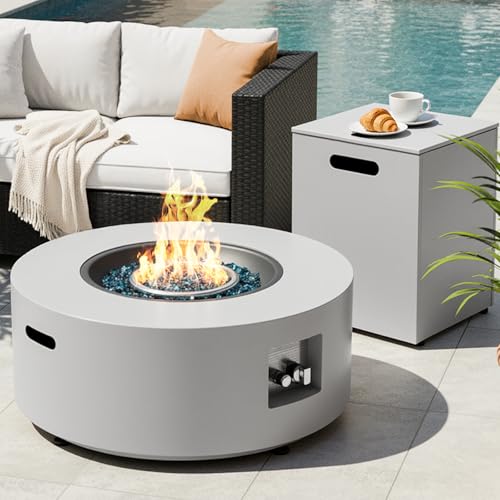
Round Propane Fire Pit With Hidden Tank: The Complete Buying Guide
A concealed propane cylinder keeps the flame center-stage and the hardware out of sight. Here is everything you need to know about how hidden tank designs work, what separates a solid build from a compromised one, and how to choose the right unit for your patio.
Explore Top PicksWhy this guide exists: You already know you want a round propane fire pit — the question is whether a hidden tank design is the right configuration for your space. This guide walks through the mechanics, the trade-offs, the materials, and the safety details so you can make a confident decision before you buy.
What "Hidden Tank" Actually Means
A round propane fire pit with a hidden tank stores the propane cylinder inside the unit's base rather than beside it. The tank sits in a ventilated compartment behind a hinged door, a lift-off panel, or a sliding access hatch. When the door is closed, the fire pit reads as a clean cylindrical or bowl-shaped form with no visible fuel source.
This is different from a standard propane fire pit, where the tank either sits exposed next to the burner or is connected by a hose to an external cylinder. It is also different from a natural gas fire pit, which connects to a household gas line and needs no tank at all. The hidden tank approach sits in the middle: portable fuel, but with the visual clutter removed.
How the Concealment Works in Practice
- Base housing: The widest part of the fire pit doubles as the tank compartment. On round models this is usually a cylindrical or drum-shaped base.
- Access door: A hinged or removable panel on the side lets you slide the cylinder in and out. Quality units use a latch or magnetic catch rather than a loose panel.
- Ventilation: Propane cylinders must vent. Look for louvered slots, perforated panels, or a raised base ring that allows air movement around the tank.
- Regulator and hose: The regulator connects inside the compartment. A well-designed unit routes the hose so it does not pinch when the door closes.
- Burner tray above: The burner assembly, lava rock or glass media, and the lid sit above the tank compartment, separated by a heat shield or structural plate.
Why Homeowners Choose This Configuration
The appeal is mostly visual, but there are practical benefits too. A concealed tank means no hose snaking across the patio, no cylinder to trip over, and no need to build a separate tank enclosure or hide the unit behind furniture. For a round fire pit used as a centerpiece — on a seating circle, a deck, or a balcony — that visual discipline matters. It also keeps the tank protected from direct sun, rain, and accidental knocks.
The trade-off is access. Refilling means opening the door, disconnecting the regulator, lifting the cylinder out, and reversing the process. On well-designed units this takes a couple of minutes. On poorly designed ones, the door is small, the hose is short, and the cylinder scrapes on the way out.
How to Evaluate a Hidden Tank Fire Pit
Because the tank is out of sight, the quality differences between models are concentrated in places you cannot see from a product photo. These are the areas that separate a well-engineered unit from a compromised one.
Build Material & Finish
Powder-coated steel and stainless steel are the durable choices. Look for a rust-proof finish rated for outdoor exposure. Cast aluminum and concrete-composite bases resist corrosion but are heavier and less forgiving if dropped.
Burner Output & Control
Output determines flame presence and heat radius. A wider round fire pit needs a burner sized for its diameter, otherwise the flame looks small in the center. A single knob with a smooth range from low to high is easier to live with than a binary on/off valve.
Ignition System
Push-button electronic ignition is the most convenient and is common on mid-range and premium units. Match-light ignition is simpler and has fewer failure points but requires a long lighter. Entry-level models often use a basic piezo spark.
Tank Compartment Design
The door should open wide enough to clear a standard cylinder without forcing. Check that the regulator sits in a protected position and that ventilation is built into the housing, not an afterthought.
Heat Shielding
A metal heat shield between the burner tray and the tank compartment protects the cylinder from radiant heat. This is a structural detail worth confirming in the manual or product specification.
Media & Flame Presentation
Lava rock is the standard and spreads the flame for a fuller look. Fire glass gives a more contemporary presentation. Some units ship with both options and let you swap.
Lid & Cover
A matching lid turns the fire pit into a table when not in use, which is valuable on a small patio. A fitted cover protects the burner and media from debris between uses.
Mobility & Placement
Round propane fire pits are heavy once the tank is installed. Hidden leveling feet or a small wheel kit make repositioning realistic. Check the clearance requirements for combustible surfaces before placing it on a deck.
Entry-Level vs Mid-Range vs Premium
Rather than quoting figures, it helps to understand how the market segments these units by tier. The descriptors below are relative positions, not absolute rankings.
| Tier | Typical Build | Best For |
|---|---|---|
| Entry-level | Powder-coated steel base, basic piezo ignition, simple door latch, lava rock media. | Occasional use, renter-friendly patios, first-time fire pit buyers. |
| Mid-range | Reinforced steel or stainless frame, push-button ignition, smoother valve control, better ventilation and heat shielding. | Regular evening use, decks where the fire pit is a focal point, households that want a reliable daily driver. |
| Premium | Heavy-gauge stainless or cast aluminum housing, refined burner with wide turndown range, integrated lid or table conversion, high-grade fittings. | Design-led patios, long-term installations, buyers who want the concealment to feel seamless rather than functional. |
Tier descriptors reflect relative market positioning and construction quality, not absolute or regional figures.
Tank Logistics: What Daily Ownership Looks Like
The single most common surprise for new owners is how the refill cycle works in practice. A round fire pit with a hidden tank is not plumbed into a fuel line; the cylinder is a consumable that you remove, exchange or refill, and reinstall.
Refilling and Swapping
- Turn the burner control to the off position and let the unit cool completely before opening the access door.
- Close the cylinder valve, then disconnect the regulator. Expect a small amount of residual gas at the connection — this is normal.
- Lift the cylinder out. Standard 20-pound cylinders are manageable for most adults but are heavier than they look when full.
- Refill or exchange the cylinder, reinstall it upright in the compartment, reconnect the regulator, and leak-test the connection with soapy water before lighting.
Runtime Expectations
Runtime is a function of burner output and valve position, not the tank size alone. On a low flame setting, a standard cylinder supports many evening sessions. Running the burner at its highest setting dramatically shortens that window. If long, high-output sessions are your routine, a larger cylinder or a natural gas conversion is worth considering. Buyers planning a built-in look may want to compare this configuration with a round propane fire pit table with lid, which serves double duty as a surface.
Safety Requirements You Cannot Skip
Concealed tanks are safe when the unit is engineered and used correctly, but the concealed compartment makes a few checks non-negotiable.
- Ventilation is mandatory: Propane is heavier than air. The tank compartment must vent at the bottom so any leaked gas can escape rather than pool inside the housing.
- Never operate with the door open or removed mid-burn: The door is part of the heat management system on most designs. Follow the manufacturer's instruction on when the door should be closed.
- Respect clearance to combustibles: Keep the unit away from deck railings, furniture, rugs, and overhanging structures per the manual. Do not assume a round shape makes it safe on any surface.
- Leak-test after every cylinder change: A soapy water solution at the regulator connection will reveal bubbles if there is a leak. Never use a flame to test for leaks.
- Store cylinders correctly: Upright, in a ventilated space, away from heat sources and out of direct sun. Do not store a spare cylinder inside the fire pit compartment.
- Check local rules: Some communities restrict open-flame devices on balconies, decks, or in drought-prone areas. Confirm before you buy.
Design and Placement Considerations
A round fire pit is a natural centerpiece, and the hidden tank design reinforces that role because there is nothing to distract the eye. The main planning question is the seating radius. A round unit works best when chairs are arranged in a circle at a consistent distance, so the flame is visible from every seat and the heat is distributed evenly.
On compact patios, a round fire pit can replace a coffee table rather than sit alongside one. On larger decks, it can anchor a conversation zone separate from the dining area. If you are already planning a dining layout, the round patio table and round patio furniture guides cover how to coordinate the two zones without visual clutter. For spaces that need shade as well as warmth, a round patio table with umbrella hole may be a better primary anchor, with the fire pit as a secondary feature.
Material coordination matters too. A powder-coated steel fire pit in a dark finish pairs naturally with wrought iron seating, while a lighter composite or concrete base suits teak, wicker, and rattan. If your patio already leans toward round wicker chairs or a round rattan coffee table with glass top, a low-profile round fire pit will read as part of the same family rather than an add-on.
Maintenance for a Concealed Tank Unit
Maintenance is straightforward, but the hidden compartment adds one routine that exposed-tank models do not have: inspecting the tank bay.
- Monthly: Open the access door and check for debris, spider webs, or insect nests around the regulator and hose. Clear the ventilation slots.
- After rain: Confirm that water drains from the base and does not pool in the tank compartment. Standing water accelerates corrosion and can damage the regulator.
- Seasonally: Clean the burner ports with a soft brush, inspect the hose for cracks or stiffness, and check the finish for chips that expose bare metal. Touch up chips promptly to prevent rust.
- Before storage: Remove the cylinder, disconnect the regulator, cover the burner, and store the unit in a dry, ventilated space. A fitted cover is preferable to a tarp, which can trap moisture.
If you notice surface rust on steel components, the rust removal guide covers treatment and prevention. For broader seasonal upkeep, the seasonal buying guide explains how timing affects availability and selection.
Who This Configuration Suits — and Who It Does Not
A round propane fire pit with a hidden tank is a strong fit for homeowners who want a portable, visually clean flame feature on a patio, deck, or balcony, and who are comfortable with a periodic cylinder swap. It suits design-conscious buyers who do not want a hose or cylinder on display, and it suits smaller spaces where a separate tank enclosure is not practical.
It is a weaker fit for anyone who wants long, high-output burn sessions without frequent refills, or who prefers the set-and-forget nature of a natural gas line. It is also less suitable for buyers who want to move the unit frequently, since the combined weight of base and cylinder makes repositioning a two-person task on most models.
Related Buying Guides
If you are still mapping out the full patio layout, these guides cover adjacent decisions:
Frequently Asked Questions
What does a hidden tank mean on a round propane fire pit?
It means the propane cylinder is stored inside the base of the fire pit, usually behind a hinged door or removable panel, so the tank is out of sight while the unit is in use.
How long does a hidden propane tank last?
Runtime depends on the burner output and the valve setting. A standard 20-pound cylinder typically provides many hours of use on a low flame setting, while high output shortens runtime considerably.
Can a hidden tank fire pit be used on a wooden deck?
Only if the manufacturer explicitly permits it and the unit is elevated on non-combustible feet or a rated pad. Always follow the clearance requirements in the owner's manual and check local codes.
Do I need to remove the tank to refill it?
Yes. On nearly all hidden tank designs the cylinder is disconnected and lifted out through the access door for refilling or exchange, then reinstalled and leak-tested before use.
Is a hidden tank fire pit harder to maintain than an exposed tank model?
The routine cleaning is similar, but you should inspect the tank compartment monthly for debris, insect nests, and moisture. This extra check is the main difference in upkeep.
Can I convert a hidden tank propane fire pit to natural gas?
Only if the manufacturer offers a certified conversion kit for that specific model. Never improvise a conversion, as it involves different orifice sizing, gas pressure, and safety certification.
Ready to Choose?
Start with the tier that matches how often you plan to use the fire pit, then verify the tank compartment design, ventilation, and heat shielding against the checks above. The product selection below is filtered to round propane fire pits with concealed tank configurations.