Round Table with Fire Pit in the Middle: The Complete Buyer’s Guide
Everything you need to choose, place, and enjoy a central-fire round table—from fuel types and materials to safety clearance and the questions shoppers ask most.
Start the GuideWhy this page exists: If you already know you want a round table with a fire pit in the middle, the remaining questions are usually about fuel, size, safety, and placement. This guide answers those directly so you can move from research to a confident decision—and check availability with confidence.
What Is a Round Table with a Fire Pit in the Middle?
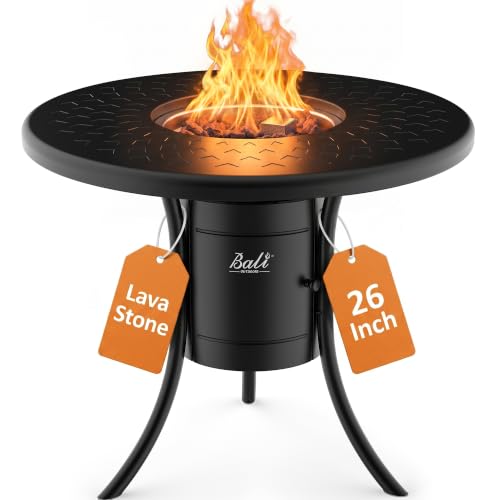
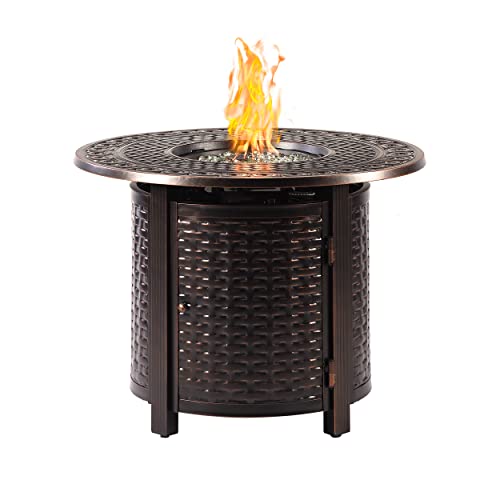
A round table with a fire pit in the middle is an outdoor table that integrates a fire element directly into the center of the tabletop. Rather than placing a separate fire bowl beside the table, the fire feature becomes the table’s focal point, so guests can eat, chat, and stay warm around a single, unified piece. These tables typically appear in two formats: a dining table with a central burner and surrounding seats, or a lower lounge table with a fire feature and a smaller seating ring.
The appeal is straightforward: you get the social geometry of a round table—equal distance from every seat to the center—combined with the ambiance and warmth of an open or enclosed flame. For buyers researching a central fire table, the key decision is not whether the idea works, but which configuration fits your patio, fuel supply, and safety requirements.
Dining Table vs. Lounge Table: Which Configuration Fits?
Round fire tables usually fall into two practical categories. Understanding the difference early prevents a mismatch with your seating and patio layout.
- Dining-height round fire tables: Standard dining height with a central burner, designed for meals. These pair naturally with a round patio dining table with fire pit setup and usually seat four to six comfortably.
- Lounge-height round fire tables: Lower tables intended for sofas and lounge chairs. They prioritize conversation and warmth over dining surface area and work well on smaller patios or alongside sectional seating.
If your priority is hosting meals, a dining-height table with a central fire feature is the more versatile choice. If your patio is primarily a relaxation space, a lounge-height unit integrates more naturally with existing seating. For a broader look at round table formats before committing, browse the round patio furniture category and compare layouts.
Fuel Types: Propane, Natural Gas, Wood, and Bioethanol
The fuel you choose affects installation, maintenance, and how freely you can move the table. Use the tier descriptors below to compare options within their class rather than by any numeric figure.
Bioethanol
No venting or gas line required. Simple to place and easy to move. Best for buyers who want ambiance with minimal installation; flame output is modest and fuel is consumed per session.
Propane
Portable and widely supported. Most units use a hidden tank or external cylinder. Best for patios without a gas line and for buyers who want flexibility in table placement.
Natural Gas
Continuous supply with no tank swaps. Requires a permanent gas line and professional installation. Best for dedicated patios where the table will remain in one location.
Wood-Burning
Authentic crackle and aroma. Requires more clearance, ash management, and spark protection. Best for buyers who value the traditional fire experience and have an open, well-ventilated setting.
For many buyers, propane is the balanced tier choice: it avoids permanent installation while still delivering a substantial flame. Natural gas is the long-term investment option if your patio already has a gas stub. Bioethanol sits at the essential tier for simplicity, while wood-burning is the premium traditionalist’s pick. If you are comparing a central burner against a table with a removable lid, the round propane fire pit table with lid format is a practical reference point.
Materials and Build Quality
Round fire tables live outdoors year-round, so material choice matters as much as the burner itself. Common tabletop and base materials include powder-coated steel, aluminum, cast stone, concrete composite, and slatted or solid wood. Each has trade-offs.
- Powder-coated steel and aluminum: Durable construction with a weather-resistant coating; aluminum is lighter and less prone to rust, while steel is heavier and more substantial.
- Cast stone and concrete composite: Heavy-duty and stable, with a premium feel; best for permanent placements where the table will not be moved frequently.
- Wood: Warm and traditional, but requires sealing and seasonal care; choose a species rated for outdoor use and inspect joinery around the burner cutout.
Whatever the material, look for a heat shield or insulated surround between the burner and the tabletop, a removable lid or cover for non-fire use, and a burner rated for outdoor installation. These details separate a well-specified table from a basic one. For related fire-feature comparisons, see round patio dining set with fire pit and round patio table set with fire pit.
Sizing and Seating: How Many Can Gather Around?
Round tables distribute space evenly, but the central burner consumes surface area. As a rule, a dining-height round fire table seats four comfortably and six with tighter spacing. Lounge-height versions typically pair with three to five seats depending on the table diameter.
Before ordering, measure the full footprint of your intended seating arrangement, not just the table. Chairs need room to pull out, and guests need room to walk behind them. If you are weighing seating counts, compare the round patio table and chairs for 4 and round patio table and chairs for 6 layouts to see which feels right for your patio dimensions.
Placement, Clearance, and Safety
Safety is the single most important factor with a central fire feature. The burner is enclosed or semi-enclosed, but it still produces heat and open flame. Follow these fundamentals:
- Ground clearance: Keep chairs and flammable items at a safe distance from the burner; a minimum of roughly 36 inches around the table for seating and movement is a practical starting point.
- Overhead clearance: Do not place an open-flame table beneath a low pergola, umbrella canopy, or overhanging branches. Check the manual for the manufacturer’s required clearance from overhead structures.
- Surface protection: On wood decks, use a heat-resistant mat or barrier and confirm the unit is rated for deck use. Composite and stone patios are generally more forgiving, but always follow the manual.
- Ventilation: Never use a fuel-burning fire table in an enclosed or poorly ventilated space. Outdoor use only, unless the unit is explicitly rated otherwise.
- Extinguishing: Keep a fire extinguisher or appropriate suppression method nearby, and never leave a lit burner unattended.
Check local fire codes before installation, especially for natural gas connections and wood-burning units. For a wider safety overview across fire features, see the fire pits category.
Central Fire vs. Umbrella Hole: Two Different Tables
Shoppers sometimes confuse a fire table with an umbrella-hole table. They serve opposite purposes. An umbrella hole provides shade on sunny days; a central fire pit provides warmth and ambiance in cooler hours. You generally cannot have both in the same table center. If shade is your priority, look at round patio table with umbrella hole options. If warmth and gathering are the goal, the central fire configuration is the right direction. For buyers who want to understand the umbrella alternative before deciding, the round table with hole in the middle guide explains that format in detail.
Comparison: Choosing by Priority
| Priority | Recommended Configuration | Why It Fits |
|---|---|---|
| Hosting meals with warmth | Dining-height round fire table, propane | Balanced tier for most patios; seats four to six; no permanent gas line needed. |
| Permanent patio, no tank swaps | Natural gas central-fire table | High-end tier setup with continuous supply and professional installation. |
| Smallest footprint, simplest setup | Lounge-height bioethanol table | Entry-level tier; portable, no venting, integrates with existing lounge seating. |
| Traditional fire experience | Wood-burning round fire table | Premium traditional tier; authentic ambiance with higher clearance needs. |
| Shade is the main goal | Umbrella-hole round table | Different category entirely; choose shade over central fire. |
Buying Checklist
Before you check availability, confirm these points
- Fuel type matches your patio setup (propane tank access, gas line, or open-air wood use).
- Table diameter fits your seating count with room to pull chairs out.
- Burner has a heat shield and a lid or cover for non-fire use.
- Materials are rated for outdoor, year-round exposure.
- Clearance from overhead structures and flammable items is documented.
- Local codes and any HOA rules allow the fuel type you chose.
- Assembly and installation requirements are clear (professional for gas lines).
Frequently Asked Questions
What is a round table with a fire pit in the middle?
It is an outdoor dining or lounge table with a fire element integrated into the center of the tabletop—propane, natural gas, wood-burning, or bioethanol—so guests can gather around warmth while eating, chatting, or relaxing.
Is a fire pit in the middle of a table safe?
Yes, when the unit is certified, installed per the manufacturer’s instructions, and used with proper clearance from flammable items. Choose tables with heat shields and flame guards, and follow local fire safety codes.
Propane, natural gas, or wood-burning: which is best?
Propane offers portability and easy installation; natural gas provides a continuous supply for permanent setups; wood-burning delivers authentic crackle and aroma but requires more maintenance and clearance. Bioethanol is the simplest option with no venting.
How much clearance do I need around a fire pit table?
Allow at least 36 inches (about 90 cm) around the table for chairs and movement, plus additional clearance from walls, pergolas, and flammable materials as specified in the manual—often 60 inches or more from overhead structures for open-flame units.
Can a round fire pit table be used on a wood deck?
Yes, with precautions. Use a heat-resistant mat or barrier beneath the unit, keep clearance from railings and overhead structures, and choose propane or natural gas models with enclosed burners. Check local codes and the manufacturer’s deck-use guidance.
Can I use the table without the fire on?
Most models include a lid or cover that converts the burner area into usable tabletop space. Confirm the lid is included and rated for the table before purchase.
Ready to Compare Round Fire Tables?
Review the recommended products below to compare fuel types, table heights, and seating configurations, then check availability for the model that matches your patio.
Explore Recommended Options