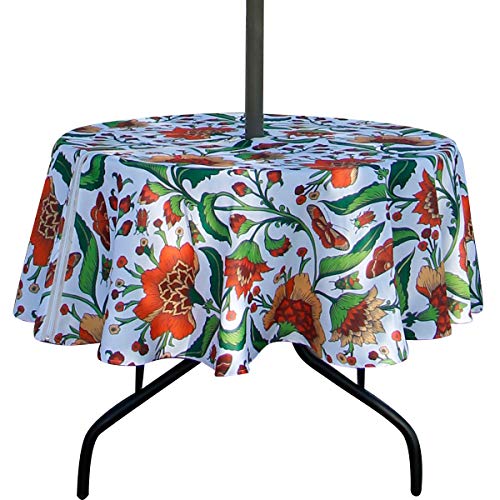
Round Table with Hole in the Middle: The Complete Buying Guide
Everything you need to know about umbrella-hole patio tables — how the central opening works, which sizes fit your space, how to match pole diameters, and which materials hold up season after season. Read this first, then shop with confidence.
Explore Recommended TablesWhat a Round Table with a Hole in the Middle Actually Does
A round table with hole in the middle is a patio dining or bistro table with a circular opening cut through the center of the tabletop. The opening is not decorative — it is a structural pass-through for the pole of a patio umbrella. Instead of placing an umbrella beside the table on a freestanding base, the pole rises through the table surface, putting the canopy directly above the diners.
This design solves a very specific problem: shade where you eat. A freestanding umbrella base occupies floor space, can be tripped over, and often sits awkwardly at the edge of a seating arrangement. A through-table hole centralizes the shade, keeps the base under the table, and leaves the perimeter clear for chairs.
The hole is typically reinforced with a collar, ring, or grommet, especially on higher-grade tables. That collar protects the tabletop edge from abrasion as the pole shifts in wind, and it keeps water from seeping into hollow-core tabletops. On round patio table with umbrella hole models, the opening is usually between 1.5 and 2 inches across, matching the two most common umbrella pole diameters.
Key insight: The hole is a convenience feature, not a load-bearing anchor. It aligns the umbrella, but a weighted base is still what keeps the canopy upright on breezy afternoons.
Why Homeowners Choose an Umbrella-Hole Table
Buyers in the research phase usually arrive with a shortlist of features in mind, and the central hole tends to rank high for practical reasons. Here is what it delivers in daily use:
- Centered shade. The canopy sits over the table, not off to one side, so every seat gets some relief from direct sun.
- Clear foot space. A through-table base sits beneath the tabletop rather than on the patio surface, reducing trip hazards around the seating ring.
- Compact footprint. Round tables fit corners, balconies, and small decks more easily than rectangular tables of comparable seating capacity.
- Flexible shade control. You can add or remove the umbrella seasonally without rearranging furniture.
- Better conversation flow. A round top puts every diner at a similar distance from the center, which suits casual meals and card games alike.
For anyone furnishing a compact deck or balcony, the combination of a round top and a through-hole umbrella is one of the most space-efficient dining setups available. If your priority is a very small footprint, the compact round patio table and chairs for 4 format pairs naturally with a 7- to 9-foot canopy.
Sizing: How Many Diners Fit at Each Diameter
The single most common source of buyer regret is a table that is one size too small. The rule of thumb is roughly 24 inches of table edge per diner, plus room for place settings and serving dishes in the center. Because the umbrella hole occupies the middle, you also want enough surface left over for a lazy Susan, a pitcher, or a centerpiece that does not crowd the pole.
| Table Diameter | Typical Seating | Best For | Notes |
|---|---|---|---|
| 30–36 inches | 2–3 | Balconies, bistro corners | Often sold as a bistro or cafe-height table; umbrella canopy should stay small. |
| 40–44 inches | 4 | Small patios, breakfast nooks | The most common entry-level round dining size; ample room for four place settings. |
| 48–54 inches | 4–6 | Mid-size decks, family meals | Comfortable for four with serving dishes; snug but workable for six. |
| 56–60 inches | 6 | Standard family patio dining | The sweet spot for six diners with a centerpiece and an umbrella pole in place. |
| 60–72 inches | 6–8 | Large decks, entertaining | Choose a heavier base and a wider canopy; verify chair clearance around the rim. |
If you already know your guest count, the more specific guides are easier to shop from: a round patio table and chairs for 6 is the most popular family configuration, while a round patio table and chairs for 8 suits larger gatherings and holiday meals. For a four-person setup that includes the umbrella, the round patio table and chairs with umbrella hole format bundles the pieces that need to match.
Don't Forget Chair Clearance
A round table needs a clear ring around it for chairs to pull out. Plan for roughly 24 to 30 inches between the table edge and the nearest wall, railing, or planter. On a narrow balcony, that clearance requirement is often the real constraint — not the table itself. Shoppers working with limited depth should review the space-efficient options in the round patio furniture collection before settling on a diameter.
Matching the Pole Diameter to the Hole
An umbrella hole is only useful if the pole actually fits. Two standards dominate the market: poles around 1.5 inches and poles around 2 inches. A 1.5-inch hole with a 2-inch pole simply will not work, and a 2-inch hole with a 1.5-inch pole leaves the umbrella rattling in the breeze.
Before you buy, confirm three measurements:
- Hole diameter — measure across the opening, ideally with calipers or a tape across the widest point.
- Pole diameter — listed in the umbrella specifications, not always obvious from photos.
- Table thickness and collar depth — a thick tabletop with a short pole collar can limit how far the pole seats into the base.
If the fit is slightly loose, a reducing ring or an umbrella stabilizer insert closes the gap and prevents wobble. If you are replacing just the top rather than the whole table, a round patio table top with umbrella hole lets you keep a frame you already like while upgrading the surface. Replacement tops are also useful when an older tabletop has weathered but the base and legs are still solid.
Measurement tip: Measure the hole at the top surface, not from underneath. Some tabletops taper, and the top measurement is the one that determines whether the pole passes cleanly.
Material Comparison by Market Tier
Round umbrella-hole tables are made from a handful of material families, and each family tends to map to a market tier. Rather than shopping by numbers, it helps to understand what each tier buys you in terms of construction and longevity.
| Material | Typical Tier | Strengths | Watch Out For |
|---|---|---|---|
| Resin / plastic | Entry-level | Lightweight, easy to move, resists rot, good for renters and balconies | Can fade in strong UV; hollow-core tops need a reinforced hole collar |
| Powder-coated steel or aluminum | Mid-range | Solid build, crisp finishes, aluminum resists rust better than steel | Check weld quality at the hole collar; steel needs touch-up on scratches |
| Wicker / rattan weave over frame | Mid-tier to premium | Warm texture, hides surface scuffs, pairs well with cushion seating | Weave can loosen over time; confirm the frame is aluminum, not steel |
| Teak and hardwood | Premium to luxury | Long-term investment, repairable surface, ages gracefully | Needs periodic sealing; the hole must be properly sealed against moisture |
| Glass over metal frame | Mid-range to high-end tier | Easy to wipe clean, modern look, reflects light | Tempered glass only; the hole edge should be polished or grommeted |
Material choice often comes down to climate and storage. In coastal or humid areas, aluminum and resin hold up with less maintenance than steel. In dry, sunny climates, UV resistance matters more than rust prevention. Wood tables reward buyers willing to maintain them and can be sanded and refinished when the surface dulls. Whichever family you choose, insist on a reinforced or grommeted hole — an unprotected cutout is the first place a tabletop fails.
For a closer look at specific material families, browse the dedicated collections: round rattan coffee table with glass top for woven textures, round teak outdoor dining table 60 inch for hardwood construction, and round wrought iron patio table and chairs for metal craftsmanship.
Stability, Umbrella Bases, and Wind Safety
An umbrella is essentially a sail. Once the canopy is open, wind load transfers down the pole and into whatever holds it. The table hole keeps the pole vertical, but it does not anchor it. This distinction matters most on open decks and rooftops where gusts arrive without warning.
Choose the Right Base Type
- Through-table base: sits under the tabletop and is the most space-efficient option. It must be heavy enough for the canopy size.
- Freestanding plate base: used when the table has no hole or when extra weight is needed. Takes up floor space under or beside the table.
- In-ground or weighted-collar bases: reserved for larger canopies and permanent installations.
As a general rule, a wider canopy needs a heavier base. If you are pairing a table with a fire feature rather than an umbrella, the same stability thinking applies to the center opening — see the round table with fire pit in middle guide for how those units handle the central column.
Wind and Weather Habits
Close the umbrella when it is not in use, and lower it during storms. Even a well-weighted base can tip if a gust catches a fully open canopy. In exposed locations, choose a table with a wider leg spread and a heavier base, and consider a tilt-and-crank umbrella that can be collapsed quickly. For seasonal storage advice, the round patio table covers with umbrella hole category covers covers that fit over the table with the pole still in place.
Setup, Care, and Seasonal Storage
A round table with a central hole is straightforward to set up, but a few habits extend its life considerably.
Assembly
- Assemble the table upside down on a soft surface to protect the tabletop finish.
- Seat the umbrella base or stabilizer before flipping the table upright — it is much harder to install afterward.
- Insert the pole through the hole and confirm it sits vertically before tightening any collar or ring.
- Check that all leg bolts are snug; recheck after the first week of use as joints settle.
Routine Care
- Wipe the tabletop and the hole collar after rain to prevent standing water and mineral stains.
- Inspect the hole edge each season for cracks, rust, or loose grommets — this is the highest-stress point on the surface.
- For metal tables, touch up scratches promptly with matching touch-up paint to stop corrosion.
- For wood tables, reseal the surface and the hole edge annually; moisture wicks into exposed end grain fastest at cutouts.
Seasonal Storage
If you store the table indoors during colder months, remove the umbrella first and clean the hole area before covering. A fitted cover with a pole opening lets you leave the umbrella in place if you prefer. For buyers replacing worn parts rather than whole tables, a round outdoor table top replacement is often the most efficient route, and a round patio table with 6 swivel chairs bundle is worth considering if the chair set also needs refreshing.
Common Buyer Mistakes to Avoid
- Buying the table before the umbrella. Pole diameter and canopy size should drive the table choice, not the other way around.
- Skipping the base. The hole aligns the pole; it does not secure it. A windy day will make that clear.
- Underestimating clearance. Measure the chair pull-out zone, not just the table diameter.
- Ignoring the hole collar. Unreinforced cutouts chip, crack, and let water into hollow tops.
- Choosing glass without checking tempering. Only tempered glass belongs outdoors, and the hole edge should be polished.
- Overlooking storage. If the table will be covered or stored, confirm the cover accommodates the umbrella hole configuration.
Ready to Choose Your Round Umbrella-Hole Table?
You now have the sizing rules, pole-fit checks, material tiers, and stability considerations that matter most. Use the shortlist below to compare options that match your deck size and guest count.
View Recommended TablesFrequently Asked Questions
What is a round table with a hole in the middle used for?
The central hole holds a patio umbrella pole, placing shade directly over the table. It also keeps the umbrella base under the tabletop, freeing up floor space around the seating area.
What size umbrella pole fits a standard umbrella hole?
Most patio tables use a hole sized for either a 1.5-inch or 2-inch pole. Measure the hole diameter at the top surface and confirm the pole size before buying. A reducing ring can close a small gap.
Do I still need an umbrella base if the table has a hole?
Yes. The hole stabilizes the pole but does not anchor it. A weighted through-table base or a heavy freestanding base is still recommended, especially for larger canopies and exposed locations.
How many people can sit at a round table with an umbrella hole?
A 40–44 inch table seats four, a 48–54 inch table seats four to six, and a 56–60 inch table comfortably seats six. Larger tables in the 60–72 inch range can seat six to eight with proper chair clearance.
Can I replace just the tabletop if the hole is damaged?
Often yes. Replacement tops with pre-cut umbrella holes are available for common frame sizes. Measure the frame diameter and hole position before ordering a replacement.