Small Deck Box Buying Guide: Compact Outdoor Storage Done Right
Everything you need to know before choosing a compact deck box for cushions, tools, and everyday outdoor essentials.
Why this guide matters: If you have already decided a deck box is the right storage solution, the remaining question is which compact model actually fits your space, climate, and daily routine. This guide walks through capacity, materials, weather sealing, seating capability, and placement so you can buy with confidence and skip the returns process.
What Counts as a Small Deck Box?
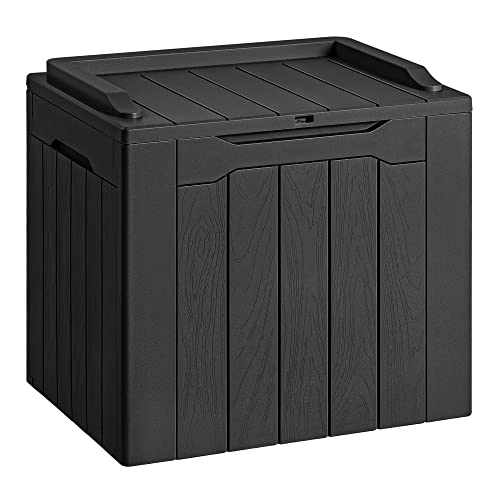
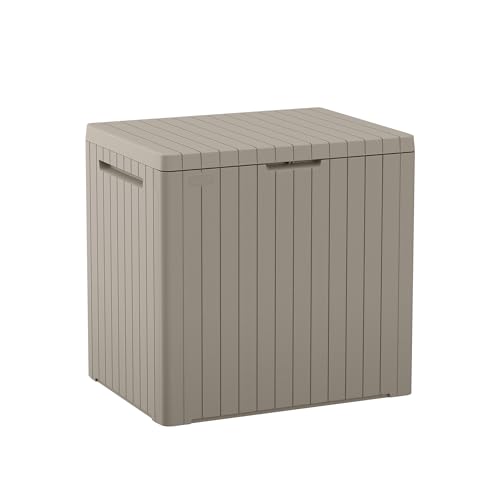
A small deck box is a compact outdoor storage container designed to sit on a deck, patio, balcony, or porch without dominating the floor plan. Unlike full-size storage benches that stretch across an entire wall, compact deck boxes typically occupy a footprint of roughly two to four square feet and are built to hold the items you use most often: seat cushions, throw blankets, grill tools, pool toys, gardening gloves, and small outdoor games.
The category is defined less by a strict measurement and more by role. A small deck box is the storage piece you can tuck beside a railing, slide under a window, or place at the end of a seating arrangement. It solves the everyday problem of where to put things when the patio is not large enough for a shed or a full outdoor storage cabinet. If your space is genuinely tight, pair this guide with our broader overview of small patio planning to keep the layout coherent.
Most buyers arrive here after realizing that leaving cushions outside overnight shortens their lifespan. A compact box gives those cushions a dedicated home, keeps them dry, and doubles as a surface or seat when needed. That dual purpose is why the category has grown well beyond simple plastic tubs.
Capacity and Sizing: Match the Box to What You Store
Capacity is usually expressed in gallons, and the small deck box segment generally spans from about 30 gallons up to roughly 75 gallons. The number matters less than what actually fits inside. Internal height, lid clearance, and the shape of the opening determine whether a cushion slides in easily or has to be forced.
Typical capacity bands
- 30 to 40 gallons: Best for a couple of seat cushions, small tools, and gloves. This is the entry-level size for balconies and tight corners.
- 50 to 60 gallons: The balanced tier for most households. Fits two to four seat cushions plus a folded throw or a small grill accessory bag.
- 65 to 75 gallons: The upper end of compact. Handles full back cushions, pool towels, and a modest collection of outdoor toys while still fitting along a railing.
Measure twice before ordering. Record the available width, depth, and height of your intended spot, then subtract a couple of inches of clearance so the lid can open fully. A box that fits the floor but cannot open its lid is a common and frustrating mistake. Also check the interior dimensions rather than the exterior, because wall thickness on premium models can reduce usable space noticeably.
If your storage needs lean toward organization rather than cushion protection, our guide to a small outdoor storage box covers open-bin and tote-style options that prioritize access over seating.
Materials: Resin, Wood, Metal, and Fabric
Material determines weather resistance, weight, maintenance, and how the box looks on your deck. Each option occupies a different position in the market, and the right choice depends on your climate and how much upkeep you are willing to accept.
Resin and high-density polyethylene
Resin is the default material for outdoor storage because it does not rot, splinter, or absorb water. Entry-level resin boxes are molded in a single piece and handle rain and sun without complaint. Mid-range and high-end tier resin models add reinforced lids, textured finishes that mimic wood grain, and rubber gaskets that improve sealing. Resin is the most forgiving choice for wet climates and the easiest to wipe clean. Its main trade-off is appearance: even well-finished resin reads as plastic up close.
Wood and wood-composite
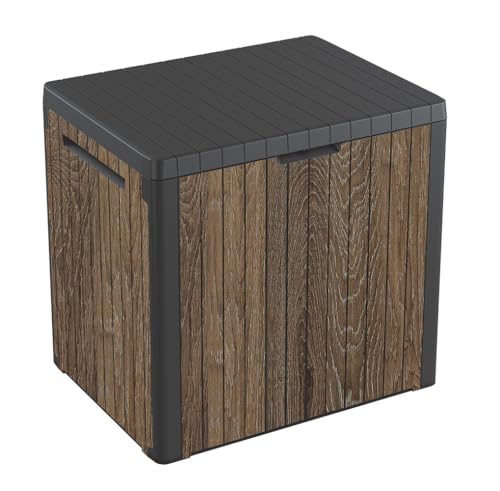
Wood deck boxes blend into natural decking and can be stained to match. Solid wood requires periodic sealing to resist moisture and UV damage, while wood-composite blends reduce maintenance and resist rot better than untreated timber. These models sit in the mid-range to premium tiers and appeal to buyers who treat outdoor furniture as part of the design. Expect more weight and a higher long-term maintenance commitment than resin.
Metal
Powder-coated steel and aluminum boxes offer a clean, modern look and strong structural rigidity. The critical specification is the coating: a rust-proof finish with a warranty against corrosion is essential for coastal or humid environments. Metal boxes are typically mid-range to high-end tier and can be heavy, which is good for stability but awkward if you plan to move the box frequently.
Fabric and soft-sided containers
Soft-sided deck boxes use heavy-duty, water-resistant fabric over a frame. They are lightweight, fold flat when empty, and suit renters or seasonal setups. They belong to the entry-level and essential tiers and are best for storing lightweight items rather than heavy cushions. They will not match the weather resistance of rigid materials over multiple seasons.
| Material | Market Tier | Best For | Weather Resistance | Maintenance |
|---|---|---|---|---|
| Molded resin / HDPE | Entry to high-end | Wet climates, cushion storage, low upkeep | Excellent | Wipe clean |
| Solid wood | Mid-range to premium | Natural deck aesthetics, design-led spaces | Good with sealing | Annual seal |
| Wood-composite | Premium | Wood look with reduced upkeep | Very good | Occasional wash |
| Powder-coated metal | Mid-range to high-end | Modern decks, secure storage | Good if coated | Inspect for chips |
| Soft-sided fabric | Essential | Renters, seasonal use, lightweight items | Moderate | Air dry, store indoors |
Weatherproofing: What Actually Keeps Contents Dry
Every manufacturer claims weather resistance, but the details that matter are the lid design, the seal, and the floor of the box. A lid with an overlapping lip and a drip edge sheds water away from the opening. Rubber or foam gaskets close the gap further. An elevated interior floor keeps stored items above any moisture that condenses or seeps in.
Placement matters as much as construction. Set the box on level ground so water does not pool against one side, and avoid spots where roof runoff or sprinklers hit directly. If your deck collects standing water after storms, a small riser or leveling feet will extend the life of any box, especially wood and metal models. For a deeper seasonal routine, our weatherproofing guide covers covers, sealants, and off-season storage.
Sealing features worth confirming before purchase
Look for an overlapping lid lip, a continuous gasket or weather strip, a water-shedding top profile, and an interior floor raised above the base. Hinged lids with soft-close hardware reduce wear and are safer around children. If the product listing does not state these features, assume they are absent and plan accordingly.
Seating Capability and Structural Build
Many small deck boxes are rated as seats, which turns dead storage into usable entertaining space. Weight capacity varies widely by build. Entry-level resin boxes may support a single adult, while reinforced mid-range and premium models handle two adults comfortably. Always check the stated capacity rather than assuming, and look for a flat, uninterrupted lid surface rather than a domed or ribbed top.
If seating is a priority, treat the deck box as furniture and inspect the hardware. Soft-close hinges prevent the lid from slamming, and gas struts hold it open while you load cushions. Stainless-steel or coated fasteners resist corrosion. These details separate a box that lasts a decade from one that loosens after two seasons. Our overview of a storage bench with cushion explains how seating-first designs differ from pure storage containers.
Placement Ideas for Decks, Balconies, and Porches
Where the box lives shapes which size and material make sense. On a narrow balcony, a slim vertical box preserves walking space and can sit against the railing. On a larger deck, a horizontal box at the end of a seating group doubles as a side surface. On a covered porch, a wood or metal box reads as part of the furniture rather than a utility item.
- Balcony corner: Choose a compact vertical model and confirm the lid opens away from the railing.
- End of a sofa: A low horizontal box acts as a side table and cushion store in one footprint.
- Beside the grill: Keep tools and fuel accessories in a metal or resin box rated for outdoor exposure.
- Under a window: A mid-height box blocks less light and provides a ledge for small planters.
- Poolside: Resin is the safest choice for wet zones; avoid untreated wood near splash areas.
For balconies specifically, our guide to small balcony furniture sets shows how storage pieces fit into a coordinated layout without crowding the floor. If you are still mapping out the whole space, the small space patio furniture overview is a useful companion.
A Practical Buying Checklist
Before you add a compact deck box to your cart
- Measure the footprint and the clearance needed for the lid to open fully.
- Confirm interior dimensions against your largest cushion or item.
- Check the material against your climate: resin for wet, wood for design, metal for security.
- Verify sealing features: overlapping lid, gasket, raised interior floor.
- Decide whether seating matters and confirm the stated weight capacity.
- Look for soft-close hinges and corrosion-resistant hardware.
- Check whether assembly is required and whether tools are included.
- Read the warranty terms for the lid and the body separately.
Understanding Market Tiers Without the Guesswork
Compact deck boxes cluster into recognizable tiers. Entry-level models are single-wall resin or soft-sided fabric, adequate for lightweight items and fair-weather use. Mid-range models add thicker walls, gaskets, and seating-rated lids. High-end tier boxes use premium materials, reinforced frames, and sealed construction built to last many seasons. Luxury and professional-grade options exist for commercial patios and design-led installations.
Comparing within a tier is more useful than comparing across tiers. A mid-range resin box usually offers smoother hinges and better sealing than an entry-level model, while a premium wood box trades weather simplicity for appearance. If you want a coordinated storage and seating setup, browse the waterproof storage cabinet options alongside compact deck boxes to see which format fits your routine.
Frequently Asked Questions
Measure your largest cushion when folded or stacked. A compact box of roughly 30 to 50 gallons suits two to four standard seat cushions. For full back cushions, choose a mid-range or high-end tier model with at least 60 gallons and confirm the internal height before ordering.
Yes. Resin resists moisture, UV fading, and rot, which makes it the most forgiving material for wet climates. Entry-level resin handles rain and sun well, while premium resin adds reinforced lids and sealed gaskets for stronger protection.
Many can. Look for a reinforced lid, a flat top surface, and a stated weight capacity. Models with hinged lids and soft-close hardware are safer for households with children. Always follow the manufacturer's seating limit rather than assuming.
Place the box on level ground or a slight slope, keep it off standing water with a small riser, and confirm the lid has a drip edge or overlapping lip. Mid-range and high-end tier boxes often include rubber gaskets and elevated floors that keep stored items above any pooled moisture.
Ready to Compare Compact Deck Boxes?
Use the curated product picks below to compare features, materials, and capacity side by side, then choose the tier that fits your deck and your storage routine.