
Small Dining Table with Bench on One Side: The Space-Saving Solution
Looking for a dining setup that seats more people without swallowing your floor plan? A small dining table with a bench on one side delivers comfort, versatility, and a clean, uncluttered look. Here is everything you need to choose the right one with confidence.
Explore the Buying GuideA small dining table with a bench on one side is one of the smartest furniture choices for compact kitchens, breakfast nooks, apartments, and multi-use rooms. Instead of four individual chairs competing for space, the bench hugs the table edge, slides fully underneath, and visually opens up the room. On the opposite side, chairs keep the setup flexible and comfortable for everyday meals.
If you are in the research phase, you probably already know you want this configuration. What you likely still need is clarity on dimensions, materials, bench types, and the practical trade-offs. This guide walks through all of it so you can choose a table that fits your room, your routine, and your style. For a related layout comparison, you can also explore a small dining table with bench and chairs before deciding.
Why Choose a Small Dining Table with Bench on One Side?
The bench-and-chair pairing is popular for good reason. It solves several common problems at once:
- Seats more in less space: A bench can comfortably seat two adults, sometimes three children, along one edge — often more than a pair of chairs would allow within the same footprint.
- Tucks away cleanly: When the bench is pushed in, the setup looks tidy and leaves more walking room, which matters in narrow kitchens and open-plan spaces.
- Encourages togetherness: Bench seating feels relaxed and social, ideal for family meals, casual breakfasts, and conversation.
- Visually lighter: A single bench replaces multiple chair legs and backs, reducing visual clutter in a compact room.
- Flexible guest seating: The chairs on the open side can be pulled away, repositioned, or swapped for extra seating when guests arrive.
The trade-off is mainly access: a bench against a wall means everyone on that side slides in rather than pulling out a chair. For daily family meals this is rarely an issue, but it is worth considering if you frequently seat guests with mobility limitations.
Quick Takeaways
- Choose a bench length of roughly 40–50 inches to seat two adults comfortably.
- Leave at least 30 inches of clearance around the table for chairs to pull out.
- A bench with storage solves the small-room clutter problem elegantly.
- Solid wood and metal frames sit in the higher durability tiers; composite and laminate in the essential tier.
- Measure the room first, then the table — not the other way around.
Key Buying Factors for a Bench-and-Table Set
1. Seating Capacity and Bench Length
A standard bench seats two adults when it measures about 40–50 inches. If you want three seats on the bench, look for a length closer to 55–60 inches and ensure the tabletop is long enough to give everyone elbow room. Most small dining tables with a bench on one side are designed for three to four people total: two on the bench, one or two chairs opposite.
2. Table Height Compatibility
Benches and tables must match in height. A dining-height table of roughly 30 inches pairs with a bench seat height of about 17–18 inches. If you choose a counter-height table, you need a counter-height bench, not a standard one. Mixing heights is the most common mistake buyers make, so confirm the pair is sold together or that the measurements match.
3. Footprint and Clearance
Small tables usually run from around 30 inches square up to 48 inches rectangular. Beyond the table itself, you need clearance for chairs on the open side — about 30 inches from the table edge to the wall or nearest furniture. The bench side can sit closer, sometimes as little as 4–6 inches from the wall if the bench is stationary.
4. Bench Type: Stationary, Pull-Out, or Built-In
Stationary benches are the simplest and most common. Pull-out or storage benches add function but require slightly more depth. Built-in banquettes are fixed and best for dedicated breakfast nooks. Your room layout should drive this choice more than aesthetics.
5. Frame and Top Durability
Look at how the table and bench are joined. Reinforced corner brackets, solid legs, and a sturdy apron signal a better build. For the bench, a solid seat panel or closely spaced slats prevent sagging over time. Heavy-duty construction matters more on benches than chairs because the load is spread across a wider span.
Table Shapes and Layout Options
The right table shape depends on your room geometry and how you want the bench to sit. Here are the most common configurations for a compact bench-and-table setup.
Rectangular Table, Bench on Long Side
The classic configuration. The bench runs along one long edge against a wall, with chairs opposite. Maximizes seating and keeps the walking path clear.
Most space-efficientRectangular Table, Bench on Short Side
Unusual but useful in narrow galley kitchens. The bench tucks against a short wall, with chairs along both long sides. Best for two to three diners.
Best for galley kitchensSquare Table with Bench
Square tables suit corner nooks and small breakfast areas. A bench on one side and two chairs on the adjacent sides creates a cozy, conversational arrangement.
Best for corner nooksRound Table with Curved Bench
Curved benches follow the table edge for a softer look. They work well in bay windows and open corners but are less space-efficient than straight benches.
Best for bay windowsIf you want to explore a related configuration, a small rectangular kitchen table with bench offers the same space-saving logic with a slightly different seating ratio. For corner-friendly alternatives, a small round drop-leaf table with two chairs can complement a bench setup when the bench is against a flat wall.
Bench Types and Storage Features
The bench is the defining element of this setup, and the type you choose affects both comfort and practicality. Consider these options:
Standard Wooden Bench
The most common and versatile choice. A solid wood or wood-composite bench with a flat seat and simple legs is durable, easy to clean, and blends with almost any decor. Add a cushion for longer meals. This is the essential-tier option for most buyers.
Upholstered Bench
An upholstered or padded bench is more comfortable for lingering meals and doubles as extra seating elsewhere in the home. Look for removable, washable covers if the bench will host children. These sit in the mid-tier to high-end tier depending on the fabric and frame quality.
Storage Bench
A storage bench with a lift-up seat or pull-out drawers hides napkins, placemats, board games, or seasonal items. This is a smart choice for small rooms where every inch counts. A small dining room table with bench and chairs paired with a storage bench creates a fully self-contained dining zone. For entryway-adjacent dining areas, a shoe bench with cushion and storage can serve double duty if the layout allows.
Pull-Out or Extendable Bench
Some benches slide out or extend to accommodate extra diners. These are more complex mechanically and sit in the premium tier, but they are excellent for households that host guests occasionally. Check that the extension mechanism is smooth and reinforced.
Backless vs. Backed Bench
Backless benches tuck completely under the table and preserve sightlines. Backed benches are more comfortable for long meals but add visual weight. In a small room, backless is usually the safer choice unless the bench sits against a wall where a back adds comfort without blocking the view.
Materials and Durability Tiers
Material choice determines how the set ages, how much maintenance it needs, and where it sits in the market. Here is a clear comparison of the main options.
| Material | Tier | Best For | Maintenance |
|---|---|---|---|
| Solid hardwood (oak, maple, rubberwood) | Mid-tier to high-end tier | Long-term daily use, family homes | Occasional oiling or sealing; wipe clean |
| Engineered wood with veneer | Essential tier to mid-tier | Apartments, light daily use, renters | Dust regularly; avoid excess moisture |
| Metal frame with wood or composite top | Essential tier to mid-tier | Modern industrial looks, busy households | Wipe frame; check joints periodically |
| Laminate or composite | Entry-level | Starter homes, occasional dining | Wipe clean; avoid standing water |
| Upholstered bench with hardwood frame | High-end tier to premium | Comfort-focused dining nooks | Vacuum fabric; spot clean covers |
In practice, a solid hardwood table with a matching bench is the most durable combination for everyday family use. Engineered wood offers a good balance for lighter use and smaller spaces. If the bench will be used as occasional extra seating, the frame build quality matters more than the surface material. For a broader look at related compact options, you can review a small dining table with bench and two chairs to see how material and seating choices change across configurations.
Measuring Your Space Before You Buy
Getting the measurements right is the single most important step. Follow this sequence:
- Measure the room's usable dining zone. Note doors, radiators, and walkways. Dining areas should keep at least 36 inches of clear path for traffic.
- Decide where the bench will sit. Against a wall, in a corner, or floating? A wall-backed bench needs only a few inches behind it; a floating bench needs full chair-style clearance.
- Measure the table footprint. Add 30 inches on the chair side for pull-out clearance and 6 inches on the bench side if it sits against a wall.
- Check ceiling and window height. If the bench has a back, ensure it does not block a low window or radiator.
- Confirm the bench height matches the table. Seat height should be roughly 10–12 inches below the tabletop.
If your space is exceptionally tight, a small dining table for four with bench is a proven compact layout that keeps four seats without a sprawling footprint. For alternate seating ratios, a small kitchen table with bench and two chairs works well in very narrow rooms.
Related Reading for Small Dining Spaces
Once you have settled on a bench-and-table configuration, these related guides can help you complete the room:
- Small dining table with bench on one side — the full configuration overview.
- Small dining table with bench and chairs — seating ratio and layout comparisons.
- Small farmhouse table with bench and chairs — rustic style pairing.
- Small kitchen table with chairs and bench — kitchen-focused layouts.
- Small balcony furniture sets — if your dining zone opens to an outdoor space.
- Small outdoor bench — coordinating outdoor seating ideas.
Frequently Asked Questions
How many people can sit at a small dining table with a bench on one side?
Most compact sets seat three to four people: two on the bench and one or two chairs on the opposite side. A bench of about 40–50 inches comfortably seats two adults. If you need four seats on a small footprint, choose a rectangular table around 48 inches long with a bench on the long side and two chairs opposite.
What is the ideal bench length for a small dining table?
For two adults, aim for a bench length of 40–50 inches. For three seats, 55–60 inches is better. The bench should be slightly shorter than or equal to the table length on the side it sits against, so people can slide in and out without bumping the table legs.
Should the bench go against a wall or float in the room?
In most small rooms, the bench works best against a wall or in a corner because it saves floor space and keeps the walking path clear. Floating the bench is possible but requires full chair-style clearance on both sides, which defeats the space-saving purpose unless the room is larger.
Is a storage bench a good idea for a small dining area?
Yes, a storage bench is one of the most practical choices for a compact dining area. It hides napkins, placemats, and small tableware, reducing the need for a separate sideboard or cabinet. Just confirm the lift-up mechanism is reinforced and the seat remains comfortable when closed.
How much clearance do I need around the table?
Allow about 30 inches of clearance on the chair side so chairs can pull out comfortably. On the bench side, if the bench is against a wall, 4–6 inches is usually enough. Keep at least 36 inches of clear walkway elsewhere in the room for comfortable traffic flow.
Can I use a bench with a round dining table?
Yes, but a straight bench on a round table can leave awkward gaps at the corners. Curved benches are designed specifically for round tables and follow the edge more closely. For very small round tables, a pair of chairs is often more practical than a bench.
What is the best material for a small dining table and bench?
Solid hardwood offers the best durability for daily family use and sits in the mid-tier to high-end tier. Engineered wood with veneer is a solid choice for lighter use and apartments. Metal frames with wood or composite tops are a practical mid-tier option for busy households that want a modern look with less maintenance.
Recommended Small Dining Tables with Bench on One Side
⚠️ AFFILIATE DISCLOSURE: This website contains affiliate links. As an Amazon Associate, we earn from qualifying purchases. If you make a purchase through these links, we may receive a small commission at no additional cost to you. Read our full affiliate policy.

COSTWAY Dining Table Set for 4 w/Bench & 2 Chairs, Storage Racks, Brown | 4-Piece Kitchen Table Set, Metal Frame, Anti-Slip Foot Pads, Industrial Dinette Set for Small Space, Apartment, Home Office
Check price on Amazon
Homiflex Lift Top Coffee Table with Large Storage Bench, 40"W White Brown | 4-in-1 Convert Gaming/Reading/Dining Table, Multi-Function Coffe Tables with Hidden Compartment & Open Shelf, for Living Room
Check price on Amazon
HUAHUU 63" Farmhouse Dining Table Set for 4-6, Kitchen Table with 2 Benches, Space Saving 3-Piece Rectangle Wooden Dinette Table Set for Dining Room, Breakfast Nook, Small Space, Brown & White
Check price on Amazon
OUTLANE 71 Inch Farmhouse Dining Table for 6-8, Rectangular Table, Walnut | Two convenient side drawers keep dining essentials close at hand for family dinners, weekend gatherings, and busy kitchens.
Check price on Amazon
Kitchen Breakfast Nook Table Set - Corner Dining Table Set with Cushion | 100% Solid Pine Wood, Dining Table Set with L-Shaped Bench, Space Saving for Kitchen Dining Room, Soft Cushion, Jet Black
Check price on Amazon
LUXOAK 3-Piece Wood Corner Dining Table Set for 4, White & Barnwood | Breakfast Nook, L-Shaped Corner Bench, Hidden Storage, Space-Saving Design for Small Spaces, Farmhouse Kitchen & Dining
Check price on Amazon
Breakfast Nook Dining Table Set for 4-6, Corner Bench with Storage Shelves | Space-saving kitchen nook set, L-shaped corner bench and separate bench create flexible seating for daily meals and guests
Check price on Amazon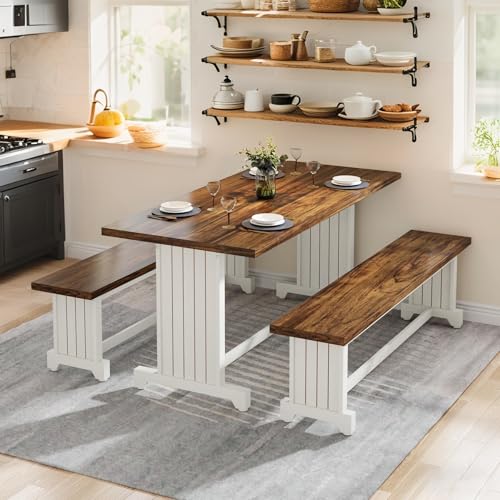
Tribesigns 47-Inch Small Dining Table Set for 2, 3-Piece Kitchen Table with 2 Benches, Farmhouse Wood Dinner Furniture for Narrow Space, Apartment, White & Rustic Brown
Check price on AmazonDisclaimer
The information provided on PatioFocus is for educational and informational purposes only. We are not professional landscapers or contractors, and our content should not replace professional advice. Always consult with a qualified expert regarding structural, safety, or weather-related concerns. Some content may use AI assistance. Always check product warranties and safety standards before purchasing. If you do not agree, please do not use this website. Read the full disclaimer.