Waterproof Storage Containers Outdoor: The Complete Buying Guide
Protect patio cushions, pool gear, and seasonal essentials from rain, humidity, and UV exposure. This guide explains how outdoor storage containers are built, which materials genuinely resist water, and how to match the right format to your space.
Explore Recommended OptionsWhy this guide matters: Most outdoor storage failures are not caused by heavy downpours. They are caused by condensation, poor lid seals, and designs that trap water against the contents. Understanding how a container manages moisture is more important than any single marketing claim on the box.
What "Waterproof" Actually Means Outdoors
The word waterproof gets applied loosely in outdoor furniture listings. In practice, a container needs to handle three distinct threats: rain falling directly on the lid, water pooling around the base, and humidity that builds inside as temperatures swing between day and night. A container that shrugs off rain but seals humid air inside can still leave cushions damp and musty after a week.
Genuinely watertight outdoor storage typically combines an overlapping or gasketed lid, a raised internal floor, and a latch system that compresses the lid against the rim. Resin and high-grade plastic bodies are inherently non-absorbent, while powder-coated steel relies on the integrity of its coating. If you are also evaluating fabric pieces that live near storage, our overview of waterproof patio furniture explains how similar material logic applies to seating.
The Main Types of Outdoor Storage Containers
Outdoor storage is not one product category. Each format solves a different problem, and choosing the wrong one often leads to frustration even when the build quality is excellent.
Deck Boxes
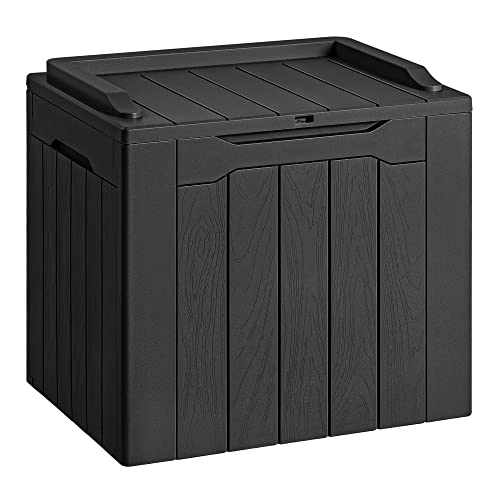
The classic rectangular chest that sits beside a patio sofa. Deck boxes are the most common choice for cushion storage because they offer a wide opening and generous internal volume. Entry-level models are usually single-wall resin; mid-range and premium versions add double-wall construction, gas struts, and deeper lid overlaps. A well-specified unit such as a 150-gallon waterproof outdoor storage box can hold several seat cushions plus folded throws.
Storage Benches
A bench with a hinged lid solves two needs at once, which makes it popular on compact balconies and small decks. The trade-off is that the seating surface constrains how large the internal cavity can be. If seating is a priority and you only need to stow a few cushions, a waterproof outdoor storage bench is an efficient choice. If volume matters more, a dedicated box will always win.
Cabinets and Vertical Units
Cabinets use vertical space and keep items on shelves rather than in a single pile. They suit pool chemicals, grilling tools, and smaller accessories that would get lost in a chest. A waterproof outdoor storage cabinet with shelves is particularly useful near an outdoor kitchen where organization matters as much as weather protection.
Bins and Smaller Containers
Lidded bins work well for small items, pet supplies, or toys that need to be scooped up quickly. They are portable and stackable, but most bins rely on simple lid overlaps rather than true gaskets, so they are better suited to sheltered spots. For a deeper comparison of this format, see our guide to weatherproof storage bins.
Materials Compared: Resin, Metal, and Wood
Material choice drives durability, maintenance, and how well the container holds a seal over several seasons. The table below compares the three families most commonly found in outdoor storage.
| Material | Moisture Behavior | Maintenance | Best For |
|---|---|---|---|
| High-grade resin / polypropylene | Non-absorbent; will not rot or rust; seals depend on lid design | Wipe down; check gaskets annually | Year-round outdoor use, humid climates, poolside |
| Powder-coated steel / aluminum | Water-resistant while coating is intact; chips expose metal | Touch up scratches; inspect hinges | Decks where appearance matters; covered porches |
| Teak and sealed hardwood | Naturally water-repellent but needs re-sealing over time | Annual sealant application | Rustic and coastal styles; sheltered patios |
Matching the Container to What You Store
The contents dictate the format far more than the other way around. Cushions are bulky but light and need breathable protection. Tools and chemicals are compact but demand secure, lockable storage. Pool accessories are wet when they go in, which changes the moisture equation entirely.
Cushions and Soft Furnishings
Cushions are the single most common reason people buy outdoor storage. They need a container wide enough to lay flat rather than compress, and one that manages condensation. A purpose-built waterproof outdoor storage box for patio cushions typically includes ventilation channels and a raised floor. If you rotate cushion sets seasonally, also review how to store and refresh them in our guide to waterproof replacement cushions for patio furniture.
Tools, Grilling Gear, and Chemicals
These items benefit from lockable lids and shelving. A waterproof outdoor storage box with lock keeps curious hands away from sharp tools, while cabinet formats keep bottles upright and separated. Never store pool chemicals and food-adjacent items in the same container, regardless of how well sealed it is.
Pool and Beach Gear
Wet gear should go into a container that drains rather than one that seals. If you must use a sealed box, wring items out first and leave the lid ajar for an hour after a swim day. A mobile unit like a waterproof outdoor storage box with wheels makes it easier to move damp gear into the sun to dry.
Features That Separate Tiers
Because outdoor storage spans a wide quality range, tier descriptors are more useful than any single spec. Here is how the market typically breaks down.
Starter Tier
Single-wall resin, simple overlapping lid, no gasket. Adequate for sheltered patios and light use. Expect to bring these inside or cover them during extreme weather, and check the lid alignment each season.
Balanced Tier
Double-wall construction, gasketed lid, reinforced base, and often gas struts. This is where most buyers find the best balance of durability and long-term weather resistance. Seals hold up well across seasons with minimal attention.
Top-Tier
Heavy-duty molded resin or marine-grade construction, multi-point latches, UV-stabilized panels, and integrated ventilation. Designed for full-year exposure and frequent opening. These are a long-term investment for households that use their patio daily.
Across all tiers, the practical differentiators are the lid gasket, the raised internal floor, and the quality of the hinge hardware. A mid-range box with a well-designed gasket will keep contents drier than a top-tier box that has been left misaligned.
Where to Place an Outdoor Storage Container
Placement has a bigger effect on performance than most buyers expect. A container in direct, all-day sun will experience more internal temperature swings and therefore more condensation. A spot under an eave or against a shaded wall reduces that cycle dramatically.
- Elevate the base: Set the container on pavers or a small plinth so water cannot pool against the bottom.
- Keep a gap from walls: A few inches of airflow behind the unit prevents trapped moisture and mold growth.
- Avoid low spots: Deck boards settle, and the lowest point is where water collects after rain.
- Face the lid away from prevailing wind: Driving rain finds lid seams first.
If your patio also holds fabric furniture, the same placement logic applies to covers and cushions. Our weatherproofing guide covers the broader protection strategy for an entire outdoor living space.
Maintenance That Extends Service Life
Waterproof containers are low-maintenance, not no-maintenance. A short seasonal routine keeps seals effective for years.
- Rinse the interior at the start of each season and let it dry fully in the sun before loading.
- Inspect the lid gasket for cracks or compression; replace it if it no longer springs back.
- Lubricate hinges and latches with a silicone-safe product, not petroleum grease.
- Clear debris from ventilation channels and drainage slots.
- Check that the lid still sits flush after a season of use and adjust latches if needed.
Common Mistakes to Avoid
Most storage problems trace back to a handful of avoidable habits. Storing cushions while they are still damp is the most frequent culprit, because the container then traps moisture against the fabric for weeks. Overfilling is the second: a lid that cannot close fully has no chance of sealing. Finally, many buyers choose a container by exterior footprint alone and then discover the internal dimensions are too shallow for their thickest cushion.
Frequently Asked Questions
What makes an outdoor storage container truly waterproof?
A genuinely waterproof outdoor container combines sealed seams, overlapping lids with gaskets, and moisture-resistant materials such as high-grade resin or powder-coated metal. Look for raised floors that keep contents off wet surfaces and latch systems that compress the lid seal.
Can waterproof storage boxes stay outside all year?
Many mid-range and premium resin deck boxes are designed for year-round outdoor exposure, including freezing temperatures and UV sunlight. Entry-level units often need a sheltered spot or an additional cover during harsh winters to maintain their seal integrity.
How do I stop condensation inside a sealed outdoor storage box?
Condensation forms when warm, humid air is trapped and then cools. Use a container with ventilation channels or add a rechargeable desiccant pack. Storing cushions fully dry and avoiding overfilling the box also reduces trapped moisture.
Should I choose a storage bench or a deck box?
A storage bench doubles as seating and suits smaller patios where every piece must multitask. A dedicated deck box or cabinet typically offers a larger internal volume and a more robust lid seal, making it a better fit for bulky cushions and long-term protection.
Are lockable outdoor storage containers worth considering?
Lockable models add a deterrent against casual tampering and keep children out of chemical or tool storage. They are especially useful on open decks and shared courtyards where items are visible to passersby.
Final Considerations Before You Choose
Start with the contents, then work outward. Measure the largest item you plan to store, decide whether the container will sit in full sun or under cover, and pick a material that suits that exposure. From there, the tier decision becomes straightforward: entry-level for light, sheltered use; mid-range for daily outdoor life; premium for year-round exposure and heavy opening.
Whichever format you choose, the principles are consistent. A raised floor, a gasketed lid, and a base that stays clear of standing water will outperform a fancier container that is poorly placed. Get those basics right and your outdoor storage will keep cushions, tools, and gear dry through every season.