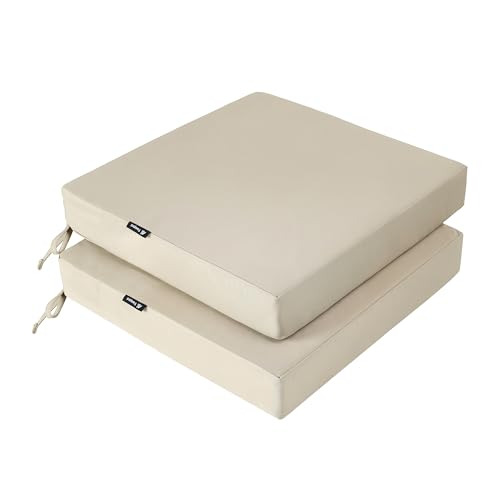
20 x 20 x 3 Outdoor Chair Cushions: The Complete Buying Guide
Everything you need to know about square 20 x 20 x 3 patio chair cushions — fit, foam density, fabric performance, and how to match the right cushion tier to your outdoor chairs.
Start the GuideWhy this size matters: 20 x 20 x 3 inches is one of the most common square cushion dimensions for patio dining chairs, wicker armchairs, and outdoor lounge seats. Getting the fit right — width, depth, thickness, and corner radius — is the difference between a cushion that stays put and one that slides, bunches, or overhangs.
What Does 20 x 20 x 3 Mean for an Outdoor Chair Cushion?
The measurements describe three dimensions: 20 inches wide, 20 inches deep, and 3 inches thick. This is a square seat cushion format — not a back cushion — and it is one of the most widely produced sizes in the outdoor cushion category.
A 20-inch square seat is common on standard patio dining chairs, resin wicker armchairs, and many aluminum frame chairs with sling or strap seats. The 3-inch thickness is a deliberate middle ground: thick enough to feel supportive for longer sitting sessions, thin enough to keep the chair silhouette clean and to avoid crowding the chair back.
Which chairs typically fit this cushion size
- Standard patio dining chairs with square or near-square seats
- Resin wicker and rattan armchairs where the seat pan is roughly 20 inches across
- Metal frame chairs with sling seats that use a square pad
- Rocking chairs and gliders with flat, square seat pans
- Folding outdoor chairs with a boxy seat profile
If your chair seat is contoured, curved, or has a tapered back, a rigid square cushion may not sit flush. In that case, look at 21 x 21 outdoor seat and back cushion sets that include a shaped back panel, or consider 22 x 22 outdoor wicker chair cushions if your chair runs slightly larger.
How to Measure Your Chair Before Buying
Do not rely on the chair's product listing alone. A few minutes with a tape measure prevents the most common cushion return reason: a pad that is a half-inch too wide or too deep.
Measurement checklist
- Measure the seat width edge to edge at the widest point.
- Measure the seat depth from the front edge to where the backrest begins.
- Check the thickness of your existing cushion to confirm the visual clearance under the chair back.
- Note any corner radius — rounded seat corners need rounded cushions.
- Confirm the chair back angle; a deep recline can compress a thick cushion into an awkward wedge.
- For a snug fit, allow about 0.5 inch of clearance on each side.
If your measurement lands between sizes, size down rather than up. A slightly smaller cushion sits neatly inside the seat frame, while an oversized one creases at the back and pushes against the armrests. For chairs with a sloped back, a 22-inch U-shaped wicker chair cushion can wrap the back corner more cleanly than a flat square pad.
Why 3 Inches Is a Balanced Thickness
Cushion thickness is the single biggest driver of comfort on a hard-seated patio chair, but thicker is not automatically better. A 3-inch cushion sits in the middle of the outdoor cushion thickness range and works well for both dining and casual lounging.
| Thickness Tier | Typical Use | Comfort Profile |
|---|---|---|
| Entry-level (1–2 inch) | Occasional dining, folding chairs | Minimal padding; primarily protects from hard metal or resin surfaces |
| Mid-range (3 inch) | Daily dining, wicker armchairs, general patio seating | Balanced support with enough loft for longer meals and conversation |
| High-end tier (4–5 inch) | Lounge chairs, deep seating, reading chairs | Plush, sink-in feel; best on frames with a low or open back |
| Top-tier (5+ inch with gusset) | Chaise lounges, oversized armchairs | Premium lounging comfort; needs a chair designed for the depth |
On a dining chair, a 3-inch cushion raises your seated height by roughly three inches. That is usually comfortable at a standard dining table, but it is worth checking the relationship between the seat height and the table apron. If your chair is already tall, a thinner 20 x 20 x 3 outdoor chair cushion remains the better pick than a deeper pad.
If you are outfitting a full seating group, matching the cushion thickness across chairs keeps the visual rhythm consistent. A 3-piece cushion set for outdoor furniture is a practical way to keep the foam density and fabric identical across a dining set.
Foam Density, Fill Types, and What Lasts
The cover gets the attention, but the foam determines whether a cushion still feels supportive after a season of use. Outdoor cushions generally use one of four fill approaches.
Polyurethane foam
The most common fill. Standard open-cell foam is soft but compresses over time; higher-density foam holds its loft longer and resists bottoming out. In the mid-range tier, look for foam described as high-density or high-resilience. Entry-level cushions often use a softer, lighter foam that feels comfortable at first but flattens faster.
Quick-dry foam
Engineered with an open cell structure that lets water drain through rather than soak in. This is the preferred fill for cushions that stay outdoors through rain and morning dew. It dries noticeably faster than standard foam and resists mildew better, though it is usually firmer to the touch.
Polyester fiberfill
Looser and softer, often used for back cushions or as a comfort layer over foam. On its own, fiberfill compresses quickly under body weight and is not a strong choice for a seat pad you use daily.
Gel-infused or memory foam blends
A premium option that adds conforming support. These cushions tend to be heavier and more expensive to produce, so they sit in the high-end tier. They suit loungers and deep seating more than dining chairs.
Whatever the fill, a removable cover with a zipper matters. It allows you to wash the fabric, inspect the foam, and replace the insert without discarding the whole cushion. Sets like the 3-piece cushion set for wicker furniture often combine zippered covers with a consistent foam spec across all three pieces.
Fabric Performance: What to Look For
Outdoor cushion fabric has to handle sun, rain, and repeated flexing. The construction matters more than the marketing name on the tag.
- Solution-dyed acrylic — color is set into the fiber rather than applied to the surface, which gives strong fade resistance and a soft hand. A top-tier choice for sunny patios.
- Solution-dyed polyester — durable, colorfast, and often more water-repellent than acrylic. A solid mid-range performer.
- Olefin — inherently water-resistant and quick-drying, common in entry-level and mid-tier cushions. Less soft than acrylic.
- Cotton blends — comfortable but prone to fading and mildew outdoors. Best avoided for cushions that live outside.
Look for a water-repellent finish and UV stabilization on the label. Neither makes a cushion fully waterproof, but together they slow saturation and color loss. Taped or bound seams and reinforced stress points at the corners add real durability, especially on cushions that get pulled on and off chairs regularly.
Fabric choice should also match your seating style. A neutral solution-dyed acrylic suits a modern patio layout, while textured olefin weaves read warmer in a rustic farmhouse patio setting.
Fit Details That Separate Good Cushions from Frustrating Ones
Two cushions can share the same 20 x 20 x 3 dimensions and still behave very differently on a chair. These construction details are worth checking.
Ties and attachment points
Corner ties, rear straps, or a skirt with elastic keep the cushion anchored in wind and prevent it from sliding forward when you sit down. On a 20-inch square seat, four corner ties are the minimum; a rear strap pair is better on chairs with an open back frame.
Piping and gussets
Piping along the edges adds structure and helps the cushion hold its shape. A gusseted side wall — a distinct vertical band between the top and bottom panels — gives a boxier, more tailored look and usually signals a firmer foam core.
Corner shape
Square cushions with sharp corners suit boxy metal and wood frames. Rounded corners suit wicker and curved armchairs. If your chair has rounded seat corners, a sharp-cornered cushion will crease and lift at the edges.
Cover removal
A hidden zipper along the back edge is the practical standard. Check that the zipper pull is covered or tucked so it does not scratch the chair frame or snag on clothing.
Care and Maintenance for Long-Term Performance
A well-chosen cushion still needs routine care to stay comfortable and presentable. The routine is short, but consistency matters.
Seasonal cushion care routine
- Brush off loose debris weekly and wipe spills promptly with mild soapy water.
- Remove covers and machine wash on a gentle cycle per the care label; air dry fully before replacing.
- Bring cushions indoors or into a storage box before heavy rain and at the end of the season.
- Store cushions dry and elevated — never seal damp foam in a bin.
- Rotate cushions between chairs to even out wear and sun exposure.
- Check seams and ties each season and repair small tears before they spread.
For a broader maintenance routine, the weatherproofing guide covers fabric treatments and frame care alongside cushion upkeep. If your cushions are part of a larger sectional, the 11-piece outdoor sectional replacement cushions guide explains how to keep replacement covers and inserts consistent across a set.
Choosing a Cushion Tier for Your Setup
Rather than comparing prices, compare construction. The tier system below describes relative market position and build quality.
| Tier | Best For | Typical Construction Signals |
|---|---|---|
| Entry-level | Occasional use, covered porches, seasonal setups | Standard open-cell foam, olefin or basic polyester cover, stitched edges, corner ties |
| Mid-range | Daily dining chairs, wicker armchairs, family patios | High-density or quick-dry foam, solution-dyed polyester, piped edges, removable zippered cover |
| Premium | Sun-exposed patios, long sitting sessions, design-led spaces | High-resilience foam, solution-dyed acrylic, gusseted sides, reinforced seams, full attachment system |
| Luxury / commercial-grade | Hospitality use, all-season outdoor rooms, deep lounge seating | Gel-infused or multi-layer foam, performance acrylic, replaceable inserts, commercial durability testing |
A mid-range cushion is the sensible default for most households: it offers good value for its tier and holds up to everyday dining and lounging. Step up to premium if the chairs sit in direct sun all day or if the cushions are part of a design statement. Entry-level cushions make sense for a covered porch or a seasonal secondary seating area where the pads come inside frequently.
If you are furnishing a small balcony or a compact dining nook, pair the cushions with appropriately scaled furniture — the small patio layout guide and the balcony decor guide both cover how cushion bulk affects a tight footprint.
Ready to Outfit Your Patio Chairs?
Browse our recommended 20 x 20 x 3 outdoor chair cushions below, selected for construction quality, fit, and weather performance.
View Recommended CushionsFrequently Asked Questions
What size chair do 20 x 20 x 3 outdoor chair cushions fit?
A 20 x 20 x 3 cushion is a square seat cushion measuring 20 inches wide, 20 inches deep, and 3 inches thick. It typically fits standard patio dining chairs, wicker armchairs, and many outdoor lounge chairs with similarly sized seats.
How thick should outdoor chair cushions be?
A 3-inch thickness is a balanced middle ground. It provides noticeably more comfort and support than thinner 1–2 inch pads while remaining easy to handle, store, and fit on standard chairs. Higher thickness tiers suit lounging, while 2-inch cushions suit occasional dining use.
Are 20 x 20 x 3 outdoor chair cushions weather-resistant?
Most quality outdoor cushions use solution-dyed acrylic or polyester fabrics with water-repellent finishes and quick-dry foam. While weather-resistant, they are not fully waterproof unless explicitly stated, so bringing them in during heavy rain or off-season storage extends their lifespan.
How do I measure my patio chair for a 20 x 20 cushion?
Measure the seat width and depth from edge to edge, then measure your existing cushion thickness if applicable. Allow a small margin so the cushion sits snugly without overhang. Check that the chair back does not interfere with the cushion depth.
Can I use 20 x 20 x 3 cushions on wicker chairs?
Yes, these cushions are commonly paired with wicker and rattan chairs, provided the seat is roughly square. For contoured wicker seats, confirm the cushion is flexible enough or look for models designed specifically for wicker furniture.