Acacia Wood Outdoor Furniture: The Complete Buying Guide
Everything you need to know about choosing, styling, and caring for acacia wood patio furniture — from durability and grain patterns to long-term maintenance.
START EXPLORINGWhy Acacia? Acacia wood has become one of the most sought-after materials in outdoor furniture. Its natural density, striking grain, and weather-resistant properties make it a compelling alternative to teak and other premium hardwoods — without compromising on style or structural integrity.
In This Guide
What Is Acacia Wood?
Acacia wood comes from the Acacia genus of trees and shrubs, which includes hundreds of species native to tropical and subtropical regions around the world. In outdoor furniture, the most common varieties are Acacia mangium and Acacia auriculiformis, both prized for their dense grain and natural resilience.
Unlike softwoods such as pine or cedar, acacia is a hardwood. Its tight grain structure gives it impressive resistance to moisture, insects, and general wear — qualities that are essential for furniture that lives outdoors year-round. The wood also features a rich, warm tone that ranges from honey-gold to deep walnut, with distinctive dark grain lines that give each piece a unique character.
Acacia is often compared to teak, another heavyweight in the outdoor furniture world. While teak has a long-established reputation, acacia offers many of the same benefits — density, natural oils, and weather resistance — at a different position in the market. For homeowners who want the look and feel of a premium hardwood without the flagship-tier positioning of teak, acacia is a strong contender.
Key Takeaway: Acacia is a dense, naturally weather-resistant hardwood with striking grain patterns. It performs well outdoors and is available across multiple quality tiers, making it accessible to a wide range of buyers.
Where Does Acacia Wood Come From?
Acacia trees are cultivated across Southeast Asia, Australia, Africa, and parts of the Americas. Plantation-grown acacia — particularly from Vietnam, Indonesia, and India — is increasingly common in the furniture industry because it grows quickly and can be harvested sustainably. When shopping, look for pieces that specify plantation-grown or responsibly sourced acacia; this indicates a more controlled supply chain and often correlates with better drying and milling practices.
If you are exploring other outdoor furniture materials, our guide to all-weather materials for outdoor furniture provides a broader comparison of wood, metal, resin, and wicker options.
Durability & Weather Resistance
Acacia wood's outdoor performance is one of its strongest selling points. The wood is naturally dense — often denser than oak — which means it resists dents, scratches, and moisture penetration better than many alternative materials. Its natural oils also help repel water, reducing the risk of warping and cracking in humid or rainy conditions.
That said, no natural wood is completely maintenance-free outdoors. Acacia furniture will weather over time, developing a silver-grey patina if left untreated. This is a natural process and does not indicate structural failure — many homeowners actually prefer the weathered look. If you want to preserve the original warm tone, regular oiling or sealing is recommended.
How Acacia Compares to Other Outdoor Woods
| Material | Durability | Weather Resistance | Maintenance Level | Best For |
|---|---|---|---|---|
| Acacia | High — dense hardwood | Very good — natural oils | Moderate — oil annually | Homeowners who want hardwood look with manageable care |
| Teak | Very high — flagship hardwood | Excellent — high natural oil content | Low to moderate | Premium installations, long-term investment |
| Cedar | Moderate — softer wood | Good — natural decay resistance | Moderate to high | Budget-conscious projects, rustic styles |
| Eucalyptus | High — dense grain | Good — requires sealing | Moderate | Mid-range outdoor sets |
| Pine (treated) | Low to moderate | Fair — depends on treatment | High | Entry-level, temporary setups |
As the table shows, acacia sits comfortably in the high-durability category. It is not quite at the flagship tier of teak in terms of natural oil content, but it outperforms cedar and treated pine by a significant margin. For most residential outdoor settings, acacia offers an excellent balance of performance and practicality.
If you are comparing wood furniture care routines more broadly, our wood furniture care guide covers sealing, cleaning, and seasonal maintenance for a range of hardwood types.
Popular Acacia Wood Furniture Styles
Acacia's warm tone and prominent grain make it a versatile material for a wide range of outdoor furniture styles. Whether your patio leans modern, rustic, or coastal, there is an acacia piece that fits.
Dining Sets
Acacia dining tables are among the most popular outdoor furniture pieces. The wood's density makes it well-suited for table tops that need to withstand daily use, and its natural variation means no two tables look exactly alike. Many acacia dining sets pair a solid wood table with matching chairs, creating a cohesive look. If you are specifically shopping for a dining table with an umbrella opening, our guide to the acacia wood outdoor dining table with umbrella hole covers sizing, stability, and shade integration in detail. For extendable options, the acacia wood extendable outdoor dining table guide explains how butterfly-leaf and drop-leaf mechanisms work in solid acacia.
Lounge Seating & Sofas
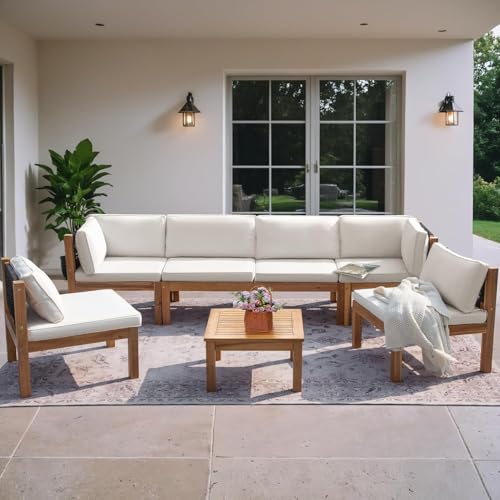
Acacia frames are frequently used for outdoor sofas and sectionals. The wood provides a sturdy, grounded base that pairs well with thick, weather-resistant cushions. Because acacia takes stain and finish well, it can be matched to a variety of cushion color palettes — from neutral beige and charcoal to bolder navy and olive tones.
Adirondack & Lounge Chairs
The classic Adirondack silhouette is a natural fit for acacia. The wood's density supports the wide armrests and reclined back that define the style, and the grain adds visual interest to what is otherwise a simple form. Acacia Adirondack chairs are a popular choice for fire pit surrounds and poolside seating areas. For a broader look at this category, see our Adirondack chairs hub.
Bistro & Small-Space Sets
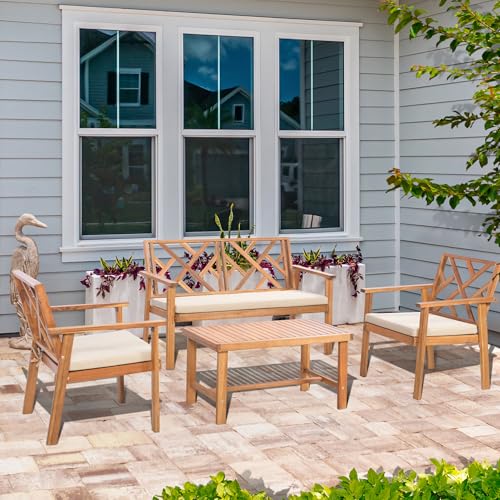
For balconies, small patios, and apartment outdoor areas, acacia bistro sets offer a compact footprint without sacrificing the warmth of natural wood. A two-seat acacia bistro set can transform a narrow balcony into a functional morning-coffee spot. Our balcony decor ideas guide includes several layouts built around compact wood furniture.
Style Tip: Acacia's warm, golden-brown tone pairs beautifully with sage green, terracotta, and charcoal accents. If you want a more modern look, consider acacia pieces with clean, straight lines and minimal ornamentation. For a rustic feel, look for live-edge or rough-hewn acacia designs.
Tier Guide: Entry-Level to Premium Acacia Furniture
Acacia furniture is available across a wide range of quality tiers. Understanding what distinguishes each tier will help you make a more informed decision — and avoid paying for features you do not need, or missing out on construction details that matter for longevity.
| Tier | Typical Construction | Finish Quality | Best For |
|---|---|---|---|
| Entry-Level | Thinner stock, basic joinery, sometimes mixed with other woods or MDF components | Light oil or lacquer finish; may require re-oiling within the first year | Seasonal use, covered porches, first-time buyers testing the material |
| Mid-Range | Solid acacia throughout, mortise-and-tenon or dowel joinery, consistent grain matching | Deeper penetrating oil finish; better resistance to fading and water absorption | Year-round outdoor use in moderate climates, family dining sets |
| Premium | Kiln-dried, furniture-grade acacia; reinforced joinery; precise machining and sanding | Multi-coat marine-grade finish; UV inhibitors; excellent grain clarity | High-exposure installations, design-focused patios, long-term investment pieces |
What Separates the Tiers?
The most significant differences between tiers are wood grading, joinery quality, and finish depth. Entry-level acacia furniture often uses thinner boards and simpler joinery, which can lead to loosening over time — especially in climates with dramatic temperature swings. Mid-range pieces typically use solid acacia throughout with more robust joinery, making them a solid choice for year-round outdoor use. Premium acacia furniture is kiln-dried to a lower moisture content, which reduces the risk of warping and cracking, and is finished with multi-coat systems that offer better UV and moisture protection.
It is also worth noting that grain matching becomes more consistent as you move up the tiers. Entry-level pieces may have visible color variation between boards, while premium pieces are often assembled with carefully matched grain patterns for a more refined look.
For a broader discussion of how to evaluate outdoor furniture quality across materials, our all-weather outdoor furniture guide covers construction details, material grades, and long-term durability considerations.
Care & Maintenance for Acacia Wood Outdoor Furniture
Acacia is a low-maintenance hardwood compared to many alternatives, but it is not maintenance-free. A simple care routine will keep your furniture looking its best and extend its useful life for many seasons.
Regular Cleaning
Wipe down acacia surfaces with a damp cloth and mild soap solution every few weeks during periods of regular use. Avoid harsh chemical cleaners, bleach, or abrasive pads, which can strip the finish and dull the grain. For deeper cleaning, a soft-bristle brush can help remove dirt from textured grain lines without damaging the wood.
Oiling and Sealing
If you want to preserve acacia's original warm tone, apply a penetrating oil (such as linseed or tung oil) once or twice a year. This replenishes the wood's natural oils and helps repel moisture. If you prefer the weathered silver-grey look, you can skip oiling — but you should still clean the furniture regularly and inspect for any signs of cracking or joint loosening.
For a detailed walkthrough of sealing and protecting outdoor wood, see our wood sealants guide. If you are dealing with existing wear, our weatherproofing guide covers repair and protection strategies for outdoor furniture.
Seasonal Storage
In climates with harsh winters or prolonged rainy seasons, storing acacia furniture in a covered area or using breathable furniture covers is recommended. Avoid plastic covers that trap moisture — these can encourage mold and mildew growth. Breathable fabric covers allow air circulation while protecting against direct rain and UV exposure. Our patio furniture covers guide explains how to choose the right cover for wood furniture.
Maintenance Summary: Clean regularly with mild soap and water. Oil once or twice a year to preserve the original tone, or let it weather naturally to a silver-grey patina. Store or cover during extended off-seasons.
What to Look For When Shopping for Acacia Wood Outdoor Furniture
Not all acacia furniture is created equal. When evaluating a piece — whether online or in person — pay attention to the following details:
1. Wood Grade and Moisture Content
Look for descriptions that mention kiln-dried or furniture-grade acacia. Kiln drying reduces the wood's moisture content, which minimizes the risk of warping and cracking after the piece is exposed to outdoor humidity. If a product listing does not mention drying or grading, it is worth asking the manufacturer directly.
2. Joinery and Hardware
Inspect the joints — mortise-and-tenon and dowel joints are generally more durable than simple butt joints held together with screws. Check that any visible hardware is rust-resistant or stainless steel, since standard steel fasteners can corrode quickly outdoors. On dining tables and chairs, look for reinforced corner blocks or brackets that add rigidity.
3. Finish Quality
A good finish should feel smooth to the touch and show consistent coverage across the entire piece. On entry-level furniture, finishes can be thin and may wear through in high-contact areas within a season. Mid-range and premium pieces typically have deeper, more uniform finishes that hold up better to sun and rain.
4. Grain Matching and Color Consistency
Because acacia has pronounced grain, color variation between boards is normal. However, premium pieces tend to have more careful grain matching, which gives the furniture a more cohesive look. If visual consistency matters to you, this is a detail worth checking in product photos or in person.
5. Cushion and Fabric Quality
If you are buying acacia seating with cushions, pay attention to the fabric. Solution-dyed acrylic and olefin fabrics offer the best fade and moisture resistance. Quick-dry foam cores help cushions dry faster after rain. Our outdoor cushion guide covers fabric types, fill materials, and maintenance in more detail.
6. Size and Scale
Acacia furniture is available in a wide range of sizes, from compact bistro sets to large dining tables. Measure your space carefully before ordering, and consider the walkway clearance around the furniture. Our measurement guide provides step-by-step instructions for sizing outdoor furniture to your patio.
Frequently Asked Questions About Acacia Wood Outdoor Furniture
Is acacia wood good for outdoor furniture?
Yes. Acacia is a dense hardwood with natural oils that help resist moisture and insect damage. It performs well outdoors, especially when finished with a penetrating oil or sealant. While it is not quite as naturally weather-resistant as teak, it offers strong performance across a range of climates and is available in multiple quality tiers.
Does acacia wood rot or warp outdoors?
Acacia is naturally resistant to rot and decay, but prolonged exposure to standing water or poorly drained surfaces can cause problems over time. Warping is more common in entry-level pieces that were not properly kiln-dried. Choosing mid-range or premium acacia furniture and keeping it on a well-drained surface will significantly reduce the risk of warping.
How often should I oil acacia outdoor furniture?
Once or twice a year is generally sufficient for most climates. If you live in an area with intense sun or frequent rain, you may need to oil more frequently. If you prefer the weathered silver-grey look, you can skip oiling entirely — but continue to clean the furniture regularly and inspect for any signs of damage.
Can acacia wood furniture stay outside in winter?
In mild climates, acacia furniture can remain outdoors year-round with proper care. In regions with freezing temperatures, heavy snow, or prolonged rain, it is best to store the furniture in a covered area or use breathable furniture covers. Avoid plastic covers that trap moisture.
How does acacia compare to teak for outdoor furniture?
Teak has a higher natural oil content and is generally considered the flagship hardwood for outdoor furniture. Acacia is denser than teak in some cases but has slightly less natural oil, meaning it may require more frequent oiling to maintain its original color. However, acacia is available across a broader range of quality tiers, making it accessible to more buyers. Both are excellent choices for outdoor use.
Is acacia wood furniture heavy?
Yes, acacia is a dense hardwood, so furniture made from solid acacia tends to be heavier than comparable pieces made from cedar, pine, or aluminum. This is generally a positive for stability — acacia dining tables and chairs are less likely to blow over in strong winds — but it does make the furniture harder to move around. If portability is a priority, consider acacia pieces with folding mechanisms or choose a lighter material for items you plan to move frequently.
Final Thoughts: Is Acacia Wood Outdoor Furniture Right for You?
Acacia wood outdoor furniture offers a compelling combination of natural beauty, durability, and practical weather resistance. Its warm tone and distinctive grain bring a sense of craftsmanship to any patio, and its density makes it well-suited to the demands of outdoor life. Whether you are outfitting a compact balcony with a bistro set or furnishing a full dining area, acacia is a material worth considering.
The key is to choose the right tier for your needs. Entry-level acacia is a reasonable option for covered porches and seasonal use, while mid-range and premium pieces are better suited to year-round exposure and long-term use. With a simple care routine — regular cleaning and occasional oiling — acacia furniture can serve you well for many seasons.
Explore our other outdoor furniture guides to compare materials, find the right layout for your space, and make a confident decision for your backyard.