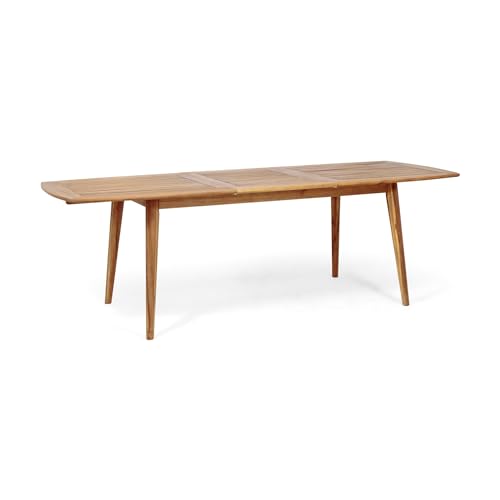
Acacia Wood Extendable Outdoor Dining Table: The Complete Guide
Everything you need to know before choosing an extendable acacia dining table — from wood properties and leaf mechanisms to sizing, care, and long-term durability.
Jump to Buying ChecklistWhy this guide matters: You already know you want a wooden extendable table for your patio. What you need now is confidence — the kind that comes from understanding how acacia performs outdoors, which extension systems hold up best, and how to match table size to your actual space and hosting habits. This guide answers those questions so you can choose with clarity.
What Makes Acacia a Smart Outdoor Wood
Acacia is a dense hardwood that grows across tropical and subtropical regions. Its tight grain and natural oil content give it a built-in resistance to moisture, rot, and insect damage that many softer woods lack. For an outdoor dining table — a surface exposed to sun, rain, spills, and repeated use — that density translates into a stable, durable construction that holds its shape season after season.
Beyond durability, acacia carries a warm, rich tone that ranges from honey-gold to deep brown. The grain is pronounced and characterful, which means an acacia table adds visual warmth to a patio without needing much decorative help. It pairs naturally with metal, wicker, and fabric seating, making it a versatile anchor for many design themes. If you are still mapping out the broader look of your space, our guide to acacia wood outdoor furniture covers how the material works across seating, tables, and accent pieces.
It is worth noting that acacia is not maintenance-free. It performs best when sealed and resealed on a seasonal schedule. The upside is that maintenance is straightforward and does not require specialized tools — a light sanding, a clean surface, and a fresh coat of outdoor sealer keep the table looking and performing its best for years.
How Extendable Tables Work — and Why They Fit Real Patios
An extendable dining table solves a common patio problem: you want a table that feels proportionate day to day but can expand when guests arrive. Most extendable designs use one of two mechanisms.
- Butterfly leaf: A self-storing leaf folds and tucks underneath the tabletop. You pull the table halves apart, flip the leaf up, and slide the halves back together. This is the cleanest option because the leaf is always with the table and there is no separate storage piece to lose.
- Separate or drop-in leaves: One or two leaves slide into a center gap and lock into place. These tend to offer larger extension ranges but require storing the leaves when not in use.
For a patio, the butterfly leaf is often the more practical choice because it eliminates the storage question. Whichever mechanism you choose, check that the table has a secure locking system and that the extension rails feel smooth and reinforced. A well-built mechanism should glide without wobble and lock firmly with no visible gap at the seams.
If your hosting style leans toward larger gatherings, an extendable table is a natural bridge to bigger configurations. Many homeowners eventually pair their table with additional seating or move toward a full 9-piece outdoor dining set when their entertaining needs grow.
Choosing the Right Size for Your Space
Size is where most buyers second-guess themselves, so it helps to think in terms of seating rather than raw dimensions. A compact extendable table typically seats four in the closed position and six when extended. Mid-size models often seat six closed and eight extended. Larger models can push toward ten when fully open.
The critical measurement is clearance. Plan for at least 36 inches of open space around the table so chairs can pull out and guests can move comfortably. On a tighter patio, that clearance requirement often matters more than the table's extended length. If your space is genuinely compact, our small patio layout guide walks through space-saving arrangements that still leave room for a proper dining table.
Also consider the shape. Rectangular tables suit narrow patios and long seating runs. Square tables work well in corner or symmetrical layouts, and a square outdoor dining set can be a strong fit for balanced, compact spaces. Round tables soften tight areas and improve conversation flow, though extendable round options are less common than rectangular ones.
Quality Tiers: What Separates One Acacia Table From Another
Acacia tables span a wide range of build quality. Rather than thinking in terms of numbers, it helps to understand the tiers that exist in the market and what each one typically delivers.
Essential Tier
Solid acacia construction with simpler joinery and a basic extension mechanism. Suitable for covered patios and lighter use. Expect to reseal more frequently and inspect hardware each season.
Balanced Tier
Thicker tabletop sections, smoother butterfly-leaf hardware, and a more refined finish. These tables balance durability and design flexibility and are the most common choice for year-round outdoor use.
Premium Tier
Kiln-dried acacia, reinforced aprons, precision-fit leaves, and a multi-coat UV-resistant finish. Built for frequent entertaining and exposed patios. Mechanisms feel noticeably more solid and stable.
Luxury Tier
Furniture-grade acacia with tight grain selection, hand-finished surfaces, and heavy-duty extension hardware. Typically designed as long-term centerpieces for dedicated outdoor dining areas.
Across all tiers, the visible indicators of build quality are consistent: seamless leaf fit, reinforced leg-to-apron connections, and a finish that feels smooth rather than coated or tacky. A mid-range table with excellent joinery will generally outperform a higher-tier label with sloppy hardware, so inspect construction details rather than relying on tier names alone.
Acacia vs. Other Outdoor Table Materials
Comparing materials side by side clarifies where acacia fits and where another option might suit you better.
| Material | Durability | Maintenance | Best For |
|---|---|---|---|
| Acacia Wood | High — dense, rot-resistant hardwood | Moderate — reseal every 6–12 months | Warm, natural patios; year-round mixed climates |
| Teak | Very high — naturally oil-rich | Low — weathers to silver if untreated | Coastal and high-exposure settings |
| Aluminum | High — rust-proof when powder-coated | Low — wipe clean | Modern patios; humid or coastal areas |
| Resin Wicker | Moderate — frame quality varies | Low — rinse and wipe | Lounge-heavy layouts; covered patios |
| Cast Aluminum | High — heavy-duty and stable | Low — occasional cleaning | Windy patios; classic and ornate styles |
If your patio is fully exposed to coastal salt air, aluminum or teak may be the more forgiving choice. If you want the warmth and grain of real wood with strong rot resistance at a balanced tier, acacia is a compelling fit. For a deeper look at the metal alternative, see our aluminum outdoor table guide.
Shade and Layout: Pairing Your Table With the Right Accessories
A dining table rarely stands alone. Shade is often the next decision, and an umbrella hole in the tabletop simplifies the setup considerably. If your table does not include an umbrella hole, a cantilever or offset umbrella keeps the tabletop clear. Our guide to a 9-foot patio umbrella with solar lights covers a popular shade-and-lighting combination for evening dining.
Consider how seating interacts with the extension. When the table is extended, chairs at the head positions need extra clearance. If your patio has a fixed wall or railing on one side, orient the table so the extension grows along the open axis. For patio layouts built around a full dining arrangement, a 9-piece dining set with umbrella shows how shade and seating come together as a coordinated setup.
Lighting completes the picture. String lights overhead or a freestanding lantern near the table extend usable dining hours without glare at eye level. Keep cords and connections away from walkways and ensure any electrical elements are rated for outdoor use.
Care and Maintenance for Long-Term Performance
Acacia rewards consistent, simple care. The routine below keeps the table stable and the finish intact through seasonal cycles.
- Clean regularly: Wipe with mild soap and water. Avoid bleach, ammonia, and abrasive pads, which strip the finish and open the grain.
- Dry after rain: Standing water is the enemy of any wood. Tilt or wipe the tabletop after heavy rain and keep the surface free of pooled water.
- Reseal seasonally: Apply a UV-protective outdoor wood sealer every six to twelve months. High-sun patios may need more frequent application.
- Light sanding: Before resealing, lightly sand raised grain and minor scratches with fine-grit paper to refresh the surface.
- Protect the mechanism: Lubricate extension rails and locking hardware annually with a dry or silicone-based lubricant suitable for outdoor use.
- Cover in off-season: Use a breathable, fitted cover during winter or prolonged non-use. Ensure the table is completely dry before covering.
For a broader seasonal routine that covers seating and other pieces, our weatherproofing guide walks through month-by-month care. If you plan to place the table under a structure, our guide to adding a covered patio explains how shade structures change the maintenance equation.
Buying Checklist: What to Verify Before You Commit
- Confirm the extension mechanism type (butterfly leaf vs. drop-in) and test the lock for firmness.
- Measure your patio clearance — at least 36 inches around the table in both closed and extended positions.
- Check that the tabletop has a consistent thickness and no visible gaps at the leaf seams.
- Look for reinforced aprons and solid leg-to-top connections; wobble at the joints is a red flag.
- Verify the finish is UV-resistant and fully cured, not tacky or unevenly coated.
- Confirm whether an umbrella hole is included and whether the table can accommodate a stable base.
- Check the care instructions and whether a sealer is recommended immediately after purchase.
- Review the warranty terms and what they cover — hardware, finish, and structural components separately.
Frequently Asked Questions
Is acacia wood good for an outdoor dining table?
Yes. Acacia is a dense hardwood with natural oils that resist moisture, rot, and insects, making it a strong choice for outdoor furniture. With proper sealing and seasonal care, an acacia table can last many years in mixed climates.
How does an extendable dining table work?
Most extendable tables use either a butterfly leaf stored inside the table or separate leaves that slide into the center. You pull the table halves apart, insert the leaf, and lock the mechanism. This lets you switch between a compact everyday size and a larger entertaining size.
Does an acacia extendable table need to be covered in winter?
It is strongly recommended. Even dense hardwoods benefit from a breathable cover during off-season months, especially in regions with heavy snow or freezing rain. Clean and dry the table fully before covering to prevent trapped moisture.
What size extendable table fits a small patio?
For compact patios, look for tables that seat four in the closed position and six when extended. Measure your space carefully and keep at least 36 inches of clearance around the table for chair movement.
How do I maintain the finish on an acacia table?
Clean with mild soap and water, avoid harsh chemicals, and reapply a UV-protective outdoor wood sealer every six to twelve months depending on sun exposure. Sand lightly before resealing to refresh the surface.
Final Thoughts
An acacia wood extendable outdoor dining table is one of the most practical centerpieces you can add to a patio. It gives you a compact everyday footprint, room to grow when guests arrive, and the natural warmth of real hardwood. The key is matching the table's tier and mechanism to how you actually use your outdoor space — then committing to a simple seasonal care routine that keeps it performing.
If you are still exploring adjacent pieces, our acacia table with umbrella hole guide and the broader buying guides collection can help you complete the setup with confidence.