Affordable Outdoor Furniture: A Practical Buying Guide
Learn how to choose durable, well-designed patio furniture without compromising on quality. This guide explains materials, construction, and smart buying strategies so you can furnish your outdoor space with confidence.
Why this guide matters: Most shoppers searching for affordable outdoor furniture are not looking for the cheapest option available — they want the best possible quality within a sensible tier. This page breaks down what separates entry-level pieces from mid-range and high-end tiers, so you can make a purchase that lasts for seasons instead of months.
What “Affordable” Really Means in Outdoor Furniture
In the outdoor furniture market, affordability is not about the lowest possible number on a tag. It is about the relationship between what you pay and how long the product performs. A well-built entry-level chair that survives five summers is a smarter acquisition than a flimsy piece that needs replacing after one season. Understanding this distinction helps you evaluate any product on its long-term merit rather than its shelf appeal.
The outdoor furniture industry generally organizes products into three broad tiers. Each tier reflects a different balance of materials, construction methods, and expected lifespan. Knowing which tier a product belongs to tells you far more about its real value than any single specification. For a broader overview of how these tiers compare across categories, see our guide to affordable high-quality outdoor furniture.
| Tier | Typical Materials | Best For | Expected Lifespan |
|---|---|---|---|
| Entry-level | Resin, basic steel, thin aluminum, low-density polyethylene wicker | First patios, rental spaces, seasonal setups | 2–4 seasons with care |
| Mid-range | Powder-coated aluminum, high-density resin wicker, acacia or eucalyptus wood | Family patios, long-term residential use | 5–8 seasons |
| High-end tier | Cast aluminum, teak, solution-dyed acrylic cushions, stainless hardware | Premium installations, harsh climates | 10+ seasons |
Materials That Deliver Value Without Compromise
The material of a piece of furniture is the single biggest predictor of how it will age outdoors. Sun, rain, temperature swings, and humidity all attack different materials in different ways. Choosing the right material for your climate is the foundation of a smart purchase.
Powder-Coated Aluminum
Aluminum is lightweight, rust-resistant, and easy to move — three qualities that make it a favorite in the mid-range tier. A proper powder-coated finish adds scratch and UV resistance. Frames with welded joints outperform those held together with bolts alone. If you want a deeper comparison of frame options, our aluminum outdoor furniture overview explains the trade-offs in detail.
Resin and High-Density Polyethylene (HDPE)
Modern resin furniture is a major step up from the brittle plastic of the past. HDPE in particular resists fading, cracking, and moisture absorption. This is the material behind many popular Adirondack styles — see our recycled plastic Adirondack chairs guide for examples of how far this category has come.
Acacia, Eucalyptus, and Teak
Wood brings warmth and character that synthetic materials cannot match. Acacia and eucalyptus are the value leaders in the wood category — dense, naturally water-resistant, and suitable for outdoor use with proper sealing. Teak sits at the high-end tier but delivers exceptional longevity. If wood is your preference, our acacia wood outdoor furniture guide covers care and selection in depth.
All-Weather Wicker
Wicker-wrapped frames offer a classic look and comfortable feel. The key is the density of the weave and whether the core frame is rust-proof. High-density resin wicker over an aluminum frame is the combination that performs best in the mid-range tier. Our all-weather wicker patio furniture guide explains what to look for when inspecting a piece.
Smart Shopping Strategies for Every Season
Timing and preparation matter as much as material choice. Shoppers who plan ahead consistently land better products for the same tier than those who buy in a hurry at the height of summer.
- Measure twice. Know your patio dimensions, doorway clearances, and storage space before browsing. A well-fitted entry-level set outperforms an oversized mid-range one in a cramped space.
- Shop the shoulder seasons. Late summer and early autumn are when retailers rotate inventory, making it an ideal window for value-focused shoppers.
- Prioritize the frame over the cushion. Cushions can be replaced; a failing frame cannot. Spend your allocation on structural quality first.
- Check warranty terms. A generous frame warranty is a strong signal that the manufacturer trusts its own construction.
- Buy modular where possible. Sectional and modular pieces let you expand over time instead of replacing everything at once.
For a more detailed breakdown of where to allocate your resources, see our affordable patio furniture planning guide and the splurge vs save outdoor guide.
Weather Resistance: The Hidden Value Multiplier
Two pieces at the same tier can have very different real-world lifespans depending on how well they handle moisture and UV exposure. Look for rust-proof hardware, drainage-friendly seat construction, and solution-dyed fabrics on cushions. Quick-dry foam is a worthwhile upgrade because it prevents the mildew that shortens cushion life dramatically.
If your climate brings heavy rain or coastal salt air, prioritize aluminum and high-density resin over steel and untreated wood. Our weather-resistant patio furniture guide walks through climate-specific recommendations, and the all-weather material comparison breaks down performance by exposure type.
Quick Rule of Thumb
If a piece will sit in direct sun and rain year-round, choose aluminum, HDPE, or sealed hardwood. If it lives under a covered patio, you have more flexibility — steel and lighter resin become viable options at the entry-level tier.
Space-by-Space Recommendations
Small Balconies and Apartments
Compact bistro sets and folding chairs are the workhorses of small-space outdoor living. Prioritize pieces that fold flat for storage and stack vertically. Our balcony furniture for small spaces guide and the apartment patio furniture overview cover layout strategies that maximize usable area.
Family Patios
Dining sets anchor family outdoor spaces. A mid-range aluminum or acacia set with a umbrella hole gives you flexibility for shade and long-term durability. Browse our 9-piece dining set with umbrella guide or the aluminum dining set overview for configuration ideas.
Lounge and Conversation Areas
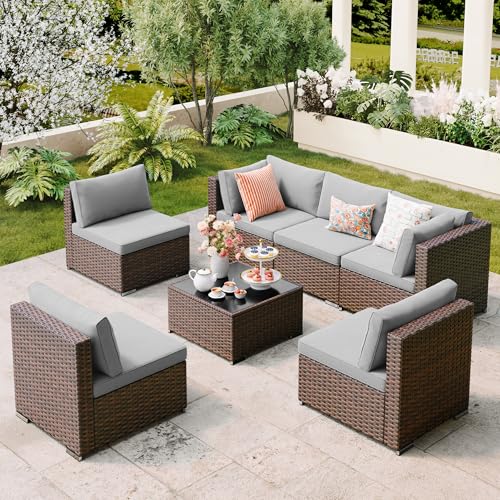
Deep seating and conversation sets benefit from modular designs that let you rearrange as needs change. Resin wicker over aluminum is the classic value formula here. See our conversation set guide for layout inspiration.
Maintenance Habits That Extend Lifespan
Even the best-chosen furniture needs basic care to reach its expected lifespan. The good news is that the habits are simple and take little time.
- Rinse and dry frames monthly during heavy-use seasons to remove pollen and grit that can abrade finishes.
- Store cushions when not in use — UV exposure and morning dew are the two biggest enemies of fabric life.
- Re-seal wood annually with a suitable outdoor sealant to maintain water resistance.
- Tighten hardware at the start of each season to prevent wobble from becoming structural failure.
- Use breathable covers rather than airtight tarps, which can trap moisture and encourage mildew.
Our weatherproofing guide and outdoor care section go deeper on seasonal routines and product-specific care.
Frequently Asked Questions
How long should entry-level outdoor furniture last?
With proper care, entry-level pieces typically last two to four seasons. Storing cushions, rinsing frames, and covering furniture during extreme weather can push that toward the upper end of the range.
Is aluminum better than steel for outdoor furniture?
For most residential outdoor settings, aluminum is the better choice because it does not rust. Steel can be viable under a covered patio, but it requires more vigilant maintenance in wet climates.
Can I mix furniture tiers on one patio?
Yes, and it is often a smart strategy. Invest in a mid-range dining table that anchors the space, then use entry-level accent chairs and side tables to complete the layout. Visual cohesion comes from color and material harmony, not from buying everything at once.
What is the single most important feature to check before buying?
The frame construction. Look for welded or reinforced joints, rust-proof hardware, and a finish that is factory-applied rather than painted on afterward. A strong frame outlasts any cushion or accessory.
Should I buy a set or individual pieces?
Sets usually offer better per-piece efficiency within a tier, while individual pieces give you more control over quality where it matters most. A hybrid approach — a set for dining and individual pieces for lounging — often delivers the best overall result.
Final Thoughts
Furnishing an outdoor space well is a matter of matching materials and construction to your climate, your usage pattern, and your layout — not chasing the lowest possible entry point. By focusing on the frame, understanding the tier system, and shopping with timing and preparation, you can build an outdoor space that performs beautifully for years. Use the recommendations above as your framework, and explore the linked guides for deeper dives into each category before you commit.