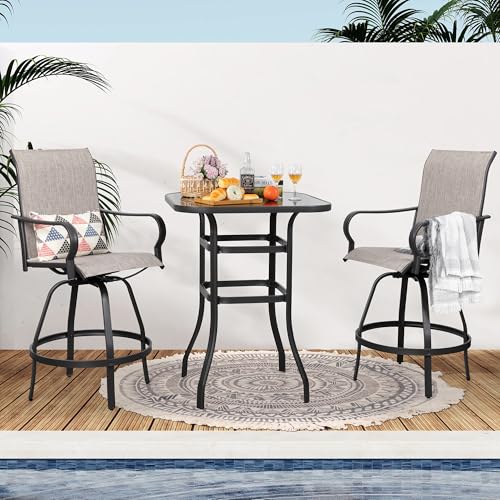
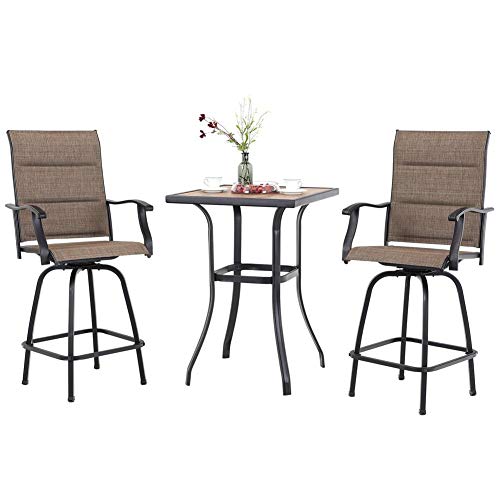
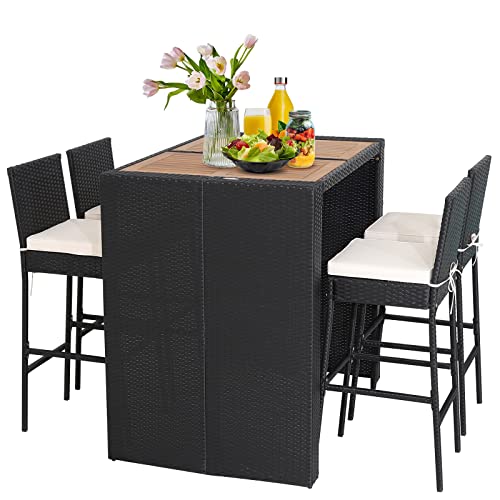
What Is a Bar Height Bistro Table and Chair Set?
A bar height bistro set is a compact outdoor seating group built around a tall, narrow table — typically around counter-to-bar height — paired with two or four matching stools or chairs. It borrows the café table concept and raises it, so you get the space-saving footprint of a bistro setup with the elevated, social feel of bar seating.
These sets are especially popular for balconies, small patios, apartment terraces, and compact decks where a full dining table would feel crowded. The taller profile also creates a natural gathering spot for drinks, coffee, or light meals, and it works well beside an outdoor kitchen or grill station. If you are planning a broader small-space layout, our balcony decor ideas and small patio planning guide pair naturally with this category.
Buyers typically compare three things first: the table's height and diameter, the comfort of the seating, and how well the materials survive sun, rain, and temperature swings. This guide walks through each of those decisions in order.
Bar Height vs. Counter Height vs. Standard Bistro Height
Before comparing individual models, it helps to understand the three common heights in this category. The difference affects comfort, the chairs you can pair with the table, and how the set feels in a small space.
| Configuration | Typical Table Height | Best For | Seating Notes |
|---|---|---|---|
| Standard bistro height | Lower, café-style | Traditional café patios, relaxed lounging | Standard dining chairs; easiest to get in and out of |
| Counter height | Between standard and bar height | Kitchen-adjacent patios, transitional spaces | Counter stools; a middle ground for comfort and elevation |
| Bar height | Tallest common bistro configuration | Balconies, compact decks, social drink-height seating | Bar stools or tall bistro chairs; check footrest support carefully |
Bar height delivers the strongest "café" feel, but it also raises the comfort bar. Tall chairs need a well-placed footrest, and the seat-to-table relationship matters more than it does at lower heights. If you plan to eat full meals rather than snacks and drinks, counter height is often the more forgiving option. If you specifically want the elevated look for a compact balcony, bar height is the right target.
Tip: Measure your railing height before ordering. On balconies, a bar height table can sit close to railing height, which looks intentional but can block sightlines if the table is too wide for the space.
Key Buying Factors for Outdoor Bar Height Bistro Sets
1. Table Size and Shape
Most bar height bistro tables are round, and that is usually the right call. A round top has no corners to navigate in tight spaces, seats two to four people evenly, and looks balanced on a small balcony. Square tops offer slightly more usable surface area for the footprint, while rectangular versions are rare and only make sense along a wall or railing.
Two-person sets are the classic bistro configuration and the most space-efficient. Four-person bar height sets exist but need more clearance — plan for roughly a chair's width of pull-out space on each side. If your priority is a larger gathering table rather than a compact café setup, a dedicated 9-piece bar height outdoor dining set is a better structural fit.
2. Frame Material and Finish
Outdoor bar height sets live with moisture, sun, and temperature swings, so the frame matters more than it does indoors. The main options are powder-coated aluminum, steel, and weather-treated wood such as acacia or teak.
- Powder-coated aluminum: Lightweight, rust-resistant, and easy to move. The most common choice for balcony-friendly sets. Look for a quality powder coat rather than a thin painted finish.
- Steel: Heavier and very stable, which helps at bar height where a top-heavy feel is a real concern. It needs a rust-proof finish and some care in humid climates.
- Weather-treated wood: Warm, natural look and solid feel. Acacia is a popular choice for outdoor dining; our acacia wood outdoor furniture guide covers care and durability in detail.
Whichever material you choose, check that the tabletop edge and welds are finished cleanly. Sharp edges and exposed seams are the first places outdoor furniture fails.
3. Seating Comfort and Back Support
Bar height chairs are where many sets fall short. A backless stool is space-efficient but tiring for long sits. A chair with a contoured back, a supportive seat, and a properly positioned footrest is far more comfortable for meals and extended conversation.
Swivel seats are a popular upgrade for bar height sets because they make it easier to get in and out without dragging the chair. If that matters to you, compare models such as a bar height bistro set with swivel chairs, which pairs the compact bistro footprint with easier access. Also check seat width and weight capacity — tall chairs with narrow seats feel unstable, even when the frame is solid.
4. Weather Resistance and Cushions
If the set includes cushions, confirm they are designed for outdoor use — quick-drying foam and solution-dyed fabric rather than indoor upholstery. Removable, tie-down cushions are easier to store during storms. Our outdoor cushion guide explains what to look for in fill and fabric.
For frames, look for rust-proof finishes, stainless or coated hardware, and drainage-friendly tabletops. A slatted or perforated top sheds rain instead of pooling it, which extends the life of the finish.
5. Stability at Height
Tall furniture has a higher center of gravity, so a wide base, cross-bracing, and adjustable feet matter. On uneven decks or stone patios, adjustable leveling feet prevent wobble. A heavier base is an asset here — lightweight is convenient, but at bar height, some weight is reassuring.
6. Assembly and Storage
Most bistro sets ship flat-packed and assemble with basic tools. Check whether the chairs stack, since stackable stools are much easier to store off-season on a small balcony. If you plan to leave the set out year-round, a fitted cover is a worthwhile addition — see our patio furniture cover guide for sizing advice.
Quality Tiers: How to Read the Market
Bar height bistro sets fall into three broad tiers. Rather than comparing specific numbers, use these descriptors to set expectations for build quality and longevity.
| Tier | Typical Build | Best For | What to Expect |
|---|---|---|---|
| Entry-level | Thinner aluminum or steel tube frames, basic powder coat, simpler seat construction | Seasonal use, renters, first balcony setup | Light and easy to move; inspect welds and hardware on arrival |
| Mid-range | Thicker frames, better powder coating, contoured seats, sturdier tabletop | Year-round covered patios, regular family use | The sweet spot for most shoppers; noticeably more stable at bar height |
| Premium | Heavy-gauge aluminum or solid weather-treated wood, refined finishes, thoughtful ergonomics | Design-focused spaces, long-term investment | Better comfort over long sits and finishes that hold their look for years |
Mid-range models usually offer the best balance for a primary outdoor seating area. Entry-level sets make sense for a secondary balcony or a first apartment, while premium sets are worth considering when the table will be the visual anchor of a small patio and you want it to stay that way.
Where a Bar Height Bistro Set Works Best
These sets are specialists, not all-rounders. They excel in specific settings:
- Balconies and terraces: The compact footprint and vertical profile suit narrow spaces. Pair with a balcony furniture plan that keeps walking space clear.
- Small patios and courtyards: A two-person bar height set leaves room for planters and a grill. Our small patio ideas guide shows how to layer furniture without crowding.
- Deck edges and railings: A tall table at the railing creates a natural perch with a view — see backyard deck planning tips for placement.
- Beside an outdoor bar or grill: A bar height set matches the height of a bar cart or outdoor kitchen counter, which feels cohesive.
Where they struggle: large families, full dinner service, and windy, exposed locations without a heavier frame. For those cases, a standard-height or larger dining configuration is the more practical choice.
Small-Space Setup Tips
A few practical moves make a bar height bistro set feel intentional rather than squeezed in:
- Leave a walking lane. Keep at least one clear path across the balcony or patio; avoid placing the table dead-center in a narrow space.
- Anchor it visually. An outdoor rug under the set defines the zone. Our outdoor rugs guide covers weather-resistant options.
- Add vertical interest. Tall planters or a slim plant stand balance the height of bar furniture — see outdoor planters for container ideas.
- Light it low. String lights or a small lantern at bar height keeps the area usable after sunset; our string lights guide has placement tips.
- Check sun and wind. On exposed balconies, a set that shifts in gusts is frustrating. Prefer heavier frames or add weighted bases.
Care and Maintenance Basics
Bar height sets are easy to maintain when you stay ahead of the weather:
- Wipe metal frames and tabletops with mild soap and water; avoid abrasive pads on powder-coated surfaces.
- Touch up chips in the finish promptly — small chips become rust points on steel frames.
- Store or cover cushions during heavy rain and off-season. Our weatherproofing guide walks through a seasonal routine.
- Tighten bolts at the start of each season; tall frames benefit from periodic re-tightening.
- For wood sets, re-oil or seal per the manufacturer's schedule — see wood sealants for guidance.
Pre-Purchase Checklist
- Measure the available floor space and railing height.
- Confirm the table height and the chair seat height match (sets sold together are matched; mixing is risky).
- Verify footrest position and seat depth for comfort.
- Check frame material, finish type, and weight capacity.
- Confirm cushions are outdoor-rated and removable.
- Check assembly requirements and whether chairs stack.
- Decide if swivel or fixed seating suits your space.
Frequently Asked Questions
What is the ideal bar height for an outdoor bistro table?
Bar height typically sits above counter height, with chairs designed to match. The key is buying a matched set — table and chairs engineered for the same seat-to-table relationship — rather than pairing a tall table with standard-height chairs.
How many people fit at a bar height bistro table?
Most bar height bistro tables seat two, which is the classic café configuration. Four-person versions exist but need noticeably more clearance. For larger groups, a full bar height dining set is the better structure.
Is aluminum or wood better for an outdoor bar height set?
Aluminum is lighter, rust-resistant, and easier to move — ideal for balconies. Weather-treated wood feels warmer and more substantial but needs periodic sealing. Both work well; the choice comes down to climate, maintenance willingness, and style.
Can a bar height bistro set stay outside year-round?
With a quality finish and, ideally, a cover, many mid-range and premium sets can stay out through the seasons. In freezing climates, bring cushions indoors and check the manufacturer's guidance on frame storage.
Do swivel chairs make sense on a small balcony?
Yes — swivel seating makes it easier to get in and out in tight spaces without scraping the chair. Just confirm the swivel mechanism is sealed for outdoor use.
What should I check first when the set arrives?
Inspect welds, tabletop edges, and hardware before assembly. Test for wobble on a level surface, and adjust leveling feet if included. Report finish defects promptly.