What Is a Bench That Makes Into a Picnic Table?
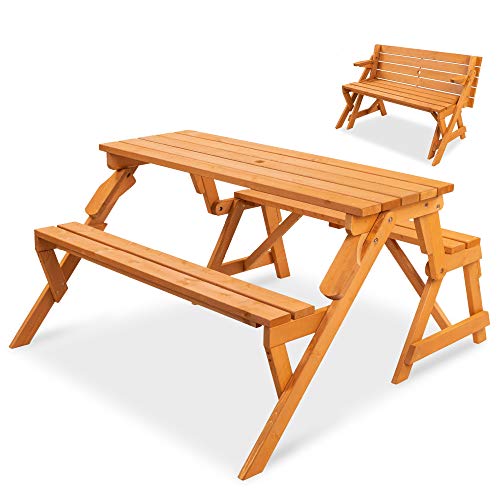
A bench that makes into a picnic table is a convertible piece of outdoor furniture. In its upright position, it functions as a standard garden bench with a backrest and seating for two to three people. When you fold the backrest flat, the same unit becomes a table surface — typically at a height suitable for dining, working, or entertaining. The transformation usually takes seconds and requires no tools.
This dual-purpose design is especially valuable for people with compact patios, balconies, or decks where furniture needs to earn its footprint. It is also a practical choice for households that entertain occasionally but do not want a permanent dining setup taking up space year-round. If you are comparing convertible options, you may also want to review a bench that folds out into a picnic table and a bench that turns into a picnic table to see how different folding mechanisms compare.
How the Conversion Mechanism Works
Most convertible benches rely on a hinged backrest. The backrest is attached to the seat frame with heavy-duty hinges, and a locking pin or latch keeps it upright when used as a bench. To convert it into a table, you release the latch and fold the backrest backward until it lies flat, supported by the rear legs or a dedicated support bracket. The seat remains in place and becomes the bench side of the picnic table.
Some designs use a sliding or pivoting panel instead of a hinge. These tend to be sturdier for daily conversion but may be heavier to operate. Whichever mechanism you choose, the key considerations are the same: the hinge hardware should be rust-resistant, the locking system should engage firmly, and the transition should not require excessive force.
Hinged Backrest
The most common design. The backrest folds flat to create the tabletop. Simple, fast, and easy to operate for most users.
Pivoting Panel
A panel rotates or slides into position. Often found on heavier, premium models with reinforced frames and smoother operation.
Folding Frame
The entire frame folds outward to form a larger table surface. Usually seen on portable or folding picnic table designs.
Removable Top
The backrest detaches and reattaches as a tabletop. Less common but useful when the table needs to be moved independently.
Materials: What Lasts Outdoors
The material determines how long your convertible bench survives sun, rain, and temperature swings. Here is how the main options compare.
| Material | Best For | Durability | Maintenance |
|---|---|---|---|
| Cedar & Acacia Wood | Natural look, warm aesthetic | High when sealed | Annual sealing recommended |
| Powder-Coated Steel | Heavy-duty, commercial settings | Very high | Minimal; check for rust at welds |
| Aluminum Frame | Lightweight portability | High; rust-proof | Low; wipe clean |
| High-Density Polyethylene | Wet climates, low upkeep | High; UV-resistant | Very low |
| Resin & Composite | Entry-level to mid-range options | Moderate to high | Low; avoid heavy abrasion |
Wood remains the most popular choice for its classic appearance, but it requires more attention. High-grade steel and aluminum frames are common in premium and commercial-grade models because they hold up to constant conversion without loosening. Resin and composite options fall into the entry-level and essential tiers, offering a solid choice for occasional use. For broader context on matching furniture to climate, see our guide on the best outdoor furniture for hot climates.
Features That Matter
Not all convertible benches are built to the same standard. These are the features that separate a reliable unit from one that will wobble or jam after a season of use.
- Reinforced hinge hardware: Look for stainless steel or galvanized hinges. These resist rust and keep the conversion smooth over thousands of cycles.
- Positive locking mechanism: A latch or pin that clicks firmly into place prevents accidental folding while someone is seated.
- Weight capacity: Check the stated load rating for both bench and table modes. A quality unit supports at least two adults comfortably in both configurations.
- Weather-resistant finish: Powder-coated frames and sealed wood surfaces protect against UV fading and moisture damage.
- Non-marring feet: Rubber or plastic caps protect deck boards and patio tiles from scratches.
- Compact folded footprint: The best designs do not need extra clearance to convert, so they work in tight spaces.
Space and Placement Considerations
Measure the area where the bench will sit, and add at least 30 inches of clearance in front of the unit for seating and legroom. When converting to table mode, you will need additional space behind the bench as the backrest folds down. Some models require up to two feet of rear clearance; others convert within their own footprint. If your patio is tight, prioritize a design that converts in place.
Also consider sun exposure. A bench placed in full afternoon sun will heat up quickly, especially metal and dark-colored surfaces. A spot with partial shade or a nearby umbrella makes the table mode far more comfortable for dining. If you are planning a full outdoor dining area, our guide to bar-height outdoor dining table and chairs covers height and layout options that pair well with convertible seating.
Bench Mode vs. Table Mode: What to Expect
In bench mode, the unit behaves like a standard garden bench. Seat depth is typically 16 to 20 inches, and the backrest angle is fixed. Some models include armrests; others are armless to keep the conversion path clear.
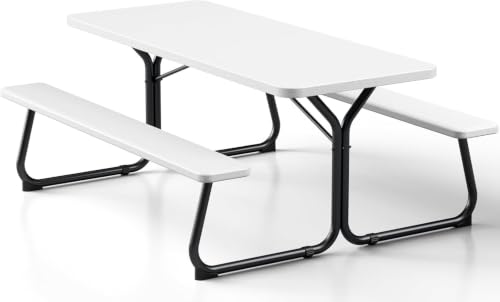
In table mode, the former backrest becomes a flat surface roughly 18 to 30 inches deep, depending on the model. That is enough for two place settings, a laptop, or a serving tray. It is not a full-size dining table, so set expectations accordingly. For larger gatherings, a dedicated bench picnic table or a bar-height outdoor dining table for 8 may be a better fit.
Ready to Compare Convertible Benches?
Browse a curated selection of benches that convert into picnic tables, with filters for material, seating capacity, and conversion style.
View Recommended ModelsMaintenance and Longevity
Convertible furniture has moving parts, so maintenance matters more than with a static bench. Follow these habits to keep the mechanism working smoothly:
- Lubricate hinges and locking pins once per season with a silicone-based or dry-film lubricant.
- Inspect hardware for looseness every few months and tighten bolts as needed.
- Clean the table surface after meals to prevent stains and sticky residue from interfering with the fold.
- Apply a fresh coat of sealant to wooden models annually, ideally before the rainy season.
- Store or cover the bench during extended periods of disuse, especially in freezing climates.
With proper care, a well-built convertible bench can last a decade or more. Models in the premium and luxury tiers often come with replaceable hardware kits, which extends service life significantly. For related care advice, see our weatherproofing guide.
Who Should Buy a Convertible Bench?
This furniture category suits several specific situations:
- Small-space dwellers: Apartment balconies, compact patios, and tiny decks benefit most from dual-purpose furniture.
- Occasional entertainers: If you host a few times a month, a convertible bench provides table space without a permanent dining set.
- Multi-use outdoor areas: A space used for morning coffee, afternoon reading, and evening meals can shift modes easily.
- Renters: Portable or lightweight models can move with you and require no permanent installation.
If you need a full-time dining surface for a family of four or more, a dedicated picnic table is more practical. But for flexible, space-conscious outdoor living, a bench that makes into a picnic table is a smart investment.
Frequently Asked Questions
How does a bench that makes into a picnic table work?
A convertible bench uses a hinged backrest that folds backward to become a flat tabletop. When folded down, the seat remains in place, and the backrest surface creates a dining or work surface at a comfortable height, instantly transforming the bench into a picnic table.
What materials are best for a convertible picnic bench?
Solid wood such as cedar or acacia offers natural beauty and durability with proper sealing. High-grade steel or aluminum frames with powder-coated finishes resist rust and weather. Resin and high-density polyethylene are low-maintenance options that handle moisture and UV exposure well.
Can a fold-out picnic bench stay outdoors year-round?
Many designs are built for year-round outdoor use, especially those with weather-resistant coatings and rust-proof hardware. However, wooden models benefit from seasonal sealing and a protective cover during harsh winters to extend their lifespan.
How many people can a convertible bench seat?
Most standard models seat two to three people in bench mode and accommodate two to four people in table mode. Larger designs can seat up to six, making them suitable for family dining and entertaining.
Is a convertible bench stable in table mode?
Stability depends on the locking mechanism and frame design. Premium and commercial-grade models use reinforced brackets and positive locks that keep the table surface rigid. Always check the stated weight capacity and read user feedback about wobble before choosing a model.