Bench That Folds Out Into a Picnic Table: The Complete Buying Guide
One piece of furniture, two ways to use it. Learn how convertible picnic benches work, which materials last, and how to pick the right model for your patio, deck, or garden.
Explore Recommended ModelsWhy this guide matters: A bench that folds out into a picnic table is one of the most practical outdoor investments you can make. It saves space when not in use, gives you a comfortable seat for everyday lounging, and transforms into a full dining surface when guests arrive. This guide breaks down how these convertible designs work, what separates a solid build from a flimsy one, and how to match a model to your space and climate.
What Is a Bench That Folds Out Into a Picnic Table?
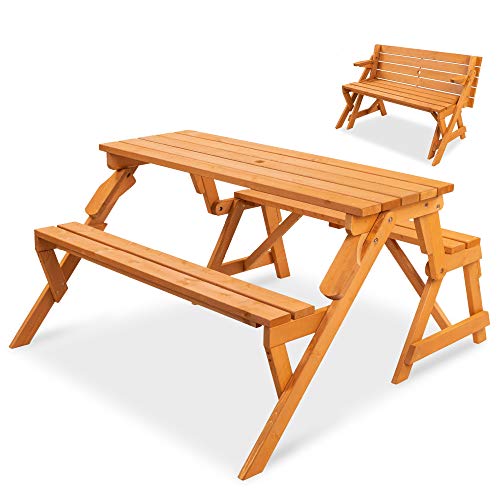
A bench that folds out into a picnic table is a convertible outdoor furniture piece built around a hinged frame. In its compact bench configuration, the tabletop panels rest flat and serve as a seat. When you lift the panels and swing the legs outward, the same unit locks into a classic picnic table shape with a raised eating surface and attached benches on either side.
This dual-mode design solves a common outdoor problem: many patios and decks are too small to dedicate permanent floor space to a full dining table. A folding picnic table bench lets you keep a usable seat on a daily basis and only expand into dining mode when you actually need it. If you are comparing layouts, our guide to a bench picnic table covers the broader category, while this page focuses specifically on the fold-out convertible style.
Bench Mode vs. Table Mode
- Bench mode: Panels lie flat, the frame is collapsed, and the unit works as a backless or backed seat for two to three people. Ideal for reading, morning coffee, or pulling on garden boots.
- Table mode: Panels lift and lock into a tabletop, and the side benches unfold outward. Most standard models seat four adults; larger high-end tier units seat six.
The transition is usually tool-free and takes under a minute. Quality matters here: entry-level hinges can feel loose after a season, while mid-range and premium models use reinforced locking mechanisms that hold the tabletop rigid under weight.
How the Folding Mechanism Works
Understanding the mechanism helps you evaluate build quality before you commit. Most convertible picnic benches rely on three components working together:
- Hinged tabletop panels: Two or three panels joined by a continuous hinge. In bench mode they rest flat; in table mode they fold up and interlock to form a level surface.
- Folding leg assemblies: Scissor-style or pivoting legs that extend outward to support the seating benches. Look for locking pins or snap latches that prevent accidental collapse.
- Frame cross-bracing: Diagonal supports that keep the unit from wobbling when someone leans on the table edge. Heavy-duty cross-bracing is the single best indicator of a stable build.
A well-engineered mechanism should feel firm at every stage: no rattling in bench mode, no sagging in table mode, and no pinch points where fingers could get caught. If you are also considering a fixed layout, our overview of a bench that makes into a picnic table explains how fixed-frame convertibles differ from true fold-out designs.
Materials: What Holds Up Outdoors
The frame and surface material determine how long your convertible bench survives sun, rain, and temperature swings. Here is how the main options compare.
| Material | Tier Positioning | Best For | Maintenance |
|---|---|---|---|
| Powder-coated aluminum | Mid-range to premium | Year-round outdoor use, coastal climates | Low — rinse and wipe |
| High-grade steel with rust-proof finish | Essential to mid-tier | Stable, heavy-duty seating on level surfaces | Moderate — check coating annually |
| Solid wood (cedar, acacia, teak) | Mid-tier to luxury | Warm, traditional garden settings | High — seal and oil seasonally |
| Wood-plastic composite | Mid-range | Low-maintenance wood look | Low — occasional wash |
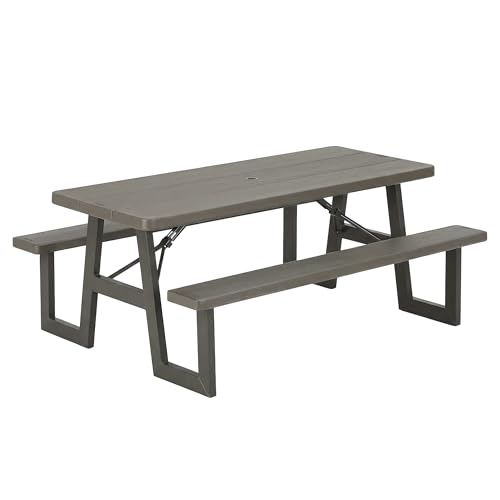
| Resin / high-density plastic | Entry-level to starter tier | Lightweight portability, occasional use | Very low — hose down |
Aluminum is the most popular choice for fold-out models because it is light enough to move solo yet strong enough for a rigid tabletop. If you live somewhere with intense summer heat, our guide to the best outdoor furniture for hot climates explains why powder-coated metal and composite outperform untreated wood.
Sizing and Seating Capacity
Convertible benches are not one-size-fits-all. Before choosing, measure your available footprint in both modes — the table configuration is always larger than the bench configuration.
- Two-person benches: Compact starter tier units that fold into a small two-seat table. Best for balconies and narrow porches.
- Four-person benches: The most common size. In table mode they seat four adults comfortably; in bench mode they seat two to three.
- Six-person benches: Longer tabletop span and heavier frame. High-end tier models in this size often include an umbrella hole.
If your priority is a taller eating surface for standing or stool-height seating, a standard picnic bench may not suit you. In that case, browse our guides to a bar height outdoor table and chairs or a bar height patio set for elevated alternatives.
Features Worth Checking Before You Buy
- Locking hinge mechanism — prevents the tabletop from collapsing under weight
- Reinforced cross-bracing — the clearest sign of a wobble-free frame
- Weather-resistant coating or rust-proof finish — essential for metal frames
- Umbrella hole — useful if you want shade over the table in summer
- Weight and portability — can one person move it alone?
- Folded footprint — measure storage space before ordering
- Warranty coverage on hardware — hinges and latches should be covered
- Level surface requirement — some folding legs need a flat patio to lock correctly
If you are unsure whether a convertible design or a fixed one suits your routine, compare the trade-offs in our article on a bench that turns into a picnic table, which walks through the conversion process in more detail.
Placement, Setup, and Everyday Use
Convertible benches work best on firm, level surfaces. Patios, concrete slabs, and composite decking are ideal. Gravel and soft lawn make it harder for folding legs to lock and can cause the tabletop to tilt.
Where it fits best
- Small patios and balconies: Keep the unit in bench mode day to day, unfold only for meals.
- Fire pit areas: Use bench mode as perimeter seating; table mode works for outdoor dining nearby.
- Garden corners and BBQ zones: A folding picnic table bench doubles as a prep surface and a place to eat.
For outdoor cooking setups, pairing a convertible bench with a dedicated BBQ table keeps prep tools separate from the dining surface, which is a cleaner layout than stacking everything on one table.
Care and storage
Rinse the frame and panels monthly during the season, tighten hinge bolts twice a year, and store or cover the unit during extended freezing periods. Wood models need an annual sealant refresh; aluminum models generally only need a wipe-down with mild soap. Following the routines in our weatherproofing guide will keep the folding mechanism smooth for years.
Who Should Choose a Fold-Out Picnic Bench?
This design is a strong fit if you recognize yourself in any of the following:
- You have limited patio or deck space but still want occasional dining capacity.
- You want one piece of furniture that serves as both seating and a table.
- You need something movable — for relocating between the patio and the lawn.
- You want a casual outdoor eating surface that does not dominate the yard year-round.
It is a weaker fit if you regularly seat six or more, need an umbrella permanently installed, or want the structural rigidity of a fixed frame. In those cases, a traditional picnic table or a dedicated dining set is the better long-term investment.
Quick Buyer's Summary
| Priority | Recommended Tier | Why |
|---|---|---|
| Occasional use, easy storage | Entry-level / starter tier | Lightweight resin or plastic, simple hinge design |
| Year-round outdoor use | Mid-range | Powder-coated aluminum frame with locking hinges |
| Frequent entertaining, larger groups | Premium / high-end tier | Heavy-duty cross-bracing, wider tabletop, umbrella hole |
| Design-led garden setting | Luxury | Solid wood or composite with refined finish and hardware |
Whichever tier you choose, verify that the hinge hardware is reinforced and that the folded footprint fits your storage area. Those two details matter more than surface styling for long-term satisfaction.
Frequently Asked Questions
How does a bench that folds out into a picnic table work?
Hinged tabletop panels and folding legs do the work. In bench mode the panels lie flat as a seat. When you lift and unfold them, they lock into a tabletop while the frame extends outward to support the side benches.
What materials are best for a folding picnic table bench?
High-grade aluminum and powder-coated steel are the most durable for year-round outdoor use. Solid wood and wood-plastic composite offer a warmer look but need more maintenance. Resin and plastic are the lightest and easiest to move.
Can a folding picnic table bench be left outside?
It depends on the finish. Rust-proof aluminum and weather-resistant coated steel can stay outside in most climates. Wood and composite models benefit from a protective cover during extended wet or freezing periods.
How many people can a convertible picnic bench seat?
Most standard models seat four adults in table mode and two to three people in bench mode. Larger high-end tier models can seat six in table mode with a longer tabletop span.
Do I need a level surface for a fold-out picnic bench?
Yes. Folding legs lock more reliably on flat surfaces such as concrete, stone, or composite decking. Gravel and soft lawn can cause the tabletop to tilt and stress the hinges.