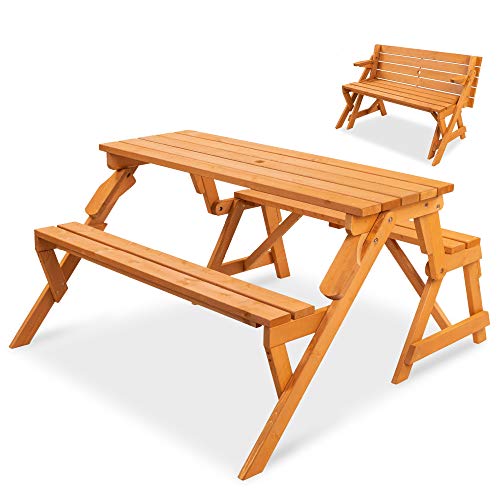
Bench That Turns Into a Picnic Table: The Complete Buying Guide
One piece of furniture, two functions. Learn how convertible benches work, which materials and mechanisms hold up outdoors, and how to choose the right model for your patio, deck, or garden.
How a Bench That Turns Into a Picnic Table Works
A bench that turns into a picnic table is a dual-purpose outdoor seat built around a movable backrest. In its bench position, the backrest stands upright so several people can sit facing one direction. When you unlock and fold the backrest forward, it rotates roughly 180 degrees and lies flat across the seat frame, becoming a raised tabletop. The original seat surface then serves as the seating on one side, while the folded panel acts as the dining surface.
The transformation usually takes only a few seconds. Most models rely on one of three approaches:
- Pivoting backrest: The backrest hinges at the base and rotates forward to form the table. This is the most common and the simplest to operate.
- Sliding panel: A panel slides from behind the seat to the center, locking into a table position. These designs often feel sturdier once locked.
- Rotating frame: The entire upper frame flips over on a central axle. This tends to appear in premium and commercial-grade models.
Because the same footprint serves two purposes, this design is especially popular in compact patios, balconies, and garden corners where dedicated dining furniture would crowd the space. If your outdoor area is tight, our small patio layout guide pairs well with this furniture concept.
Why Homeowners Choose Convertible Benches
The appeal goes beyond clever engineering. A bench that converts into a picnic table solves several practical problems at once:
- Space efficiency: You get seating and a dining surface without buying two separate pieces of furniture.
- Everyday flexibility: It works as a reading bench in the morning and a lunch table in the afternoon.
- Lower furniture count: Fewer pieces means less clutter, fewer covers, and less maintenance.
- Entertaining readiness: When guests arrive, you convert the bench in seconds instead of dragging out a folding table.
- Storage simplicity: There is no separate table to store in winter; the unit folds back into a single bench footprint.
For families who host casual outdoor meals, the convertible bench often replaces both a garden bench and a small picnic table. If you are planning a broader outdoor refresh, our patio essentials checklist helps you map out which pieces you actually need.
Mechanism Types Compared
The conversion mechanism is the single most important part of the product. It determines how easy the bench is to use, how sturdy the table feels, and how long the unit lasts. The table below compares the three main approaches.
| Mechanism | Ease of Use | Stability at Table Position | Best For |
|---|---|---|---|
| Pivoting backrest | Very easy, one motion | Good when a locking pin is present | Everyday family use, small patios |
| Sliding panel | Moderate, requires alignment | Very good, panel seats into rails | Frequent dining use, heavier users |
| Rotating frame | Easy, single flip | Excellent, axle distributes load | High-traffic decks, commercial settings |
Entry-level models sometimes use simple friction hinges without a positive lock. These are fine for light use, but mid-range and top-tier designs almost always add a spring-loaded pin or a cam latch that clicks audibly when the table is secured. That audible click is a useful quality signal during assembly and daily use.
Material Guide: Wood, Metal, and Resin
The frame material affects weight, weather resistance, and how the mechanism feels over time.
Weather-resistant wood
Cedar, teak, and acacia are common choices. Wood offers a warm natural look and tends to dampen noise from the mechanism. Cedar is lightweight and naturally rot-resistant; teak is denser and holds up best in humid climates. Wooden convertible benches generally require an annual seal or oil treatment to prevent cracking and swelling at the hinge points.
Powder-coated aluminum and steel
Aluminum frames are lightweight and rust-resistant, making them a strong pick for coastal areas. Steel frames are heavier and often more rigid, which can make the table position feel more solid. Look for a rust-proof finish and stainless hardware at the pivot points. Metal benches pair nicely with other durable pieces; our guide to outdoor furniture for hot climates explains which finishes tolerate intense sun.
Recycled plastic and resin
High-density polyethylene and resin composites resist moisture, insects, and fading. They are heavier than aluminum but require almost no maintenance. The trade-off is that resin mechanisms can feel less refined than metal ones, so check whether the locking hardware is metal even if the body is resin.
Quality Tiers and What to Expect
Convertible benches fall into clear quality tiers. Understanding these tiers helps you set realistic expectations without relying on arbitrary numbers.
Entry-level tier
These models usually use a simple pivoting backrest, thinner frame stock, and basic hardware. They work well for occasional use, light users, and sheltered porches. Expect to re-tighten fasteners seasonally and to apply a protective finish to wood surfaces more often.
Mid-range tier
Mid-tier benches add reinforced joints, positive locking pins, and better weather coatings. The table position feels notably more stable than entry-level designs. This is the sweet spot for most families who use the bench daily during the warmer months.
Premium and top-tier
High-end and professional-grade models use thicker frames, precision pivots, and premium materials such as teak or marine-grade aluminum. Some include adjustable backrest angles, integrated cup holders, or a storage compartment under the seat. These are built as long-term investments for heavy use and exposed locations.
For a broader look at how outdoor furniture is graded by durability rather than appearance, our buying guides section covers tier-based comparisons across categories.
Sizing and Placement Tips
Measure your space in both configurations before ordering. A convertible bench needs clearance in front of it for the table position, not just for the bench position.
- Bench mode: Allow about 24 inches of depth plus legroom in front.
- Table mode: Add roughly 30 to 36 inches of clear space on the side where people will sit at the table.
- Turning radius: Leave a small buffer at the ends so the backrest can rotate without hitting walls or planters.
- Surface level: Place the bench on a flat, stable surface so the locking mechanism engages evenly.
On decks and balconies, check railing height and wind exposure. A heavier mid-range or premium model stays put in gusty conditions. If you are also considering fixed seating, our guides to benches with backs and tree benches offer useful comparisons for adjacent spaces.
Care and Maintenance
Convertible benches have more moving parts than a standard bench, so maintenance should focus on the mechanism as much as the surface.
- Lubricate hinges and pins twice a year with a silicone-based lubricant. Avoid heavy grease, which attracts grit.
- Inspect fasteners at the start of each season and tighten any that have loosened.
- Clean the pivot area with a soft brush to remove sand and debris that can jam the fold.
- Treat wood surfaces annually with a weather-resistant sealant or oil.
- Cover or store during prolonged freezing conditions, especially if the mechanism is metal.
For a full seasonal routine, see our weatherproofing guide. It covers protective coatings and storage practices that apply directly to convertible outdoor furniture.
Related Outdoor Furniture Ideas
If the convertible bench is part of a larger patio plan, these related guides can help you build a cohesive setup:
- Classic bench picnic table options for fixed dining layouts.
- Folding benches that convert into picnic tables for storage-friendly designs.
- Benches that make into picnic tables for alternative mechanism styles.
- BBQ tables if you need a dedicated prep and grill surface.
- Bistro sets for small-space dining with a different footprint.
- Outdoor rugs to define the dining zone under and around the bench.
These pieces complement the convertible bench rather than duplicate it, so you can build a functional layout without buying redundant furniture.
Frequently Asked Questions
How does a bench that turns into a picnic table work?
Most models use a pivoting backrest that folds forward to become a flat tabletop. When locked upright, the backrest serves as a seat back. Premium designs use sliding or rotating mechanisms that reconfigure the entire frame and distribute weight more evenly.
What materials are best for a convertible picnic bench?
Weather-resistant wood such as cedar or teak, powder-coated aluminum, and high-grade recycled plastic are the most durable options. Each balances weight, maintenance needs, and outdoor longevity differently, so match the material to your climate and storage habits.
Can a transforming bench stay outdoors year-round?
Many models are built for full outdoor exposure, but the folding mechanism and hardware benefit from periodic lubrication and a protective cover during harsh winters. Check the manufacturer's weather-resistance rating before leaving it uncovered.
Is a bench that turns into a picnic table sturdy enough for daily use?
Top-tier and professional-grade models with reinforced frames and locking pins handle daily family use well. Entry-level designs may have weight limits and should be checked against the number of intended users before purchase.
Ready to Choose Your Convertible Bench?
Compare the recommended models below, check their mechanisms and material ratings, and pick the tier that matches how often you entertain outdoors.