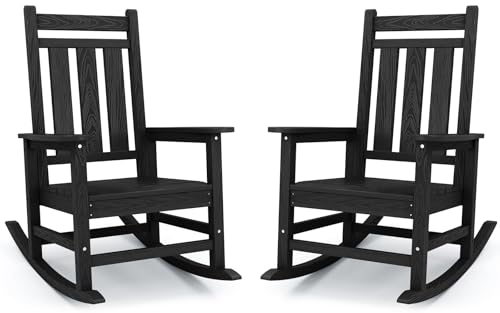
Black Rocking Chairs: The Complete Outdoor Buying & Style Guide
A black rocker is one of the most versatile seats you can add to a porch, patio, or deck. This guide walks you through frame materials, motion types, comfort layers, weather care, and styling so you can choose with confidence.
Few pieces of outdoor furniture carry as much emotional weight as a rocking chair. It signals slow mornings, shaded afternoons, and conversations that stretch past sunset. When that chair is finished in black, it also brings a clean, architectural anchor to a space that might otherwise feel busy or unfinished. Whether you are furnishing a narrow front porch, a wide back deck, or a garden corner, understanding how black rocking chairs are built and how they behave outdoors is the difference between a seat you love and one you quietly stop using.
This guide is written for shoppers who already know they want a rocking chair and are now comparing the details. You will learn which frame materials handle weather best, how motion systems differ, what to look for in cushions, and how to build a seating zone that feels intentional. Along the way we point to related guides on black outdoor furniture and black outdoor rocking chairs in a set of two so you can plan a complete arrangement.
Why Black Rocking Chairs Work in Almost Any Outdoor Space
Black is not just a color choice; it is a design decision with real practical benefits. A black frame visually recedes, which means the chair does not fight with flowering plants, colorful cushions, or a patterned outdoor rug. That restraint is exactly why designers return to black again and again for porches and patios.
- Visual grounding: A dark frame anchors a light-colored deck or pale stone patio and keeps the seating area from floating.
- Color flexibility: Black pairs with white, grey, red, blue, and natural wood tones, so you can change cushion colors seasonally without replacing the frame.
- Hides wear gracefully: Scuffs and dust are less visible on a matte black finish than on bright white or pastel frames.
- Timeless silhouette: Black reads as classic porch furniture, which keeps the investment relevant for years.
If your broader outdoor scheme already leans dark, a rocker can slot in beside a black outdoor bench or a black patio chair to create a unified seating language. For a softer contrast, pair black frames with black outdoor furniture with white cushions.
Frame Materials Compared
The frame determines how a rocker feels, how long it lasts, and how much care it needs. Below is a practical comparison of the most common constructions you will encounter when shopping for black rocking chairs.
| Frame Type | Market Tier | Best For | Care Level |
|---|---|---|---|
| Powder-coated aluminum | Mid-range | Year-round porches, humid climates, low-maintenance households | Low — wipe with soap and water |
| Treated hardwood (teak, acacia, eucalyptus) | Premium | Traditional porches, covered patios, warm natural aesthetics | Moderate — annual sealant recommended |
| Synthetic wicker over aluminum | Mid-tier | Coastal look, covered decks, textured styling | Low to moderate — rinse and inspect weave |
| Wrought iron or steel | High-end tier | Heavy-duty settings, windy exposures, classic garden style | Moderate — touch up chips to prevent rust |
| Resin / high-density plastic | Entry-level | Casual patios, rental spaces, quick seasonal seating | Very low — hose down as needed |
Powder-coated aluminum is the sweet spot for most shoppers. It is light enough to move around, will not rust, and the coating holds a deep black finish well. Treated hardwood is the choice when you want the tactile warmth of wood under your hands; the black stain or paint must be maintained to prevent moisture intrusion. Synthetic wicker delivers texture and a coastal feel, and modern UV-stabilized resin resists fading far better than early-generation wicker. Wrought iron is the most substantial option and suits windy porches, but chips must be treated quickly. Resin is the practical choice for casual or temporary setups.
Buying tip: Check the hardware, not just the frame. Stainless steel or zinc-plated bolts resist corrosion far better than untreated steel. On a black frame, a rusty bolt is the first thing that will fail and the first thing that will look tired.
Rocking Motion: Runners, Gliders, and Swivel Rockers
The motion system is what makes a rocking chair feel like a rocking chair. There are three main types, and each suits a different user.
Traditional runner rockers sit on curved wooden or metal rails. The motion is rhythmic and front-to-back, and the chair requires a little momentum to get going. These are ideal for porches with level flooring and for people who enjoy the classic rocking sensation. Many black rocking chair outdoor models use this design.
Gliders move on a sliding track or bearing assembly. The motion is smoother and more horizontal, and it starts with less effort. Gliders are a strong choice for older users, people with joint sensitivity, and anyone who wants a calmer, more controlled glide. They also tend to be quieter on hard surfaces.
Swivel rockers combine a rocking arc with a rotating base, letting you turn toward a conversation or a view. They take up more floor space and need a stable, level surface, but they are excellent for open patios where seating is arranged in a circle.
Whichever motion you choose, test the balance point. A well-built rocker should feel stable at the extremes of its arc and should not tip easily when you stand up. If you are shopping online, look for product descriptions that mention a weighted base, anti-tip design, or a tested weight capacity.
Cushions, Slats, and Comfort Layers
Comfort on a rocking chair comes from three places: the seat profile, the back angle, and the cushion. Many black rockers are sold with slatted seats that are durable and drain well, but they are not comfortable for long sitting without a cushion. If you plan to use the chair daily, prioritize a model with a contoured seat or plan to add a fitted cushion.
Look for cushions with a high-density foam core and a solution-dyed or acrylic outdoor fabric cover. These resist fading and mildew far better than standard indoor foam. A cushion with a tie-down strap or a non-slip bottom will stay put as the chair moves. If you already own a rocker, a black seat cushion for outdoor furniture can be a simple upgrade that transforms the sitting experience.
For a bolder look, contrast the frame with blue and white striped outdoor seat cushions or keep it crisp with black patio furniture with white cushions. Cushions are the easiest way to shift a black rocker from formal to relaxed without changing the furniture itself.
How to Choose the Right Size and Placement
Measure before you shop. A rocking chair needs clearance behind and in front of the runners to complete its arc. As a rule of thumb, allow at least 18 inches behind the chair and 24 inches in front. On a narrow porch, a glider may fit better than a full runner rocker because it needs less front-to-back travel.
Seat height matters too. A seat height around 17 to 19 inches from the floor suits most adults; lower seats can be harder to rise from, and higher seats may leave your feet dangling. If the chair will be used by people of different heights, a model with a slightly deeper seat and a firm cushion offers the most flexibility.
- Measure porch depth and doorway width before ordering.
- Confirm the chair will sit on a level surface — runners and gliders both need it.
- Leave room for a small side table between two chairs.
- Check the weight capacity if the chair will be shared or used by heavier adults.
- Plan storage for cushions if the porch is uncovered.
For a matched pair, a black outdoor rocking chairs set of 2 is often the most efficient way to furnish a porch, and it guarantees consistent finish and proportions. If you are building a larger seating zone, consider a black outdoor dining chairs set of 4 nearby to keep the material and color story consistent.
Weather Care and Long-Term Maintenance
A black finish is forgiving, but it is not indestructible. The care routine depends on the frame material, and a few habits will extend the life of any rocker.
Monthly: Wipe the frame with mild soap and water, rinse, and dry with a soft cloth. Check bolts and tighten any that have loosened from rocking motion.
Seasonally: Inspect joints, runners, and the base for cracks or corrosion. On wood frames, apply a UV-protective sealant annually. On metal frames, touch up chips with matching enamel before rust develops.
During storms and winter: Bring cushions indoors or store them in a ventilated cushion box. If the chair stays outside, use a breathable cover rather than a sealed plastic tarp, which can trap moisture. For a broader seasonal routine, see our weatherproofing guide.
If your porch also includes a black wicker patio furniture set, keep the care routine consistent across pieces so the finish ages evenly. A single faded or chipped piece can make an otherwise cohesive porch look neglected.
Styling Black Rocking Chairs
Black rockers are a natural fit for several design directions. On a farmhouse porch, pair them with a black outdoor bench and a woven outdoor rug. On a coastal porch, use synthetic wicker rockers with blue and white cushions and a light-colored side table. In a modern setting, choose a slim aluminum rocker with a minimal cushion and let the architecture do the talking.
For a cohesive look, repeat black in small accents: a lantern, a side table, or a planter. Avoid introducing too many competing dark tones; if the rocker is black, keep other metal finishes to one additional tone, such as brushed nickel or warm brass. If you want a softer palette, a black outdoor furniture with grey cushions combination is calm and easy to maintain.
Finally, think about the transition from the house to the porch. A black rocker near the door creates a natural landing spot, and it pairs well with a black wrought iron coffee table with glass top if your porch doubles as a conversation area. The goal is a space that feels finished enough to use every day, not just on special occasions.
Common Mistakes to Avoid
- Buying for looks only: A chair that is beautiful but uncomfortable will not get used. Sit in it or read the seat dimensions carefully.
- Ignoring the surface: Runners and gliders both need level ground. A wobbly rocker is frustrating and can damage the frame over time.
- Skipping cushion care: Outdoor cushions left in the rain will mildew. Plan storage before you buy.
- Mismatched scale: A large rocker on a small balcony will crowd the space. Measure first.
- Forgetting hardware: Cheap bolts are the first failure point. Check the specification before ordering.
Quick decision framework: Choose aluminum for low maintenance, hardwood for warmth and tradition, wicker for texture, and wrought iron for weight and permanence. Choose a runner for classic motion, a glider for smoothness, and a swivel rocker for flexible conversation seating. Add a fitted cushion if the seat is slatted.
Frequently Asked Questions
Are black rocking chairs suitable for outdoor use?
Yes, provided the frame and finish are rated for outdoor exposure. Powder-coated aluminum, treated hardwood, and synthetic wicker with UV-stabilized resin all perform well on porches and patios. Look for rust-proof hardware, weather-resistant coating, and drainage-friendly seat construction.
What is the difference between a rocking chair and a glider?
A rocking chair moves on curved runners fixed to the base, creating a front-to-back arc motion. A glider travels on a sliding track or bearing system, producing a smoother horizontal motion. Rockers feel more traditional and rhythmic, while gliders offer a gentler glide that many people find easier on the joints.
How do I maintain black rocking chairs over time?
Wipe frames with mild soap and water monthly, tighten hardware each season, and apply a UV-protective sealant to wood frames annually. Bring cushions indoors or store them in a ventilated cushion box during rain and winter. Touch up scratches on metal finishes with matching enamel to prevent corrosion.
Can black rocking chairs be paired with other furniture colors?
Black is a versatile neutral anchor. It pairs cleanly with white and grey cushions for a crisp modern look, red cushions for bold contrast, and natural wood tones for warmth. Mixing a black rocker with a black outdoor bench or black patio chairs creates a cohesive, intentional seating zone.
How many rocking chairs should a typical porch have?
Most porches comfortably fit two rockers side by side with a small table between them. A wider porch can accommodate a pair plus a bench. For narrow spaces, a single rocker angled toward the door or view often works better than forcing two chairs into a tight footprint.