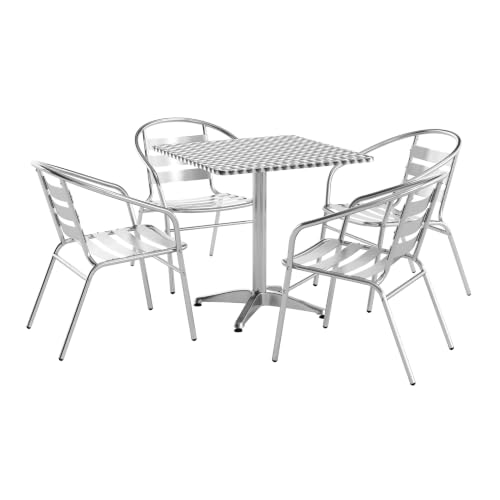
Commercial Outdoor Bistro Table and Chairs
Everything you need to choose durable, commercial-grade bistro sets for cafés, restaurants, patios, and hospitality spaces — from materials and sizing to maintenance and setup.
If you're outfitting a café patio, a restaurant terrace, or any public-facing outdoor space, commercial outdoor bistro table and chairs are among the most important investments you'll make. Unlike residential furniture, commercial bistro sets must withstand continuous daily use, frequent cleaning, exposure to weather, and the wear that comes with high foot traffic. Choosing the right combination of table and chairs directly affects guest comfort, safety, and the long-term efficiency of your outdoor operation.
This guide breaks down the key factors that matter when you're researching commercial bistro sets — the materials that hold up over time, the dimensions that work for different layouts, the features that simplify daily operations, and the practical details that separate true commercial outdoor furniture from residential pieces that happen to look similar.
Quick summary: Look for reinforced frames in powder-coated aluminum, high-grade steel, or cast aluminum. Prioritize stackable chairs and stable table bases. Match table size to your space and seating plan, and confirm that every piece is rated for continuous commercial use.
Why Commercial-Grade Bistro Sets Are Different
Residential bistro sets are designed for occasional use by a few people. Commercial outdoor bistro table and chairs are engineered for the opposite: repeated use throughout the day, movement across surfaces, exposure to cleaning chemicals, and constant exposure to sun, rain, and temperature swings. That difference shows up in three main areas:
- Frame construction: Commercial sets use reinforced joints, thicker tubing, and heavier-gauge metal. Table bases are weighted and designed to resist tipping even when guests lean on the edge.
- Weather-resistant finishes: Powder-coated aluminum, rust-proof finishes, and UV-stable materials protect against fading, corrosion, and surface degradation.
- Operational features: Stackable chairs, easy-to-clean surfaces, and modular table designs help staff reset seating quickly during busy service periods.
When you browse commercial outdoor dining tables and chairs, these are the characteristics to verify before committing to a set. For larger installations, it also helps to understand how commercial outdoor furniture manufacturers structure their product lines and warranties.
Best Materials for Commercial Outdoor Bistro Sets
Material choice is the single biggest factor in how long your bistro set will last and how much maintenance it will require. Here's how the main options compare:
| Material | Best For | Key Strengths | Considerations |
|---|---|---|---|
| Powder-Coated Aluminum | Most commercial patios | Lightweight, rust-proof finish, easy to move and stack | Choose heavier-gauge frames for windy locations |
| High-Grade Steel | High-traffic, high-wind areas | Heavy-duty strength, stable bases, solid build | Must have a rust-proof finish and regular inspection |
| Cast Aluminum | Premium and luxury settings | Decorative detailing, durable construction, weather-resistant | Heavier than tubular aluminum; typically top-tier |
| UV-Resistant HDPE | Casual dining and family-friendly patios | Fade-resistant, easy to clean, low maintenance | Less premium in feel than metal; check weight rating |
| Teak and Hardwood | Upscale, design-forward terraces | Natural look, long-term investment when properly sealed | Requires periodic oiling and seasonal care |
Editorial tip: For most cafés and restaurants, powder-coated aluminum offers the best balance of durability, weight, and maintenance. Mid-range models typically handle daily service well, while high-end tier and luxury sets add decorative detailing and heavier bases for premium settings.
Sizing and Layout: Matching Tables to Your Space
Commercial bistro tables are typically available in round, square, and rectangular formats. The right choice depends on your available footprint, service style, and how you want guests to move through the space.
- Round tables: Best for two-person seating and conversational layouts. Round tops reduce sharp corners in tight spaces and work well along walls and railings.
- Square tables: Flexible for two or four guests. Square tops can be pushed together to create larger seating groups during peak hours.
- Rectangular tables: Suited to four- or six-person seating and longer terraces. Pair with narrower chair profiles to maximize circulation space.
As a planning rule, allow at least 24 to 30 inches of clearance per seated guest and 36 inches or more for main walkways. Standard commercial bistro table heights are 29 to 30 inches for dining height, with bar-height options at 40 to 42 inches. If your layout mixes heights, keep bar-height and dining-height zones clearly separated for both safety and aesthetics. For related layout inspiration, see our guides on circular outdoor dining tables and commercial picnic tables.
Choosing Commercial Bistro Chairs
The chairs in a commercial bistro set often take more abuse than the tables. Guests slide them across pavement, lean back, and move them constantly. For that reason, chair selection deserves as much attention as the table itself.
- Stackability: Stackable chairs simplify cleaning, storage, and end-of-day resets. Look for stacking guides and protective caps that prevent finish wear.
- Weight and stability: Heavier chairs stay in place on windy patios. Check that the chair frame is rated for commercial use and that the seat height matches the table.
- Seat materials: Aluminum slats, perforated steel, and UV-resistant resin seats drain quickly after rain. Cushioned seats add comfort but require storage and maintenance planning.
- Armrests and back height: Armrests improve comfort for longer visits; higher backs suit lounging, while lower backs keep sightlines open in busy spaces.
If your outdoor area includes flexible seating zones, it's worth reviewing how chairs for outside and chairs and benches are typically specified for commercial use.
Table Bases and Stability
The base is where commercial bistro tables earn their reputation. A stable base prevents wobbling and tipping, especially on uneven pavement. Common base types include:
- Cast-iron cross bases: Heavy-duty and stable, ideal for high-wind and high-traffic locations.
- Weighted round bases: Simple and effective for smaller tops; easy to level on patios.
- Pedestal bases: Best for round tops and tight spaces; choose commercial-grade pedestals with reinforced welds.
- Fixed bases: Bolted or anchored for permanent installations in hospitality settings.
Check that the base is matched to the top size. Oversized tops on undersized bases are a common cause of wobble and tip-over complaints in cafés and restaurants.
Weather Resistance and Daily Maintenance
Even the best commercial sets need a simple maintenance routine. A few practical habits will extend the life of your investment:
- Wipe tables and chairs with a mild detergent solution after service; avoid abrasive cleaners that dull coatings.
- Inspect welds, joints, and base hardware monthly for loosening or corrosion.
- Touch up scratches on powder-coated surfaces promptly to prevent rust creep.
- Store or cover stackable chairs during extended off-seasons to reduce UV exposure.
- Level tables regularly on patios and pavements, especially after temperature changes.
For broader guidance, see our related content on commercial patio umbrellas that resist wind and commercial outdoor furniture overall.
What to Check Before You Buy
When you're comparing commercial outdoor bistro table and chairs, use this checklist to keep your evaluation consistent:
- Commercial rating: Confirm the manufacturer explicitly rates the set for commercial use, not just residential.
- Frame gauge and welds: Thicker frames and reinforced welds indicate heavier-duty construction.
- Finish warranty: A finish warranty is a useful signal of coating quality and corrosion resistance.
- Stacking and storage: Verify stack counts and storage height if space is limited.
- Replacement parts: Check whether glides, bases, and hardware are available separately.
- Surface compatibility: Match base type and chair feet to your patio surface to prevent scratching.
For brand comparisons, our brand comparison guide and comparison guide cover how major manufacturers position their commercial lines.
Ready to explore options? Browse curated commercial bistro sets below, then compare features across entry-level, mid-range, premium, and commercial-grade tiers to find the right fit for your outdoor space.
Frequently Asked Questions
What makes a bistro table commercial-grade?
Commercial-grade bistro tables use reinforced frames, high-grade steel or cast aluminum, and weather-resistant coatings designed to withstand continuous public use, frequent cleaning, and exposure to the elements.
How many chairs fit around a commercial bistro table?
Most commercial bistro tables seat two to four people. Square and round tables typically accommodate two to four chairs, while larger rectangular models can seat four to six depending on the dimensions.
Are commercial bistro chairs stackable?
Many commercial bistro chairs are designed to be stackable for efficient storage and cleaning. Stackable models are popular in cafés and restaurants that need to reconfigure outdoor seating quickly.
What materials are best for outdoor commercial bistro sets?
Powder-coated aluminum, high-grade steel, cast aluminum, and UV-resistant high-density polyethylene are the most durable materials for commercial outdoor bistro sets. These resist rust, fading, and heavy foot traffic.