Commercial Outdoor Furniture Buying Guide
Everything business owners need to choose durable, safe, and attractive outdoor furniture for cafes, restaurants, hotels, and commercial patios. Built for heavy traffic, designed for the long run.
START THE GUIDEWhy commercial outdoor furniture is different: Furniture for a business faces continuous public use, frequent cleaning, and exposure to weather day after day. The right commercial-grade pieces reduce replacement frequency, improve guest comfort, and reflect the quality of your brand. This guide explains what to look for, how to plan your space, and which tiers and materials make the most sense for your venue.
What Makes Outdoor Furniture Commercial-Grade?
Residential furniture is designed for occasional use by a small household. Commercial outdoor furniture is engineered for repeated, continuous use by the public. That difference shows up in the frame, the joints, the finish, and the testing behind each piece. When you shop for commercial outdoor furniture, look for these defining traits:
- Reinforced frames: Thicker walls, welded or double-bolted joints, and heavier gauge construction that resist wobble under constant use.
- Higher weight capacity: Commercial pieces are rated for a wider range of users and repeated load cycles.
- Commercial-grade finishes: Powder-coated or rust-proof surfaces tested against UV fading, salt, and frequent cleaning.
- Safety and stability: Wider bases, anti-tip design, and stackability that holds up in busy service areas.
- Maintenance efficiency: Removable cushions, replaceable parts, and materials that wipe clean quickly between guests.
If you are outfitting a smaller venue or a mixed-use patio, it also helps to compare commercial options with composite outdoor furniture and proven residential designs such as comfortable outdoor furniture, then decide where commercial-grade construction is essential and where it is not.
Why Commercial-Grade Matters for Your Business
Outdoor seating is one of the first things guests notice. Sturdy, well-designed furniture signals care and professionalism. Flimsy or worn pieces do the opposite, and they also create operational headaches: frequent replacements, wobbly tables, and safety complaints. Commercial-grade furniture supports your business in four practical ways:
- Longer service life: Heavy-duty construction reduces replacement frequency and downtime.
- Lower total ownership burden: Efficient in the long run compared with repeated replacement of lighter pieces.
- Guest comfort and dwell time: Proper ergonomics and stable seating encourage guests to stay longer.
- Brand consistency: Coordinated commercial patio furniture presents a polished, intentional look across every seating zone.
For a broader look at material comparisons and brand evaluation, see our brand comparison guide and product comparison guide.
Best Materials for Commercial Outdoor Furniture
Material choice drives durability, maintenance effort, and appearance over time. Here is how the main commercial materials compare in practice:
Powder-Coated Aluminum
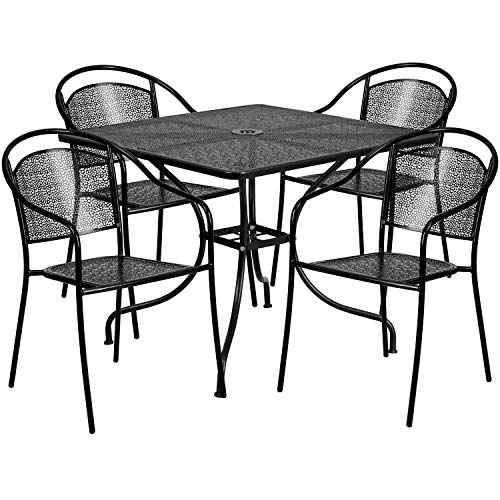
The workhorse of commercial patios. Aluminum is lightweight, rust-resistant, and easy to rearrange for events. A quality powder coat resists chipping and UV fading. Choose reinforced frames for high-traffic dining areas, and pair with commercial outdoor dining tables and chairs for a coordinated setup.
High-Grade Stainless Steel
Exceptional strength and corrosion resistance, especially in coastal or humid climates. Stainless steel is heavier and typically sits in the premium and luxury tiers, but it delivers outstanding longevity in demanding environments.
Commercial-Grade Resin and HDPE
High-density polyethylene and commercial resin resist moisture, insects, and UV exposure without painting or sealing. They are a strong fit for poolside areas, boardwalks, and family-friendly venues. Look for UV-stabilized formulations and solid, not hollow, construction.
Teak and Hardwood
Premium hardwoods bring warmth and a high-end feel to hotel terraces and upscale restaurants. They require periodic cleaning and sealing, but with proper care they age gracefully. Compare care routines in our teak cleaning guide before committing to a full hardwood program.
Wicker, Rattan, and Synthetic Weave
Synthetic weaves over aluminum frames offer a resort-style look with commercial durability. They suit lounge zones and hospitality patios. Check weave density and frame quality, since these determine how well the piece holds its shape under heavy use.
For a material-by-material breakdown of solid outdoor options, our guide to composite outdoor furniture and comfortable outdoor furniture without cushions is a useful starting point.
Quality Tiers in Commercial Outdoor Furniture
Commercial furniture is best understood through quality tiers rather than absolute figures. The tier you choose should match your traffic volume, climate, and brand positioning. The three-tier system below is used consistently throughout this guide.
Entry-Level Commercial
Solid build with reinforced frames and weather-resistant coatings. A good fit for seasonal patios, low-to-moderate traffic, and venues that refresh layouts often. Well-specified for the category when frames and joints are checked carefully.
Mid-Range Commercial
The most common choice for daily-use restaurants and cafes. Better finishes, smoother mechanisms, and heavier frames than entry-level. Competitive within its class for durability and long-term reliability.
Commercial-Grade & Luxury
Professional-grade construction for high-traffic, all-weather venues and hospitality brands. Premium materials, engineered joints, and extended service life. A worthwhile long-term investment for continuous outdoor operations.
Key Buying Factors Checklist
Before You Order, Confirm These Points
- Traffic volume: Estimate daily covers and peak-season load. Higher traffic demands the balanced tier or above.
- Climate exposure: Coastal salt air, intense UV, and freeze-thaw cycles should push you toward rust-proof finishes and UV-stabilized materials.
- Storage and flexibility: Stackable chairs and folding tables simplify closing routines and event reconfiguration.
- Cleaning protocol: Choose wipe-clean surfaces and removable cushions that match your team's daily routine.
- Safety and compliance: Verify weight ratings, stability, and local accessibility and occupancy requirements.
- Replacement parts: Confirm that cushions, glides, and hardware are available individually.
- Delivery and assembly: Plan for receiving, assembly space, and disposal of packaging; see our delivery and assembly guide.
- Warranty terms: Commercial warranties differ from residential ones; review coverage in our warranty and returns guide.
Planning Your Commercial Outdoor Space
Layout determines how many guests you can serve comfortably and how smoothly service runs. Start with accurate measurements, then build zones around clear circulation paths.
Cafes and Bistros
Compact footprints reward small, sturdy sets. Commercial outdoor bistro table and chairs maximize seating in narrow frontages while keeping walkways open. Two-top configurations are ideal for quick turnover and solo diners.
Restaurants and Dining Terraces
For full-service dining, commercial outdoor dining tables and chairs provide stable, comfortable seating for longer meals. Keep service lanes clear, and use consistent table spacing so staff can move efficiently during peak hours.
Parks, Picnic Areas, and Public Spaces
Fixed or heavy seating reduces movement and vandalism risk. Commercial picnic tables are a dependable choice for parks, schools, and communal areas, offering generous seating and straightforward maintenance.
Shade and Weather Protection
Shade extends usable hours and protects guests on hot days. Wind-rated options are essential in open plazas and coastal locations; see our guide to commercial patio umbrellas wind-resistant for anchoring and canopy considerations.
Lounge and Waiting Areas
Hotels, spas, and clubs benefit from relaxed lounge zones that balance comfort with durability. Deep seating, modular sofas, and side tables create a hospitality feel without sacrificing commercial-grade construction.
If you are still shortlisting suppliers, our overview of commercial outdoor furniture manufacturers explains what separates specialist makers from general suppliers.
Quick Comparison by Venue Type
| Venue Type | Recommended Tier | Best For | Key Material Focus |
|---|---|---|---|
| Cafe / Bistro | Essential to Balanced | Compact two-top seating, quick turnover | Powder-coated aluminum, synthetic weave |
| Full-Service Restaurant | Balanced to Top-Tier | Long meals, daily high-traffic service | Reinforced aluminum, stainless steel accents |
| Hotel / Resort | Top-Tier / Luxury | Brand-forward lounge and poolside zones | Premium hardwood, high-grade stainless steel |
| Park / Public Space | Commercial-Grade | Fixed seating, vandal resistance | HDPE, steel-reinforced concrete, treated wood |
Maintenance and Longevity Tips
Commercial furniture rewards a simple, consistent maintenance routine. A few minutes per day protects your investment and keeps the space presentable for guests.
- Daily: Wipe tabletops and armrests, remove debris, and check that chairs and tables sit level.
- Weekly: Rinse frames, inspect joints and fasteners, and tighten any loosened bolts.
- Seasonal: Deep-clean cushions and frames, apply sealant to hardwood as recommended, and touch up powder-coated surfaces.
- Storage: Stack or cover furniture during closures and off-seasons to extend finish life.
For cleaning products and methods, see our weatherproofing guide. For cushion care and replacement planning, see our outdoor cushion guide.
Frequently Asked Questions
What makes outdoor furniture commercial-grade?
Commercial-grade outdoor furniture is built with reinforced frames, heavier-duty materials, higher weight capacities, and finishes tested for continuous public use. It typically meets higher durability and safety standards than residential furniture.
Which materials are best for commercial patio furniture?
Powder-coated aluminum, high-grade stainless steel, and commercial-grade resin or high-density polyethylene are among the best choices. They resist rust, UV fading, and heavy traffic while remaining relatively easy to maintain.
How do I plan seating capacity for a commercial patio?
Start by measuring usable square footage, then allow clear walkways and service paths. Compact bistro sets suit small footprints, while modular seating scales efficiently for larger terraces. Always confirm local occupancy and accessibility rules before finalizing a layout.
Is commercial outdoor furniture worth the investment?
Yes. Commercial-grade pieces are engineered for longer service life and lower replacement frequency, making them a worthwhile long-term investment for businesses that operate outdoor seating daily.
Ready to Outfit Your Commercial Patio?
Explore curated commercial-grade options below, compare features, and choose the setup that fits your venue, traffic, and climate. Every recommendation is selected for durability and long-term performance.
VIEW RECOMMENDED PRODUCTS