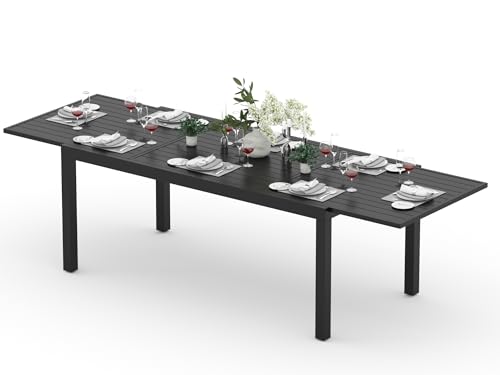
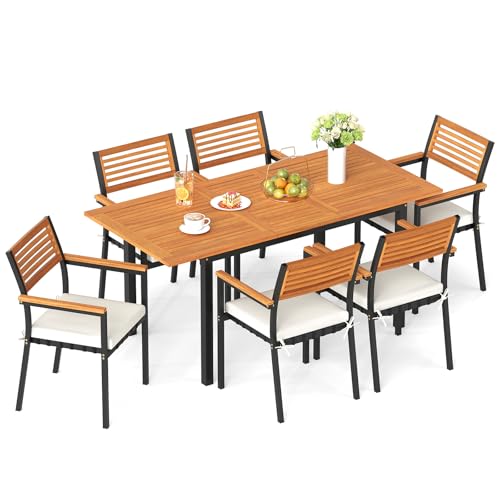
Expandable Outdoor Dining Table with Umbrella Hole
Everything you need to know before choosing a flexible patio dining table that grows with your guest list and keeps shade within reach all day.
START THE GUIDEWhy this table matters: An expandable outdoor dining table with an umbrella hole solves two of the biggest patio frustrations at once — seating that is too small for gatherings, and harsh midday sun with nowhere to mount shade. This guide explains how to choose the right size, extension mechanism, material, and umbrella compatibility so you buy once and enjoy it for years.
What Is an Expandable Outdoor Dining Table with an Umbrella Hole?
An expandable outdoor dining table is a patio table designed to change length. Most models use one of three approaches: a self-storing butterfly leaf that folds into the table body, drop-in extension leaves stored separately, or a sliding and locking mechanism that extends the tabletop frame. The umbrella hole is a pre-cut opening — usually in the fixed center section — that accepts the pole of a patio umbrella.
Combining these two features is genuinely useful. The umbrella hole gives you shade during long lunches and afternoon work sessions, while the expandable design lets the same table serve as a compact four-person setup on weekdays and a six- or eight-person dining surface when family and friends arrive. If you are comparing table types more broadly, our guide to the expandable outdoor dining table covers the wider category and how it differs from fixed tables.
Why Choose an Expandable Table with an Umbrella Hole?
- One table, two capacities. Keep a compact footprint for everyday use and extend only when you need more seats.
- Shade stays centered. A central umbrella hole positions shade over the table, not off to one side, so everyone is covered.
- Better use of small patios. You do not need to dedicate permanent floor space to a large table.
- Hosting flexibility. Holiday meals, birthday parties, and casual dinners all work with the same piece of furniture.
- Seasonal adaptability. The umbrella can be removed in cooler months so the table works year-round.
If your priority is a fixed table that seats a full crowd from day one, a larger option such as a large outdoor dining table with bench and chairs may be a better fit. Expandable tables are for buyers who value versatility over maximum fixed seating.
Sizing Guide: How Much Table Do You Actually Need?
Sizing is where most buyers either overbuy or undersize. The key is to plan around your typical and maximum guest counts, then check the extension range against your patio dimensions.
Seating Capacity Rules of Thumb
- Allow roughly 24 inches of table width per person when seated side by side.
- A 4-person table usually spans about 48 to 60 inches in length.
- A 6-person table typically runs from 60 to 72 inches.
- An 8-person table generally starts around 72 inches and can reach 90 inches or more when fully extended.
Because expandable tables change length, look at both the collapsed and fully extended measurements. A model that collapses to 60 inches and extends to 84 inches covers the 6-to-8-person range comfortably.
Clearance Around the Table
Leave at least 36 inches of open space on every side of the table so chairs can slide out and people can walk past. Tight corners are the most common reason a patio dining area feels cramped even when the table itself is the right size. For smaller spaces, consider pairing the table with compact seating such as folding outdoor chairs that can be stored when not in use.
Capacity and Tier Reference
| Collapsed Length | Extended Length | Typical Seats | Market Tier | Best For |
|---|---|---|---|---|
| 40–48 in | 56–64 in | 4 to 6 | Entry-level / starter tier | Balconies and small patios |
| 48–60 in | 66–78 in | 6 to 8 | Mid-range / balanced tier | Most family patios |
| 60–72 in | 80–96 in | 8 to 10 | Premium / high-end tier | Frequent entertaining |
| 72 in and above | 96 in and above | 10 and above | Luxury / commercial-grade | Large decks and hospitality use |
Extension Mechanisms Compared
The extension mechanism affects how easy the table is to adjust, how much storage the leaves require, and how stable the table feels when fully open. Each design suits a different type of buyer.
Butterfly Leaf
A butterfly leaf folds in half and stores inside the table body. You pull the two halves of the tabletop apart, unfold the leaf, and push the table back together. This is the most convenient design for everyday switching because there are no loose panels to store. Mid-range and premium models tend to have the smoothest butterfly mechanisms with metal hinges and locking latches.
Drop-In Extension Leaf
Drop-in leaves are separate panels that you set into the gap after separating the table halves. They are common on entry-level and mid-tier wooden tables. The trade-off is that the leaf must be stored somewhere when not in use — under a sofa, in a shed, or in a closet. Always check whether the table includes a storage slot.
Sliding Frame Extension
Some designs use a sliding frame with an integrated panel that extends the tabletop without separate leaves. These are often found on aluminum tables and tend to be simple to operate, though the extension range is usually shorter than butterfly-leaf designs.
Stability Considerations
- Leg placement matters. Tables with legs at the corners and a central stretcher wobble less when extended than tables with a single central pedestal.
- Locking mechanisms are essential. A secure latch prevents the table from sliding apart when someone leans on the edge.
- Heavier is more stable, but harder to move. If you reposition the table often, look for locking casters or a lighter aluminum frame.
Materials: Which Tabletop and Frame Lasts?
Outdoor dining tables face rain, sun, temperature swings, and food spills. The material you choose determines how much maintenance the table needs and how long it will look good.
Powder-Coated Aluminum
Lightweight, rust-resistant, and easy to move. A strong choice for humid climates and anyone who reconfigures the patio often. Mid-range and premium aluminum tables usually have reinforced frames and thicker coatings.
High-Grade Steel
Heavier and very stable, with excellent structural rigidity. Look for rust-proof finishes and sealed welds. Steel is common in premium and high-end tier tables.
Weather-Resistant Hardwood
Teak, acacia, and eucalyptus offer warmth and a natural look. They need periodic sealing or oiling but age gracefully. Hardwood tables tend to be heavier and are often found in mid-range and premium tiers.
Resin and HDPE
Entry-level and starter tier options that resist moisture and require almost no maintenance. They are lightweight and durable for casual use, though they feel less refined than metal or wood.
Tabletop Surface Options
- Slatted tops drain water quickly and are the most weather-friendly.
- Solid surfaces such as polywood or composite are easy to wipe clean but can hold water if not slightly pitched.
- Glass tops look elegant and reflect light but require careful handling and frequent cleaning. A glass-top patio table and chairs with umbrella is a good reference point if you prefer that aesthetic.
- Tile and stone tops add a premium feel and handle heat well, but they are heavy and can crack if dropped.
Umbrella Hole Compatibility: What to Check
The umbrella hole is only useful if it fits your umbrella and base correctly. Before buying, confirm these four details.
Hole Diameter
Most patio umbrella poles are 1.5 inches in diameter, and most table holes are cut to about 1.75 to 2 inches to allow clearance. Some larger market umbrellas use thicker poles. Measure the pole of your existing umbrella or check the pole specification before committing to a table.
Hole Position
On expandable tables, the hole is normally in the fixed center section. That is the right placement because it keeps the umbrella stable whether the table is compact or extended. Avoid designs where the hole sits in a removable leaf, since the umbrella will not have a secure mount when the leaf is out.
Base and Weight Requirements
The table does not hold the umbrella up — the base does. Use a weighted base rated for your canopy size, and place it under the table around the pole. For larger canopies, consider a cantilever umbrella that stands independently, such as a cantilever patio umbrella with weighted base included. If you want shade without a center pole, an offset design can be paired with the table without using the hole at all.
Umbrella Canopy Size
A 9-foot canopy typically shades a 60-inch round or 72-inch rectangular table. If your table extends to 84 inches or more, choose a larger canopy or add a second shade source. Check that the umbrella's ribs clear the table edge and do not clip seated guests.
Table Shape: Rectangular, Round, or Oval?
Shape affects conversation flow, walking clearance, and how well the table fits your patio layout.
- Rectangular tables maximize seating along walls and fit narrow patios well. They are the most common expandable design.
- Round tables encourage conversation and have no corners to navigate around. A round outdoor dining table with umbrella hole is a natural fit for square patios.
- Oval tables combine the seating capacity of a rectangle with softer edges. They work well on larger decks where a rectangular table feels too rigid.
Pairing the Table with the Right Seating
An expandable table is only as comfortable as the chairs around it. A few practical pairings:
- Stackable or folding chairs keep storage simple when the table is collapsed. See our selection of folding outdoor chairs for space-conscious patios.
- Cushioned dining chairs add comfort for long meals. A set such as outdoor dining chairs set of 6 with cushions pairs well with 6-to-8-person tables.
- Benches let you seat more people along one side. A bench works especially well with rectangular tables and can be tucked underneath when not in use.
- Bar-height seating is a different category entirely — if you prefer taller surfaces, explore bar-height patio dining sets with umbrella hole instead.
Care and Maintenance for Long-Term Performance
Expandable tables have moving parts, so maintenance matters more than on a fixed table. A simple routine keeps the mechanism smooth and the surface looking good.
Routine Cleaning
- Wipe the tabletop after meals with a mild soap solution and a soft cloth.
- Avoid abrasive pads on coated metal, glass, and composite surfaces.
- Rinse slatted tops periodically to clear debris from the gaps.
Caring for the Extension Mechanism
- Clear crumbs and grit from the sliding tracks before extending or collapsing the table.
- Apply a silicone-based lubricant to metal tracks once or twice per season.
- Check hinges, latches, and locking pins for looseness and tighten as needed.
Seasonal Protection
- Use a fitted cover during off-season months to protect the surface and mechanism.
- Remove the umbrella during high winds and storms.
- Store drop-in leaves indoors in humid or freezing climates to prevent warping.
- Re-oil wooden tables annually or as recommended by the manufacturer.
For a deeper maintenance routine across all your outdoor pieces, our weatherproofing guide covers covers, sealants, and seasonal storage.
Common Buying Mistakes to Avoid
- Ignoring the extended footprint. A table that fits collapsed may crowd the patio when fully open. Always plan for the extended size.
- Buying the umbrella separately without checking pole diameter. Measure first, then choose the umbrella.
- Underestimating base weight. A light base with a large canopy can tip in wind. Match base to canopy size.
- Choosing a heavy table you cannot move. If you reconfigure the patio often, prioritize lighter aluminum or add casters.
- Skipping the clearance check. Leave room for chairs to pull out and for walkways behind them.
Related Reading on PatioFocus
If you are still refining your outdoor dining setup, these guides can help you compare options and complete the space:
- Expandable outdoor table with umbrella hole — alternative designs and configurations.
- Outdoor patio dining sets with umbrella hole — complete table-and-chair combinations.
- Outdoor dining set for 6 with umbrella — a good match for mid-size patios.
- 8-seat outdoor dining set with umbrella — for larger gatherings.
- Outdoor dining set for 8 with bench — bench-style seating for long tables.
- Aluminum outdoor dining table — lightweight, rust-resistant construction.
- Outdoor patio table with umbrella — broader shade-table comparison.
- Counter-height patio table with umbrella hole — if you prefer taller dining surfaces.
Frequently Asked Questions
What is an expandable outdoor dining table with an umbrella hole?
It is a patio dining table that can extend in length to seat more guests, and it includes a central hole that accepts a patio umbrella pole for shade.
Does the umbrella hole stay usable when the table is expanded?
On most designs, yes. The hole is positioned in the fixed central section so the umbrella remains stable whether the table is compact or extended.
What umbrella base do I need for an expandable table?
Use a base rated for your umbrella canopy size and the table's hole diameter. Weighted bases that sit under the table are the most stable option.
Which materials work best for expandable patio tables?
Powder-coated aluminum, high-grade steel, and weather-resistant hardwoods are the most durable choices. Resin and HDPE are strong entry-level options.
How many people can an expandable table seat?
Most models seat 4 to 6 when collapsed and 6 to 8 when extended. Larger premium models can reach 10 seats at full extension.
Can I leave an expandable table outside year-round?
Most outdoor-rated tables can stay outside, but using a fitted cover and storing drop-in leaves indoors will extend the life of the mechanism and surface.