Fire Gas Pit: Complete Buying Guide for Outdoor Warmth
Everything you need to know about propane and natural gas fire pits — from burner types and materials to placement, safety, and long-term care.
Start ExploringWhy a gas fire pit? A fire gas pit delivers instant, controllable warmth without the smoke, ash, and cleanup of a wood-burning fire. It extends your patio season, anchors a conversation area, and adds ambiance with a simple turn of a dial. This guide walks you through every decision so you can buy with confidence.
What Is a Fire Gas Pit?
A fire gas pit is an outdoor heating fixture that burns propane or natural gas to produce a steady, adjustable flame. Instead of stacking and lighting firewood, you connect a fuel source to a burner, turn a knob or push a button, and the unit ignites. The flame typically rises through a bed of lava rocks, fire glass, or ceramic logs, which diffuse the heat and create a polished visual effect.
Compared with wood-burning fire pits, gas models start faster, produce no sparks or embers, and require far less cleanup. They are also easier to leave unattended for short periods, which makes them a practical choice for families and for patios where a wood fire may not be permitted. The trade-off is that gas units generally offer a more uniform, less crackling experience — but for many homeowners, the convenience is well worth it.
Most gas fire pits fall into two broad categories: freestanding units (bowls, columns, and tables) and built-in or drop-in burners designed for a custom surround. Freestanding models are the simplest to install, while built-in systems allow you to integrate the fire feature into a masonry wall, a concrete fire pit table with a hidden propane tank, or a custom outdoor kitchen layout.
Types of Gas Fire Pits
The right type depends on how you plan to use the space, how much room you have, and whether you want the fire pit to double as a table or a design focal point. Here are the main options:
Fire Pit Tables
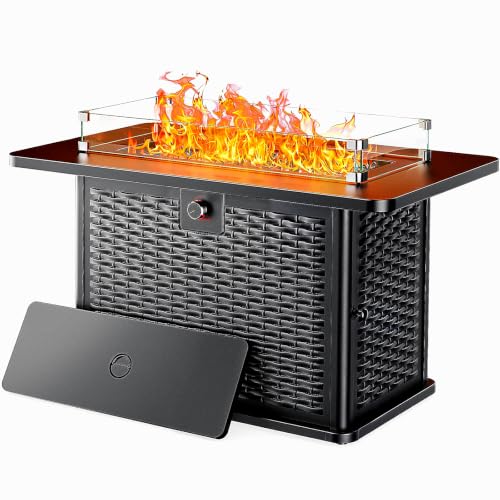
Fire pit tables combine a flat surface with a central burner. They are ideal for patios because they can hold drinks or small plates when the fire is off, and they create a natural gathering point when it is on. Many models include a hidden compartment for a propane tank, which keeps the setup tidy. If you want a table that also serves as a conversation anchor, explore fire patio tables and fire pit benches that pair seating with the table.
Freestanding Bowls and Columns
Freestanding bowls and columns are portable and easy to reposition. They suit renters, small patios, and homeowners who like to rearrange their layout seasonally. Column styles tend to have a smaller footprint and a taller flame profile, while wide bowls spread heat across a larger seating area.
Built-In and Drop-In Burners
Built-in burners are installed into a non-combustible surround such as concrete, stone, or brick. They offer a seamless look and can be sized to fit a custom layout. This route requires more planning — you need to account for gas lines, drainage, and clearance — but the result is a permanent feature that feels integrated with the patio. A concrete fire pit with a hidden propane tank is a popular example of this approach.
Dual-Purpose and Conversational Layouts
Some units are designed to pair with curved seating, such as a curved outdoor bench with a back for a fire pit. These layouts encourage face-to-face conversation and make the fire pit the center of the social zone. If you are building a full seating arrangement, consider how the fire feature will relate to your outdoor conversation sets.
Propane vs. Natural Gas
Fuel choice affects installation, portability, and long-term convenience. Both options are safe when installed and maintained correctly, but they suit different situations.
| Factor | Propane (LPG) | Natural Gas |
|---|---|---|
| Installation | Portable; uses a refillable tank | Requires a permanent gas line connection |
| Mobility | Can be moved or stored seasonally | Fixed in place once connected |
| Refueling | Tank exchange or refill | Continuous supply from the home line |
| Best for | Renters, flexible layouts, decks | Permanent patios, built-in designs |
| Storage needs | Safe outdoor tank storage required | No tank storage needed |
Propane is the more flexible choice for most homeowners because it does not require a plumber or a gas line. Natural gas is convenient once connected, but the installation is permanent and typically requires professional work. If you plan to move the unit around or want the option to store it during winter, propane is usually the better fit.
Hidden Tank Designs
One of the most practical innovations in this category is the hidden tank compartment. Units such as a concrete fire pit with a propane tank inside keep the tank out of sight while maintaining airflow and access for replacement. This design is especially useful on smaller patios where a visible tank would disrupt the look of the space.
Materials & Build Quality
The material of the fire pit body determines how well it handles heat, weather, and everyday use. Look for units described as heavy-duty or built with premium materials, and check how the finish is applied.
Concrete and Cast Stone
Concrete and cast stone offer a substantial, architectural look and hold up well in many climates. They are heavy, so they are best for permanent placements. A concrete fire table with a hidden propane tank is a good example of how this material can combine durability with a clean design. Seal concrete periodically to reduce moisture absorption and surface staining.
Steel and Aluminum
Powder-coated steel and aluminum are common for tables and bowls. They are lighter than concrete and easier to move. Look for a rust-proof finish or a weather-resistant coating, especially if the unit will stay outside year-round. Stainless steel burners are a strong indicator of build quality because they resist corrosion better than standard steel.
Composite and Resin
Composite materials mimic the look of stone or wood while reducing weight. They are a practical middle ground for homeowners who want a specific aesthetic without the heft of concrete. Check that the composite is rated for heat exposure and that the frame underneath is sturdy.
Fire Media
Lava rocks, fire glass, and ceramic logs each change the look and heat spread of the flame. Fire glass produces a cleaner, more modern appearance, while lava rocks tend to diffuse heat more evenly. Ceramic logs create a traditional campfire feel. Choose media that matches the burner type and follow the manufacturer's guidance on quantity and arrangement.
Burner & Ignition Systems
The burner is the heart of the fire gas pit. A well-designed burner produces a consistent flame, resists clogging, and is easy to light. Entry-level units often use a basic match-lit or push-button ignition, while mid-range and premium models may include electronic ignition, flame-sensing safety shutoffs, and adjustable heat output.
When comparing options, look for these features:
- Burner material: Stainless steel is the most durable choice for outdoor use.
- Ignition type: Electronic ignition is more convenient than manual lighting, especially in windy conditions.
- Heat output control: A adjustable valve lets you lower the flame for ambiance or raise it for warmth.
- Safety shutoff: A thermocouple or flame sensor cuts the gas supply if the flame goes out.
- Burner cover: A lid or cover protects the burner when the unit is not in use and can turn a fire table into a usable surface.
If you are handy and prefer a custom build, a DIY fire pit project can use a drop-in burner insert, but be sure the surround is non-combustible and the gas connection is installed safely. For a more structured approach, review a fire pit build guide before starting.
Placement & Clearance
Placement affects both safety and comfort. A gas fire pit should sit on a level, stable, non-combustible surface. Keep it away from low-hanging branches, fabric awnings, and flammable structures. Follow the manufacturer's clearance guidelines on all sides — these are usually listed in the manual and on the product page.
On a wooden deck, use a heat-resistant mat or barrier beneath the unit if the manufacturer permits deck use. Never assume a fire pit is deck-safe without checking the specifications. If you are unsure, consult a professional or choose a unit explicitly rated for deck installation.
Think about wind direction as well. A spot with a natural windbreak will give you a more consistent flame and a more comfortable seating experience. Avoid placing the fire pit in a tight corner where heat can build up against walls or railings.
Safety Essentials
Gas fire pits are safe when used correctly, but a few habits make a big difference:
- Check connections: Inspect hoses and fittings for leaks before the first use of the season and after any tank change.
- Keep combustibles clear: Maintain clearance from cushions, blankets, paper, and decor.
- Never leave children or pets unattended: The outer surfaces can become hot even when the flame is low.
- Use outdoors only: Never operate a gas fire pit in an enclosed space, garage, or covered area without proper ventilation.
- Follow local rules: Some communities have restrictions on open flames or gas appliances on balconies and decks.
- Turn off the gas fully: Confirm the valve is closed after each use and before storing the unit.
If your unit has a flame-sensing safety shutoff, test it at the start of the season according to the manual. This feature is one of the clearest indicators of a well-engineered design.
Maintenance & Care
Regular care extends the life of your fire gas pit and keeps it looking sharp. A simple seasonal routine is usually enough.
Routine Cleaning
Wipe down the exterior with a mild cleaner and a soft cloth. Keep the burner area free of debris, leaves, and spider webs, which can block gas flow. If the flame becomes uneven or noisy, the burner ports may need cleaning with a soft brush.
Seasonal Checks
Before the first use of the season, inspect the hose and connections, test the ignition, and confirm the flame is burning cleanly. A yellow, sooty flame can indicate a blockage or an incorrect air-to-gas mixture. If the problem persists, have the unit serviced.
Storage and Covers
Use a fitted cover when the unit is not in use to protect the burner and finish from rain and debris. If you store a propane unit for the winter, disconnect the tank and store it safely according to local guidelines. For more detail on protecting outdoor pieces, see the weatherproofing guide.
How to Choose the Right Unit
With the basics covered, here is a practical decision path. Start with the space and the fuel source, then narrow down the style and features.
- Measure your space. Confirm how much room you have for the unit and for clearance around it. A fire pit table needs room for seating; a column or bowl may fit in a tighter spot.
- Choose your fuel. Propane for flexibility and easy installation; natural gas for a permanent, tank-free setup.
- Pick a style. A table for entertaining, a bowl or column for a compact focal point, or a built-in burner for a custom look.
- Check the build. Prioritize stainless steel burners, a weather-resistant finish, and a flame-sensing safety shutoff.
- Plan the layout. Pair the fire pit with seating that encourages conversation, such as a curved bench or an outdoor conversation set with swivel chairs.
- Consider storage. If you will move the unit or store it seasonally, favor a portable propane model with a cover.
As a general rule, entry-level units cover the basics — a burner, a simple ignition, and a straightforward body — while mid-range models add better materials and more consistent ignition. Premium and high-end tier units focus on refined design, hidden tank storage, and more precise heat control. Match the tier to how often you expect to use the fire pit and how much visual integration you want with your patio.
Frequently Asked Questions
What is a fire gas pit and how does it work?
A fire gas pit is an outdoor heating feature that uses propane or natural gas to create a controllable flame. It typically includes a burner, lava rocks or fire glass, and a structure such as a table or bowl. The gas feeds a burner that ignites to produce steady warmth without wood, ash, or smoke.
Where should I place a gas fire pit on my patio?
Place your gas fire pit on a level, non-combustible surface away from low-hanging branches, fabric, and flammable structures. Keep at least a few feet of clearance on all sides and follow the manufacturer's clearance guidelines. Avoid placing it under a covered area unless the structure is rated for it.
Are gas fire pits safe to use on a wooden deck?
Many gas fire pits are suitable for wooden decks when used with proper clearance and a heat-resistant mat or barrier beneath the unit. Always check the product specifications and local regulations. Never place a fire pit directly on a combustible surface without the recommended protection.
How do I maintain a propane fire pit?
Keep the burner and ignition area clean and free of debris. Cover the unit when not in use and check the gas connections for leaks before each season. Replace lava rocks or fire glass when they become worn, and store propane tanks safely according to local guidelines.
Ready to Warm Up Your Patio?
Browse our recommended fire gas pits and outdoor heating options to find the right fit for your space.
View Recommendations