High Top Bistro Table and Chairs Outdoor: The Complete Buying Guide
Everything you need to choose a tall bistro set that fits your space, your lifestyle, and your long-term outdoor plans.
Why a high top bistro set deserves a closer look: A high top bistro table and chairs outdoor setup solves a problem that standard patio furniture often cannot. It gives you usable seating in compact spaces, keeps conversation at eye level when standing, and creates a natural transition zone between indoor and outdoor living. This guide walks you through sizing, materials, placement, and styling so you can buy with confidence.
What Exactly Is a High Top Bistro Set?
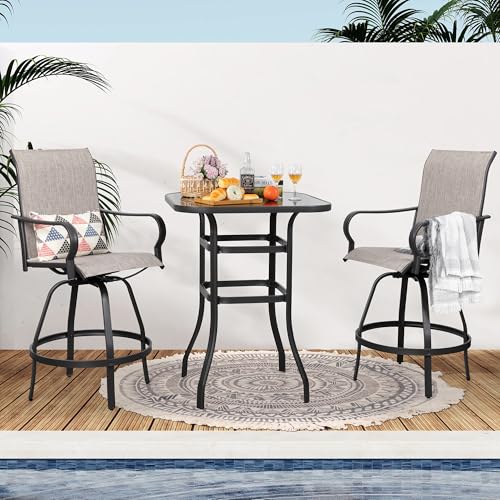
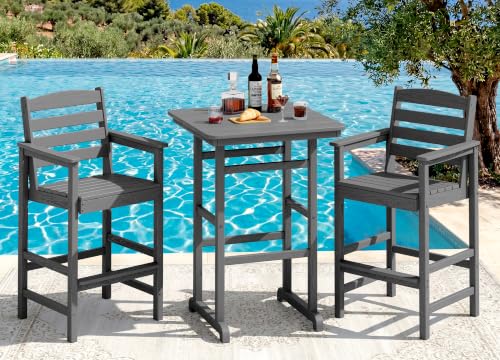
A high top bistro set is a compact outdoor furniture pairing built around a table that stands taller than a standard dining table. Most sets pair that table with two or four matching stools or chairs that are proportioned to the taller surface. The format originated in European café culture, where small footprint seating allowed venues to serve many guests in narrow street spaces. Today, homeowners use the same concept on balconies, patios, decks, and poolside areas.
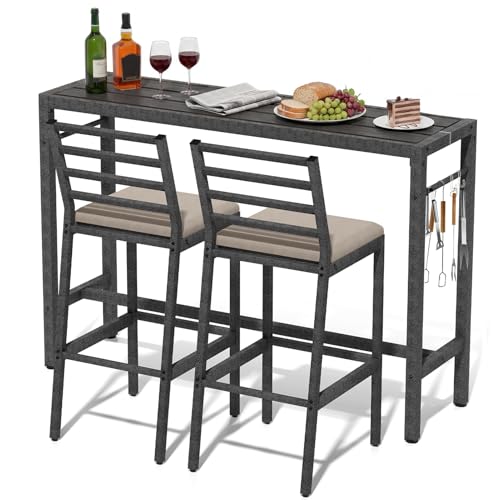
The defining feature is the table height. A conventional outdoor dining table sits around standard dining height, while a high top bistro table rises to bar or counter height. That extra elevation delivers three practical benefits: better sightlines when you are standing and chatting, a smaller footprint because the table typically uses a narrower top, and a natural standing-socializing format that works well for casual gatherings. If you are exploring similar elevated formats, our guide to the high top outdoor bar table and chairs covers the wider bar-height category in detail.
High top bistro sets are not simply scaled-up café tables. The good ones are engineered with weighted bases, reinforced joints, and weather-resistant finishes because a taller table catches more wind and creates more leverage at the top. That structural detail is what separates a set that lasts several seasons from one that wobbles after the first storm.
Who Should Consider a High Top Bistro Set?
This furniture format suits a specific set of buyers. If you recognize yourself in two or more of the profiles below, a high top set is likely a strong fit.
- Small-space dwellers: Apartment balconies, narrow side yards, and compact condo patios benefit from the reduced footprint of a two-seat tall bistro set.
- Standing entertainers: Hosts who prefer guests to mingle rather than sit for long meals will find the standing-friendly height natural.
- Poolside and deck owners: A tall table keeps drinks and snacks above splash level and away from low furniture cushions.
- View maximizers: On a deck with a railing or a balcony with a skyline view, a taller table lets seated guests see over the barrier.
- Morning coffee and evening wine drinkers: A two-seat bistro set is ideal for a quick coffee, a glass of wine, or a light breakfast without committing to a full dining arrangement.
On the other hand, if you regularly host seated dinners for four or more, a full-height dining arrangement is usually more comfortable. Our overview of the high top outdoor dining table category explains when a larger elevated table makes more sense than a compact bistro pairing.
Sizing and Clearance: Getting the Numbers Right
Height mismatches are the most common mistake buyers make with bistro sets. A table that is too tall for its chairs forces you to perch; one that is too short makes the chairs feel oversized. The table and seating must be designed as a matched pair, and the manufacturer's stated pairing is almost always the safest guide.
Table and Seat Height Relationships
In practical terms, bistro sets fall into two elevation families: counter height and bar height. Counter-height sets sit lower and feel closer to a standard dining experience, while bar-height sets are taller and feel more like a pub table. Neither is inherently better; the choice depends on the average height of your household and how you plan to use the set. Taller users often prefer bar height for legroom, while shorter users and older guests usually find counter height easier to get in and out of.
Footprint and Clearance Rules
A two-seat bistro set needs surprisingly little floor area, which is exactly why it works on balconies. The critical measurement is not the tabletop alone but the full envelope: tabletop width plus chair pull-out space on each side. As a rule of thumb, allow comfortable walking clearance behind each chair so guests can push back without hitting a railing or wall. On a narrow balcony, a round or square two-seat set usually outperforms a rectangular one because there are no sharp corners eating into circulation space.
If your space is truly tight, a smaller pairing such as a high top outdoor table and 2 chairs configuration keeps the footprint minimal while still giving you a legitimate dining and socializing surface. For spaces that allow a bit more breathing room, a high top patio table with 4 chairs expands seating without demanding a full dining set's floor area.
Materials: What Holds Up Outdoors
Because a high top table has a higher center of gravity, material choice matters more than it does for low furniture. Lightweight materials need a weighted base to stay stable in wind, while heavy materials are naturally more planted but harder to move. Here is how the main material families compare.
Metal Frames: Aluminum and Steel
Powder-coated aluminum is the most common frame material for high top bistro sets because it is light enough to reposition, will not rust at the frame level, and accepts durable coatings well. Steel frames are heavier and feel more planted, but they require a genuinely rust-proof finish to survive wet climates. Look for welded joints rather than bolted ones at the table column, since the column takes the most stress on a tall table.
Wicker and Resin Weave
Resin wicker wrapped over an aluminum frame delivers a warm, textured look that reads well on coastal and cottage-style patios. The quality of the weave determines longevity: tighter weaves with UV-stabilized resin resist fading and cracking far better than loose, thin weaves. Buyers who want that woven aesthetic across a larger seating arrangement should look at high quality resin wicker patio furniture, which follows the same durability principles at full-size scale.
Wood and HDPE
Teak and other dense hardwoods are classic bistro materials and age gracefully, developing a silver patina if left untreated. They are heavy, stable, and repairable, but they demand periodic oiling if you want to keep the original tone. High-density polyethylene, often called HDPE, mimics the look of painted wood while resisting moisture, insects, and rot without maintenance. Our guide to HDPE outdoor furniture explains how this material behaves over multiple seasons.
Tabletop Surfaces
The tabletop is where daily life happens, so surface choice deserves attention. Slatted metal tops drain rainwater quickly and dry fast. Solid resin tops are easy to wipe and resist staining. Glass tops look refined but show water spots and need careful handling during storms. Mosaic tile tops add visual interest but grout lines require periodic cleaning. For a balanced approach, choose a top that matches your climate: wet regions favor drainage-friendly slats, while dry, sunny regions can comfortably use solid or glass surfaces under a cover.
Stability and Wind: The Tall-Table Factor
A taller table presents more surface area to the wind, which means the base has to do more work. Three design details separate stable sets from wobbly ones. First, a wide, weighted base plate or cross-shaped foot spreads the load and lowers the effective center of gravity. Second, a thick central column resists flexing better than a thin one. Third, leveling feet let you compensate for slightly uneven deck boards or patio pavers.
If your patio is exposed to strong seasonal gusts, consider a set with a heavier base or plan to anchor it. A cover that fits snugly also reduces wind capture when the set is not in use. Buyers in windy, coastal, or elevated locations should treat base weight as a primary specification rather than an afterthought.
Placement Ideas by Space Type
Where you put the set shapes how often you use it. Here are placement approaches that work well for common outdoor spaces.
Balcony and Condo Patio
On a balcony, place the set against the railing side that gets the best light and leave the interior edge open for circulation. A round two-seat set works best because there are no corners to catch a hip when you walk past. If the balcony doubles as storage access, choose a set that is light enough to slide aside when needed.
Deck and Raised Patio
On a deck, the view is often the star. A high top set placed near the railing lets seated guests see over it, which is one of the format's strongest advantages. Keep the table at least a comfortable step back from the edge for safety, and avoid placing it directly over deck board seams where wobble is more likely. If your deck furniture plan is still forming, our broader guide to high end outdoor furniture covers how to layer pieces across a larger deck.
Poolside
Poolside placement benefits from the elevated surface: drinks stay above splash height and cushions stay drier. Choose a set with rust-proof hardware and a drainage-friendly top, and position it on the deck rather than the wet zone. If you want to combine poolside lounging with elevated dining, a high top patio dining set with fire pit extends the usable season into cooler evenings.
Garden Nook and Side Yard
A small garden nook is a natural home for a bistro set. Tuck it among planters or against a fence for a sense of enclosure, and pair it with a small umbrella if the spot gets afternoon sun. A high top patio table and chairs with umbrella configuration keeps the setup compact while adding shade.
Comfort Details That Matter More Than You Think
Because bistro seating is often used for shorter sessions, comfort details are easy to overlook during buying. They matter anyway, especially if you plan to sit for an hour or more.
- Footrest support: Tall stools and chairs need a footrest ring or bar. Without one, your legs dangle and the seat becomes uncomfortable within minutes.
- Seat depth and back support: Backless stools suit quick coffee stops; chairs with a low back suit longer sits. Choose based on your actual usage pattern.
- Cushion thickness: Thin pads are fine for occasional use, but firmer, thicker cushions distribute weight better on hard seats. If you already own patio chairs and only need to refresh comfort, our guides to high back patio chair cushions set of 4 and larger high back patio chair cushions set of 6 cover cushion sizing and fitting.
- Armrests: Armrests help guests rise from a tall seat, which matters for older visitors. They also limit how close the chair can tuck under the table, so check clearance.
- Edge comfort: A rounded tabletop edge is kinder on forearms than a sharp square edge during long conversations.
If you want a seated experience that feels closer to a lounge chair, a swivel option can make a tall set feel far more relaxed. Sets built around high top patio table with swivel chairs let guests rotate toward the conversation or the view without pushing back from the table.
How to Read Quality Tiers at a Glance
Product listings describe construction in inconsistent language, so it helps to map those descriptions onto a simple tier framework. The table below uses universal quality descriptors rather than currency figures, so it stays useful regardless of when or where you shop.
| Tier | Typical Construction Signals | Best For |
|---|---|---|
| Entry-level | Thinner tubular frames, bolted joints, lighter base, basic powder coating | Occasional use on sheltered balconies and covered porches |
| Mid-range | Welded or reinforced joints, weighted base, UV-stabilized finish, leveling feet | Regular daily use on open decks and patios in mixed weather |
| Premium | Heavy-gauge frames, wide base plate, marine-grade hardware, thick resin weave or solid hardwood | Year-round exposure, coastal climates, and long-term ownership |
| Luxury / commercial-grade | Architectural-grade materials, engineered stability systems, replaceable components, refined finishes | High-traffic entertaining spaces and design-led outdoor rooms |
As a general rule, mid-range sets offer the most balanced combination of stability and longevity for typical residential use. Entry-level sets work well when the furniture lives under cover, while premium and luxury tiers make sense when the set will face full sun, salt air, or year-round exposure. Buyers prioritizing long-term durability across a whole patio should also review our guide to high quality outdoor furniture for the broader construction checklist.
A Practical Buying Checklist
Before you commit to a set, run through these checks in order. They take only a few minutes and prevent most post-purchase regrets.
- Measure twice: Record your available floor area, railing clearance, and door swing path before shopping.
- Confirm the matched pairing: Verify that the chairs or stools are designed for the table height, not adapted from a different set.
- Check the base: Look for a wide, weighted base plate and leveling feet, especially if the set will sit on deck boards.
- Inspect joint construction: Welded joints at the column and base outperform bolted joints on tall tables.
- Confirm finish protection: Powder coating, UV-stabilized resin, or sealed hardwood each need the right maintenance routine.
- Plan for storage: If the set stays out year-round, confirm a compatible cover is available.
- Think about assembly: Tall tables with central columns are usually straightforward to assemble, but check the parts list.
Styling a High Top Bistro Set
A bistro set is small, so styling choices read loudly. A few well-chosen additions do more than a crowded arrangement.
Start with the floor plane: an outdoor rug defines the seating zone and visually separates it from the rest of the patio. Add a small planter or two at the base of the table column to soften the transition between furniture and ground. For evening use, a compact lantern or a clip-on light keeps the table usable after sunset without requiring permanent wiring. A tray left on the tabletop corrals drinks, a candle, and a small vase, and it makes the set look intentional rather than sparse.
Color-wise, let the furniture lead. Wicker and wood tones pair naturally with green, terracotta, and cream textiles, while powder-coated metal frames tolerate bolder accents. If your set will live in a shaded nook, lighter cushions and a pale rug lift the space; in full sun, slightly deeper tones hide dust and wear better.
Care and Seasonal Maintenance
Tall bistro sets are low-maintenance compared with full dining sets, but a short seasonal routine extends their life considerably.
- Weekly: Wipe the tabletop and brush debris from the base plate, where leaves and grit collect.
- Monthly: Check the column bolts and leveling feet, since a tall table loosens faster than a low one.
- Seasonally: Clean the frame with mild soap and water, inspect the finish for chips, and touch up any exposed metal to prevent corrosion.
- Before storm season: Tighten joints, confirm the base is weighted, and secure or store the set if high winds are forecast.
For a deeper routine covering covers, cleaners, and rust prevention, see our outdoor care section, which walks through maintenance by material type.
Common Mistakes to Avoid
Most disappointing bistro set purchases trace back to a small number of avoidable errors. Mixing heights is the most frequent: buyers sometimes pair a tall table with standard-height chairs, which ruins the ergonomics. Buying purely on looks is the second: a lightweight set that photographs beautifully can wobble in the first strong breeze. Ignoring the base is the third: the base is the least visible component and the most important for stability. Finally, skipping the clearance check leads to sets that technically fit but leave no room to push a chair back, which makes the set feel cramped every time it is used.
Frequently Asked Questions
What is the difference between a high top bistro set and a bar table set?
The terms overlap. A high top bistro set is generally designed for two to four people in a compact footprint, often with a round or square top. A bar table set is defined primarily by bar height and may be larger or designed for standing service. In practice, many outdoor sets marketed as high top bistro tables sit at bar height.
Can a high top bistro set stay outside all year?
Premium and mid-range sets with rust-proof hardware, UV-stabilized finishes, and weighted bases can stay outside year-round in most climates. Entry-level sets last longer under cover. In regions with heavy snow or salt air, a seasonal cover or indoor storage during the harshest months is still the safer choice.
How many people does a typical bistro set seat?
Most high top bistro sets seat two, which is the most common configuration for balconies and small patios. Four-seat configurations exist for larger decks and are usually rectangular or square. If you regularly host more than four, a full elevated dining set is usually the better fit.
Is a high top table comfortable for older guests?
It can be, provided the set includes footrests, armrests, and a seat height that lets guests sit with feet supported. Counter-height sets are generally easier to enter and exit than bar-height sets. If accessibility is a priority, test the set in person or prioritize counter height.
What kind of top is best for rainy climates?
Slatted metal or resin tops drain quickly and dry fast, which makes them the most practical choice for wet regions. Solid surfaces can pool water if they lack a drainage feature, and glass tops show water spots. Whatever the top, a fitted cover during prolonged rain protects both the surface and the base hardware.
Do I need cushions for a bistro set?
Not strictly, but cushions make hard seats far more comfortable for longer sits. If the set includes metal or resin seats, a fitted pad is worthwhile. Check whether the set's cushion covers are removable and washable, and confirm the pad is designed for the specific seat shape rather than a generic size.
Ready to Choose Your Set?
A high top bistro table and chairs outdoor setup is one of the most space-efficient ways to add real function to a small patio, balcony, deck, or poolside area. Focus on three decisions and the rest falls into place: match the table and seat heights as a designed pair, choose a material tier that matches your climate and usage frequency, and confirm the base is stable enough for your exposure level. Get those right and the set will serve as a daily coffee spot, an evening conversation corner, and a flexible surface for years to come.
If you are still mapping out the rest of your outdoor space, browse our related guides on high top patio sets, high top patio table and 2 chairs configurations, and high top table and chairs for outside use. Each covers a slightly different footprint and use case, so you can match the format to your space before committing.