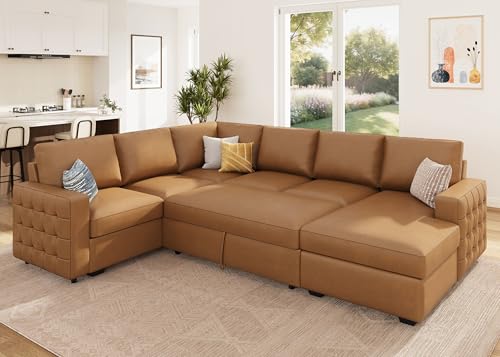
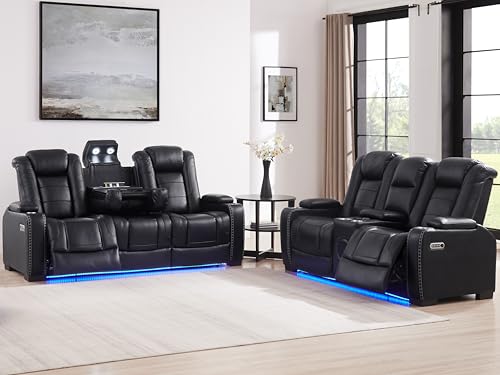
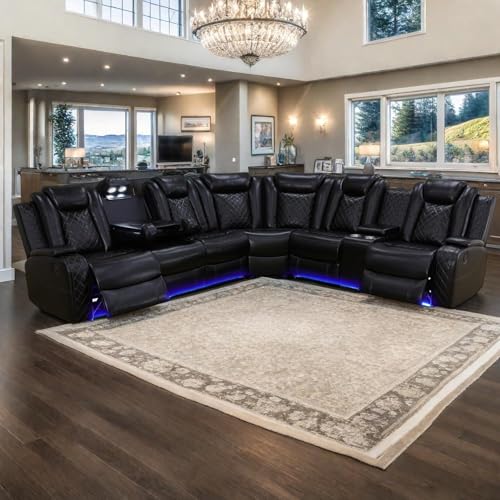
Leather Sectional with Sleeper and Recliner: The Complete Buying Guide
Seating, sleeping, and reclining in one piece of furniture. Here is everything research-stage buyers need to evaluate frame quality, leather grades, dual-function mechanisms, and room fit before committing to a purchase.
Why a Leather Sectional with Sleeper and Recliner Makes Sense
A leather sectional that combines a sleeper and a recliner solves a common household problem: limited square footage paired with the need to host overnight guests. Instead of buying a sofa, a guest bed, and separate recliners, one piece of furniture delivers all three functions. For homeowners furnishing a family room, a covered lanai or patio lounge, or a multipurpose basement, that consolidation is a meaningful practical advantage.
Leather adds a layer of durability that fabric often cannot match. A quality leather surface resists spills, wipes clean easily, and develops a patina over time. When paired with a pull-out bed and a powered or manual recline mechanism, the result is a piece that works as everyday seating, a movie-night recliner, and a guest bed on demand.
That said, combining three functions introduces engineering complexity. Buyers in the research stage should understand that not every dual-function model is built to the same standard. The sections below break down the components that separate a long-term investment from a disappointing purchase.
Quick orientation: If you already know you want a reclining layout with a hidden bed, explore related configurations such as a leather sectional sleeper sofa with recliners or a leather sectional couch with pull-out bed to compare how different builds prioritize seating versus sleeping space.
How the Sleeper and Recliner Mechanisms Work
Understanding the mechanics is the single best way to evaluate quality before purchase. A dual-function sectional typically contains two independent systems that share a frame.
The sleeper mechanism
Most sleeper sectionals use one of three designs:
- Pull-out bed with a foldable metal frame: The seat cushions lift and a folded mattress frame unfolds into the room. This is the most common design and offers the most comfortable sleeping surface when the mattress is thick and the frame is reinforced.
- Click-clack or fold-flat design: The backrest folds down to create a flat sleeping surface. This is simpler mechanically and takes up less room, but the sleeping surface is thinner and better suited to occasional use.
- Trundle or pop-up design: A hidden mattress slides or pops up from beneath the seating. These are less common in leather sectionals but appear in space-conscious models.
Whichever design is used, inspect the gauge of the metal frame and the smoothness of the folding action. Mid-range and premium models use heavier-gauge steel and sealed hinge points that operate smoothly for years. Entry-level models may use thinner tubing that flexes under weight.
The reclining mechanism
Reclining seats in a sectional come in two main varieties:
- Manual recline: A lever or push-back action engages the footrest. Manual mechanisms are simpler, have fewer failure points, and are reliable across all quality tiers.
- Power recline: A motorized button or switch moves the seat and footrest. Power recline is smoother and allows infinite positioning, but it introduces wiring, motors, and a power source requirement. Premium and luxury models typically offer power recline with a battery backup option.
Pay attention to how the recliner and the sleeper interact. In a well-engineered dual-function sectional, the reclining seats and the sleeper mechanism are positioned so that neither blocks the other. In poorly designed models, the recliner footrest may collide with the pull-out bed when both are deployed. This is a key reason to read specifications carefully and, where possible, view the mechanism in person.
Leather Grades and What They Mean for Longevity
The word "leather" covers a wide spectrum of materials, and the grade directly affects durability, feel, and maintenance needs. Buyers should know the difference before comparing models.
| Leather Type | Characteristics | Best For |
|---|---|---|
| Full-grain leather | Highest grade, retains natural grain, develops patina, most durable | High-end tier and luxury models; long-term investment pieces |
| Top-grain leather | Sanded and corrected lightly, still durable, more uniform appearance | Mid-range and premium models; everyday family seating |
| Corrected-grain leather | Heavily sanded and embossed with a pattern, more uniform but less breathable | Entry-level and essential tier models |
| Bonded leather | Leather fibers bonded to a backing, lowest durability, can peel over time | Starter tier only; short-term or low-traffic use |
| Faux leather / polyurethane | Synthetic surface, easy to clean, no patina, variable durability | Entry-level models where spill resistance matters most |
For a dual-function piece that will see daily seating and occasional sleeping, top-grain or full-grain leather is the safer long-term choice. These grades hold up to the friction of repeated recline and sleeper deployment far better than bonded leather. If the sectional is destined for a covered outdoor room or a sunroom, confirm that the leather is treated for UV and humidity exposure, or consider a luxury outdoor furniture alternative built specifically for those conditions.
Also check the leather on the back and sides of the frame. Some manufacturers use a lower-grade split leather on non-seating surfaces. This is acceptable if disclosed, but buyers should know what they are getting.
Frame and Cushion Construction Quality
A leather sectional with a sleeper and recliner carries more mechanical stress than a standard sofa. Every time the bed pulls out or a seat reclines, force travels through the frame. That makes frame construction the most important durability factor after the leather itself.
Frame materials
- Kiln-dried hardwood: The gold standard. Hardwood frames resist warping and hold screws and staples securely, which matters for the repeated stress of a sleeper mechanism.
- Plywood and engineered wood: Common in mid-range models. Adequate when thick and properly joined, but less forgiving over many years of use.
- Metal frame reinforcement: Many dual-function models use a metal rail system inside a wood frame. This hybrid approach is common and works well when the metal is heavy-gauge and the joints are welded rather than riveted.
Cushion construction
Seat cushions on quality leather sectionals use high-density foam wrapped in fiber or down. High-density foam retains its shape under daily use; low-density foam compresses and creates sagging within a year or two. For reclining seats, the foam must also be flexible enough to compress and recover as the mechanism moves. Ask about foam density and whether the cushions are removable or fixed.
Joint and mechanism reinforcement
Look for corner blocks, glued and screwed joints, and reinforced mounting points where the recliner and sleeper mechanisms attach to the frame. These details are rarely visible in product photos, so check specifications or reviews that mention long-term durability. Entry-level models often skip corner blocking, which is one of the main reasons they develop squeaks and wobbles over time.
Space Planning and Recline Clearance
Dual-function sectionals demand more floor space than their footprint suggests. Before purchasing, measure three dimensions in the room:
- Fully reclined depth: A reclining seat needs clearance behind and in front of the sofa for the backrest to tilt and the footrest to extend. Typical recliners need several feet of front clearance.
- Extended sleeper depth: A pull-out bed extends forward from the sofa frame, often by the length of a mattress. The sleeper must open into open floor space, not into a coffee table or walkway.
- Corner and wall placement: Sectionals are often placed in corners, but a reclining seat cannot be placed tight against a wall. Plan which seats need recline clearance and orient the configuration accordingly.
If the room is compact, consider a configuration where only one or two seats recline, leaving the remaining seats as fixed seating. This preserves the sleeper function while reducing clearance demands. For tight layouts, a large sectional couch that turns into a bed without a recliner may be a better fit.
Measurement tip: Tape the extended sleeper footprint on the floor with painter's tape. Live with the outline for a day. If it blocks a doorway or primary walkway, the model is too large for the room regardless of how well it fits when closed.
Configuration Options and Layout Matches
Leather sectionals with sleepers and recliners come in several common shapes. The right choice depends on room dimensions, seating count, and how often the bed will be used.
- L-shaped with chaise: The most popular layout. The chaise adds lounge seating and often houses the sleeper mechanism. See a leather sectional sleeper sofa with chaise for a focused comparison of this style.
- U-shaped: Maximizes seating and conversation flow. U-shaped models with sleepers are larger and require more open floor space.
- Recliner-end sectional: Places one or two reclining seats at the ends of the sectional, with the sleeper in the center section. This keeps recline clearance at the perimeter, which is easier to plan.
- Modular sectional: Individual pieces can be rearranged. Modular dual-function models are less common but offer flexibility for rooms that may change use over time.
When matching a sectional to a layout, consider the surrounding furniture. A reclining sectional needs open space in front, so a coffee table may need to be smaller or moved. If the room also serves as a dining or entertainment area, coordinate the seating with a large outdoor dining table with fire pit or similar anchor piece in adjacent zones to keep the overall layout balanced.
Comparing Quality Tiers Side by Side
Dual-function leather sectionals fall into recognizable quality tiers. The table below uses universal descriptors rather than specific figures, so the comparison stays useful regardless of market conditions.
| Feature | Entry-Level Tier | Mid-Range Tier | Premium / Luxury Tier |
|---|---|---|---|
| Leather | Bonded or corrected-grain leather; may use split leather on sides | Top-grain leather on seating surfaces | Full-grain leather throughout; UV or humidity treated where relevant |
| Frame | Engineered wood with basic metal rails | Kiln-dried hardwood with reinforced mechanism mounts | Hardwood frame with corner blocks, heavy-gauge steel reinforcement |
| Sleeper mechanism | Light-gauge foldable frame; thin mattress | Heavier-gauge frame; thicker foam mattress | Commercial-grade mechanism; high-density mattress with reinforced edges |
| Recline mechanism | Manual only; basic lever action | Manual with smoother action; some power options | Power recline with battery backup; infinite positioning |
| Cushion foam | Low-to-medium density; may sag under daily use | High-density foam wrapped in fiber | High-resilience foam with down or fiber wrap; retains shape long term |
| Best for | Occasional guest use and light daily seating | Primary family seating with regular overnight guests | Daily heavy use; long-term investment in a primary living space |
The jump from entry-level to mid-range is the most consequential for dual-function models. Mid-range construction typically delivers noticeably smoother mechanisms, better foam retention, and leather that resists wear far longer. Premium and luxury tiers add refinement, power convenience, and the longest service life, but the core functional improvement happens at the mid-range step.
Care and Maintenance Essentials
Leather is forgiving, but a dual-function piece needs a little routine attention to keep both the upholstery and the mechanisms working smoothly.
- Clean leather monthly: Wipe with a dry microfiber cloth and use a leather conditioner two to four times a year. Avoid harsh household cleaners, which strip natural oils.
- Keep leather out of direct sun: Prolonged UV exposure fades and dries leather. Use blinds or place the sectional away from unshaded windows.
- Lubricate mechanisms annually: A light application of silicone spray on hinge points and folding rails keeps the sleeper and recliner operating smoothly. Avoid oil-based lubricants that attract dust.
- Vacuum the sleeper mattress: If the sleeper mattress is removable, vacuum it and air it out between uses. Store it flat rather than folded for long periods.
- Check fasteners: Every few months, check that bolts on the recliner and sleeper mechanisms are snug. Loose fasteners are the most common cause of squeaks and premature wear.
For rooms that see seasonal humidity or temperature swings, consider a dehumidifier in summer and a humidifier in winter to protect the leather from cracking. If the sectional lives in a sunroom or covered porch, review weatherproofing guidance to understand how much protection the environment requires.
Pre-Purchase Checklist
Before finalizing a decision, run through this checklist. Each item addresses a factor that is difficult or impossible to change after purchase.
- Confirm the leather grade and which surfaces use which grade.
- Verify the frame material and whether mechanism mounts are reinforced.
- Measure fully reclined depth and extended sleeper depth in the actual room.
- Decide between manual and power recline based on outlet access and preference.
- Confirm the sleeper mattress thickness and type.
- Check whether the recliner and sleeper can be deployed simultaneously without interference.
- Review the warranty terms for frame, leather, and mechanisms separately.
- Confirm delivery access: measure doorways, stairwells, and turns along the delivery path.
- Plan for assembly: determine whether white-glove delivery is included.
Frequently Asked Questions
Can a leather sectional with a sleeper and recliner be used daily as a bed?
It can, but sleeper mattresses in sectionals are generally designed for occasional use. For nightly sleeping, a dedicated bed or a high-end tier model with a thick, high-density sleeper mattress is a better fit. Mid-range and premium models handle regular guest use well; entry-level mattresses compress faster under frequent use.
Is full-grain leather worth the upgrade over top-grain?
Full-grain leather is more durable and develops a richer patina, making it the better long-term choice for a piece that will see daily seating and repeated mechanism use. Top-grain leather is a solid choice for mid-range models and offers a more uniform appearance. The decision comes down to how long you intend to keep the sectional.
How much clearance does a reclining sectional need?
Reclining seats need open floor space in front for the footrest to extend and clearance behind for the backrest to tilt. The exact amount varies by model, so check the manufacturer's specifications. As a planning rule, tape the fully reclined footprint on the floor before purchasing.
Can the sleeper and recliner be used at the same time?
On well-engineered models, yes. The mechanisms are positioned so that the recliner footrest and the pull-out bed do not collide. On some entry-level designs, however, deploying both simultaneously creates interference. Confirm this with the manufacturer or in reviews before buying.
How do I protect leather in a sunroom or covered outdoor area?
Use window treatments or shade to limit direct UV exposure, maintain stable humidity, and condition the leather regularly. If the space is fully open to the elements, leather furniture is not recommended; choose furniture built specifically for outdoor exposure instead.
What is the most common failure point on dual-function sectionals?
The sleeper mechanism frame and the recliner hinges are the most common failure points, especially on entry-level models. Heavy-gauge steel frames, reinforced mounting points, and annual lubrication significantly extend the life of both systems.