Outdoor Dining Chairs Set of 6: The Complete Buying Guide
Everything you need to choose a six-chair outdoor dining set that fits your table, your space, and your lifestyle — from materials and sizing to comfort, care, and long-term durability.
Why a Set of 6 Outdoor Dining Chairs Makes Sense
A six-chair outdoor dining arrangement is the sweet spot for most households. It seats a full family plus guests, works with both round and rectangular tables, and still fits comfortably on a typical patio or deck. If you are planning al fresco meals, weekend brunches, or casual evening gatherings, a coordinated set of six chairs removes the guesswork of matching styles and finishes.
Unlike buying chairs individually, a matched set of six is engineered to work together — consistent seat height, uniform frame construction, and a shared design language. This matters more than most shoppers realize, because mismatched seat heights or frame profiles can make even a well-designed dining table feel uneven and visually crowded.
When you are ready to pair the chairs with a table, explore options like a round patio dining table with umbrella hole for a balanced six-seat layout, or a rustic farmhouse table with bench and chairs if you prefer a mixed seating look. If you want a fully coordinated purchase, a wrought iron patio table and 6 chairs set is a classic, durable route.
Materials: What Works Best for Outdoor Dining Chairs
The frame material determines how long your set lasts, how often it needs maintenance, and how it feels on a hot summer afternoon. Below is a practical comparison of the most common outdoor dining chair materials.
| Material | Best For | Durability Notes | Maintenance Level |
|---|---|---|---|
| Powder-coated aluminum | Everyday patios, coastal areas | Lightweight, rust-resistant, easy to move | Low |
| Powder-coated steel | Heavy-duty family use | Solid build, very stable, needs rust checks at welds | Moderate |
| Teak / solid hardwood | Classic and rustic settings | Ages gracefully, naturally weather-resistant | Moderate (periodic oiling) |
| Resin wicker over aluminum | Woven look with modern resilience | UV-stable, colorfast, resists cracking | Low |
| Wrought iron | Traditional and formal patios | Very durable, heavier to reposition | Moderate (touch-up paint) |
Aluminum and Steel
Aluminum is the lightest practical option for a six-chair set. It resists rust well and is easy to move when you need to reconfigure the patio. Steel frames are heavier and often more stable in windy conditions, but they require more attention to welds and painted joints to prevent corrosion. For a closer look at how these frames perform in practice, see our guide on high-quality resin wicker patio furniture, which often uses aluminum as the underlying structure.
Teak and Hardwood
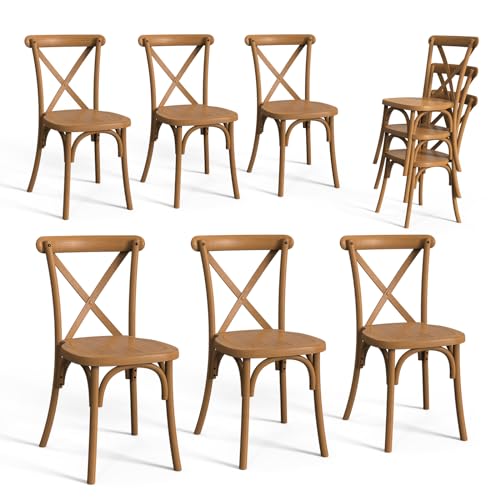
Teak is a long-term investment material. It weathers to a soft silver-gray if left untreated, or keeps its warm tone with periodic oiling. If you like the look, browse teak furniture for a broader view of how hardwood pieces age and how to care for them. Hardwood chairs are heavier than aluminum but feel grounded and substantial around a dining table.
Wicker and Resin
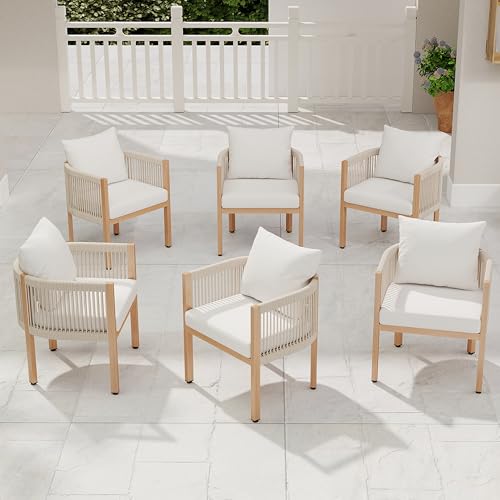
Woven chairs add texture and a relaxed feel to outdoor dining. Modern resin wicker is far more weather-resistant than traditional natural wicker, and it holds color well under sun exposure. For a coordinated look, consider pairing your chairs with a wicker patio set or reviewing high-quality wicker patio furniture for build-quality indicators.
Wrought Iron
Wrought iron chairs bring a timeless, formal character to the patio. They are heavy, stable, and very durable, but they need occasional touch-up painting at joints and edges. If a full wrought iron arrangement appeals to you, our overview of wrought iron outdoor dining table and chairs covers how to evaluate frame thickness and finish quality.
Sizing and Table Pairing for Six Chairs
Six chairs need a table that gives each guest roughly 24 inches of linear space along the table edge. That means a rectangular table should be at least 72 inches long, while a round table should be at least 60 inches in diameter. Anything smaller and your guests will be bumping elbows through dinner.
Chair Dimensions to Check
- Seat height: Standard dining chairs sit around 17–19 inches from floor to seat top. Counter-height sets sit around 24–26 inches, and bar-height around 28–30 inches. Always match the chair height to the table height.
- Arm height: If your table has an apron or crossbar, confirm the chair arms slide under the table edge. Armless chairs offer more tuck-in flexibility.
- Overall footprint: A typical dining chair occupies about 20–24 inches of width. Multiply by six and add table overhang to estimate total patio depth.
Round vs. Rectangular Tables
A round table with six chairs creates a more conversational layout and works well on square or compact patios. A rectangular table is better for long, narrow spaces and makes serving from one end easier. If you are working with a compact footprint, our guide on the 30-inch round patio table and chairs explains how smaller round tables pair with seating, while larger gatherings may benefit from a round outdoor table and chairs for 8 if you plan to expand later.
Quick measurement tip: Before ordering, mark your patio with painter's tape using the table dimensions plus 30 inches of clearance on every side. That clearance allows guests to pull chairs out and walk behind seated diners.
Comfort Factors: Cushions, Arms, and Back Support
A dining chair can look beautiful and still be uncomfortable after 20 minutes. For a set of six, comfort is worth prioritizing because every guest at the table will feel it.
Seat Cushions
Outdoor cushions should use quick-dry foam and solution-dyed fabric. Quick-dry foam allows water to pass through rather than soak in, and solution-dyed fabric holds color against UV exposure. If you already own a set and want to refresh it, our page on waterproof outdoor seat cushions explains what to look for in replacement cushions. For dining chairs specifically, a thinner, firmer cushion is usually better than a deep lounge cushion because it keeps guests at the right height relative to the table.
Armrests and Back Angle
Arms help guests push back from the table and add comfort during longer meals. If your table has a fixed apron, choose armless chairs or confirm the arms fit underneath. A slight recline in the backrest — around 5–10 degrees — supports relaxed posture without making guests lean away from their plates.
Weight Capacity and Frame Rigidity
Check the stated weight capacity per chair, especially if your household includes taller or heavier adults. If capacity is a concern, our guide on outdoor dining chairs with 300 lb weight capacity highlights reinforced frame construction. Frame rigidity matters too: a chair that flexes slightly when you lean back will loosen faster over time.
Stackable vs. Fixed-Frame Chairs
For a set of six, stackability is often the difference between an easy off-season and a crowded garage.
Stackable Outdoor Chairs
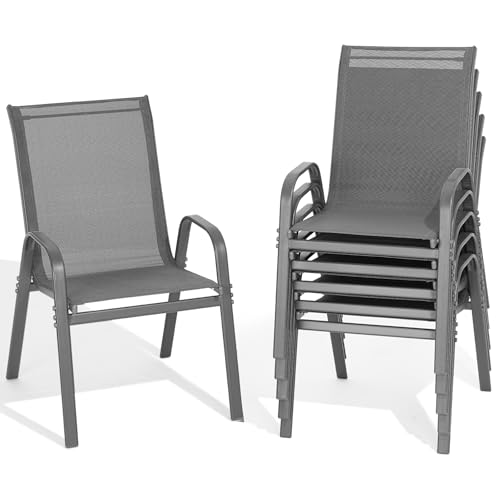
Stackable chairs nest vertically, so six chairs may occupy the footprint of one or two. They are ideal if you host occasionally and want to reclaim patio space between gatherings. The trade-off is that stackable frames sometimes feel slightly less rigid than fixed-frame chairs, and stacking can wear the finish at contact points if chairs are stacked roughly. See our guide on stackable outdoor chairs for stacking height and material considerations.
Fixed-Frame Chairs
Fixed-frame chairs typically offer a more solid feel and often support heavier cushions and arms. They are the better choice if your chairs will stay in place for most of the season and you want a more permanent, furniture-like appearance.
Editorial recommendation: If you entertain seasonally and live in a climate with harsh winters, stackable chairs simplify storage. If your patio is a year-round extension of your living space, fixed-frame chairs feel more substantial around the table.
Storage and Seasonal Care
Six chairs take up meaningful space when stored. A few practical habits will keep your set looking new and make seasonal transitions easier.
Off-Season Storage Options
- Stack and cover: Stack chairs in a corner and use a breathable furniture cover. Avoid sealed plastic, which traps moisture.
- Dedicated storage boxes: A waterproof outdoor storage box for patio cushions keeps cushions dry and lets you store them near the dining area.
- Cabinets and benches: A waterproof outdoor storage bench doubles as seating and hides small items, while a tall outdoor storage cabinet with shelves works well for cushions and covers.
- Large-capacity options: For households with several sets of cushions, a waterproof outdoor storage box 150 gallon provides generous volume.
Routine Care
Wash frames with mild soap and water, rinse thoroughly, and dry before covering. Inspect welds, bolts, and feet at the start and end of each season. If you notice rust spots on metal chairs, our rust removal guide explains how to treat and repaint affected areas before they spread. For wood frames, reapply oil or sealant according to the manufacturer's schedule.
Weather Protection
Even weather-resistant materials benefit from protection during storms. Confirm your chairs have drainage-friendly feet or glides so water does not pool under the legs. If your patio is exposed, a screened-in deck or a covered pergola can dramatically extend the life of outdoor dining furniture by reducing direct rain and sun exposure.
Tier Guide: Entry-Level, Mid-Range, and Premium
Instead of comparing numeric figures, it helps to understand how outdoor dining chairs differ across market tiers. The table below uses universal descriptors so you can match expectations to construction quality.
| Tier | Typical Build Characteristics | Best For |
|---|---|---|
| Entry-level | Lighter frames, simpler welds, basic powder coating, fewer reinforcement points | Occasional use, seasonal patios, first outdoor dining setup |
| Mid-range | Thicker frame tubing, better weld quality, UV-stable finishes, more ergonomic seat shaping | Regular family dining, mixed sun and shade exposure |
| Premium | High-grade materials, reinforced joints, premium cushions, refined finish details | Year-round use, harsh climates, design-focused patios |
In practice, mid-range chairs usually offer the most balanced blend of durability and comfort for a six-chair dining set. They typically include better seat ergonomics and more consistent powder coating than entry-level frames, and they hold up well under normal residential use. Premium chairs make more sense if your patio is exposed to coastal salt air, heavy rain, or constant sun, or if you want the set to anchor the visual design of the space.
For a wider view of how premium materials perform, our stainless steel outdoor table and chairs guide covers high-end metal construction, and teak Adirondack chairs shows how premium hardwood is built and finished.
Pre-Purchase Checklist for a Six-Chair Set
Before you commit, run through this list. It covers the details that most often cause returns or frustration after delivery.
- Measure your patio and table. Confirm the table can seat six and that there is 30 inches of clearance behind each chair.
- Match chair height to table height. Standard, counter, and bar heights are not interchangeable.
- Confirm arm clearance. Check whether arms slide under your table apron or crossbar.
- Check per-chair weight capacity. Look for reinforced frames if any household member is above average weight.
- Review the finish warranty. Powder coating and UV stability are the most common failure points.
- Plan for storage. Decide whether stackability matters for your off-season routine.
- Check cushion compatibility. Confirm replacement cushions are available in the right size.
- Read the assembly requirements. Some chairs ship partially assembled; others require full assembly.
If you are also updating the rest of your outdoor setup, our guides on round patio coffee table with umbrella hole and outdoor umbrella with solar lights and stand can help you complete a coordinated outdoor dining area.
Frequently Asked Questions
How many people can an outdoor dining chairs set of 6 seat?
A set of 6 outdoor dining chairs seats six adults comfortably around a coordinating table. Pair the chairs with a round or rectangular table sized for six guests so everyone has adequate elbow room and leg clearance.
What is the best material for outdoor dining chairs?
Aluminum, powder-coated steel, teak, and high-density resin wicker are among the most reliable materials. Aluminum is lightweight and rust-resistant, steel offers heavy-duty stability, teak ages gracefully, and resin wicker provides a woven look with modern weather resistance.
Are stackable outdoor dining chairs worth considering?
Stackable outdoor chairs are an excellent choice for households that need flexible seating or limited storage. They nest together during off-season months, freeing up patio space and simplifying winter storage.
How should I care for a set of 6 outdoor dining chairs?
Clean with mild soap and water, inspect fasteners and welds periodically, and use protective covers during harsh weather. Store cushions indoors or in a waterproof box when not in use to prevent mildew and fading.
Can I pair a set of 6 chairs with any dining table?
Not automatically. Chair height must match table height, and arm clearance must be sufficient for chairs to tuck in. Always verify dimensions before pairing a new chair set with an existing table.
Final Thoughts
A six-chair outdoor dining set is one of the most useful purchases you can make for a patio. It turns an empty deck into a functional dining room, and it handles family meals and casual entertaining equally well. Focus your research on frame material, sizing, comfort, and storage — those four factors determine whether you are happy with the set after the first season and the fifth.
Once you have your priorities clear, you are ready to compare specific models. Use the tier guide above to align your expectations with construction quality, then browse the recommended products below to see which sets match your criteria.