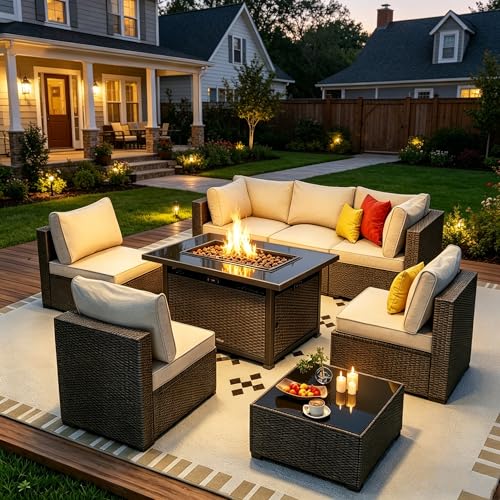
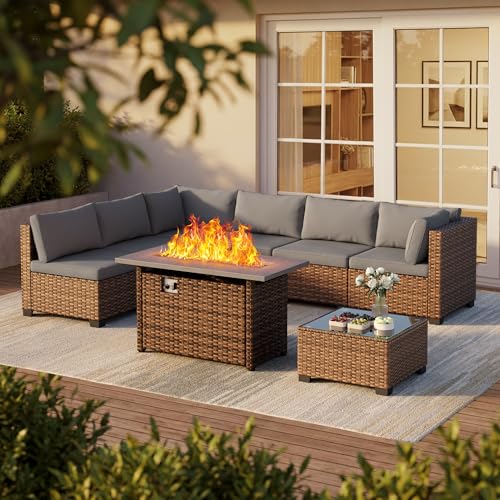
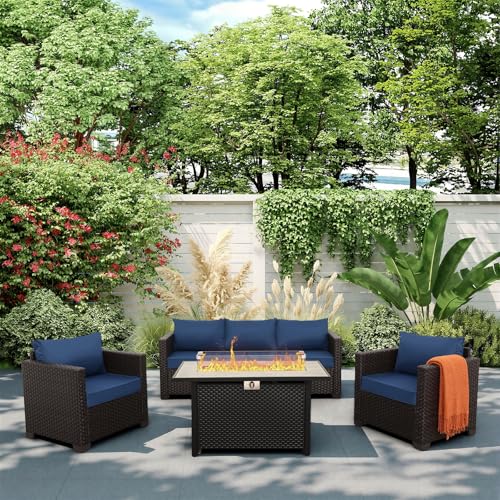
Outdoor Patio Furniture with Fire Pit Table
Everything you need to know before choosing a fire pit dining set or conversation group — materials, fuel types, seating layouts, safety clearances, and long-term care.
Explore the GuideWhy this guide matters: A fire pit table changes how you use your patio. It extends evenings into cooler months, becomes the natural gathering point of the yard, and merges dining and lounging into one zone. But the wrong frame material, fuel type, or clearance can quickly turn that upgrade into a maintenance headache. This guide walks you through the decisions that actually matter.
What Counts as Fire Pit Patio Furniture?
Fire pit patio furniture is a coordinated outdoor set built around a central fire pit table — a table with an integrated burner that runs on propane, natural gas, or bio-ethanol. Unlike a standalone fire bowl, the table surface doubles as a dining or drinks surface, so the same footprint serves two purposes.
These sets generally fall into three families:
- Dining-height fire pit sets — table height matches standard patio dining, usually paired with four to six chairs and often with an umbrella-compatible layout.
- Conversation-height fire pit sets — lower coffee-table height with deep lounge seating, sofas, or swivel chairs arranged around the flame.
- Bar-height fire pit sets — tall tables with stools or high chairs, popular for compact decks and entertaining standing guests.
If your priority is shared meals with warmth overhead, a dining configuration tends to be the most versatile. If your priority is evening lounging, a conversation set wins. Many buyers end up pairing a fire pit dining set with a separate lounge zone — our guide to patio dining sets with fire pit covers that combination in more depth.
Propane, Natural Gas, or Bio-Ethanol?
The fuel choice determines installation complexity, portability, and how much ongoing attention the table needs.
| Fuel Type | Best For | Installation | Ongoing Attention |
|---|---|---|---|
| Propane (tank) | Renters, flexible layouts, decks without gas lines | None — drop-in tank, often hidden in the table base | Tank refills; store spare tanks upright and covered |
| Natural gas | Permanent patios with an existing gas line | Professional hookup required | No refills; annual inspection recommended |
| Bio-ethanol | Small balconies, smokeless ambience, no gas line | None — portable insert | Fuel gel or liquid refills; lower heat output |
Practical note on heat output
Propane and natural gas tables produce meaningful radiant heat and work well in cool evening air. Bio-ethanol produces a visible flame with modest warmth — treat it as ambiance first and heating second. If your goal is genuinely extending patio season, gas is the more effective choice.
Frame and Surface Materials That Hold Up
Heat, UV exposure, and moisture combine to punish weak materials. Around a fire pit, the tabletop takes the brunt, so pay attention to both the frame and the surface.
Powder-Coated Aluminum
Lightweight, rust-resistant, and easy to reposition. Powder coating resists chipping better than paint. The strongest all-around choice for humid climates and covered or uncovered patios alike.
Stainless Steel
Heavy-duty and heat-tolerant, ideal for burner housings and tabletop surrounds. Marine-grade grades resist corrosion best. Expect a solid, premium-tier build with minimal flex.
Cast Aluminum
Offers ornate detailing and a substantial feel without the rust risk of iron. Often finished with a weather-resistant coating. A common premium choice for traditional and transitional styles.
Wicker and Rattan
Synthetic all-weather wicker over aluminum frames looks warm and textural, but keep it on covered patios or well away from open flame. Best suited to conversation sets rather than dining tables.
Concrete Composite Tops
Dense, heat-resilient, and visually grounded. Excellent for modern layouts, though heavy — plan the layout before delivery since repositioning is a two-person job.
Ceramic and Porcelain Tile Tops
Scratch-resistant and easy to wipe down, with good heat tolerance. Check that edges are sealed and that the tile is rated for outdoor freeze-thaw cycles.
Cushions matter as much as frames. Look for solution-dyed acrylic or olefin fabrics with quick-dry foam cores, and prefer removable, machine-washable covers. If you are upgrading an existing set, our notes on waterproof lounge chair cushions explain what to look for in the fabric spec sheet.
Layout, Sizing, and Clearance
Fire pit furniture fails most often for spatial reasons rather than quality reasons. Before choosing a set, measure twice and plan the walking path.
Clearance rules that prevent accidents
- Keep chair fronts at least 18–24 inches from the table edge so guests can stand and sit without leaning over the flame.
- Maintain at least 36 inches of walkway behind seated guests on the main circulation side.
- Follow the manufacturer's clearance from walls, railings, and overhead structures — usually several feet on all sides.
- Never place the set under a low wooden pergola or fabric canopy unless the burner is rated for it.
Choosing a shape for your space
- Round tables suit square patios and conversation-focused layouts; everyone faces the flame evenly.
- Rectangular tables maximize seating along a wall or railing and work better for dining.
- Square tables are the most space-efficient for four-person setups and small decks.
On tight balconies or narrow decks, a compact bar-height arrangement can fit where a full dining set cannot. Our breakdown of patio furniture for apartment balconies covers the constraints in detail.
Matching the Set to How You Actually Entertain
Rather than shopping by style alone, start from the activity your patio hosts most often. The table below maps common setups to their strengths.
| Configuration | Typical Seating | Best For | Market Position |
|---|---|---|---|
| Fire pit dining set with umbrella hole | 4–6 chairs | Daytime shade plus evening warmth from one table | Mid-range to premium |
| Conversation set with swivel chairs | 4–5 seats plus sofa | Relaxed evening gatherings and cocktail hours | Mid-tier to high-end tier |
| Bar-height fire pit table with stools | 2–4 stools | Compact decks and standing social setups | Essential tier to mid-range |
| Modular sectional around a low fire table | 5–7 seats | Large families and dedicated lounge zones | Premium to luxury |
If you already own a dining set and only need the warmth layer, a standalone fire pit table can sit alongside it. Our guide to patio furniture with fire pit compares integrated sets against add-on tables. For propane-specific builds, see patio furniture with propane fire pit.
Safety and Placement Essentials
Fire pit furniture is safe when installed and used correctly, and risky when it is not. These are the non-negotiables:
- Choose burners with CSA, UL, or equivalent certification for your region.
- Never operate a gas fire pit table indoors, in a garage, or under an enclosed structure without ventilation.
- On wooden decks, use a heat-resistant mat or set the table on patio pavers to protect the surface beneath.
- Keep a fire extinguisher nearby and maintain the manufacturer's clearance from combustible materials.
- Turn off the gas supply and cover the table when not in use; store propane tanks upright and outdoors.
- Check for gas leaks at connections before first use each season, following the manual's procedure.
Children and pets
Glass wind guards and raised burner surrounds reduce accidental contact, but supervision remains the primary safeguard. Consider a set with a taller tabletop if young children share the patio regularly.
Maintenance Through the Seasons
A fire pit set is a long-term investment, and a simple routine keeps it looking new:
- Weekly during use: wipe the tabletop, clear ash or debris from the burner area, and check that the ignition works cleanly.
- Monthly: inspect burner ports for blockage and clean with a soft brush; check frame fasteners for loosening.
- Seasonally: deep-clean cushions, reseal porous stone or concrete tops if recommended, and cover the set during prolonged wet or freezing weather.
- Annually: have a natural gas connection inspected by a qualified technician and replace worn ignition components.
For a broader maintenance routine covering all your outdoor pieces, see our guide to weatherproofing outdoor furniture.
Common Buying Mistakes to Avoid
- Buying by looks before measuring. A set that crowds the walkway will be used less than a smaller set that fits well.
- Ignoring the tabletop material. A beautiful frame with a heat-sensitive top will degrade quickly around a burner.
- Overlooking cushion storage. Quick-dry foam and washable covers matter; so does a place to store them. See patio furniture with built-in storage for options that solve this.
- Skipping the wind guard. On exposed patios, wind disrupts the flame and reduces heat efficiency.
- Assuming all fire pit tables are equal. Burner quality, ignition type, and safety certification vary widely between tiers.
Frequently Asked Questions
What is the best material for a fire pit table patio set?
Powder-coated aluminum and high-grade stainless steel are the most durable choices because they resist rust and heat. Cast aluminum offers a premium look, while wicker and rattan frames work well for covered patios but need more care around open flame.
How far should seating be from a fire pit table?
Keep chair fronts at least 18 to 24 inches from the edge of the fire pit table. This gives guests room to move without leaning over the flame and keeps fabric away from rising heat.
Can a fire pit table be used on a wooden deck?
Yes, with precautions. Choose a propane or natural gas table with a CSA or UL certification, keep it on a heat-resistant mat or patio pavers, and follow the manufacturer's clearance requirements. Never place an open wood-burning bowl directly on decking.
Is propane or natural gas better for a fire pit table?
Propane is portable and needs no installation, making it ideal for renters and flexible layouts. Natural gas is convenient for permanent setups because it connects to your home line and eliminates tank refills, but it requires a professional hookup.
How much heat does a fire pit table actually produce?
Gas fire pit tables produce enough radiant heat to warm the immediate seating circle on cool evenings, but they are not a substitute for a patio heater in cold weather. For serious shoulder-season warmth, pair the set with a dedicated outdoor heater.
Ready to Compare Options?
Browse vetted fire pit furniture sets, organized by configuration and build tier, to find the match for your patio layout.
View Recommended Sets