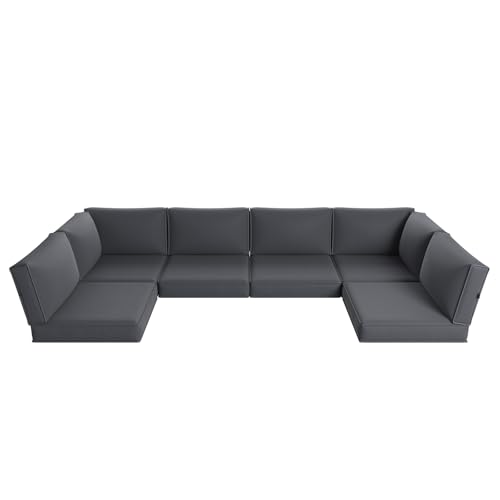
Outdoor Patio Sectional Replacement Cushions: The Complete Buying Guide
Your sectional frame is still solid, but the seat cushions have flattened, the covers have faded, and sitting down no longer feels like a treat. Replacing the cushions is one of the most efficient ways to restore comfort and refresh the look of your outdoor living space without replacing the entire furniture set. This guide walks you through measuring, choosing fills and fabrics, and matching cushion tiers to how you actually use your patio.
Why Replacement Cushions Make Sense for a Sectional
Outdoor sectional frames—whether powder-coated aluminum, high-grade steel, or resin wicker—are built to last for many seasons. The cushions, by contrast, take the brunt of daily use, sun exposure, rain, and temperature swings. Foam compresses, fabric fades, and seams weaken long before the frame shows meaningful wear.
Replacing just the cushions is a practical, sustainable choice. You keep the structure you already know fits your patio, and you redirect your attention to the parts that affect comfort and appearance most. It also lets you change the color story of your outdoor space without buying a new sectional—useful if you have repainted a deck, added a new outdoor rug, or simply want a fresher look.
If your frame includes integrated storage, that is another reason to keep it and refresh the cushions instead. A sectional with storage compartments under the seats pairs naturally with a fresh set of cushions, and you can read more about that combination in our guide to outdoor sectional with storage underneath.
Quick check: Before ordering replacement cushions, confirm that the frame itself is structurally sound—no cracked welds, wobbly legs, or rusted-through joints. If the frame is failing, cushions alone will not solve the problem.
Measure Your Sectional Before You Buy Anything
The single biggest cause of returns on replacement cushions is a size mismatch. Sectionals are not standardized, and even models from the same brand can differ between production years. Measure each seating bay individually rather than assuming every seat is identical.
What to Measure
- Seat width: the clear distance between the arms or side frames of one seating bay.
- Seat depth: from the front edge of the seat platform to the backrest.
- Cushion thickness: the height of the existing seat cushion, measured at the center.
- Back cushion height and width: for back cushions, measure the visible back panel area.
- Corner and wedge bays: measure the longest sides and note the angle if the corner is angled rather than square.
Deep Seating vs. Standard Seating
Deep seating sectionals typically have seat depths in the range of roughly 25 to 30 inches, while standard seating is shallower. Replacement cushions must match the seating type, because a deep seat cushion placed on a standard frame will overhang and slide. If you are still deciding on the frame itself, our overview of outdoor sectional furniture explains how seating depth affects the overall feel of a set.
Allow a Small Tolerance
Fabric has some give, and foam settles slightly after the first week of use. A cushion that is a fraction smaller than the bay is usually fine; one that is noticeably larger will buckle and wear at the seams. Write your measurements down and compare them against the listed dimensions of any cushion you consider, rather than relying on a generic size label like "deep seat."
Seat Cushions vs. Back Cushions vs. Covers
Replacement cushions are not a single product category. Depending on the condition of your existing set, you may need seat cushions only, back cushions only, or complete sets. You may also be able to refresh the look with covers alone.
Seat Cushions
Seat cushions carry the most weight and take the most compression. They are the first to flatten and the most important to get right in terms of firmness and thickness. Look for a core that recovers its shape after sitting and a cover that resists abrasion at the front edge.
Back Cushions
Back cushions are usually softer and lighter. They matter for lumbar support and for the visual proportion of the sectional. If your back cushions are still plump but the covers are worn, replacement covers may be sufficient.
Replacement Cushion Covers
If the foam cores are intact, new covers are a lighter-touch option. They let you change color and texture without replacing the filling. Our article on outdoor sectional replacement cushion covers covers how to check whether your cores are worth keeping.
Related reading: If your sectional is specifically a sofa-style model, the guidance in our outdoor sectional sofa replacement cushions article addresses the slightly different proportions involved.
Fill Options Compared: Foam, Fiber, and Blends
The fill determines how a cushion feels on day one and how it holds up over seasons. There is no single best fill; the right choice depends on your climate, how often the sectional is used, and whether it sits under cover or fully exposed.
| Fill Type | Feel | Best For | Notes |
|---|---|---|---|
| High-resilience (HR) foam | Firm, supportive | Everyday family use | Recovers shape well; pair with a fiber wrap for softness |
| Quick-dry reticulated foam | Firm, open-cell | Humid or rainy climates | Water passes through rather than pooling; dries faster |
| Polyester fiber fill | Soft, light | Back cushions, occasional use | Compresses faster; needs fluffing |
| Foam wrapped in fiber | Balanced | Most residential sectionals | Good compromise between support and softness |
| Memory foam blend | Contouring, plush | Premium lounging | Heavier; can feel warm in direct sun |
| Down-alternative blend | Soft, sink-in | High-end comfort seekers | Requires regular fluffing; check moisture resistance |
In practical terms, a mid-range cushion with an HR foam core wrapped in polyester fiber suits most households well. Entry-level poly fill cushions are lighter and softer out of the box but tend to flatten sooner. Premium and luxury tiers typically use denser cores, better wraps, and more refined covers—improvements you feel most clearly after a full season of use.
Fabric and Cover Guide for Outdoor Cushions
Outdoor cushion covers need to handle sun, moisture, and abrasion. The fabric label matters more than the color swatch. Here are the main families you will encounter.
Solution-Dyed Acrylic
Color is added to the fiber before it is spun, so the fabric resists fading far better than surface-dyed alternatives. It is a strong performer for sunny patios and a common choice in premium and top-tier cushions. It feels comfortable against skin and cleans reasonably well.
Olefin (Polypropylene)
Olefin is inherently moisture-resistant and mildew-resistant, which makes it a practical choice for poolside and humid environments. It is durable and holds color well, though the hand feel can be slightly less soft than acrylic.
Polyester Blends
Polyester is widely used in mid-range cushions, often with a water-repellent finish. It is durable and colorfast when treated, but untreated polyester can fade faster in strong sun.
What to Check on the Label
- UV resistance or fade resistance rating.
- Mold and mildew resistance.
- Water-repellent or quick-dry finish.
- Removable, machine-washable cover with a hidden zipper.
- Reinforced seams and double-stitched edges at high-stress points.
If your sectional sits fully exposed, prioritize fade and moisture resistance over softness. If it sits under a pergola or covered porch, you have more freedom to choose softer fabrics. For color coordination ideas, see our notes on outdoor sectional with navy blue cushions.
Cushion Tier Classification: Matching Quality to Use
Rather than thinking in terms of specific figures, it helps to classify replacement cushions by their position in the market and the construction quality that comes with it. The tiers below are relative, not absolute, and they help you compare options on a like-for-like basis.
| Tier | Typical Construction | Best For |
|---|---|---|
| Entry-level | Standard poly foam, basic polyester cover, simple seams | Occasional use, covered patios, seasonal refresh |
| Mid-range | HR foam with fiber wrap, treated polyester or olefin cover | Regular family use, mixed sun and shade |
| Premium | Dense HR or quick-dry core, solution-dyed acrylic cover, reinforced seams | Frequent use, strong sun, long-term ownership |
| Luxury | Memory foam or down-alternative blend, high-grade acrylic, tailored finish | Deep lounging, design-focused patios, low-traffic households |
A mid-range cushion is the balanced choice for most people: it offers noticeably better recovery and fabric performance than entry-level options without the weight and maintenance quirks of the most plush tiers. If your sectional is used daily and sits in full sun, moving up to premium construction is a worthwhile long-term investment.
Fit and Attachment: Keeping Cushions in Place
A cushion that slides forward every time someone stands up quickly becomes irritating. Look for attachment features that suit your frame.
Common Attachment Methods
- Tie straps: fabric ties that loop around the frame or backrest. Simple and effective on open frames.
- Hook-and-loop strips: sewn into the cushion and applied to the frame. Neat and low-profile.
- Non-slip backing: a textured underside that grips the seat platform.
- Zippered or fitted covers: a snug cover reduces movement of the fill inside the cushion.
If your sectional has curved or angled corner bays, confirm that the replacement cushions are designed for that shape rather than forcing a square cushion into the space. Corner and wedge cushions are often sold separately for this reason.
Tip: If you are also considering a broader refresh of the seating area, our guide to outdoor sectional cushions covers cushion sets as part of a larger sectional update.
Care and Longevity: Making Replacement Cushions Last
Even well-made cushions benefit from a simple care routine. The goal is to reduce moisture exposure, limit sun damage, and keep the fill from compressing permanently.
Routine Care
- Brush off loose debris weekly and wipe spills promptly with a mild soap solution.
- Check the care label before machine washing; many covers are machine-washable on a gentle cycle and air-dry only.
- Fluff back cushions regularly to redistribute the fill.
- Rotate seat cushions between bays every few months to even out wear.
Seasonal Protection
- Use a breathable cover or store cushions in a dry, ventilated space during off-season months.
- Avoid sealing damp cushions in plastic, which traps moisture and encourages mildew.
- Bring cushions indoors before prolonged rain if your frame is fully exposed.
If your sectional includes integrated cushion storage, use it consistently—this is one of the simplest ways to extend cushion life. Our overview of outdoor patio furniture with storage for cushions explains how storage compartments are typically configured.
Common Mistakes to Avoid
- Buying by label instead of measurement. "Deep seat" is not a universal size. Always measure.
- Ignoring the frame condition. New cushions on a failing frame will not sit correctly or last.
- Choosing fill by feel alone. A cushion that feels wonderful in a showroom may flatten quickly outdoors.
- Overlooking moisture behavior. In humid climates, quick-dry foam and mildew-resistant fabric matter more than plushness.
- Mismatching back and seat proportions. A thick seat cushion with a thin back cushion can look unbalanced and feel awkward.
- Forgetting attachment hardware. Confirm that ties, straps, or hook-and-loop strips are included if your frame needs them.
Frequently Asked Questions
How do I measure my outdoor sectional for replacement cushions?
Measure the seat width, depth, and thickness of each cushion bay, and the back height for back cushions. Note whether your sectional uses deep seating or standard seating. Record measurements in inches and compare against the cushion's listed dimensions, allowing a small tolerance for fabric give.
What fill is best for outdoor sectional replacement cushions?
High-resilience foam wrapped in polyester fiber is a balanced choice for most households. Quick-dry reticulated foam suits humid or rainy climates, while premium memory foam and down-alternative blends offer a softer, longer-lasting feel. Entry-level poly fill is lighter but compresses faster.
Which fabric should I choose for replacement cushion covers?
Solution-dyed acrylic and olefin are strong performers for fade and moisture resistance. Polyester blends with a water-repellent finish work well for covered patios. Check for UV resistance, mold and mildew resistance, and whether the cover is removable and machine washable.
Can I replace just the cushion covers instead of the whole cushion?
Yes, if your foam cores are still firm and intact. Replacement cushion covers are available in standard sizes and can refresh the look of a sectional with less commitment than full cushions. Inspect the foam for sagging, crumbling, or odor before deciding.
How do I keep replacement cushions from sliding on the sectional frame?
Look for cushions with non-slip backing, ties, or hook-and-loop strips. Adding a grip pad or rug underlay between the cushion and frame also helps. Ensure the cushion size matches the seat bay closely to reduce movement.
Final Verdict: How to Choose with Confidence
Replacement cushions are a smart, sustainable way to extend the life of a sectional you already like. The process comes down to three decisions: accurate measurements, a fill that matches your climate and usage, and a fabric that can handle your exposure level.
For most households, a mid-range cushion with an HR foam core and a treated outdoor cover strikes the best balance. If your patio is fully exposed or used daily, step up to premium construction with solution-dyed acrylic. If the sectional is lightly used and under cover, entry-level options can work well as a seasonal refresh.
- Measure every bay, including corners.
- Match fill to climate: quick-dry foam for humid regions, HR foam for everyday comfort.
- Prioritize fade and mildew resistance for exposed patios.
- Confirm attachment features before ordering.
- Plan a simple seasonal care routine to extend cushion life.
When you are ready to explore specific products, the recommendations below are filtered to replacement cushions for outdoor patio sectionals, so you can compare construction, tiers, and features in one place.
Related Sectional Guides
If you are still evaluating the sectional itself rather than just the cushions, our outdoor sectional guide covers frame materials, configurations, and sizing. For a broader view of how replacement cushions fit into a full sectional refresh, see outdoor sectional replacement cushions.