Outdoor Sectional Cushions: The Complete Buying & Care Guide
Everything you need to choose, fit, maintain, and replace cushions for your patio sectional — from fill types and fabrics to size matching and seasonal care.
Start the GuideWhy cushions matter more than the frame: An outdoor sectional is only as comfortable as the cushions on top of it. The frame provides structure, but the cushions deliver the sitting experience, the visual style, and the seasonal durability that determine how often you actually use your patio. This guide walks you through every decision — fabric, fill, fit, and long-term care — so you can buy with confidence.
Why Outdoor Sectional Cushions Need Special Attention
Indoor cushions and outdoor cushions look similar at a glance, but they are engineered for completely different environments. An outdoor sectional cushion must handle sun exposure, rain, humidity, temperature swings, and occasional spills — while still feeling comfortable against your skin. Understanding these demands is the foundation of a smart purchase.
If you are still mapping out your entire patio layout, it helps to start with a broader view of outdoor sectional configurations and how cushion placement affects traffic flow, shade coverage, and conversation seating. Many buyers choose their sectional shape first and then discover that cushion sizing and replacement availability vary widely between models.
The most common mistake is treating cushions as an afterthought. In reality, the cushion system is the part of your sectional that receives the most wear. Sun, moisture, and body weight all compress and degrade foam over time. Choosing the right cushion the first time — or replacing it intelligently — is what keeps a sectional usable for years rather than seasons.
Quick note: If your sectional frame is still in good condition but the cushions have flattened or faded, replacement is almost always more sensible than buying a new sectional. A well-chosen replacement set can restore comfort and appearance without replacing the structural piece.
Types of Outdoor Sectional Cushions
Outdoor sectional cushions are not a single product category. They break down into several distinct types, each serving a different purpose on the sectional. Knowing which type you need prevents mismatched orders and returns.
Seat Cushions
Seat cushions are the thick, horizontal pads you sit on. They bear the most weight and compress the fastest over time. On sectionals, seat cushions are often rectangular or square and may be sold individually or as a set. Thickness typically ranges from about three to six inches, with thicker cushions offering more support but also raising the seat height. If your sectional seats feel too low or too firm, seat cushion thickness is the variable to adjust.
Back Cushions
Back cushions are the vertical pads that support your spine. They are usually thinner and softer than seat cushions, often filled with fiber rather than dense foam. Back cushions on sectionals may be attached with ties, zippers, or hook-and-loop strips, or they may be loose. Loose back cushions are easier to clean and rotate, while attached cushions stay neatly in place but are harder to replace individually.
Corner and Wedge Cushions
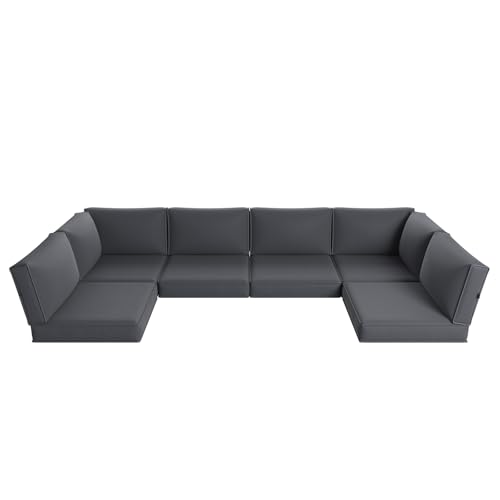
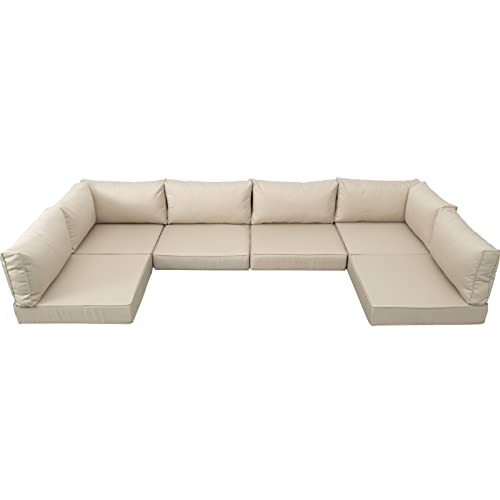
Sectional corners are the trickiest cushions to fit. A corner piece may use a single L-shaped cushion, two separate rectangular cushions meeting at the corner, or a dedicated wedge cushion. When ordering replacements, always measure the corner section separately — do not assume a standard rectangular cushion will fit. Many buyers discover this too late and end up with gaps or overhang at the corner joints.
Chaise and Ottoman Cushions
If your sectional includes a chaise lounge or ottoman extension, those cushions are longer and often thinner in profile. They need to match the seat height of the main sectional so the transition feels seamless when you stretch out. Cushion sets that include chaise pieces are less common than standard seat-and-back sets, so check availability before committing to a sectional with a chaise extension.
Cushion Covers (Separate from Cushions)
Sometimes the foam core is still good but the fabric has faded, stained, or torn. In that case, outdoor sectional replacement cushion covers let you refresh the look without replacing the entire cushion. This is a practical middle path between full replacement and living with worn fabric. Covers are also useful for seasonal color changes or for protecting cushions during heavy-use periods.
Fabric and Fill Materials Explained
The two components that determine cushion performance are the outer fabric and the inner fill. Both matter, and both vary significantly across quality tiers.
Outer Fabric Options
- Solution-dyed acrylic: The gold standard for outdoor cushions. Color is infused into the fiber rather than applied on top, so it resists fading from UV exposure. It also resists mold, mildew, and water absorption reasonably well. This is the fabric type found in most premium and luxury outdoor cushion sets.
- Polyester blends: Common in mid-range cushions. Polyester is durable and quick-drying but can fade faster than acrylic under intense sun. Higher-quality polyester blends with UV inhibitors perform noticeably better than basic versions.
- Olefin: A synthetic fiber that is naturally water-resistant and stain-resistant. It is often used in entry-level and mid-tier cushions. Olefin is strong but can feel slightly less soft than acrylic.
- Cotton blends: Comfortable and breathable, but generally not ideal for full outdoor exposure unless treated. Better suited to covered porches than open patios.
Fill Options
- High-density foam: The most common seat cushion fill. Dense foam provides firm support and holds shape well, but low-quality foam can flatten within a season. High-density foam in a premium cushion set can last several years with proper care.
- Quick-dry foam: Foam engineered with open cells that allow water to pass through and drain quickly. This is the preferred fill for uncovered patios and rainy climates.
- Polyester fiber fill: Soft and lightweight, commonly used for back cushions. Fiber fill feels plush but compresses and clumps over time, requiring fluffing and eventual replacement.
- Fiber-wrapped foam: A hybrid that combines a foam core with a soft fiber wrap. This delivers support plus a soft surface feel and is common in mid-range and premium cushions.
- Blown fiber and shredded foam: Found in some loose back cushions. Comfortable but prone to settling; these need regular fluffing.
Practical takeaway: For an uncovered patio, prioritize quick-dry foam and solution-dyed acrylic. For a covered porch, standard high-density foam and a polyester blend can work well and may feel softer. Match the materials to the actual exposure of your space, not to a generic recommendation.
How to Choose the Right Outdoor Sectional Cushions
Buying cushions is a measurement and compatibility exercise as much as a style decision. Work through these factors in order, because each one narrows the options for the next.
- Measure the seat platform, not the old cushion. Old cushions may have stretched or compressed. Measure the actual frame platform — width, depth, and the space between armrests or back supports. Add a small allowance so the cushion fits snugly without bulging.
- Check corner and chaise geometry separately. Corner pieces and chaise extensions rarely match standard rectangular dimensions. Measure each unique section and note whether it needs one cushion or two.
- Decide on thickness. Thicker seat cushions raise the seat height and feel more supportive; thinner cushions keep the profile low and modern. Make sure the combined seat height (frame plus cushion) is comfortable for the people who will use it most.
- Match fill to exposure. Uncovered patio: quick-dry foam. Covered porch: standard high-density foam is fine. High-humidity climates: prioritize drainage and mildew resistance in both fabric and fill.
- Confirm attachment method. Check whether your sectional uses ties, zippers, hook-and-loop strips, or loose cushions. Replacement cushions must be compatible with the attachment points on your frame, or they will slide and bunch.
- Verify replacement availability before buying the sectional. If you are shopping for a new sectional, check whether the manufacturer sells replacement cushions and cushion covers. A sectional with no replacement path becomes disposable when the cushions wear out.
- Plan for color and style longevity. Neutral tones hide fading and coordinate with future decor changes. Bold colors make a statement but are harder to match if you need to replace a single cushion later.
If you are comparing complete seating setups rather than just cushions, the same sizing logic applies to outdoor sectional furniture as a whole — cushion dimensions should be confirmed before the frame is finalized. Buyers who plan storage alongside seating often choose outdoor sectional with storage for cushions designs, which keep cushions protected when not in use and extend their lifespan significantly.
Quality Tiers: What Changes as You Move Up
Outdoor sectional cushions fall into recognizable quality tiers. Rather than focusing on absolute numbers, it helps to understand what each tier typically delivers so you can match the cushion to your usage and climate.
| Tier | Typical Fabric | Typical Fill | Best For |
|---|---|---|---|
| Entry-level | Basic polyester or olefin | Standard foam, lower density | Covered porches, light seasonal use |
| Mid-range | UV-treated polyester blend | High-density foam or fiber-wrapped foam | Regular family use on covered or semi-covered patios |
| Premium | Solution-dyed acrylic | Quick-dry high-density foam | Uncovered patios, sunny and rainy climates |
| Luxury / commercial-grade | Heavyweight solution-dyed acrylic with reinforced seams | Engineered quick-dry foam with drainage channels | Full exposure, heavy daily use, hospitality settings |
As you move up tiers, the improvements are usually in three areas: colorfastness under UV, drainage and mildew resistance, and foam resilience over time. A mid-range cushion with good UV treatment often outperforms an entry-level cushion by a wide margin in year two and beyond. Premium and luxury tiers add consistency — the cushions look and feel the same after several seasons rather than degrading unevenly.
For most homeowners with a covered or partially covered patio, mid-range cushions offer a solid balance. For fully exposed patios, premium or luxury tiers are the more efficient long-term investment because they resist the exact conditions that destroy lower-tier cushions.
Care and Maintenance for Long Cushion Life
Even top-tier cushions degrade faster without basic care. The good news is that outdoor cushion maintenance is simple and takes only a few minutes per season.
Routine Cleaning
- Brush off loose debris weekly with a soft brush.
- Spot-clean spills promptly with mild soap and water; avoid harsh solvents that can strip UV coatings.
- Rinse fabric periodically to remove dust and pollen that trap moisture.
- Allow cushions to dry fully in the sun before replacing them on the frame.
Moisture Management
- Stand cushions on edge after rain so water drains and air circulates.
- Use quick-dry foam on uncovered sectionals; standard foam traps water and develops mildew.
- Store cushions in a dry, ventilated space during prolonged wet periods.
Seasonal Storage
- Clean and fully dry cushions before storing for winter.
- Store in breathable bags or containers rather than sealed plastic, which traps condensation.
- Keep stored cushions off cold concrete floors to prevent moisture wicking.
- If your sectional has built-in storage, confirm it stays dry and ventilated — built-in storage is convenient but can trap humidity if not designed with drainage.
When to Replace Instead of Clean
Replace cushions when the foam no longer recovers after compression, when fabric tears at seams cannot be repaired cleanly, or when mildew has penetrated the fill. Cover replacement is a valid intermediate step when only the fabric is worn. If the sectional itself is aging, consider whether a full outdoor sectional replacement cushions set makes sense before replacing the entire seating piece.
Common Mistakes to Avoid
- Ordering by old cushion size: Stretched or compressed cushions mislead. Measure the frame platform.
- Ignoring corner geometry: Corners and chaise sections need their own measurements and often their own cushion shapes.
- Choosing fabric by color only: A beautiful fabric that fades in one season is not a good choice for an uncovered patio.
- Skipping attachment compatibility: Cushions that do not match your frame's ties or strips will slide and wear unevenly.
- Buying a sectional with no replacement path: If the manufacturer does not sell replacement cushions or covers, the sectional becomes disposable when the cushions wear out.
- Storing cushions damp: Mildew damage is often permanent. Always dry fully before storage.
For readers still deciding on the seating piece itself, reviewing outdoor sectional couch options alongside cushion availability prevents the frustrating situation of owning a comfortable sofa with no viable replacement cushions. Similarly, if your sectional includes a dining-height table, confirm that cushion sets are available for the seating sections around it — mixed-height sectionals often use non-standard cushion sizes.
Frequently Asked Questions
How do I know if my sectional needs new cushions or just new covers?
Press down firmly on the seat cushion. If the foam springs back quickly and feels supportive, the core is still good and new covers will refresh the look. If the foam stays compressed, feels lumpy, or the cushion bottom has lost structure, replace the full cushion. Back cushions with fiber fill can sometimes be refreshed by adding fill, but flattened seat foam cannot be restored reliably.
Can I use indoor cushions on an outdoor sectional?
You can, but they will not last. Indoor fabrics are not treated for UV exposure or moisture, and indoor foam traps water. Within a season, indoor cushions on an outdoor sectional typically fade, develop mildew, and flatten. The upfront difference in durability is significant enough that outdoor-specific cushions are the practical choice even for covered porches.
What is the best fill for a humid climate?
Quick-dry foam is the best choice for humid climates. Its open-cell structure allows water to drain and air to circulate, reducing the risk of mildew inside the cushion. Pair it with a solution-dyed acrylic fabric that resists moisture and UV fade. Fiber fill is a poor choice for humid outdoor use because it clumps when damp.
How often should outdoor sectional cushions be replaced?
With proper care, mid-range cushions typically last two to four seasons, while premium quick-dry cushions with solution-dyed acrylic fabric can last considerably longer. The replacement trigger is function, not calendar age: flattened foam, torn seams that cannot be repaired, or mildew that has reached the fill. Covers alone can extend the visible life of a cushion by several seasons if the foam core remains supportive.
Do corner sectional cushions come in standard sizes?
No. Corner cushion dimensions vary widely between manufacturers and even between models from the same brand. There is no reliable universal corner size. Always measure the corner platform directly — width along both legs, depth, and thickness — and order cushions specifically sized for that corner section, or choose a sectional whose manufacturer sells replacement corner cushions.
Should I remove cushions when the sectional is not in use?
Yes, whenever practical. Removing cushions and storing them in a dry, ventilated space protects them from rain, sun, and debris between uses. If daily removal is impractical, use a breathable cover over the sectional and stand cushions on edge after rain. Built-in storage on some sectionals makes removal convenient, but confirm the storage compartment stays dry.
Final Thoughts
Outdoor sectional cushions are the component that determines whether your patio seating is genuinely comfortable or merely decorative. The right choice comes down to four decisions: measure the frame rather than the old cushion, match the fill to your exposure, choose a fabric rated for your sun and rain conditions, and confirm that replacement cushions and covers are available for your model.
If you are still in the planning stage, review your outdoor sectional cushions options alongside the frame you are considering — and check replacement availability before committing. A well-chosen cushion set turns a sectional into a space you use every day, season after season.