Outdoor Sectional with Dining Height Table: The Complete Buying Guide
One piece of furniture, two essential functions. Learn how to choose, arrange, and care for an outdoor sectional that seats your guests and serves your meals at the perfect height.
Start ExploringWhy this setup works: An outdoor sectional with a dining height table solves the most common patio problem — limited space. Instead of dedicating separate zones to lounging and eating, this hybrid arrangement lets you transition seamlessly from afternoon relaxation to evening dinner. The guide below covers everything you need to choose the right configuration, materials, and accessories for your home.
What Is an Outdoor Sectional with a Dining Height Table?
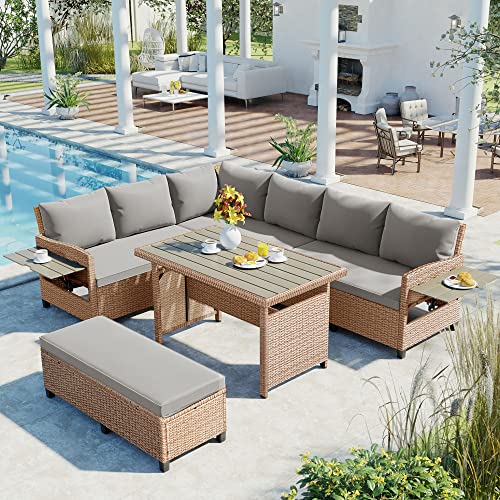
An outdoor sectional with dining height table is a modular seating system where the sofa sections connect to or wrap around a table built at standard dining height — typically 28 to 30 inches (71 to 76 cm) from the ground to the tabletop. Unlike a traditional coffee table that sits low, a dining height table allows guests to pull up close, rest their plates comfortably, and sit upright for meals without awkward bending.
This configuration is especially popular for patios that serve double duty: a casual lounge during the day and an alfresco dining room in the evening. Many modular sets allow you to detach the table and rearrange the sectional pieces into a conventional L-shape or U-shape when you want a pure lounge layout. The versatility makes it one of the most practical choices for homeowners who entertain regularly but do not have room for a separate dining set.
If you are still comparing broader furniture categories, our outdoor sectional hub covers the full range of modular seating options, while the sectional couch with dining table guide dives deeper into couch-style configurations.
Why Choose a Dining Height Sectional?
Space Efficiency
Combine two furniture zones into one footprint. This is the single biggest advantage for small patios, balconies, and compact decks where a separate dining table would crowd the layout.
Seamless Entertaining
Guests can lounge with a drink, then shift to a meal without changing seats. The conversation never breaks, and you avoid the awkward shuffle between lounge and dining areas.
Modular Flexibility
Most sets let you rearrange pieces into different configurations. Detach the table for a pure lounge setup, or reconfigure the sectional to match your patio shape.
Design Cohesion
Matching frames, fabrics, and finishes create a unified look. There is no guessing whether a separate dining set will complement your sectional — it is designed as one system.
Multi-Season Use
The dining table doubles as a serving station, game table, or workspace. Add a fire pit table variant and the setup extends well into cooler months.
Easy Cushion Management
Because the seating is a single unit, cushion storage and replacement are simpler. You order one consistent set rather than coordinating multiple furniture pieces.
Popular Configurations and Layouts
The right configuration depends on your patio shape, the number of people you typically host, and whether you want the table centered or at one end. Here are the most common arrangements:
L-Shaped with Corner Dining Table
The table sits at the corner where the two sectional arms meet. This layout works well for square or rectangular patios and keeps the dining surface central to the seating. It is the most popular configuration for families of four to six.
U-Shaped with Center Table
Three sectional sides surround a rectangular or round dining table. This is the most social layout, ideal for larger gatherings, but it requires more floor space. A U-shape with a sectional with dining table and umbrella is a strong choice for sunny climates.
Straight Run with End Table
A single long sectional with the dining table positioned at one end. This suits narrow patios and balconies. The table can double as a serving station when not in active dining use.
Convertible Modular Setup
Some manufacturers design the table to drop or lift, converting between coffee height and dining height. These convertible models are convenient but typically sit in the premium or luxury tier due to the mechanism complexity. For a fixed-height alternative that still offers flexibility, a sectional couch with dining table is worth considering.
L-Shaped Configuration
Efficient corner use, seats four to five comfortably, and leaves walking space on two sides. The table anchors the corner and serves as both dining and serving surface.
U-Shaped Configuration
Maximum seating and conversation flow. Requires at least 10 by 10 feet of clear patio space to avoid feeling cramped. Ideal for households that host frequently.
Straight Run Configuration
Linear layout that hugs a wall or railing. The dining table sits at one end, keeping the center open for movement. Works well on balconies and side yards.
Materials: Frame, Tabletop, and Cushions
Durability is the deciding factor for outdoor furniture. A set that looks beautiful in the showroom but degrades after one season is a poor investment. Here is how the main material categories compare.
Frame Materials
| Frame Type | Tier | Best For | Key Traits |
|---|---|---|---|
| Powder-Coated Aluminum | Mid-range to Premium | Humid and coastal climates | Rust-proof, lightweight, easy to rearrange. Thicker gauge aluminum resists denting better than thin frames. |
| High-Density Polyethylene (HDPE) Wicker | Entry-level to Mid-range | Family patios with kids and pets | Woven look, UV-stabilized, does not splinter. Look for fully wrapped frames rather than wicker over cardboard. |
| Teak and Rot-Resistant Hardwood | Premium to Luxury | Traditional and rustic designs | Ages to a silver-grey patina, naturally repels insects and moisture. Requires annual sealing to maintain honey tone. |
| Powder-Coated Steel | Entry-level | Covered porches and sunrooms | Heavy and sturdy but prone to rust if the coating chips. Best for protected areas away from direct rain. |
| Recycled Plastic (Poly Lumber) | Mid-range | Low-maintenance households | Never needs painting or sealing, extremely weather-resistant. Heavier than aluminum and less refined in appearance. |
Tabletop Options
The dining height table is the functional centerpiece of the set, so its surface matters. Slatted aluminum tops drain rainwater quickly and resist staining. Tempered glass looks elegant but shows water spots and requires more frequent cleaning. Composite stone and ceramic tops resist scratches and heat, making them a strong choice for households that serve hot dishes directly. Wood tops offer warmth but need sealing and should not be left uncovered through winter. For setups that include shade, a sectional with dining table and umbrella often pairs a slatted or composite top with a central umbrella hole.
Cushion Fabrics and Foam
Solution-dyed acrylic is the benchmark for outdoor cushions. The color is infused into the fiber rather than applied as a surface dye, so it resists fading under UV exposure. Olefin is a more accessible alternative with good moisture resistance but slightly less colorfastness over many years. For the foam core, open-cell quick-dry foam allows water to pass through and air to circulate, preventing the musty smell that plagues standard foam after rain. If your cushions are showing wear, outdoor sectional replacement cushions are available in standard and custom sizes.
Understanding Quality Tiers
Outdoor sectional dining sets fall into distinct quality tiers. Rather than focusing on numeric figures, use these descriptors to understand where a set sits in the market and what you can expect from its construction.
| Quality Tier | Typical Construction | Expected Lifespan | Best Suited For |
|---|---|---|---|
| Entry-Level / Starter Tier | Thin-gauge steel or basic aluminum frames, standard foam cushions, olefin fabric. Assembly required. | 3 to 5 seasons with care | First-time buyers, renters, seasonal use, covered patios. |
| Mid-Range / Balanced Tier | Thicker aluminum or HDPE wicker, quick-dry foam, solution-dyed acrylic cushions. Better hardware and joinery. | 6 to 10 seasons | Year-round use in moderate climates, families, regular entertainers. |
| Premium / High-End Tier | Heavy-gauge aluminum or teak, high-density quick-dry foam, brand-name acrylic fabrics. Precision welding and reinforced joints. | 10 to 15+ seasons | Full outdoor exposure, coastal environments, design-conscious homeowners. |
| Luxury / Flagship Tier | Marine-grade aluminum or premium hardwood, custom-tailored cushions, designer fabric collections, convertible mechanisms. | 15+ seasons | High-end residential installations, commercial hospitality, legacy furniture pieces. |
Buying Checklist: What to Verify Before You Order
- Measure the table height against your seat height. The tabletop should be 10 to 12 inches above the cushion surface. If you plan to add a thicker cushion later, account for that difference now.
- Confirm the table depth. A dining height table needs at least 24 inches of depth per diner so plates and elbows have room. Corner tables should be at least 32 by 32 inches for four settings.
- Check the frame gauge. Thicker aluminum (1.5 mm and above) resists denting and wobble. Ask the manufacturer or check the spec sheet.
- Verify cushion foam type. Quick-dry open-cell foam is essential for uncovered patios. Standard foam retains water and develops mildew.
- Look for reinforced joints. Corner brackets, welded seams, and bolted connections should feel solid with no play when you shift weight.
- Confirm modular compatibility. If you plan to expand later, verify that individual pieces are sold separately and that the locking mechanism is consistent across the line.
- Review the warranty terms. Frame warranties of 3 to 5 years indicate mid-range confidence; 10 years or more signals premium construction. Cushion warranties are typically shorter and cover fabric defects only.
- Plan for storage. If you live in a region with harsh winters, confirm that the table and sectional pieces fit under a standard cover or inside a shed. Our guide to outdoor sectional with storage for cushions covers integrated storage options.
- Check umbrella compatibility if needed. A central umbrella hole requires a table with a pre-drilled opening and a weighted base. Not all dining height tables include this feature.
Care and Maintenance for Long-Term Performance
An outdoor sectional dining set is a long-term investment, and the maintenance routine is straightforward if you stay ahead of it. Here is the seasonal care calendar:
Routine Cleaning
Wipe the tabletop weekly with a damp cloth and mild soap. Avoid abrasive cleaners on powder-coated surfaces and glass tops. For wicker frames, use a soft brush to lift dust from the weave, then rinse with a garden hose and allow to air dry in the sun. Cushion covers that are removable can be machine washed on a gentle cycle and air dried — never tumble dry, as heat can shrink the fabric and damage the water-repellent finish.
Seasonal Protection
Before winter or the rainy season, clean and fully dry all surfaces, then apply a furniture cover that breathes. A completely waterproof cover can trap condensation and promote mildew, so look for covers with vented panels. Wood frames should receive a fresh coat of sealant annually. Store cushions indoors during extended periods of disuse. If your set includes a sectional with fire pit dining table, follow the fire feature manufacturer’s instructions for off-season care and fuel line inspection.
Cushion Longevity
Rotate cushions every few weeks so they wear evenly. Bring them inside before heavy rain when possible. If the foam begins to compress or lose shape, replacement inserts are available for most standard sizes, and outdoor sectional replacement cushion covers let you refresh the look without replacing the entire set.
Space Planning: Making the Layout Work
The most common mistake buyers make is underestimating the clearance needed around the table. Plan for at least 30 inches of open floor space behind each seating position so guests can push back from the table without hitting a wall or railing. For a U-shaped configuration, add another 12 inches of walking room behind the outermost seats.
On a compact balcony, an L-shaped layout with the dining table at the corner is usually the most efficient. Measure the longest wall and the shortest wall, then choose a sectional whose two arms fit within those dimensions with at least 24 inches of clearance at each end. If your patio is narrow, a sectional couch with a slim table at one end may fit better than a corner-oriented layout.
Leave room for circulation between the sectional and any doors or steps. A general guideline is 36 inches of clear path. If the dining table sits near a grill or serving station, keep a buffer of at least 18 inches so heat and splatter do not reach the cushions. For patios that include a patio serving station and storage cabinet, position it adjacent to the table end rather than behind the seating to reduce foot traffic through the conversation area.
Ready to Compare Specific Sets?
Browse hand-selected sectional dining configurations, filter by frame material and table shape, and read detailed spec breakdowns.
Explore Recommended OptionsFrequently Asked Questions
Final Thoughts
An outdoor sectional with a dining height table is one of the smartest furniture investments for a multi-purpose patio. It eliminates the need for duplicate zones, keeps entertaining fluid, and often costs less than buying a separate lounge set and dining set individually. The key is to prioritize frame construction and cushion foam quality, verify the table-to-seat height ratio before ordering, and commit to a simple seasonal maintenance routine.
Whether you choose an entry-level modular set for a covered porch or a premium teak configuration for a coastal patio, the hybrid sectional-dining concept delivers flexibility that single-purpose furniture cannot match. Use the checklist and tier table above to narrow your options, and explore our recommended products below to compare specific models side by side.