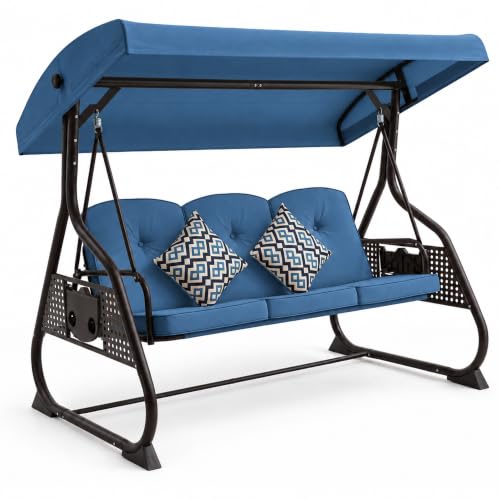
Outdoor Swing with Canopy and Side Tables: The Complete Buying Guide
Everything you need to choose a canopy swing that fits your space, your climate, and the way you actually relax — from frame materials and canopy fabrics to integrated side tables and cushion care.
Why this guide exists: If you've already decided a canopy swing is the right addition to your patio, you're past the browsing stage and into decision mode. The challenge now is distinguishing between models that look similar in photos but differ sharply in frame durability, canopy longevity, side table practicality, and long-term comfort. This guide walks through each of those variables so you can evaluate any canopy swing you encounter with confidence — and know exactly what questions to ask before you commit.
What Makes an Outdoor Swing with Canopy and Side Tables Different
A canopy swing — sometimes called a patio swing, garden swing, or porch swing with canopy — combines three elements into a single freestanding piece: a suspended seating area, a built-in overhead canopy for shade and light rain protection, and (in the configuration this guide focuses on) side tables mounted to or integrated with the frame. Unlike a traditional hanging porch swing that requires structural mounting, these are self-supporting units with an A-frame or arc frame that rests directly on your patio, deck, or lawn.
The side tables are the feature most buyers underestimate. On a basic canopy swing, you have nowhere to set a drink, a book, or your phone without balancing it on your lap or the armrest. Integrated side tables solve that — but only if they're designed well. A table that wobbles when the swing moves, or that's too small for a standard tumbler, is worse than no table at all. Throughout this guide, we'll treat side table design as a core evaluation criterion rather than an afterthought.
If you're also furnishing the surrounding area, it helps to think of the swing as part of a larger outdoor setting. Our guide to creating a cohesive outdoor setting covers how seating pieces, shade, and accent tables relate to one another, while the outdoor shade overview explains how canopy shade compares to umbrellas and pergolas.
Frame Materials: The Foundation of Longevity
The frame determines how stable the swing feels, how much weight it can hold, and how long it survives exposure to sun, rain, and temperature swings. Three materials dominate the market, each with a distinct position in the quality hierarchy.
Powder-Coated Steel
Steel is the most common frame material in entry-level and mid-range canopy swings. It's rigid, handles high weight capacities well, and — when finished with a proper powder coating — resists rust for several seasons. The weakness is at joints, welds, and any spot where the coating chips; once bare steel is exposed, rust progresses quickly. Steel swings are heavier than aluminum, which makes them more stable in wind but harder to reposition alone. Look for fully welded joints rather than bolted connections, and a coating described as rust-proof or multi-layer rather than simply "painted."
Aluminum
Aluminum frames sit in the mid-range to premium tiers. They're significantly lighter than steel, inherently rust-resistant, and easier to move for cleaning or seasonal rearranging. The trade-off is that aluminum can feel less planted than steel in gusty conditions unless the base is weighted or the frame uses thicker tubing. Powder-coated aluminum with a matte finish is the most weather-durable option for coastal or humid climates, where salt air accelerates corrosion on steel.
Wood
Wooden canopy swings — typically cedar, fir, or eucalyptus — occupy the premium and luxury tiers. They offer a warmth and visual character that metal frames can't match, and they suit rustic, farmhouse, and traditional patio styles. The maintenance burden is higher: wood requires sealing or staining every one to two years depending on climate, and it can crack or warp if neglected. Cedar and teak are the most rot-resistant choices; fir and pine need more attentive care. Wooden swings are also heavier and usually ship in more pieces, so assembly takes longer.
| Frame Material | Tier Positioning | Weather Resistance | Best For |
|---|---|---|---|
| Powder-coated steel | Entry-level to mid-range | Good; vulnerable at chips and welds | Stable, high-capacity seating on covered patios |
| Powder-coated aluminum | Mid-range to premium | Excellent; rust-proof by nature | Coastal, humid, or uncovered outdoor areas |
| Cedar / teak wood | Premium to luxury | Good with annual sealing | Rustic and traditional designs; covered porches |
| Fir / pine wood | Entry-level to mid-range | Moderate; requires frequent care | Seasonal use under a roof or awning |
Canopy Fabric and Design: Shade That Lasts
The canopy is the feature that separates this swing type from an open bench — and it's also the component most likely to fail first if the fabric is low-grade. Canopy quality comes down to three factors: fabric type, UV treatment, and structural design.
Fabric Types
- Polyester with UV coating: The standard for entry-level and mid-range swings. Lightweight, water-repellent, and available in many colors, but the UV coating degrades after a few seasons of direct sun, leading to fading and eventual fabric brittleness.
- Solution-dyed acrylic: Found in premium and luxury models. The color is infused into the fibers rather than applied as a surface coating, so it resists fading far longer. It also breathes better, reducing heat buildup under the canopy and minimizing condensation.
- Olefin: A mid-tier option with good moisture and mildew resistance, often used in coastal climates. It's durable but less colorfast than solution-dyed acrylic under intense sun.
Vented Tops and Frame Integration
A canopy with a vented top — a small opening or mesh panel at the peak — allows wind to pass through rather than catching the fabric like a sail. This reduces the lifting force on the frame during gusts and extends the life of both the canopy and the swing. Equally important is how the canopy attaches to the frame: reinforced pockets, heavy-duty zippers, and tension straps hold up far better than simple ties or hook-and-loop fasteners. If the canopy is removable for winter storage, check that the attachment points are metal or reinforced fabric rather than thin plastic clips that crack in cold weather.
Canopy shade is one approach among several; if you're comparing options for a larger seating area, the outdoor sun shade guide covers how canopy swings fit alongside umbrellas, sails, and pergolas. For a deeper look at umbrella-based alternatives, the outdoor umbrella holder overview is useful when deciding whether a swing canopy alone provides enough coverage.
Side Tables: The Feature That Makes or Breaks the Swing
Integrated side tables turn a canopy swing from a place to sit into a place to spend an afternoon. But not all side table designs are equal. Here's what separates a genuinely useful table from a decorative afterthought.
Mounting and Stability
The best side tables are welded or bolted directly into the swing's armrest or frame, with a support bracket underneath. Tables that hang from the armrest by a single hook or strap will sway when the swing moves, and drinks will slide or tip. Look for tables that either lock into a level position or are rigidly fixed to the frame so they move with the swing as a single unit. If the table is removable, check that the attachment mechanism is metal-on-metal rather than plastic clips.
Size and Surface Features
A practical side table needs enough surface for a tumbler, a small plate, and a phone — roughly 10 to 14 inches in diameter for round tables, or similar usable area for rectangular designs. Raised lips or tray-style edges are a major plus, since they catch condensation runoff and prevent small items from sliding off during gentle swinging. Some premium models add a lower shelf or a built-in cup recess; both are genuinely useful rather than gimmicky.
Material Matching
Side tables should match the frame material for visual consistency and durability. Steel-framed swings with plastic side tables look mismatched and age unevenly; aluminum swings with aluminum tabletops (often powder-coated or with a slat design) hold up best. Wooden swings typically pair with wooden side tables, which need the same sealing schedule as the frame. If you're considering a standalone side table instead of an integrated one, our guide to choosing an outdoor side table and the broader outdoor side tables collection cover freestanding alternatives that can work alongside a swing.
Cushions and Seating Comfort
Most canopy swings ship with cushions, and the cushion quality varies enormously across tiers. Three factors matter most: foam density, fabric weather resistance, and how the cushions attach to the seat.
High-density foam (often described as 3-inch or 4-inch thickness with a density rating) holds its shape for years, while low-density foam compresses into a flat pad within a season or two. Fabric should be solution-dyed acrylic or a treated polyester with UV and mildew resistance; untreated fabric will fade, grow mildew in humid conditions, and feel damp after rain. Attachment matters too — cushions with ties or straps stay in place when the swing moves, while loose cushions slide forward constantly.
If you're replacing or upgrading cushions, our outdoor swing cushions guide covers thickness options, fabric choices, and how to measure for a proper fit. For broader cushion care and storage advice, the cushion storage guide explains how to protect them through the off-season.
Weight Capacity, Dimensions, and Safety
Canopy swings come in two-seat and three-seat configurations, and occasionally larger bench-style designs. Weight capacity doesn't scale linearly with seat count — a well-built two-seat swing can outperform a poorly built three-seat model. Mid-range and premium three-seat swings are typically engineered for roughly 600 to 800 pounds total capacity, while commercial-grade models exceed that. Always check the stated capacity in the product specifications rather than assuming based on how many people the seat appears to hold.
Footprint is the other number buyers regret not checking. A three-seat swing with side tables generally needs about 70 to 90 inches of width and 45 to 55 inches of depth, plus at least 24 inches of clearance on each side for the swinging motion. Measure your patio or deck against the manufacturer's assembled dimensions — not the shipping dimensions — before ordering. If space is tight, a two-seat model or a swing without side tables may fit better; our outdoor swing chair guide covers compact alternatives.
Pre-Purchase Checklist for a Canopy Swing with Side Tables
- Confirm the frame material and finish (powder-coated steel, aluminum, or sealed wood)
- Check the stated weight capacity against your typical use
- Verify the canopy fabric type and whether it's removable for storage
- Inspect how the side tables attach — welded, bolted, or hanging
- Measure your space against assembled dimensions plus swing clearance
- Confirm cushion thickness, fabric treatment, and attachment method
- Check whether assembly requires tools you own and how many people are needed
- Review the warranty terms for frame, canopy, and cushions separately
Placement, Setup, and Styling
Where you place the swing affects both its comfort and its lifespan. A spot with afternoon shade from a tree or structure will extend canopy fabric life considerably compared to full-day sun. A level, solid surface — concrete patio, composite deck, or packed gravel — keeps the frame from settling unevenly. On grass or soft ground, use a ground anchor kit or stake the base, especially in windy areas.
Stylistically, a canopy swing anchors a seating zone. Pair it with a small freestanding table for additional surface area, a rug to define the space, and lighting for evening use. Our outdoor side table guide and outdoor storage bench overview cover complementary pieces that work well beside a swing without crowding it. For evening ambiance, the outdoor string lights guide explains how to light a seating area without glare.
If you're planning the swing as part of a larger furniture refresh, the outdoor sofa set overview and sectional with waterproof cushions guide show how swing seating fits into a full patio layout.
Care and Maintenance by Material
- Steel and aluminum frames: Wipe down monthly with mild soap and water; touch up any coating chips promptly with matching touch-up paint to prevent rust (steel) or oxidation (aluminum). Inspect welds and bolts at the start of each season.
- Wood frames: Clean with a soft brush and mild soap, then apply a sealant or stain annually. Check for cracks and tighten any loose fasteners; wood expands and contracts with humidity.
- Canopy fabric: Brush off debris, clean with mild soap and a soft brush, and allow to dry fully before folding or storing. Remove the canopy for winter in cold climates to prevent snow load damage and fabric degradation.
- Cushions: Shake out weekly, spot-clean with mild detergent, and store in a dry place during off-season or heavy rain. Mildew-resistant fabric still needs airflow to stay fresh.
- Side tables: Wipe spills promptly, especially on wood surfaces. Check mounting hardware each season and tighten as needed.
For a broader seasonal maintenance routine that covers all patio furniture, the outdoor care hub and the weatherproofing guide go deeper into protective treatments and storage practices.
Common Buying Mistakes to Avoid
- Choosing by seat count alone. A three-seat swing with a weak frame and thin cushions is a worse purchase than a well-built two-seat model.
- Ignoring the canopy attachment method. Plastic clips and simple ties fail first; reinforced pockets and metal hardware last.
- Overlooking side table stability. A table that swings independently of the seat is a spill waiting to happen.
- Skipping the assembled dimensions. A swing that doesn't leave room to actually swing is a swing you won't use.
- Assuming all cushions are equal. Foam density and fabric treatment vary dramatically across tiers and determine comfort within the first season.
- Neglecting winter storage. Even weather-resistant swings last longer when the canopy and cushions are removed for the off-season.
Frequently Asked Questions
What should I look for in a canopy for an outdoor swing?
Look for a canopy made from UV-resistant, water-repellent fabric such as polyester or solution-dyed acrylic. A sturdy powder-coated steel or aluminum frame with reinforced stitching and a vented top helps wind pass through, reducing lifting and wear.
Are side tables on outdoor swings stable enough for drinks?
Yes, provided the side tables are integrated into the swing frame rather than attached as flimsy add-ons. Look for tables with a weight capacity rated for beverages and small items, a raised lip or tray edge, and a locking mechanism that keeps the table level when the swing is in motion.
What weight capacity is typical for a 3-seat canopy swing?
Most mid-range and premium 3-seat canopy swings are engineered for roughly 600 to 800 pounds total capacity, though commercial-grade models can support more. Always verify the stated capacity in the product specifications rather than assuming based on seat count.
Can an outdoor swing with canopy stay outside year-round?
It depends on the materials. Powder-coated steel or aluminum frames with rust-proof finishes and solution-dyed acrylic canopies can handle year-round exposure in mild climates. In areas with heavy snow or extreme UV, remove the canopy and store cushions during the off-season to extend the swing's lifespan.
How much space do I need for a swing with side tables?
A typical 3-seat swing with integrated side tables needs a footprint of roughly 70 to 90 inches wide and 45 to 55 inches deep, plus clearance of at least 24 inches on each side for safe swinging motion. Always measure your patio or deck against the manufacturer's assembled dimensions before purchasing.
Ready to Compare Canopy Swings?
Use the checklist above to evaluate any model you're considering. Focus on frame material, canopy fabric, side table attachment, and cushion density — those four factors separate a swing you'll enjoy for years from one you'll replace in a season. Browse our recommended options below to see how different tiers compare on these criteria.