Outdoor Swivel Bar Stools: The Complete Buying Guide
Everything you need to know before choosing swivel bar stools for your patio, deck, or outdoor kitchen — materials, sizing, swivel mechanics, comfort, and styling that lasts for seasons.
Explore The GuideWhy swivel stools belong outdoors: A swivel bar stool lets guests turn toward the grill, the conversation, or the view without leaving their seat. It is one of the most practical upgrades for an outdoor bar, counter, or high-top table — but only when the stool is built for weather, weight, and daily use. This guide walks you through every decision so you can buy with confidence.
What Makes an Outdoor Swivel Bar Stool Different?
An outdoor swivel bar stool combines three engineering challenges in one piece of furniture: a rotating mechanism, a weather-exposed frame, and a seat that must support full adult weight repeatedly. Indoor swivel stools often rely on exposed steel bearings and fabric that absorbs moisture. Outdoor-rated models use sealed or stainless swivel plates, powder-coated or marine-grade frames, and quick-dry seat materials. That difference in construction is what separates a stool that lasts a decade from one that seizes after a single rainy season.
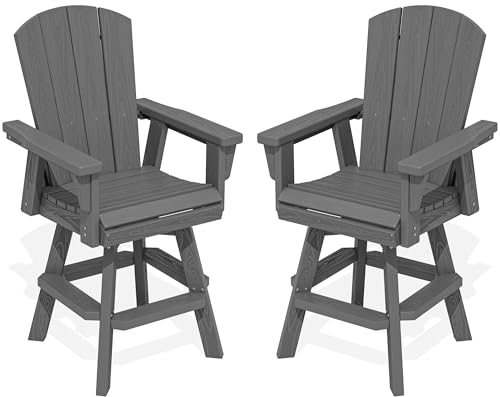
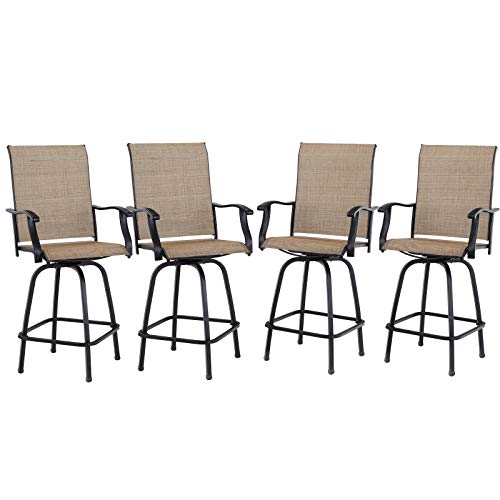
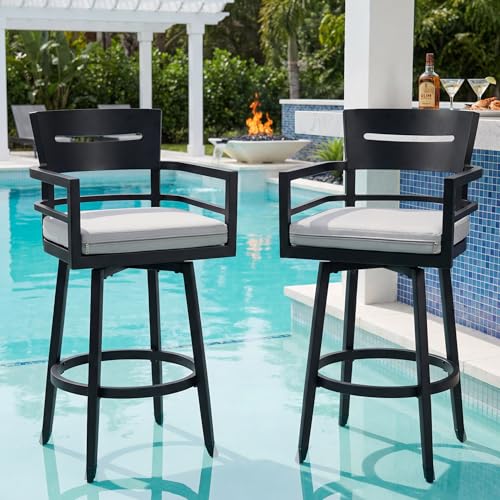
If you are still comparing bar seating categories, our overview of patio bar stools explains how swivel models fit alongside fixed and counter-height options. For ready-made sets, the set of 4 outdoor swivel bar stools format is popular for outdoor kitchens and covered bars.
The Three Core Decisions
1. Height & Sizing
Match seat height to your counter or bar surface. Bar-height stools need 28–30 inch seats; counter-height stools need 24–26 inch seats. Leave 24–26 inches of width per stool.
2. Frame Material
Powder-coated aluminum, stainless steel, and all-weather wicker over metal are the most durable. Dense sealed wood works in covered areas. Avoid untreated steel.
3. Swivel Mechanism
Sealed stainless bearings, a memory-return swivel, and a weighted base matter more than flashy design. A stiff or exposed swivel is the first thing to fail.
Height and Sizing: Get This Right First
Height is the most common buying mistake. Measure from the floor to the underside of your counter or table top, then subtract 10 to 12 inches for legroom. A 40–42 inch bar top pairs with 28–30 inch seat heights. A 36 inch counter pairs with 24–26 inch seats. If you are building a bar setup from scratch, our guide to an outdoor high-top table and chairs set covers surface heights alongside seating. If your plan includes a dedicated bar zone, the bar dining set overview helps you match stools to table proportions.
Width matters too. Allow 24–26 inches per stool along the bar so guests can swivel without colliding. A six-foot bar comfortably seats three stools; a four-foot bar seats two. Depth matters for swivel clearance: keep at least 18 inches between the back of the stool and any wall, railing, or planter.
Material Guide: What Survives Outdoors
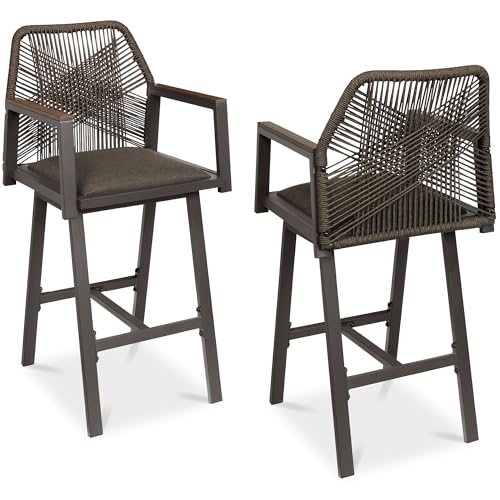
The frame determines lifespan. Powder-coated aluminum is lightweight, rust-proof, and the most common choice for mid-range and premium outdoor swivel stools. Stainless steel offers the highest corrosion resistance and suits coastal environments. Wrought iron with a quality protective finish delivers a classic look and heavy stability, though it requires periodic inspection for finish chips. All-weather wicker over a metal frame adds texture and comfort but should be inspected for UV fading over time.
Seat materials follow the same logic. Solution-dyed acrylic and olefin are colorfast and dry quickly. Quick-dry foam cushions resist mold. Sling seats and contoured resin seats need no cushions at all and are the easiest to maintain. If you prefer the wicker look, our outdoor wicker bar stools set of 2 guide shows how wicker is structured for outdoor use. Metal-frame buyers can compare the outdoor metal bar stools set of 4 format for coordinated bar seating.
| Tier | Typical Construction | Best For |
|---|---|---|
| Essential tier | Powder-coated steel or aluminum frame, basic nylon swivel, sling or resin seat | Casual patios, seasonal use, first outdoor bar setup |
| Balanced tier | Aluminum or wrought iron frame, sealed swivel plate, quick-dry cushion option | Year-round covered patios, family use, regular entertaining |
| Premium tier | Stainless or marine-grade aluminum, stainless bearings, solution-dyed fabric | Coastal homes, uncovered decks, long-term investment |
| Luxury tier | Teak or architectural-grade metal, memory-return swivel, custom upholstery | Design-led outdoor kitchens, full-sun luxury installations |
Tier language describes construction and intended use, not decoration. A balanced-tier stool with a sealed swivel and quick-dry cushion will usually outlast an entry-level stool with an exposed mechanism, even if the entry-level model looks more ornate.
The Swivel Mechanism: What to Inspect
The swivel is the part that fails first, and it is the part most buyers ignore. Look for a sealed swivel plate or stainless bearings, a smooth 360-degree rotation without wobble, and a base wide enough to prevent tipping when a guest leans. Memory-return swivels automatically rotate back to center — convenient for tight spaces and for stools that sit under a counter overhang. Avoid exposed mild-steel swivels, which corrode and seize in humid or coastal air. Test the rotation in person whenever possible: a quality swivel moves silently and evenly, without grinding or free play.
Comfort and Support
Swivel stools are used for long conversations, so seat contour and back support matter. Contoured resin or sling seats distribute weight without cushions. If you add cushions, choose quick-dry foam with ties or a non-slip back so the cushion does not slide during rotation. Footrests should be positioned so feet rest flat, not dangling — this reduces pressure on the back of the thighs. For a full bar-height dining arrangement, the bar table set guide explains how stool height, footrest placement, and table surface work together.
- Seat height measured to your actual counter, not a generic standard
- Sealed or stainless swivel with smooth 360-degree rotation
- Weighted or wide base for stability during swiveling
- Footrest at a height that keeps feet flat
- Quick-dry or solution-dyed seat materials
- Rust-proof finish on all welds and hardware
- Enough width per stool for free rotation
- Cover or storage plan for off-season protection
Styling Swivel Stools on a Patio or Deck
Swivel stools work best when they are treated as part of a complete bar zone rather than standalone seats. Pair them with a high-top surface, a shade element overhead, and lighting that reaches the bar after sunset. Our outdoor lighting guide covers bar-height lighting options, and the 11 ft offset umbrella with LED lights overview shows how shade and lighting can be combined over a bar area.
For seasonal refresh, the summer decor guide includes bar-zone styling ideas, while the winter storage guide explains how to protect swivel mechanisms and cushions during the off-season. If pets share the patio, the pet-friendly outdoor guide offers practical notes on durable finishes and stable bases.
Frequently Asked Questions
What height should outdoor swivel bar stools be?
Are swivel bar stools safe for outdoor use?
What materials work best for outdoor swivel bar stools?
Do outdoor swivel bar stools need cushions?
How many swivel bar stools do I need for my outdoor bar?
Buying tip: Test the swivel before you commit. A stool that rotates smoothly with no wobble and returns to center is a better long-term choice than a heavier stool with a stiff or exposed mechanism. Rotation quality is the single most reliable indicator of build quality in this category.
A Simple Buying Sequence
Start with height: measure your counter, subtract legroom, and lock in the seat height range. Next, choose the frame material based on sun exposure and climate. Then select the swivel mechanism — sealed or stainless, with memory-return if space is tight. Finally, decide on seat type and cushioning, and confirm that the base width fits your available depth. Following this sequence prevents the most common and costly ordering mistakes.
If you are outfitting a full bar zone rather than just seats, the outdoor swivel bar stools overview connects height, material, and swivel guidance in one place. For counter-height alternatives, the rattan counter stools guide covers a different seat-height category. And if your project includes a broader patio refresh, the patio bar stools hub links to related seating and table guides.
Ready to Compare Outdoor Swivel Bar Stools?
Use the guide above to shortlist the right height, material, and swivel type — then explore current models and set options to complete your outdoor bar.
View Recommended Products