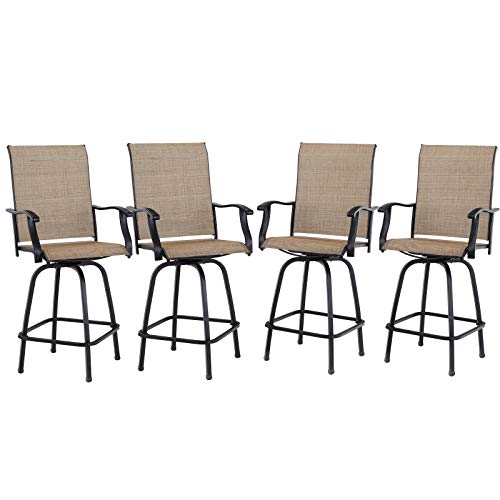
Outdoor Swivel Bar Stools Set of 4: The Complete Buying Guide
Everything you need to know before choosing a four-piece swivel bar stool set for your patio, deck, or backyard bar. Compare materials, swivel mechanisms, comfort features, and layout strategies — then decide with confidence.
Explore the GuideWhy this guide matters: A set of four outdoor swivel bar stools is one of the most practical upgrades for any entertaining space. Unlike fixed stools, swivel models let guests turn toward conversation, the grill, or the view without leaving their seat. This guide walks you through every decision point — from frame materials and swivel rings to seat height and weather resistance — so you can pick a set that fits your space and your lifestyle.
Why a Set of Four Swivel Bar Stools Makes Sense
Four stools hit a sweet spot for most outdoor entertaining areas. They fit comfortably along a standard 6- to 8-foot bar counter, they pair naturally with a six-person outdoor table and chairs arrangement, and they let you seat a small group without cluttering the space. Buying as a matched set also guarantees consistent seat height, finish, and swivel tension across all four stools — a detail that matters more than most shoppers realize.
Swivel functionality adds a layer of usability that fixed bar stools simply cannot match. Guests can rotate from the bar surface to a outdoor side table or turn toward a table with a built-in fire pit without awkwardly repositioning their seat. For hosts, swivel stools also make it easier to serve and clear without reaching over guests.
Key Buying Factors for Outdoor Swivel Bar Stools
1. Frame Material and Weather Resistance
The frame determines how your stools will look and perform after seasons of sun, rain, and temperature swings. Powder-coated aluminum is the most common choice for outdoor sets because it resists rust, stays lightweight enough to rearrange, and holds color well. High-grade steel with a rust-proof finish offers a heavier, more anchored feel but demands more attention to scratch touch-ups. Teak and other dense hardwoods age gracefully but require periodic sealing. Wicker and rattan wraps — whether natural or resin — add texture and warmth, though resin versions hold up better to moisture.
2. Swivel Mechanism Quality
A smooth, quiet swivel is the defining feature of this product category, and it is also where quality tiers diverge most sharply. Entry-level sets often use a simple nylon or plastic bearing that can stiffen over time. Mid-range models typically add a metal ball-bearing ring for smoother rotation and better weight distribution. Premium and luxury sets may include sealed stainless bearings, memory-return swivel, or a 360-degree rotation with adjustable tension. If the set will live outdoors year-round, look for a swivel mechanism described as sealed or weather-protected.
3. Seat Height: Bar vs. Counter
Outdoor swivel bar stools generally come in two heights. Bar-height stools are designed for counters roughly 40 to 42 inches high, while counter-height stools suit surfaces around 34 to 36 inches. Measure your actual bar or counter before ordering — a mismatched height is the most common regret in this category. If your setup is still being planned, the measurement guide walks through the ergonomics of seat-to-surface ratios.
4. Comfort Features: Backs, Arms, and Cushions
Backless swivel stools tuck neatly under a counter and suit tight spaces, but for longer gatherings most guests prefer a backrest. Models with arms add support when turning, though they can limit how closely the stool slides under the bar. Cushioned seats — ideally with quick-dry foam and solution-dyed fabric — dramatically improve comfort and are standard on mid-range sets and above. If you want a broader look at arm-and-back configurations, the outdoor swivel bar stools with backs and arms overview is a useful comparison point.
Quality Tiers at a Glance
To compare sets without relying on fluctuating figures, this guide uses a consistent tier system. The tiers below describe relative market position, not absolute figures, and should be read as a general framework rather than a rigid label.
| Tier | Typical Frame | Swivel Mechanism | Best For |
|---|---|---|---|
| Entry-Level | Powder-coated steel or basic aluminum | Nylon or plastic bearing | Occasional use, covered porches, seasonal setups |
| Mid-Range | Powder-coated aluminum with reinforced joints | Metal ball-bearing ring | Regular entertaining, mixed sun and shade |
| Premium | High-grade aluminum or sealed hardwood | Sealed stainless bearing, adjustable tension | Full-season outdoor exposure, frequent use |
| Luxury | Marine-grade aluminum, teak, or designer composite | Memory-return or commercial-grade swivel | High-end outdoor kitchens, hospitality-style setups |
As a rule of thumb, mid-range sets usually offer a noticeably smoother swivel and better cushioning than entry-level models, while premium and luxury tiers focus on longevity, sealed hardware, and refined finishing. Matching the tier to how often the stools will be used — and how exposed they will be — is the most reliable way to choose well.
Features Worth Prioritizing
Quick-Dry Seat Foam
Open-cell foam lets rainwater pass through instead of pooling, so seats dry faster after a shower and resist mildew over time.
Solution-Dyed Fabric
Color is built into the fiber rather than applied on top, which means better fade resistance under sustained UV exposure.
Adjustable Footrests
A well-placed footrest reduces leg fatigue during long evenings. Look for fixed or adjustable rests sized to the stool height.
Non-Marring Glides
Rubber or nylon feet protect deck boards and tile while adding grip. Replaceable glides extend the life of the set.
Stackable or Nesting Design
Some sets allow stools to stack for off-season storage — a practical bonus if your outdoor storage space is limited.
Weight Rating and Stability
A wider base and lower center of gravity reduce tipping. Check the stated weight capacity and base footprint for your surface.
Placing Your Set of Four: Layout and Styling
Where the stools go shapes which features matter most. Along a straight outdoor bar or kitchen pass-through, allow roughly 24 to 26 inches of width per stool so guests can swivel freely without knocking elbows. Around a round or curved bar, four stools spaced evenly create a natural conversation circle. If your bar sits near a dining zone, consider how the stools relate to a four-chair outdoor table set — matching finishes and seat heights keep the two areas visually connected.
Styling is where swivel stools earn their keep. Because guests can rotate, the stools work equally well facing a string light display, a garden view, or a fire pit table arrangement. Add a slim side table between pairs for drinks and small plates, and consider a weather-resistant outdoor rug to anchor the bar zone and define the entertaining footprint.
If your space is tight, a set of four can still work beautifully — the small outdoor table and chair layout guide shows how compact zones can be organized without feeling crowded. For larger patios, the outdoor setting guide covers how bar seating fits into a broader furniture plan alongside lounge and dining areas.
Care and Maintenance for Long-Term Performance
A few simple habits keep swivel stools working smoothly for years. Wipe frames with mild soap and water rather than abrasive cleaners, which can dull powder coatings. Rinse cushions and allow them to air-dry fully before replacing them. Periodically check the swivel ring for grit and tighten any exposed fasteners at the start of each season. During extended off-season storage, cover the set or move it to a sheltered area — the weatherproofing guide covers protective covers and storage best practices in detail.
- Clean frames monthly during peak season with mild soap and a soft cloth
- Inspect and tighten swivel hardware at the start of each season
- Air-dry cushions fully before use after rain
- Store or cover stools during prolonged off-season periods
- Touch up chips on painted or powder-coated frames promptly to prevent corrosion
- Check glides and replace worn feet to protect deck surfaces
Ready to compare specific four-piece swivel sets side by side? Browse curated options with detailed feature breakdowns.
View Available SetsFrequently Asked Questions
What is the ideal seat height for an outdoor swivel bar stool?
It depends on your counter. Bar-height surfaces around 40 to 42 inches pair best with bar-height stools, while counters around 34 to 36 inches call for counter-height stools. Measure the top of your bar surface to the floor before ordering, and aim for roughly 10 to 12 inches of clearance between the seat and the underside of the counter.
Are swivel bar stools safe for outdoor use in rainy climates?
Yes, provided the swivel mechanism is described as sealed or weather-protected and the frame uses rust-resistant materials such as powder-coated aluminum. Look for drainage-friendly seat construction and quick-dry foam if the set will be exposed to regular rain.
Should I choose backless or backrest swivel stools?
Backless stools save space and tuck neatly under a counter, making them ideal for tight layouts. Backrest models — especially those with arms — offer more support for longer gatherings. Many buyers find that a set of four with backrests works best for entertaining, while backless suits compact balconies.
How much space do I need for four swivel bar stools?
Plan for roughly 24 to 26 inches of width per stool along a straight bar, plus a few inches of clearance behind each seat for swiveling. A four-stool run therefore fits comfortably along a bar roughly 8 feet long, with slightly tighter spacing acceptable if the stools rotate freely without contact.
Can outdoor swivel bar stools be used around a fire pit table?
They can, as long as the stool height matches the table and the swivel base sits stable on your surface. Swivel seating pairs particularly well with a fire pit table and chairs setup because guests can turn toward the flames or the conversation without moving the stool.
How do I keep the swivel mechanism smooth over time?
Keep the bearing area free of sand and grit, wipe it down periodically, and check for loose fasteners each season. If the swivel stiffens, a small amount of manufacturer-approved lubricant — only if the mechanism is designed for it — can restore smooth rotation. Avoid forcing a seized swivel, as this can damage the bearing ring.