Outdoor Swivel Counter Stools with Backs: The Complete Buying Guide
Everything you need to know before choosing counter-height swivel stools for your patio bar, deck, or outdoor kitchen — materials, comfort, height fit, safety, and care.
Jump to Buying ChecklistWhy this guide matters: Outdoor swivel counter stools with backs sit at the intersection of comfort, durability, and design. Unlike indoor stools, they must survive sun, rain, and temperature swings while still offering smooth rotation and proper back support. This guide walks you through every decision point so you can buy with confidence — whether you are furnishing a new outdoor bar or upgrading an existing seating area.
If you are still mapping out the wider layout of your outdoor space, our outdoor setting guide can help you plan seating zones, traffic flow, and shade before you commit to a specific stool style. For broader bar-area inspiration, the outdoor stool overview covers the full range of seating options.
What Are Outdoor Swivel Counter Stools with Backs?
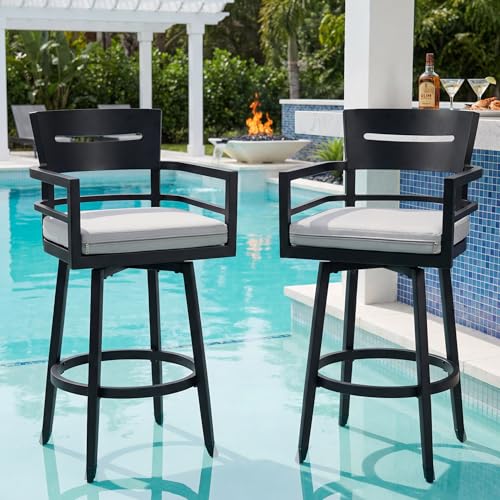
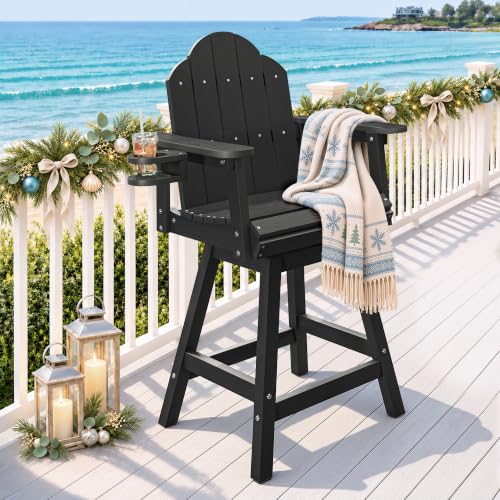
These are counter-height stools (typically around 24 to 26 inches at the seat) built for exterior use. The defining features are a rotating seat — usually a full 360-degree swivel — and a backrest that supports the lower and mid-back. The combination lets guests turn easily toward conversation, food, or a view without getting up, while the back adds comfort for longer sitting sessions.
They differ from bar-height stools, which are taller and pair with higher counters, and from backless stools, which favor compactness over support. If your setup leans toward a taller bar counter, you may want to compare with outdoor swivel bar stools with backs and arms, which offer similar features at bar height.
Why Choose Swivel Counter Stools with Backs?
- Effortless movement: A swivel seat makes it easy to turn between the counter, the grill, and fellow guests without scooting the stool.
- Back support: A backrest reduces fatigue during long meals and gatherings, especially for older guests.
- Space efficiency: Counter-height stools tuck neatly under overhangs and work well on smaller decks and balconies.
- Design cohesion: A matched set of swivel stools visually ties an outdoor bar or kitchen island together.
For households that prefer arm support as well, the swivel bar stools with backs and arms offer an alternative configuration worth comparing before you finalize your choice.
Getting the Height Right: Counter vs Bar
Height mismatch is the most common buying mistake. Counter-height stools are designed for counters roughly 34 to 36 inches high, while bar-height stools suit counters around 40 to 42 inches. As a rule of thumb, leave about 9 to 12 inches of clearance between the seat and the underside of the counter for comfortable legroom.
Measure from the floor to the underside of your counter — not the top surface — and confirm the seat height listed for each stool. If you are still deciding on the surrounding furniture, our outdoor table guide includes notes on pairing table and counter heights.
| Setup | Counter Height (approx.) | Recommended Seat Height | Best For |
|---|---|---|---|
| Counter-height | 34–36 in | 24–26 in | Patio bars, outdoor kitchen islands, pass-through windows |
| Bar-height | 40–42 in | 28–30 in | Tall bar counters, raised deck rails |
| Standard dining | 28–30 in | 17–19 in | Dining tables (not counter stools) |
Frame Materials: What Survives the Outdoors
The frame determines how long your stools last and how much maintenance they demand. Here is how the main options compare.
Powder-Coated Aluminum
The most popular choice for outdoor swivel counter stools. Aluminum resists rust, stays relatively light, and the powder coating adds a durable, weather-resistant finish. It is a solid choice for most climates and is easy to move when rearranging.
High-Grade Stainless Steel
Heavy-duty and rust-resistant, stainless steel suits coastal environments and high-use areas. It is heavier than aluminum, so consider whether you will need to move the stools frequently.
Weather-Resistant Wood (Teak, Eucalyptus)
Wood brings warmth and a natural look. Teak and similar dense woods hold up well outdoors when sealed. Expect periodic oiling or sealing to maintain appearance and prevent drying and cracking.
Resin Wicker over Metal Frame
Resin wicker delivers a woven, textured look without the fragility of natural wicker. Paired with an aluminum frame, it balances style and weather resistance. Check that the weave is UV-stabilized to reduce fading.
If your patio also includes cushioned seating, our guide to an outdoor sectional with waterproof cushions covers fabric and foam choices that complement a bar area.
Comfort Features That Matter
- Backrest height and shape: A low back offers a clean look; a mid-back provides more support for longer sitting. Contoured backs are more comfortable than flat panels.
- Seat cushioning: Quick-dry foam and solution-dyed acrylic fabrics resist moisture and fading. Removable, washable covers are a practical bonus.
- Footrest: A built-in footrest reduces leg strain and improves stability when swiveling.
- Swivel mechanism: A smooth, sealed bearing is quieter and less prone to grit buildup than an open mechanism.
- Arm options: Arms add support but reduce how tightly stools can tuck under the counter. Compare with the armless option if space is tight.
If you are coordinating cushions and textiles across the patio, our outdoor throw pillows guide covers fabric choices that pair well with stool upholstery.
Safety and Stability
Swivel stools should feel planted. Look for wide bases or splayed legs, non-marking glides suited to your deck material, and a weight capacity that comfortably exceeds your heaviest expected user. A stool with a back should not tip when a guest leans back — check reviews and product specs for stability notes. On windy, elevated decks, heavier frames and lower centers of gravity are safer choices.
Matching Stools to Your Patio Style
Counter stools are visible focal points, so their finish and silhouette should echo the rest of your outdoor design. Modern patios often pair matte black or graphite aluminum stools with clean lines, while coastal setups favor white or driftwood-toned frames. Rustic and farmhouse looks lean toward wood frames or woven backs.
For a cohesive seating plan, our outdoor swivel chairs guide covers matching lounge seating, and the outdoor sofa overview helps balance upholstered pieces with bar seating. If your bar area includes a serving surface, the outdoor side table guide covers compact companions.
Product Tiers: A Neutral Way to Compare
Rather than focusing on figures, use market position to compare stools. The table below uses a consistent tier system across this guide.
| Tier | Typical Characteristics | Best For |
|---|---|---|
| Entry-level | Basic powder-coated aluminum or resin frames, simpler swivel mechanisms, standard foam cushions | Occasional use, starter patio setups, seasonal seating |
| Mid-range | Refined frames, smoother sealed swivels, quick-dry cushions, better UV resistance | Regular entertaining, family patios, mixed-use decks |
| Premium | Heavy-duty stainless or high-grade aluminum, contoured backs, reinforced joints, premium fabrics | Frequent use, coastal climates, design-led patios |
| Luxury / professional-grade | Commercial-grade construction, precision swivel bearings, top-tier weatherproofing and upholstery | Hospitality-grade settings, high-end outdoor kitchens, long-term investment |
Mid-range models usually offer smoother swivel action and better cushioning than entry-level options, while premium and professional-grade tiers focus on longevity and finish quality.
Care and Maintenance
- Rinse frames with mild soap and water, then dry thoroughly — especially joints and swivel housings.
- Lubricate the swivel mechanism periodically with a silicone-based lubricant to keep rotation smooth.
- Store cushions indoors or in a dry box when not in use. Our outdoor storage box guide covers weatherproof options.
- Use fitted covers during off-season or severe weather. The outdoor care section includes broader maintenance routines.
- Touch up powder-coated frames with manufacturer-approved paint if chips appear, to prevent corrosion.
Buying Checklist
Before You Buy
- Measure counter height and confirm the required seat height (9–12 inches of clearance).
- Decide between counter and bar height; compare with bar-height swivel stools with backs and arms if needed.
- Choose a frame material that suits your climate (aluminum for general use, stainless for coastal).
- Check backrest height and cushion material for long-term comfort.
- Confirm swivel mechanism quality and base stability.
- Plan storage and cover solutions for the off-season.
Ready to Compare Options?
Browse curated outdoor swivel counter stools with backs and compare features side by side to find the right fit for your patio bar.
Explore Recommended OptionsFrequently Asked Questions
What height should outdoor swivel counter stools with backs be?
Counter-height stools typically have a seat height of around 24 to 26 inches, designed to pair with counters roughly 34 to 36 inches high. Measure from the floor to the underside of your counter and leave about 9 to 12 inches of clearance for comfortable legroom.
Are swivel counter stools safe for outdoor use?
Yes, when the stool is built for exterior conditions. Look for weather-resistant frames, sealed swivel mechanisms, and rust-proof finishes. Stools rated for outdoor use handle sun, rain, and temperature swings far better than indoor-only models.
Which frame material is best for outdoor swivel counter stools?
Powder-coated aluminum is the most popular choice because it resists rust and stays relatively light. High-grade stainless steel offers heavy-duty durability in coastal settings. Teak and other weather-resistant woods provide a warm look, while resin wicker over an aluminum frame balances style and weather resistance.
How do I maintain outdoor swivel counter stools with backs?
Rinse frames with mild soap and water, dry thoroughly, and lubricate the swivel mechanism periodically. Use fitted covers during long stretches of bad weather, and store cushions indoors when not in use to extend their life.