Outdoor Wrought Iron Bar Height Table and Chairs: The Complete Buyer's Guide
Everything you need to know before choosing a wrought iron bar height patio set — from material behavior and frame construction to comfort, layout, and long-term care.
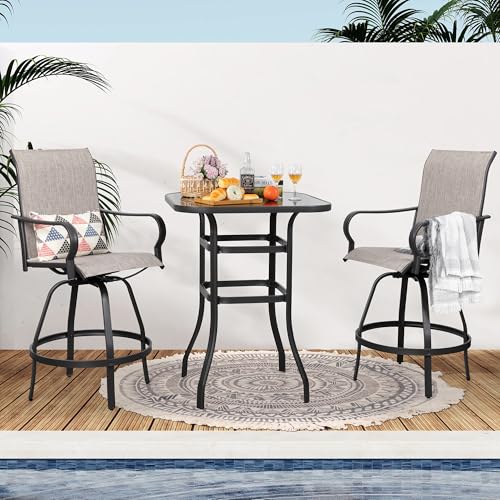
An outdoor wrought iron bar height table and chairs set occupies a unique place in patio design. It lifts the dining and social experience to eye level, transforms a corner of the deck into a genuine gathering point, and brings a sense of permanence that lighter furniture often lacks. For homeowners in the research stage, the challenge is rarely about finding a set that looks appealing — it is about understanding whether wrought iron is the right material for the setting, how the frame should be built, and what separates a set that lasts from one that disappoints after a few seasons.
This guide walks through the material itself, the structural details that matter, the practical questions of height and seating, styling approaches, and the maintenance routine that keeps a wrought iron set looking sharp year after year. By the end, you should have a clear picture of whether this category fits your outdoor space and what to prioritize when comparing options.
Why Wrought Iron Suits Bar Height Outdoor Furniture
Wrought iron has been used in garden and patio furniture for generations, and the reasons are practical rather than nostalgic. The material is dense, which gives bar height tables a low center of gravity and a planted feel. When a table stands roughly 40 to 42 inches tall, stability becomes a genuine safety consideration — a lighter frame can feel tippy when someone leans on it or when wind catches an umbrella. Wrought iron's mass works in its favor here.
Beyond stability, wrought iron accepts a range of finishes. Powder coating in particular produces a smooth, consistent surface that resists moisture and UV exposure far better than bare metal. A well-coated wrought iron frame can handle rain, humidity, and temperature swings, provided the coating is inspected and maintained. The classic dark finishes — black, charcoal, bronze, and deep forest tones — also pair naturally with a wide range of outdoor palettes, from traditional to contemporary.
How Wrought Iron Compares to Other Bar Set Materials
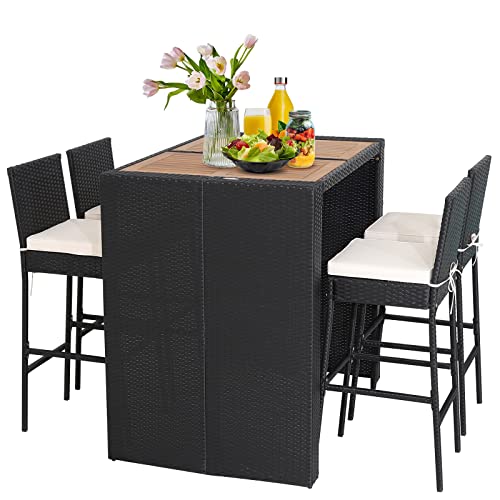
It helps to place wrought iron alongside the alternatives. Aluminum is lighter and effectively rust-proof, which makes it a strong choice for coastal or highly humid environments, but its lower weight can make tall tables feel less grounded unless the design includes weighted bases. Outdoor wicker bar height table and chairs offer a softer, more textured look and are comfortable in shaded or covered areas, though the woven material requires more careful cleaning and can degrade under prolonged direct sun. Wood, including teak and acacia, brings warmth and a natural grain, but demands periodic sealing and is more susceptible to moisture damage at joints.
Wrought iron sits in the durable, structured end of that spectrum. It is not the lightest option and it is not maintenance-free, but it delivers a combination of stability, longevity, and visual presence that suits bar height furniture particularly well.
Material note: The term "wrought iron" in modern patio furniture often refers to steel or iron alloys shaped and finished to resemble traditional wrought iron. Always check the product specification for the base metal and the finish type — powder-coated steel and cast aluminum are common and each behaves differently over time.
Structural Details That Separate Good Sets From Great Ones
Two sets can look nearly identical in a product photo and still differ enormously in how they hold up. The differences live in the details, and those details are worth checking before you commit.
Frame Construction and Welds
Inspect how the frame is joined. Continuous welds at stress points — where legs meet the apron, where stretchers connect, and where the tabletop frame meets the legs — are a sign of a solid build. Rough, porous, or inconsistent welds are a warning sign, because those are the points where moisture enters and corrosion begins. On a bar height table, the leg-to-apron joint carries the most load, so it deserves the closest look.
Finish and Coating
The finish is the frame's first line of defense. A proper powder-coated finish should be uniform, free of thin patches, and cover the underside of the table and the inside of the legs — areas that are easy to skip and quick to rust. Some sets add an electrophoretic primer layer beneath the powder coat, which improves corrosion resistance. If the set is described as rust-proof, read the specification carefully; the claim usually refers to the coating rather than the base metal, and the coating is only as good as its coverage.
Tabletop Options
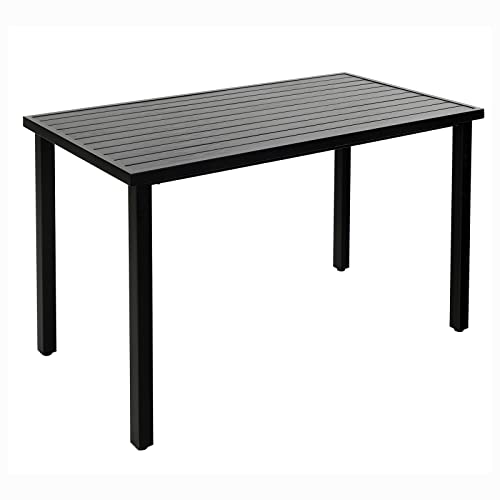
Bar height tables typically come with one of three top types: a solid metal top, a glass top, or a slatted metal top. Solid metal tops are the most durable and the easiest to wipe down, though they can heat up in direct sun. Glass tops bring a lighter, more open look and are simple to clean, but they require care around impact and should be tempered. Slatted tops drain water well and stay cooler, but debris can collect between the slats. Each has trade-offs; the right choice depends on your climate and how you plan to use the table.
Chair Frame and Weight Capacity
Bar height chairs face more stress than standard dining chairs because the seating position is higher and the legs are longer. Look for chairs with cross-bracing or stretchers between the legs, and check the stated weight capacity. A chair built for a 250-pound rating is not the same as one rated for 350 pounds, and the difference shows up in the thickness of the tubing and the quality of the welds. If the set will be used by a range of guests, a higher capacity rating is the safer choice.
Getting the Height and Seating Right
Bar height is not a single standard, and mismatched table-and-chair heights are one of the most common sources of buyer regret. Before comparing sets, confirm the numbers.
| Configuration | Typical Table Surface Height | Typical Seat Height | Best For |
|---|---|---|---|
| Counter height | 34–36 inches | 24–26 inches | Smaller patios, easy access for all ages |
| Bar height | 40–42 inches | 28–30 inches | Standing socializing, elevated views, entertaining |
| Extra tall bar height | 44–46 inches | 30–32 inches | Commercial-style setups, high-traffic gathering areas |
The general rule is that the seat should sit about 10 to 12 inches below the table surface. That gap leaves room for legs and allows comfortable arm placement. If you already own bar stools, measure their seat height first and then look for a table that pairs correctly. If you are buying a matched set, confirm that the manufacturer designed the table and chairs together — a set sold as a unit is far less likely to have a mismatch.
How Many Seats Fit
A round table around 32 to 36 inches in diameter comfortably seats two to three people at bar height. Square tables in the 36 to 40 inch range seat four. Rectangular tables can seat four to six, but only if there is enough room for chairs to pull out without hitting a wall, railing, or planter. Leave at least 30 inches of clearance behind each chair for comfortable movement, and more if the set sits on a narrow balcony.
Comfort and Cushions
Wrought iron chairs are typically firm, and that firmness is part of the look. For short gatherings, it is perfectly comfortable. For long evenings, adding outdoor-rated seat cushions makes a meaningful difference. Look for cushions with quick-dry foam and solution-dyed fabric, and check that the cushion ties or straps secure to the chair frame so they do not slide. If you plan to leave the set out year-round, a waterproof storage box for cushions keeps them dry and extends their life considerably.
Styling a Wrought Iron Bar Height Set
Because wrought iron is visually strong, it anchors a space well. The set naturally becomes the focal point of a patio bar zone, and the surrounding choices should support rather than compete with it.
Placement and Layout
Bar height sets work best in defined zones — a corner of the deck, the edge of a covered patio, or a transition area between the dining space and the garden. Placing the table near a railing or low wall gives it a natural backdrop and encourages guests to gather around it. If the set sits on a large, open surface, an outdoor rug helps define the zone and keeps the table from feeling adrift.
Color and Finish Direction
A dark wrought iron finish reads as classic and grounds a space. Pair it with warm wood tones, natural fiber textures, and muted greens or terracotta accents for a traditional look. For a more contemporary result, keep the surrounding palette neutral and let the dark frame provide contrast. Lighter metal finishes, such as bronze or brushed grey, open up the look and suit brighter, airier spaces.
Lighting and Shade
Bar height furniture sits closer to eye level with string lights and pendant fixtures, which makes lighting placement easier. A set of warm outdoor string lights or a low pendant above the table can transform the space after sunset. If the table sits in direct afternoon sun, consider a patio umbrella with a sturdy base, or an umbrella with solar lights and stand that adds evening ambiance without extra wiring. Just confirm that the table has a suitable umbrella hole and that the umbrella base is heavy enough for the wind exposure in your area.
Surrounding Pieces
The best bar height setups feel like a complete zone rather than a table dropped into empty space. A small side table for drinks, a planter or two, and a waterproof vertical storage cabinet for serving items and supplies can round out the area without crowding it. If you are building a full entertaining zone, see our guide to outdoor dining setups for ideas on connecting the bar area with the main dining space.
Maintaining Wrought Iron in Outdoor Conditions
Wrought iron is durable, but it is not indifferent to weather. The coating is what protects the metal, and the coating is what needs attention.
- Clean regularly with a damp cloth. Wipe down the table and chair frames every few weeks during the season. Mild soap and water are sufficient; avoid abrasive pads that scratch the finish.
- Inspect for chips and scratches. Small breaks in the coating are where rust starts. Touch up exposed metal promptly with a matching touch-up paint or a rust-inhibiting primer followed by a topcoat.
- Keep water from pooling. Check the tabletop and the joints after rain. Standing water on a metal surface accelerates corrosion, especially at weld points and on flat sections.
- Use covers during off-season storage. If the set stays outside through winter or extended wet periods, a fitted cover that allows some airflow is better than a fully sealed tarp, which can trap condensation.
- Store cushions separately. Cushions left out in rain or snow lose their shape and can develop mildew. A waterproof storage cabinet with shelves keeps them organized and dry.
For a broader seasonal routine, our guide on waterproof materials for garden furniture covers how different finishes behave and what to check each season. If the frame ever needs refinishing, the process is manageable — our article on painting outdoor metal furniture walks through surface preparation and coating selection.
Understanding Market Tiers
Wrought iron bar height sets fall into recognizable tiers based on construction, finish quality, and design detail. Using tier descriptors rather than specific figures makes comparison easier and more durable over time.
| Tier | Typical Characteristics | Best For |
|---|---|---|
| Entry-level | Thinner tubing, simpler welds, basic powder coating, fewer decorative details | Occasional use, covered patios, seasonal setups |
| Mid-range | Thicker frame sections, consistent welds, better coating coverage, more comfortable chair profiles | Regular entertaining, full-season outdoor use |
| Premium | Reinforced joints, multi-layer finish, refined detailing, higher weight ratings, matched table-and-chair design | Daily use, exposed locations, long-term investment |
| Luxury / commercial-grade | Heavy-gauge construction, professional coatings, precise joinery, hospitality-level durability standards | High-traffic patios, rental properties, demanding environments |
Tier descriptions are relative and reflect construction and finish quality rather than any specific figure.
In practice, the jump from entry-level to mid-range usually brings the biggest improvement in day-to-day satisfaction — smoother welds, better coating coverage, and chairs that feel more stable. Moving to premium tends to matter most for exposed locations and heavy use.
A Practical Buying Checklist
Before finalizing a purchase, run through these checks. They take only a few minutes and prevent most of the common disappointments.
- Measure the space. Confirm the table footprint, the chair pull-out clearance, and the height relative to railings or walls.
- Verify table and seat heights. The seat should sit about 10 to 12 inches below the table surface.
- Check the base metal and finish. Look for powder coating with full coverage, including undersides and inner legs.
- Inspect weld quality in photos. Continuous, clean welds at stress points indicate a solid build.
- Confirm weight capacity. Higher ratings generally correlate with thicker tubing and better joints.
- Check the tabletop type. Metal, glass, or slatted — each has different care and heat behavior.
- Plan for storage. Decide where cushions and the set itself will go during the off-season.
- Review the warranty and return terms. A clear warranty signals confidence in the finish and construction.
Ready to Compare Options?
Browse the recommended wrought iron bar height sets below, then use the checklist above to evaluate each one against your space and climate.
Frequently Asked Questions
Is wrought iron suitable for outdoor bar height table and chairs?
Yes. Wrought iron is dense and stable, which is exactly what a tall table needs. With a proper powder-coated or rust-proof finish, it handles outdoor conditions well. Periodic maintenance of the coating is the key to long-term performance.
What bar height should I look for in an outdoor set?
Standard bar height tables sit around 40 to 42 inches at the surface, with stools or chairs around 28 to 30 inches at the seat. Counter height sets are lower, typically 34 to 36 inches at the table with 24 to 26 inch seats. Measure your space and confirm the pairing between table and seating before buying.
How many people can a wrought iron bar height set seat?
Most sets seat two to four people. Round or square tables in the 32 to 40 inch range typically seat two to four, while rectangular tables can seat four to six. Always check the manufacturer's recommended seating count and allow clearance for chair pull-out.
Do wrought iron bar sets need cushions?
Cushions are not required, but they add comfort for longer sitting sessions. Choose outdoor-rated cushions with quick-dry foam and solution-dyed fabric, and store them during heavy rain or off-season to extend their life.
How do I maintain an outdoor wrought iron bar set?
Wipe the frame regularly with a damp cloth, inspect the finish for chips or scratches, and touch up any exposed metal promptly. Use furniture covers during extended off-season storage and avoid letting water pool on flat surfaces or joints.
Can a wrought iron bar set stay outside year-round?
It can, provided the finish is in good condition and you inspect it regularly. In regions with heavy snow, salt, or prolonged rain, a cover and periodic touch-ups are strongly recommended. Cushions and any glass components should be stored separately during the off-season.
Final Thoughts
An outdoor wrought iron bar height table and chairs set is a long-term addition to a patio, and the decision deserves more than a glance at a product photo. Focus on the frame construction, the finish coverage, and the height pairing between table and seating. Those three factors determine how the set feels to use and how well it holds up. Style and detailing matter, but they are secondary to a solid build.
If the set will live in a covered or semi-covered area and receive regular care, wrought iron is one of the most rewarding materials available for bar height furniture. If the location is fully exposed to salt air or constant moisture, weigh the maintenance commitment carefully and compare against aluminum alternatives. Either way, the checklist above and the recommended sets below give you a clear starting point.