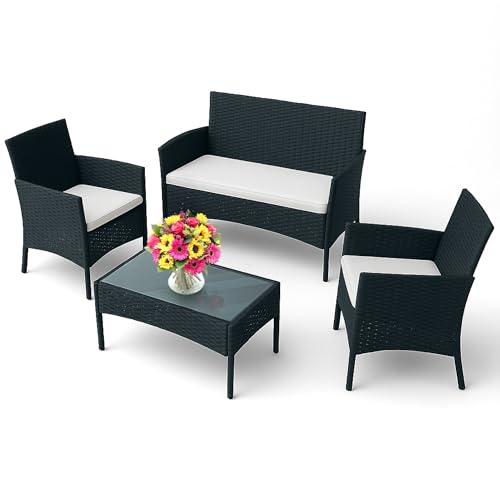
Patio Furniture Sets for Apartment Balconies
Turn a compact balcony into a functional outdoor retreat. This complete guide covers space-planning, material durability, seating layouts, and the furniture configurations that work best when every square foot counts.
START THE GUIDEThe Apartment Balcony Buying Framework
Shopping for a balcony set is a different exercise from furnishing a ground-level patio. An apartment balcony typically comes with hard constraints: a fixed footprint, a single access door, load limits imposed by the building structure, wind exposure at height, and often a homeowners association or landlord rulebook. A set that looks superb in a showroom can become a liability if it blocks the door swing or catches the wind on the twelfth floor.
The framework below prioritizes constraints first and aesthetics second. Buyers who follow it tend to end up with furniture they keep for years rather than a set they replace after one season.
Step 1 — Define the primary use
Before browsing any product category, decide what the balcony is for. A morning coffee nook needs two seats and a small surface. A reading corner needs one deep chair and a side table. A container-garden balcony needs vertical clearance and drainage space. An entertaining balcony for four needs a compact dining configuration. Mixing two or three uses is possible, but each added use consumes floor area and constrains the set's shape.
Step 2 — Audit the physical envelope
Record the usable floor area, door swing arc, railing height, and any built-in obstructions such as an air-conditioning unit, drain pipe, or utility closet. These numbers become the hard boundary for every candidate set. A useful rule is to reserve roughly one-third of the floor as clear circulation and access space, so the furniture footprint should stay within about two-thirds of the usable area.
Step 3 — Verify building and tenancy rules
Many apartment buildings restrict open flames, so a patio fire pit or similar feature may not be permitted on a balcony. Railing attachments, hanging planters, and mounted heaters can also fall under modification clauses. Confirm these points before ordering anything that attaches to the structure.
Step 4 — Match material to exposure
Elevated balconies receive more wind, more driving rain, and often more direct sun than sheltered ground-level patios. Powder-coated aluminum, high-grade steel with a rust-proof finish, and resin wicker over metal frames generally hold up best in this environment. Solid wood requires more consistent care on an exposed balcony, while glass tabletops add visual lightness but need safety-tempered construction.
Practical tip: Order a fabric swatch or finish sample whenever the retailer offers one. Colors that read as neutral online can look very different under the strong daylight and shadow patterns typical of an upper-floor balcony.
Space Planning: Measuring Before You Shop
Measurement errors are the single most common reason balcony furniture gets returned. The method below keeps the process simple and prevents the most frequent mistakes.
Measure the usable rectangle, not the full slab
Measure between the railing and the wall, then subtract the door swing zone and any fixed obstructions. The remaining rectangle is the true usable area. For a typical apartment balcony of around 50 to 80 square feet, a usable rectangle of 35 to 55 square feet is normal once circulation space is accounted for.
Apply the footprint budget
Write down a footprint budget in square feet for each furniture role: seating, table surface, and storage. For a compact two-seat setup, a workable split is roughly 12 to 16 square feet for seating, 4 to 6 square feet for a table, and 3 to 5 square feet for a weatherproof storage bench or deck box. Anything left over becomes circulation space.
Test with tape or cardboard
Mark the planned furniture outline on the balcony floor with painter's tape or flattened cardboard boxes. Live with the outline for a day, walking in and out through the door and reaching the railing. This exercise reveals problems that dimension charts on a product page never show, such as a chair that blocks the only comfortable standing spot.
Plan the vertical space
Balconies are usually short on floor area but generous on wall and railing height. Vertical storage, stackable chairs, folding tables, and wall-mounted planters can recover a surprising amount of usable floor. Keep at least the railing height clear for safety and for any building rules on railing obstructions.
Check the route in: Confirm that the assembled or boxed set will pass through the apartment door, elevator, and stairwell. Some mid-range and premium sets ship partially assembled and are wide and heavy in their cartons. If the building has a narrow service elevator, verify carton dimensions before ordering.
Furniture Set Configurations That Fit an Apartment Balcony
The best balcony sets are chosen by shape rather than by brand. The configurations below cover most realistic balcony layouts, from narrow Juliet balconies to wider wraparound terraces.
Two chairs and a small table
This is the most reliable layout for a narrow or deep-but-thin balcony. Two compact chairs facing each other, with a small round or square table between them, keep the footprint predictable and leave a clear path along the railing. A patio furniture two chairs and a table arrangement is also the easiest to reconfigure when guests arrive, since the chairs can rotate toward each other or toward the view.
Compact conversation sets
A scaled-down patio conversation set for small spaces typically pairs a short loveseat with two chairs, or a corner bench with two stools. These sets create a genuinely social layout in a small area, but they demand careful measurement because the angled or L-shaped footprint uses more floor than two straight chairs. Corner placement, with the L tucked against the wall and railing, recovers the most space.
Bistro-style dining for two
A high or standard-height bistro table with two stools or chairs turns a narrow strip of balcony into a dining spot. Bistro configurations excel on balconies used mainly for breakfast and evening drinks because the table diameter is small and the chairs tuck underneath. Look for sets where the chairs fully nest under the tabletop when not in use.
Balcony dining for four (occasionally)
A four-seat dining set fits a balcony of roughly 60 square feet or more, provided the table is round or square rather than rectangular. Round tables improve circulation because there are no corners to navigate. If dining is occasional rather than daily, a folding or drop-leaf patio dining table paired with stackable chairs offers the same seat count in less permanent floor area.
Lounge and daybed configurations
When the balcony is deeper, a single lounge chair or a compact patio daybed can define a relaxation zone without a full set. This works best on balconies used for reading and sunbathing rather than entertaining, and it keeps the set count low, which simplifies storage.
Shape rule of thumb: Round and oval tables and chairs with curved backs soften tight spaces and make circulation easier. Rectangular and square pieces maximize usable surface but are less forgiving in narrow layouts.
Material and Weather-Resistance Guide
Balcony furniture lives in one of the harshest microclimates in a home: elevated wind, intermittent rain, strong UV, and temperature swings between day and night. Material choice therefore matters more than styling.
Powder-coated aluminum frames
Aluminum is the default recommendation for balconies. It is light enough to move single-handedly, does not rust, and takes a powder-coated finish well. Entry-level aluminum sets can feel thin at joints, while mid-range and premium sets typically use heavier gauge tubing and reinforced welds. When comparing, look for sealed or capped tube ends that prevent water intrusion.
High-grade steel
Steel frames are heavier and often stiffer than aluminum, which reduces wind movement, but they require a rust-proof finish and regular inspection of welds and feet. On a covered or sheltered balcony, a well-finished steel set is a solid long-term investment. On a fully exposed balcony, aluminum is usually the safer choice.
Resin wicker and rattan
Resin wicker over an aluminum frame delivers the woven look without the maintenance demands of natural rattan. Quality varies widely: mid-range and premium resin wicker uses tighter weaves and UV-stabilized strands that resist fading and cracking. Check whether the weave is wrapped around a full frame or only a partial shell, since partial shells are more prone to sagging over time.
Fabric and cushion durability
Cushions are the component most likely to degrade first. Solution-dyed acrylic and similar performance fabrics resist fading and mildew far better than standard polyester. Quick-dry foam cores prevent waterlogging after rain. On a balcony, removable, machine-washable covers and zip-off cushion shells are a meaningful convenience. If cushions will be stored indoors between uses, a patio cushion storage solution keeps them dry and extends their life.
Tabletops
Tempered glass, powder-coated metal slats, and compact high-pressure laminate are the common balcony tabletop choices. Glass adds visual space but shows water spots; metal slats drain quickly and resist wind uplift; laminate is the most forgiving for daily use. Whichever you choose, confirm the tabletop is rated for outdoor exposure and has a sealed edge.
Storage, Wind, and Building Considerations
Two factors separate a balcony that stays usable from one that becomes a storage zone: how well the set handles wind, and how easily it can be packed away.
Wind management
Upper-floor balconies funnel wind, and lightweight chairs, umbrellas, and glass-topped tables are the most common casualties. Prefer chairs with a moderate base weight, stack or nest them against a wall when not in use, and avoid freestanding umbrellas unless the base is rated for the exposure. If shade is essential, a cantilever or wall-mounted shade may be more stable than a pole umbrella.
Storage strategy
Balcony storage should be weatherproof and should double as furniture where possible. A bench with a sealed storage cavity, a deck box that supports seating, or a narrow vertical cabinet against the wall can hold cushions, throws, and small accessories without consuming separate floor area. Sets with self-storing cushions, where the cushions fold into the frame, are especially practical for balconies with limited indoor storage.
Building rules and safety
Check the building's rules on open flames, grills, and mounted equipment. Confirm the balcony's rated load if you plan to add heavy planters, a water feature, or a large storage unit. Keep the railing clear and never place climbable furniture directly against it if children or pets use the balcony. These checks take minutes and prevent problems that are difficult to undo later.
Covers and seasonal care
A fitted patio furniture cover protects the set during off-season weeks and reduces cleaning effort. Choose breathable covers that let moisture escape, and secure them so they do not act as a sail in high wind. Even with covers, wipe down frames and dry cushions periodically to prevent mildew.
Tier Comparison: Entry-Level to Luxury
The table below compares balcony furniture sets by market tier rather than by figure. Use it to calibrate expectations for construction quality, finish, and long-term durability. Each tier is a relative position in the market, not a fixed specification.
| Tier | Typical Construction | Best For | Longevity Outlook |
|---|---|---|---|
| Entry-level | Light-gauge aluminum or steel, basic powder coat, standard polyester cushions, partial wicker wrap | First balcony setup, renters, occasional use | Short to medium term with careful storage |
| Mid-range | Heavier gauge aluminum, reinforced welds, solution-dyed acrylic cushions, full-frame wicker | Daily use, exposed balconies, long-term renters | Medium to long term; some component replacement expected |
| Premium | High-grade aluminum or finished steel, sealed tube ends, high-performance fabrics, precision joinery | Frequent entertaining, design-focused owners | Long term with routine care |
| Luxury | Flagship frames, commercial-grade finishes, custom upholstery, modular engineering | Wraparound terraces, design-led projects, maximum durability | Very long term; built as a permanent investment |
Within each tier, the practical differences usually show up in three places: the thickness of the frame tubing, the quality of the fabric and foam, and the consistency of the finish at joints and welds. A mid-range set with excellent fabric and sealed frames will often outlast an entry-level set with a more fashionable silhouette. When comparing within a tier, weight the construction details more heavily than the styling.
Tier selection guidance: A starter tier set suits a first apartment where the balcony may change use within a year or two. A balanced tier set is the standard recommendation for daily-use balconies with full weather exposure. Top-tier and flagship sets make sense when the balcony is a permanent, heavily used part of the home.
Ready to Compare Balcony Sets?
Browse hand-picked configurations that fit compact apartment balconies, from two-seat bistro layouts to scaled conversation sets. Each pick is selected for space efficiency, wind stability, and weather resistance.
Explore Recommended SetsRecommended Sets to Explore
The products below are selected for apartment balcony use rather than for large patios. When reviewing any set, confirm the assembled footprint against your measured usable rectangle, check the carton dimensions for the route into the apartment, and verify the fabric and frame specifications for full weather exposure.