Patio Rug Buying Guide: Sizes, Materials & Design
Everything you need to know before choosing an outdoor rug — how to measure for your furniture, which materials survive the weather, and how a well-placed rug transforms a plain patio into a finished outdoor room.
START WITH SIZINGWhy a patio rug matters more than you think: An outdoor rug is one of the fastest ways to unify a patio. It defines the conversation zone, softens hard paving, protects bare feet from hot stone or splintered decking, and anchors furniture so the space looks intentional rather than scattered. This guide walks you through measuring, material selection, placement, and long-term care — so your rug looks great through seasons of sun, rain, and foot traffic.
How to Choose the Right Patio Rug Size
The most common mistake buyers make is choosing a rug that is too small. A rug should relate to the furniture on top of it, not merely float beneath the coffee table. Use these measurement rules as a starting point:
- Dining sets: The rug should extend roughly 24 inches beyond each edge of the table. This keeps chairs on the rug when guests pull them out to sit or stand.
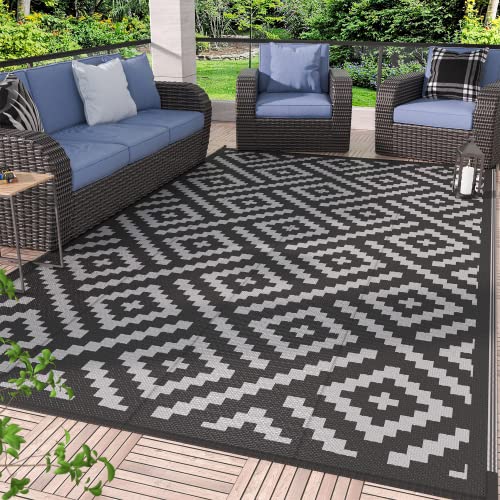
- Lounge and conversation seating: All four legs of each seat should rest on the rug, or at minimum the two front legs. This ties the seating group together visually.
- Sectionals and large sofas: Measure the full footprint of the sectional plus any chaise or ottoman, then add a margin on all sides. A rug smaller than the furniture footprint looks undersized.
- Small balconies and narrow patios: A runner-style rug aligned with the longest dimension can make a tight space feel deeper. Browse more ideas for space-saving furniture to pair with it.
Pro measuring tip: Lay down painter's tape on the patio in the exact dimensions of the rug you are considering. Live with the outline for a day or two. This simple step prevents the most common sizing regret.
Standard Patio Rug Sizes at a Glance
| Rug Size | Best For | Placement Note |
|---|---|---|
| 4 x 6 ft | Bistro sets, small balconies, single lounge chairs | Entry-level footprint for compact spaces |
| 5 x 8 ft | Four-chair dining sets, small conversation groups | Mid-tier versatile size for most patios |
| 6 x 9 ft | Six-chair dining sets, medium lounge areas | Balanced tier for standard patio layouts |
| 8 x 10 ft | Large dining sets, sectionals, full outdoor living rooms | High-end tier for generous spaces |
| 9 x 12 ft and larger | Expansive patios with multiple seating zones | Flagship tier for full-room definition |
Patio Rug Materials Compared
The material determines how a rug handles sun, rain, mildew, and cleaning. Outdoor rugs are engineered differently from indoor rugs, so prioritize fibers explicitly rated for exterior use.
Polypropylene
The most common outdoor rug material. It resists moisture, dries quickly, cleans with a hose, and holds color well when UV-stabilized. A solid choice for high-traffic patios.
Recycled PET
Made from recycled plastic bottles, this fiber feels softer underfoot than standard polypropylene while remaining weather resistant. A good fit for lounge areas where comfort matters.
Polyester blends
Softer hand-feel with good color retention. Best used on covered porches or in mild climates, since prolonged soaking is not its strength.
Natural fibers (jute, sisal, seagrass)
Beautiful texture and a natural look that pairs with natural wood tones. These belong on covered patios and screened porches, not in direct rain.
Performance woven rugs
Dense, tightly woven constructions with reinforced edges. Feature-rich for their class, with better stain resistance and a more refined look than standard flatweaves.
Solution-dyed acrylic
Color is set into the fiber itself, so it resists fading under intense sun. Often specified for hospitality patios and full-exposure decks.
Weather Resistance: What to Look For
- UV-stabilized fibers: Prevents sun fading, which is the single most common reason outdoor rugs age badly.
- Mold and mildew resistance: Look for rugs that are treated or inherently resistant. Flatweaves with open weaves drain and dry faster than plush constructions.
- Stain resistance: Solution-dyed and polypropylene rugs handle spills better. Consider pairing the rug with a protective approach similar to the one used for UV protection on other outdoor furnishings.
- Edge finishing: Bound or heat-sealed edges resist unraveling far better than loose woven borders.
Design and Placement Ideas
Define the conversation zone
Place a rug under the seating group so the front legs of every chair rest on it. This instantly creates a "room within the patio," especially on large open decks. Pair it with outdoor side tables at the edges to complete the layout.
Anchor the dining area
A rug beneath the dining table reduces the clatter of chair legs on hard paving and gives the meal area a distinct border. If your table has a central pole, look for rugs that work with an umbrella hole setup or position the rug so the umbrella base sits just at the edge.
Connect indoor and outdoor spaces
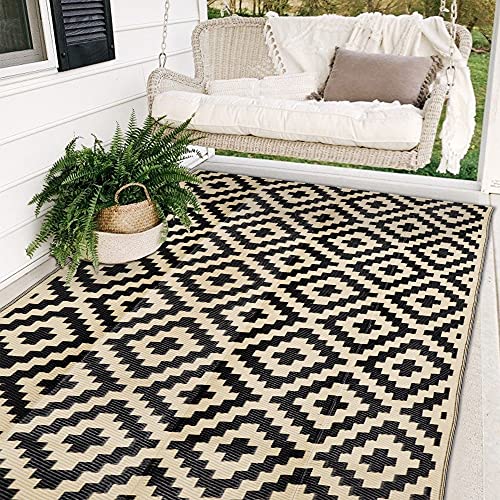
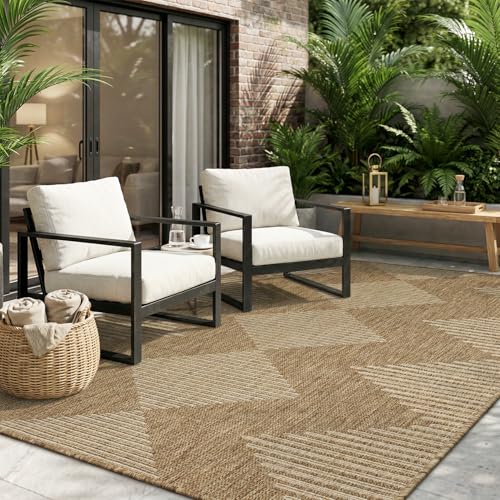
Choose a rug color that echoes your interior palette for a seamless transition. Earthy neutrals suit wood furniture, while bold geometrics pair well with wicker and rattan pieces. If you love a relaxed look, explore how rugs fit into a bohemian patio design.
Layer texture, not clutter
A single large rug is usually stronger than multiple small ones. For a soft transition between stone and deck, you can overlap two flatweaves by a few inches, but keep the overall color story tight.
Choosing a Rug Pad and Preventing Slips
Rug pads extend the life of an outdoor rug by improving drainage and reducing friction. Choose a pad specifically rated for outdoor use with an open-weave or perforated design so water passes through instead of trapping moisture.
- Size the pad a few inches smaller than the rug on all sides.
- On windy patios, add corner weights or rug clips.
- On smooth concrete or composite decking, a non-slip pad is essential for safety, particularly near the edges of lounge chairs and traffic paths.
Care and Maintenance
- Weekly: Sweep or vacuum loose leaves and grit. A leaf blower on low works well on flatweaves.
- Monthly: Rinse with a garden hose and let it dry completely on both sides in the sun.
- For stains: Use mild soap and water with a soft brush. Avoid harsh bleach on printed or solution-dyed designs.
- Seasonally: Roll, not fold, the rug for storage. Folding creates permanent creases in many outdoor fibers.
- Winter: Bring the rug indoors or cover it during long wet seasons. If your patio furniture uses covers, coordinate the schedule so everything is protected together — see patio furniture covers for a matching approach.
Mistakes to Avoid
- Buying a rug that is smaller than the furniture footprint.
- Using an indoor rug outdoors, even on a covered patio, unless it is labeled for exterior use.
- Ignoring drainage under the rug on solid paving, which can leave water rings.
- Choosing a very light color in a high-traffic, high-pollen area without stain protection.
- Skipping the rug pad and then wondering why the rug shifts.
Pulling the Patio Together
A patio rug is one layer in a complete outdoor room. Once the rug is in place, finish the space with cushions and decorative textiles. Browse outdoor throw pillows and patio decor to echo the rug's colors. If you are starting from scratch, our patio essentials checklist helps you sequence purchases so nothing gets overlooked, and our guide to outdoor storage keeps cushions and rugs safe when the season ends.
Frequently Asked Questions
What size patio rug should I choose for my outdoor furniture?
For a dining set, choose a rug that extends about 24 inches beyond the table edge on all sides so chairs stay on the rug when pulled out. For lounge seating, extend the rug past the front legs of each piece, ideally all four legs if space permits.
Which material is best for a patio rug?
Polypropylene is the most popular all-round choice for weather resistance and easy cleaning. Recycled PET offers a softer feel, and natural fibers such as jute suit covered porches. Prioritize UV-stabilized colors and outdoor-rated construction.
How do I keep a patio rug from sliding or blowing away?
Use a non-slip outdoor rug pad sized slightly smaller than the rug, and select a denser weave for exposed, windy patios. Corner weights or rug clips add extra hold on open decks.
How do I clean and maintain an outdoor rug?
Sweep or vacuum weekly, rinse with a hose and mild soap monthly, and dry fully on both sides. Roll the rug for seasonal storage rather than folding it.
Ready to Find Your Patio Rug?
Browse our curated patio product picks below and compare weather-resistant rugs that fit your space, style, and furniture layout.
VIEW PATIO RUG PICKS