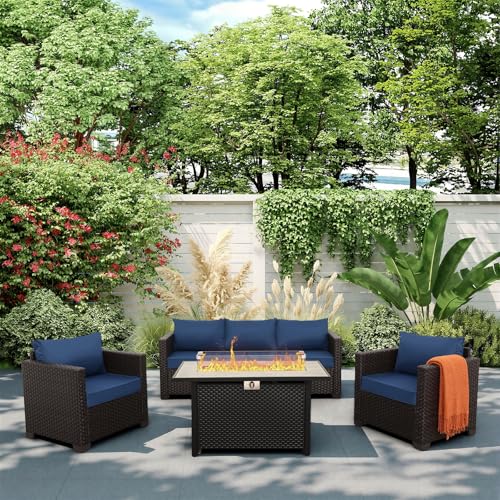
Patio Table and Chairs Set with Fire Pit: The Complete Buying Guide
Everything you need to know before choosing an outdoor dining set with a built-in fire pit — sizing, materials, fuel types, safety, and long-term care — so you can create a warm, functional gathering space with confidence.
START EXPLORINGWhy a Patio Table and Chairs Set with Fire Pit Works
A patio table and chairs set with fire pit combines two outdoor essentials into one cohesive piece: a dining surface for meals and a central flame for warmth and ambiance. Instead of arranging a separate fire bowl and a dining table side by side, an integrated design places the fire feature at the heart of the table, so guests can eat, talk, and stay warm without rearranging the space.
This format is especially useful for homeowners who want a defined gathering zone on a deck or patio. The table anchors the seating arrangement, while the fire pit extends the usable season into cooler evenings. Many models also include a lid or cover that converts the fire feature into a flat serving surface when the flame is not in use, which improves everyday practicality.
If you are still mapping out your overall outdoor layout, it helps to start with a broader plan. Our outdoor furniture with fire pit overview explains how fire features fit into different seating and dining configurations, while the outdoor furniture section with fire pit guide is useful if you are weighing a sectional arrangement instead of a dining set.
For buyers in the research stage, the key decision is not simply which set looks best. It is which combination of size, fuel type, material, and safety features matches your household, your climate, and the way you actually entertain. The sections below walk through each of those factors in detail.
Types of Fire Pit Table Sets
Fire pit dining sets generally fall into a few recognizable formats. Understanding the differences helps you narrow the field before comparing individual products.
Integrated fire pit dining tables
These tables have the fire feature built into the center of the tabletop, usually as a drop-in burner surrounded by a raised rim. Seating wraps around the table, and the flame sits at a comfortable height for diners. This is the most common format and the one most buyers picture when they search for a patio table and chairs set with fire pit.
Conversation-height and counter-height fire tables
Some sets are built around a lower conversation table rather than a full dining height. These work well for lounging and evening drinks but are less suited to full meals. Counter-height and bar-height versions sit between the two, offering a more upright seating posture. If you prefer taller seating, browse options like the high-top patio dining table with fire pit and the outdoor high-top dining set with fire pit to see how these layouts differ.
Sets with convertible tabletop lids
Many integrated tables include a lid that covers the burner when not in use, turning the fire pit into a flat surface for serving or games. This is a meaningful convenience feature, especially for households that want one table to serve multiple purposes.
Modular and expandable layouts
Larger households or frequent hosts may prefer an extendable table paired with a separate fire feature, or a modular set that can be reconfigured. The extendable outdoor dining table and chairs guide covers how expandable tables pair with different seating counts, which is useful if your guest list varies.
Sizing and Seating Capacity
Size is the most common source of buyer regret with fire pit dining sets. A table that looks generous in a showroom can overwhelm a small deck, and a compact set can feel cramped when guests arrive. Measure your available footprint first, then subtract clearance for chairs pulled out and walkways around the table.
As a practical starting point, allow roughly two feet of chair pull-out space on each side of the table, plus a clear path for movement. For the fire feature itself, check the manufacturer's clearance requirements — they typically exceed what you would allow for a standard dining table because of radiant heat.
| Seating Capacity | Typical Best For | Considerations |
|---|---|---|
| 4-person sets | Small patios, couples, compact decks | Easiest to place; limited room for guests |
| 6-person sets | Families, regular entertaining | Balanced footprint and flexibility |
| 8-person sets | Large decks, frequent hosting | Requires generous clearance around the table |
If your space is tight, the outdoor furniture for small spaces guide offers layout strategies that apply directly to fire pit dining sets. For larger gatherings, an outdoor dining set for 6 with umbrella or a large outdoor dining table with bench and chairs can complement a fire pit zone rather than replace it.
Also consider table shape. Round tables tend to work better in compact or irregular spaces and encourage conversation, while rectangular tables suit longer patios and bench seating. If you are comparing shapes, the round patio table and chairs with umbrella and chairs page illustrates how round layouts behave in practice.
Materials and Durability
Because a fire pit dining set stays outdoors and combines a heat source with a dining surface, material quality matters more than it does for a basic table. The frame, tabletop, and burner surround all need to handle weather, heat, and regular cleaning.
Powder-coated aluminum and high-grade steel
Aluminum frames are lightweight, resistant to rust, and well suited to humid or coastal climates. High-grade steel with a rust-proof finish offers a more substantial feel and is common in premium and commercial-grade sets. Both are strong choices when the coating is intact and the welds are clean.
Wrought iron and metal
Wrought iron brings a classic look and significant weight, which helps the table stay stable. It requires more attention to prevent rust over time. Our metal patio furniture guide explains how different metal constructions compare, and the wrought iron patio table and four chairs page shows a traditional four-seat configuration.
Wood and composite tabletops
Wood tops add warmth but need sealing and seasonal care. Composite and resin surfaces are lower maintenance and resist moisture well. The resin outdoor dining table with umbrella hole guide covers how resin tops perform in outdoor dining settings.
Concrete and stone-look tops
Concrete and stone-look surfaces offer a modern, substantial appearance and handle heat well. They are heavy, so confirm the frame is rated for the load. The concrete dining table overview is a useful reference for weight and placement considerations.
Fuel Types Compared
The fuel source affects convenience, safety, and how you use the set. Most integrated fire pit dining tables use propane, natural gas, or a wood-burning insert, and each has distinct trade-offs.
| Fuel Type | Best For | Considerations |
|---|---|---|
| Propane | Flexible placement; no gas line needed | Requires a tank; plan for refills and tank storage |
| Natural gas | Permanent installations with a gas line | Professional connection recommended; less portable |
| Wood-burning | Traditional ambiance and crackle | More clearance, ash cleanup, and local burn rules apply |
| Bio-ethanol | Low-smoke, ventless-style setups | Smaller flame; follow fuel handling guidance closely |
For most homeowners, propane offers the simplest path because the set can be placed wherever the patio allows and does not depend on an existing gas line. Natural gas is attractive for permanent outdoor kitchens and decks where a line is already available. Wood-burning inserts appeal to buyers who want a traditional fire, but they demand more clearance and routine ash maintenance.
Whichever fuel you choose, confirm that the burner is rated for the table and that replacement parts are available. Sets that use proprietary burners can be harder to service later, so check parts availability before committing.
Safety and Clearance
Safety is the single most important consideration with any fire feature, and it deserves more attention than styling. Integrated dining sets bring the flame close to seated guests, so clearance and stability matter.
- Respect clearance distances. Follow the manufacturer's minimum clearances from structures, railings, and overhead elements. These distances are typically larger than those for a standard dining table.
- Keep combustibles away. Avoid placing fabric, cushions, or decor near the burner, and never use the fire feature under a low or fabric-covered structure unless the manual explicitly permits it.
- Stabilize the table. A fire pit table should sit level and firm. On windy decks, consider anchoring options. The outdoor furniture that can be bolted down guide covers anchoring approaches for exposed locations.
- Supervise children and pets. The pet-friendly outdoor guide offers practical tips for households with animals, and a similar approach applies to young children around open flames.
- Check local rules. Burn bans, rental restrictions, and HOA rules may limit wood-burning or open-flame features. Confirm before purchasing.
If your patio is exposed to strong wind, a gas fire feature with a controlled flame is generally easier to manage than a wood fire. For windy or coastal sites, the durable outdoor chairs guide also helps you choose seating that stays stable in gusty conditions.
Maintenance and Weather Protection
A fire pit dining set is a long-term investment, and routine care is what keeps it looking and functioning well. The good news is that most maintenance is simple and seasonal rather than daily.
Routine cleaning
Wipe the tabletop after meals, keep the burner area free of debris, and clean the fire feature according to the manual. For gas models, inspect hoses and connections periodically and check for leaks using the manufacturer's recommended method.
Protecting the finish
Powder-coated and rust-proof finishes last longer when cleaned gently and inspected for chips. Touch up small chips promptly to prevent corrosion from spreading. Wood tops need periodic sealing, while composite tops generally need only soap and water.
Covers and seasonal storage
A fitted cover is the single most effective protection against rain, pollen, and UV exposure. The waterproof outdoor furniture cover guide explains how to choose a cover that fits without trapping moisture, and the weatherproofing outdoor furniture covers page covers layering and ventilation.
Cushions and seating
If your set includes cushions, store them during off-season or heavy rain. The outdoor chair cushions set of 2 and patio chair cushions set of 4 guides are useful references for replacement and care, and the Agio patio furniture replacement cushions page helps if you are refreshing an existing set.
Buying Checklist
Before you commit to a set, run through this checklist. It is designed to catch the issues that buyers most often overlook.
- Measure twice. Confirm the table footprint, chair pull-out space, and walkway clearance.
- Match seating to real use. Choose capacity for your typical guest count, not your largest party.
- Pick a fuel type that fits your site. Propane for flexibility, natural gas for permanent setups, wood for traditional ambiance.
- Verify the frame and burner quality. Look for documented weather-resistant coatings and available replacement parts.
- Check safety clearances. Compare the manual's requirements against your actual space.
- Plan for care. Budget time for cleaning and buy a fitted cover.
- Compare within tiers. Entry-level sets prioritize basic function, mid-range sets add sturdier frames and better finishes, and premium or commercial-grade sets focus on longevity and refined details.
If you are comparing a fire pit dining set against other outdoor layouts, the outdoor furniture set with swivel chairs and outdoor sectional with dining table guides show how alternative configurations handle seating and dining. For a simpler four-seat layout, the 3-piece outdoor bistro set overview is a useful contrast point.