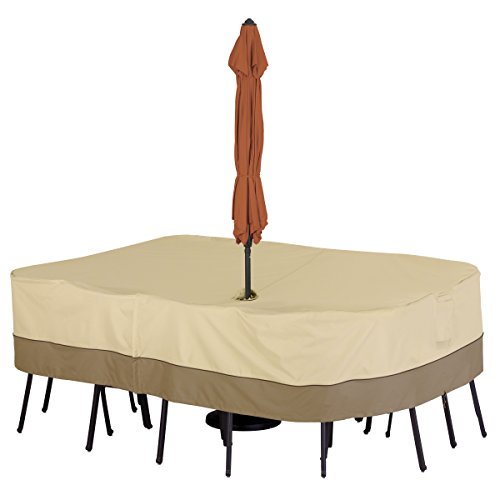
Patio Table Covers: Rectangular with Umbrella Hole
Protect your rectangular patio table and keep it ready for outdoor dining. Learn how to choose the right cover with an umbrella hole for lasting protection.
START WITH THE BASICSWhy a dedicated cover matters: A rectangular patio table with an umbrella hole is one of the most practical outdoor investments. But that same umbrella hole also exposes the tabletop to rain, dust, pollen, and sun damage. A properly fitted cover with a dedicated umbrella hole protects the table surface while keeping the umbrella in place — so your table stays ready for the next gathering instead of needing a deep clean every time.
What Is a Rectangular Patio Table Cover with Umbrella Hole?
A rectangular patio table cover with an umbrella hole is a fitted protective cover designed specifically for long, rectangular tables. The key feature is a reinforced opening at the center (or offset, depending on the table) that allows the patio umbrella pole to pass through while the cover drapes over the tabletop and down the sides. This design lets you keep the umbrella assembled and inserted while the table below stays shielded from weather and debris.
Unlike a standard rectangular cover, which forces you to remove the umbrella before covering the table, an umbrella-hole model eliminates that hassle. You simply slide the cover over the umbrella pole and secure it around the table edges. For households that leave the umbrella up through the season, this is the most practical protection setup available.
Why a Cover with an Umbrella Hole Is Worth It
Rectangular tables are common because they seat more people in a compact footprint — often paired with a patio table and 6 chairs with umbrella configuration. But that long surface area collects leaves, rain, and UV exposure across a large span. Here is what a dedicated cover does for you:
- Keeps the umbrella in place: No need to disassemble the umbrella every time you cover the table.
- Protects the tabletop finish: Shields against rain, bird droppings, sap, pollen, and UV fading.
- Reduces cleaning time: A quick wipe of the cover is faster than scrubbing the table surface.
- Extends furniture life: Consistent protection slows wear on wood, metal, and composite surfaces.
- Keeps the table guest-ready: Uncover and dine — no last-minute cleanup before a gathering.
If your table also supports a fire feature, a cover becomes even more important. Explore options for a patio table with fire pit and umbrella to understand how covers accommodate both the umbrella pole and the fire element.
Key Features to Look For
Not all covers are built the same. The differences show up in fabric, fit, and finishing details. Focus on these features when comparing options:
1. Fabric and Weather Resistance
The cover's fabric determines how well it handles sun, rain, and temperature swings. Look for tightly woven, water-resistant fabrics with UV treatment. Reinforced stitching and heat-sealed seams prevent water from seeping through. A weather-resistant coating and rust-proof finish on any hardware (grommets, zippers, ties) are signs of durable construction.
2. Umbrella Hole Placement and Reinforcement
The umbrella hole should be reinforced with a stitched or heat-sealed ring so it does not tear over time. Check whether the hole is centered or offset — this must match your table's umbrella position. Some covers include a split or flap design that lets you install the cover without removing the umbrella at all.
3. Fit and Sizing
A cover that is too loose flaps in the wind and pools water; one that is too tight strains seams and is hard to install. Measure your table's length, width, and height, then choose a cover sized to drape slightly below the table edge. If you have a smaller setup, a patio table and chairs configuration may call for a compact cover, while larger tables need proportionally larger coverage.
4. Secure Fastening
Drawstrings, elastic hems, buckles, or hook-and-loop straps keep the cover anchored in wind. Fastening at the corners and along the long sides prevents the cover from lifting during storms.
5. Ventilation
Mesh vents or breathable panels reduce condensation buildup underneath the cover. Without ventilation, trapped moisture can encourage mold and mildew on the tabletop and cushions.
Cover Materials Compared
The table below compares common cover materials using tier-based descriptors rather than numeric ranges. Use it to match the material to your climate and usage style.
| Material Type | Tier | Best For | Key Characteristics |
|---|---|---|---|
| Polyester with PU coating | Entry-level | Covered patios, mild climates | Lightweight, water-resistant, easy to handle |
| Polyester with PVC backing | Mid-range | Mixed weather, seasonal use | Stronger water resistance, heavier drape |
| Solution-dyed acrylic | Premium | Sunny climates, long-term use | Excellent UV resistance, colorfast, breathable |
| Heavy-duty woven fabric with reinforced seams | Top-tier | Year-round exposure, windy areas | Heavy-duty construction, tear-resistant, secure fastening |
For most rectangular tables with an umbrella hole, a mid-range or premium fabric offers the best balance of protection and handling ease. Entry-level covers work well when the table sits under a covered porch or pergola — consider pairing with a pergola for extra overhead protection.
How to Measure and Size Your Cover
Accurate measurements are the difference between a cover that protects and one that frustrates. Follow these steps:
- Measure length: The longest side of the tabletop, edge to edge.
- Measure width: The shorter side, edge to edge.
- Measure height: From the floor (or ground) to the top of the table surface.
- Confirm umbrella hole position: Note whether it is centered or offset, and measure the pole diameter.
- Add drape allowance: Choose a cover that extends a few inches below the table edge for better runoff.
If your table has a standard 2-inch opening, confirm that your cover's umbrella hole accommodates that dimension. Tables with this specification are common — see patio table with 2 inch umbrella hole for reference. A cover with a snug but not tight umbrella opening strikes the right balance.
Installation, Care, and Seasonal Maintenance
A cover only performs as well as its upkeep. Follow these habits to get the most from your rectangular cover with umbrella hole:
- Installation: Slide the cover over the umbrella pole first, then drape it across the table and secure the fasteners. Avoid dragging the cover across rough surfaces.
- Routine cleaning: Brush off leaves and debris weekly. Wipe with mild soap and water, then let it air-dry fully before reinstalling.
- Seasonal checks: Inspect seams, the umbrella-hole ring, and fasteners for wear before storm season and before winter storage.
- Storage: Fold and store the cover in a dry place when not in use for extended periods. A patio storage box keeps covers and cushions organized and dry.
- Winter prep: Remove the umbrella before heavy snow loads, even with the cover on, to prevent stress on the table and cover alike.
Pairing your cover routine with broader maintenance habits — cleaning, sealing, and storing — keeps the entire dining setup in good condition. If your table is part of a larger dining arrangement, our patio table set overview covers how covers fit into a complete care plan.
Common Mistakes to Avoid
- Buying without measuring: Guessing the size leads to flapping or straining covers.
- Ignoring the umbrella hole position: A centered hole will not fit an offset umbrella pole.
- Skipping ventilation: Trapped moisture causes mildew, especially in humid climates.
- Leaving standing water: Pooled water on top of the cover stresses seams and the table below. Choose a fitted cover or add a support under the cover.
- Using one cover for every table: A cover sized for a patio table and 4 chairs with umbrella will not fit a longer six-seat table.
Frequently Asked Questions
Can I use the cover with the umbrella still in the table?
Yes — that is the entire purpose of an umbrella-hole cover. Slide the cover over the umbrella pole and drape it across the table. Some covers use a split or flap design for even easier installation without removing the umbrella.
What size cover do I need for a rectangular table?
Measure the table's length, width, and height, then choose a cover that matches those dimensions with a few inches of drape below the table edge. Confirm the umbrella hole position (centered or offset) and the pole diameter before ordering.
Will a cover prevent rust on metal tables?
A water-resistant cover with sealed seams and ventilation significantly reduces moisture exposure, which is the main driver of rust. For metal tables, choose a cover with breathable panels and wipe down the frame periodically to maintain its rust-proof finish.
How often should I clean the cover?
Brush off debris weekly and wash with mild soap and water seasonally, or more often in dusty or pollen-heavy areas. Always let the cover dry completely before reinstalling to prevent mildew.
Do I need a different cover for a fire pit table?
Yes. Fire pit tables often require covers that accommodate the burner area or include a separate fire-pit cover. Check the manufacturer's recommendations and ensure the cover is compatible with both the umbrella pole and the fire element.
Final Takeaway
A rectangular patio table cover with an umbrella hole is a small addition that delivers outsized protection. Choose a cover made from weather-resistant fabric, sized accurately to your table, with a reinforced umbrella opening that matches your pole position. Add secure fasteners and ventilation for the best all-around performance, and maintain the cover with regular cleaning and seasonal checks. With the right cover, your rectangular table stays clean, dry, and ready for outdoor meals through every season.
Still planning your outdoor dining setup? Start with the basics in our patio table with umbrella hole guide, then explore related essentials like patio shade and patio umbrella bases to complete the arrangement.