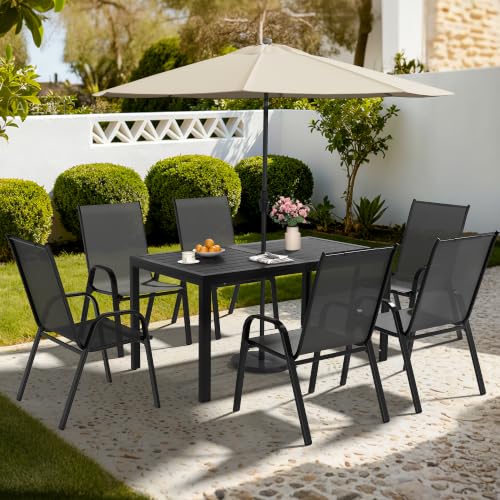
Patio Table and 6 Chairs with Umbrella: The Complete Buying Guide
Everything you need to choose a six-seat patio dining set that fits your space, shades your guests, and holds up season after season — from table dimensions and umbrella compatibility to frame materials and care routines.
Explore Recommended SetsWho this guide is for: If you have already decided you want a patio dining set for six and are now comparing options, this page is built for you. We walk through the decisions that actually matter — sizing, umbrella fit, frame construction, chair comfort, and maintenance — so you can buy with confidence instead of guesswork.
Why a Six-Seat Set Is the Sweet Spot for Most Backyards
A patio table and 6 chairs with umbrella hits a practical middle ground. It is large enough for family dinners and small gatherings, yet compact enough for typical decks and patios. Compared with a four-seat set, it adds seating without demanding a dramatically larger footprint. Compared with a ten-seat arrangement, it stays manageable for everyday use and easier to shade with a single umbrella.
The built-in umbrella is the feature that makes this configuration so popular. A central umbrella shades the tabletop and most diners at once, which means fewer separate shade structures and a cleaner layout. If shade is your priority, our guide to patio shade solutions explains how umbrellas compare with pergolas, awnings, and other options.
Six-seat sets also come in enough shapes and styles that you can match almost any outdoor design. Whether you are leaning toward a classic look or a more contemporary layout, browsing patio styles first can help you narrow the aesthetic before you compare specific sets.
Table Shape and Size: Getting the Dimensions Right
Table shape affects seating comfort, traffic flow, and how well an umbrella shades the group. Before comparing materials or features, confirm that the table footprint fits your space with room to move.
| Table Shape | Typical 6-Seat Size | Best For | Watch Out For |
|---|---|---|---|
| Rectangular | About 60–72 inches long | Narrow patios and decks; formal dining feel | End seats need extra pull-out room |
| Round | About 54–60 inches diameter | Conversation-friendly gatherings; compact square footprints | Corners of the patio may go unused |
| Oval | About 60–72 inches long | Soft traffic flow around the table | Fewer umbrella-hole cover options |
As a rule of thumb, allow roughly 24 inches of table edge per diner and at least 24 to 36 inches of clearance behind each chair so people can pull out comfortably. On tighter decks, a rectangular table along the railing often works better than a round one. If your space is especially compact, compare this setup with options in our guide to a patio table and chairs for a small deck.
Also think about chair tuck-in. Sets where chairs slide fully under the table look tidier and protect cushions from rain. Our article on a patio table with chairs that fit underneath covers how table apron height and chair arm height interact.
Umbrella Compatibility: Pole, Hole, and Base
The umbrella is only as good as its mounting. Three details determine whether your setup shades well and stays stable:
- Umbrella hole size. Most patio tables use a 1.5-inch or 2-inch hole. Confirm the hole diameter matches your umbrella pole, or use a reducer ring. Sets designed around a patio table with a 2-inch umbrella hole accept heavier poles and larger canopies.
- Canopy size. A 9-foot umbrella is the standard match for a six-seat table. Step up to an 11-foot canopy for long rectangular tables, but only if the pole and base are rated for the extra load.
- Base weight and type. A weighted base is not optional — it is what keeps the umbrella upright in gusts. Compare plate bases, weighted polymer bases, and water-filled bases in our guide to patio umbrella bases.
If wind is a recurring concern in your area, read our tips on a patio umbrella that won't blow over. For larger canopies, an umbrella stand for an 11-foot umbrella is often the safer pairing. And if you prefer an all-in-one purchase, sets that include a patio umbrella with a weighted base included remove the guesswork.
Quick Umbrella Fit Check
Measure the umbrella hole diameter, confirm the pole diameter, and check the base rating against your canopy size. A 9-foot canopy on a properly weighted base is the most reliable combination for a six-seat table. Never rely on the table alone to hold an umbrella steady in wind.
Frame Materials: Aluminum, Steel, Wood, and Wicker
Frame construction drives durability, weight, and maintenance. Use a consistent tier framework when comparing: entry-level, mid-range, premium, and luxury.
| Material | Market Tier | Strengths | Considerations |
|---|---|---|---|
| Powder-coated aluminum | Mid-range to premium | Lightweight, rust-resistant, easy to move | Can shift in strong wind without weights |
| Powder-coated steel | Entry-level to mid-range | Heavy and stable; solid build | Requires touch-ups if coating chips |
| Teak and hardwood | Premium to luxury | Warm look, repairable, long-term investment | Needs periodic sealing and oiling |
| Wicker and rattan over metal | Entry-level to premium | Comfortable look, hides minor wear | Frame quality underneath varies widely |
Aluminum is the most practical default for most households: it resists rust, moves easily when you rearrange, and holds up to weather with minimal effort. Steel is the better pick when stability is the priority and the set will stay in one place. Wood suits buyers who want a natural finish and are willing to maintain it. Wicker-style sets are popular for their visual warmth, but inspect the underlying metal frame — that is what determines how long the set lasts.
Whatever the frame, a weather-resistant coating and rust-proof finish on hardware matter more than the marketing label. For deeper comparisons, see our guides on metal versus aluminum furniture and wicker and rattan construction.
Chair Comfort and Cushions
Chairs get more use than the table, so comfort deserves equal attention. Look for:
- Seat height and depth. Standard dining height is around 17 to 19 inches from floor to seat. Deeper seats suit taller diners; shallower seats suit smaller frames.
- Armrests. Armrests help guests rise comfortably, but they must clear the table apron when tucked in.
- Cushion thickness and foam density. Thicker, denser foam holds shape longer. Quick-dry foam is worth prioritizing if the set stays outdoors.
- Fabric and covers. Solution-dyed fabrics resist fading. Removable, washable covers simplify care.
If you plan to upgrade or replace cushions later, review our outdoor cushion guide and patio table chair cushions overview before you commit to a chair style. Chair cushions are often the first component to wear out, so buying a set with standard cushion sizes makes replacement easier.
Tabletop Surfaces and Umbrella Hole Details
Tabletop material affects heat retention, scratch resistance, and how the umbrella hole is finished. Common options include:
- Powder-coated metal. Durable and easy to wipe down; can get warm in direct sun.
- Glass. Easy to clean and visually light; check for tempered glass and a reinforced hole rim.
- Wood and composite. Warm appearance; requires sealing and occasional refinishing.
- Tile and stone-look. Heat-tolerant and stable; heavier to move.
Pay attention to how the umbrella hole is reinforced. A metal or plastic grommet reduces wear around the opening. If you want a cover for the hole when the umbrella is removed, check whether the set includes one — or plan to buy a compatible cap. Sets built around a patio table with an umbrella hole usually include this detail, but confirm before ordering.
Setup, Placement, and Wind Stability
Even a well-built set needs sensible placement. Follow these steps:
- Position the table so chairs have pull-out clearance on all sides.
- Center the umbrella in the hole and confirm the pole sits vertical.
- Place the weighted base directly under the pole, not offset.
- Close or remove the umbrella during high wind, storms, and off-season storage.
- Use leg levelers or shims on uneven patios to prevent wobble.
If your patio surface is still being planned, our guides to paver patios and patio stone cover surface options that pair well with dining sets. On windy sites, consider anchoring the base with sand or water weights and choosing a table with a wider leg spread.
Care and Seasonal Maintenance
Simple routines extend the life of any six-seat set:
- Wipe the tabletop weekly with mild soap and water; avoid abrasive cleaners on coated surfaces.
- Clean cushions according to the fabric label; air-dry fully before replacing.
- Touch up chips on powder-coated frames promptly to prevent corrosion.
- Oil wood surfaces as recommended by the manufacturer.
- Store or cover the set during extended off-season periods.
For a deeper maintenance plan, see our weatherproofing guide and furniture cleaner recommendations. If you plan to cover the table, confirm the cover accommodates the umbrella hole or remove the umbrella first.
Common Buying Mistakes to Avoid
- Ignoring chair pull-out space. A table that fits but leaves no room to slide chairs out defeats the purpose.
- Mismatching umbrella and base. An undersized base is the most common cause of tip-overs.
- Skipping the hole diameter check. A 1.5-inch hole will not accept a 2-inch pole without an adapter.
- Choosing cushions without checking replacement sizes. Standard sizes are easier to refresh later.
- Overlooking wind exposure. If your patio is open to prevailing winds, prioritize a heavier base and a stable frame.
Frequently Asked Questions
What size patio table seats 6 chairs comfortably?
For six chairs, a rectangular table around 60 to 72 inches long or a round table around 54 to 60 inches in diameter gives comfortable elbow room. Leave at least 24 inches of clearance per diner and check chair pull-out space around the table.
What umbrella size works with a 6-seat patio table?
A 9-foot umbrella is the common choice for a 6-seat table because it shades the tabletop and most diners. An 11-foot umbrella provides broader coverage for larger rectangular tables, provided the base and pole are rated for the extra canopy load.
Should I choose an aluminum, steel, wood, or wicker frame?
Aluminum is light and rust-resistant for everyday use. Powder-coated steel is heavier and very stable. Wood offers a warm look with more maintenance. Wicker and rattan over a metal frame balance style and comfort, but check the underlying frame quality.
How do I keep a patio dining set stable in wind?
Use a weighted umbrella base rated for your canopy size, close or remove the umbrella during high winds, and choose a table with a wide footprint or leg levelers. A heavier frame and a properly sized base are the most effective stability measures.
Can I use a larger umbrella on a six-seat table?
Yes, if the pole fits the hole and the base is rated for the canopy. An 11-foot umbrella can shade a long rectangular table well, but confirm the table and base can handle the added leverage in wind.
Ready to Compare Six-Seat Sets?
Use the recommendations below to explore patio table and 6 chairs with umbrella options that match the sizing, materials, and umbrella setup covered in this guide.
View Recommended Products