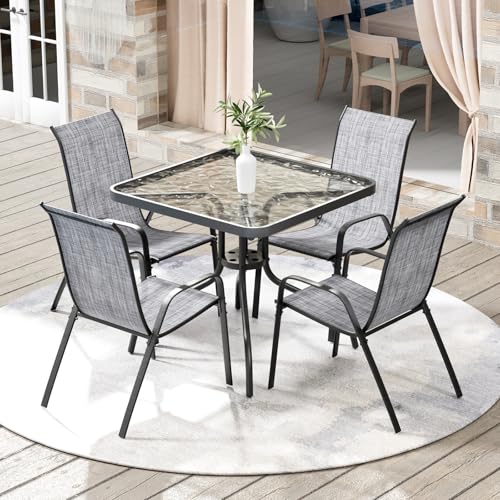
Patio Table and Chairs: Complete Buying Guide
Everything you need to choose the right outdoor dining set — from table size and chair comfort to materials, umbrella compatibility, and long-term care. Research first, buy with confidence.
Start the GuideA patio table and chairs set is the anchor of outdoor dining. It is where weekend breakfasts turn into long conversations and where evening gatherings find their center. But choosing the right set is not just about picking a shape you like. The table size must fit your space, the chairs must stay comfortable through a full meal, and the materials must survive sun, rain, and seasonal storage. This guide walks you through each decision in the order that matters most, so you finish with a set that fits your patio and your daily life.
Below you will find sizing guidance, a material comparison, umbrella and shade considerations, chair comfort factors, and a maintenance routine that keeps a set in service for years. Every recommendation is framed around real use — how often you dine outside, who joins you, and how much space you actually have.
How to Choose the Right Size Table and Chair Set
The most common mistake buyers make is choosing a set that fits the tabletop but not the people around it. A table that seats four on paper can feel cramped once chairs are pulled out. Start with your headcount, then match it to a table dimension, then confirm the patio has enough room for chairs to slide back.
As a baseline, allow 24 inches of table width per seated person. Round tables distribute space evenly and work well in square or compact areas. Rectangular tables suit narrow patios and accommodate more diners along a wall or railing. Square tables offer a balanced middle ground and pair naturally with four chairs.
| Seating Capacity | Recommended Table Size | Best For |
|---|---|---|
| 2 people | 30-inch round or 24 by 32-inch rectangular | Balconies, patio table and chairs for 2, coffee-style dining |
| 4 people | 42 to 48-inch round or square | Standard family patio, small deck layouts |
| 6 people | 60-inch round or 60 by 36-inch rectangular | Everyday family dining, weekend guests |
| 8 to 10 people | 72 to 84-inch rectangular | Large gatherings, patio table and chairs for 10 |
Clearance rule: Leave at least 36 inches of open space on every side of the table where a chair is used. This allows a seated person to pull the chair back and stand up without bumping a wall, railing, or grill. If your patio is tight, a round table with chairs that tuck underneath preserves walking room.
If your space is genuinely small, look at a patio table and chair set designed with a compact footprint, or consider a table with chairs that fit underneath to reclaim floor area when the set is not in use. For a thorough layout walkthrough, the small patio design guide covers space-saving arrangements in detail.
Material Comparison: Aluminum, Steel, Wood, Wicker, and Resin
Material determines weight, weather tolerance, maintenance effort, and how the set feels when you sit down. There is no universal best material — only the best match for your climate and habits.
| Material | Durability | Maintenance | Best Climate / Use |
|---|---|---|---|
| Powder-coated aluminum | Rust-resistant, lightweight, strong frame | Low — wipe clean, touch up chips | Humid, coastal, and rainy areas; sets that move often |
| Powder-coated steel | Heavy-duty and stable; rusts if coating chips | Moderate — inspect welds and edges | Windy patios; permanent placements |
| Teak and acacia wood | Long-lasting with proper sealing; natural aging | Moderate to high — annual sealing | Covered patios, dry climates, natural-style decks |
| Wicker and rattan over metal | Good weave integrity over a reinforced frame | Low to moderate — keep dry, cover in winter | Covered outdoor rooms, transitional styles |
| Resin and plastic | Entry-level durability, UV-stabilized grades last longer | Very low — hose down and store | Rentals, casual patios, seasonal use |
Aluminum dominates the mid-range and premium segments because it balances strength and portability. If you live near salt water or deal with heavy summer humidity, a rust-proof finish on an aluminum frame is the safest long-term choice. For a deeper dive into woven options, the wicker and rattan guide explains how to evaluate weave density and frame quality, while the metal vs aluminum comparison breaks down frame construction differences.
Wood sets reward buyers who enjoy a natural look and are willing to seal annually. Acacia is the common choice at the mid-range tier; teak sits at the premium and luxury tiers with better natural oil content. If you choose wood, budget time for a yearly sealant application — the wood furniture care guide covers the routine step by step.
Resin and plastic sets are the practical entry-level option. They are light, easy to clean, and stack or fold for storage. Modern UV-stabilized resin holds color far better than older formulations. If this is your starting point, the plastic outdoor furniture overview explains what to look for in frame thickness and UV ratings.
Ready to Compare Real Sets?
Browse recommended patio table and chairs options with detailed feature breakdowns.
View Recommended ProductsUmbrella Holes, Shade, and Table Compatibility
If your dining area receives direct sun during meal times, an umbrella hole is not optional — it is the difference between a usable table and one you avoid at noon. Standard umbrella holes measure 1.5 to 2 inches in diameter. Before buying an umbrella separately, confirm the hole size on the table matches the pole diameter, and check that the base is rated for the umbrella's canopy size and your local wind exposure.
Sets that include a table and umbrella together remove the guesswork. A patio table and chairs with umbrella is the simplest path for most buyers. If you need a specific capacity, compare the 4-chair set with umbrella against the 6-chair set with umbrella — the larger table usually needs a wider canopy and a heavier base to stay stable.
For tables without a built-in hole, a cantilever or offset umbrella provides shade without drilling or modifying the tabletop. Whichever route you take, the base matters as much as the canopy. A lightweight base under a large canopy will tip in a gust. The umbrella bases guide explains weight ratings, and the wind-stable umbrella guide covers vented canopies and anchoring options.
Umbrella compatibility checklist: measure the hole diameter, confirm the pole fits with the sleeve or ring in place, match the base weight to canopy size, and check that the umbrella can be closed without removing the table. Also confirm the table's umbrella hole is centered over the base and not offset toward a leg.
If shade is your primary concern and you want a complete package, the patio table and chair set with umbrella page covers bundled options. For broader shade strategies beyond the table itself, the patio shade guide compares umbrellas, pergolas, and awnings.
Chair Comfort and Seating Ergonomics
A dining set is only as good as its chairs. Tables are forgiving — chairs are not. A chair that feels fine for five minutes can become uncomfortable by the end of a meal. When evaluating chairs, focus on four things: seat height relative to the table, seat depth, back support angle, and armrest clearance.
- Seat height: Standard dining chairs sit 17 to 19 inches from floor to seat top. The table apron should clear your thighs by at least 1 inch. Bar-height sets sit 28 to 30 inches and need matching stool heights.
- Seat depth: 16 to 18 inches is comfortable for most adults. Deeper seats feel relaxed but can reduce back support for shorter users.
- Back angle: A slight recline (around 100 to 105 degrees) supports longer meals better than a rigid 90-degree back.
- Armrests: Measure the distance between armrests and the table edge. Chairs with arms need to slide under the table or tuck beside it without collision.
- Cushions: Removable, quick-dry cushions are easier to maintain. Check that cushion ties or straps keep them in place on windy days.
Stackable chairs are a practical choice for patios that need flexibility — they store compactly and are easy to rearrange for gatherings. Swivel or rocking chairs add comfort but consume more clearance space. If you want to upgrade an existing set, replacement cushions are covered in the patio table and chair cushions guide.
Quality Tiers: Entry-Level to Luxury Sets
Patio table and chairs sets fall into recognizable quality tiers. Understanding what each tier delivers helps you decide where to invest. The descriptors below are relative positions in the market — not absolute numbers.
Starter Tier
Resin or lightweight steel frames with basic powder coating. Chairs are often stackable and simple in design. Best for seasonal use, renters, and buyers testing how much they will actually dine outside. Expect a few seasons of solid service with basic care.
Balanced Tier
Powder-coated aluminum frames, better cushion foam, and tighter welding. This is the sweet spot for most homeowners — a durable build that handles year-round exposure in moderate climates with minimal maintenance. Chairs typically have more refined ergonomics.
High-End Tier
Thicker gauge aluminum or teak frames, high-density cushions with quick-dry cores, and precision joinery. Designed for daily use and long-term outdoor exposure. Often includes matching umbrellas or expandable table options.
Flagship Tier
Teak, high-grade aluminum, or designer composite frames with commercial-grade hardware. These sets are built for resort-style patios and decades of service. Attention to detail extends to hidden fasteners, replaceable components, and custom finishes.
Commercial-Grade
Contract-grade frames and fabrics rated for hospitality use. Heavier, more rigid, and designed to withstand constant reconfiguration. A good match for large households that entertain frequently or for covered outdoor kitchens.
Feature-Rich Tier
Sets with integrated features — a patio table with fire pit, a lazy Susan with umbrella hole, or a table with grill in the middle. These bridge multiple tiers and are priced on feature complexity rather than frame alone.
Across tiers, the biggest quality differentiators are frame wall thickness, weld quality, cushion foam density, and the durability of the powder coat. A mid-range set with a thick aluminum frame usually outlasts an entry-level set with a steel frame, even though both look similar at first glance.
Layout Planning and Clearance Rules
Before ordering, map the footprint on your patio. Mark the table's dimensions on the ground with tape, then place boxes or chairs where the seats will go. Walk around the arrangement. If you cannot move comfortably between the chairs and the nearest wall or railing, the set is too large for the space.
Rectangular tables work best parallel to the longest patio edge or railing. Round tables suit square footprints and small corners. If your patio has a focal point such as a fire pit or grill, orient the seating so chairs face it without blocking walkways. The measurement guide includes a printable layout worksheet, and the patio styles section shows how different table shapes pair with modern, rustic, and coastal designs.
For decks with limited depth, consider a table and chairs set for a small deck with chairs that tuck fully under the table. For long, narrow patios, a table designed for tucked chairs keeps the walkway clear when the set is not in use.
Care and Seasonal Maintenance
A patio table and chairs set rewards routine care. The maintenance routine depends on material, but the core principles are the same: keep surfaces dry, prevent standing water in crevices, and cover or store the set during extreme weather.
- Weekly: wipe down tabletops and chair arms; clear leaves and debris from umbrella holes and table seams.
- Monthly: inspect frame joints and welds for chips or rust spots; touch up powder coat with a matching repair pen.
- Seasonally: deep-clean cushions and allow them to dry fully before replacing them; tighten bolts and fasteners.
- Before winter: clean and dry the entire set, apply wood sealant if needed, and cover with breathable furniture covers or move indoors if possible.
For a full seasonal routine, the weatherproofing guide covers protective coatings and cover selection. If you plan to leave the set outside through winter, the winter storage guide explains how to prepare frames and cushions. Covers are essential — the rectangular cover with umbrella hole page explains sizing for sets with a center pole.
Small parts matter too. Rusted fasteners can loosen a chair over time. Replacement hardware is widely available, and the outdoor care section covers fastener maintenance across materials. If your set includes cushions, the outdoor cushion guide explains foam types and drying behavior.
Frequently Asked Questions
What size patio table and chairs set should I choose?
For two people, a bistro or 30-inch round table works well. For four, a 42 to 48-inch round or square table is comfortable. For six, look for a 60-inch round or a 60 by 36-inch rectangular table. For eight to ten, choose a 72 to 84-inch rectangular table. Always leave at least 36 inches of clearance around the table so chairs can pull out comfortably.
Which material is best for patio table and chairs?
Aluminum is lightweight and rust-resistant, ideal for humid climates. Powder-coated steel is heavy-duty and stable. Teak and acacia offer natural beauty and need occasional sealing. Wicker and rattan over a metal frame provide a woven look with good durability. Resin and plastic are entry-level options that are easy to clean and store. Match the material to your climate, storage habits, and maintenance willingness.
Should I get a patio table with an umbrella hole?
Yes, if your table sits in direct sun or you plan to dine outdoors during midday. A standard umbrella hole measures 1.5 to 2 inches in diameter. Pair it with a weighted base rated for your umbrella size and wind conditions. Some sets include a table and umbrella together, which simplifies matching the hole size to the pole.
How do I protect patio table and chairs in winter?
Clean and dry the furniture thoroughly, apply a protective sealant to wood or metal as needed, and use fitted covers that allow ventilation. Store cushions indoors. If space allows, move lighter aluminum or resin sets into a garage or shed. For heavy sets left outside, secure covers tightly and check them after storms.
Can patio table and chairs stay outside year-round?
It depends on the material and climate. Powder-coated aluminum, high-grade resin, and treated teak handle year-round exposure well in most climates. Steel can rust if the coating chips, and untreated wood can crack in freeze-thaw cycles. In harsh winters, covers or indoor storage extend the life of any set.
Find Your Perfect Patio Table and Chairs Set
You have the sizing rules, material comparison, and care plan. Now explore recommended sets that match the way you actually live outdoors.
Browse Recommended Sets