Patio Table and Chair Set with Umbrella: The Complete Buying Guide
Everything you need to know about choosing an all-in-one outdoor dining set with built-in shade — sizing, materials, umbrella mechanics, and practical ownership tips.
Why this guide matters: A patio table and chair set with umbrella is the anchor of outdoor entertaining. It combines dining surface, seating, and shade in a single coordinated package — but the details determine whether it lasts one season or a decade. This guide walks you through the decisions that matter most so you can buy with confidence.
What to Know Before You Buy
A bundled dining set with umbrella solves a common frustration: buying a table, chairs, and shade separately often leads to mismatched heights, incompatible umbrella poles, and an unstable base. A purpose-built set arrives coordinated, so the umbrella pole fits the table hole and the chairs tuck cleanly underneath. If you already own a table and only need shade, explore standalone patio umbrellas and patio umbrella bases instead.
Before shopping, measure your space and allow 24 to 36 inches of clearance around the table edge so chairs can pull out and guests can walk behind them. Also decide whether your surface is a deck, patio stone area, or lawn, because chair leg style and umbrella base weight should match the surface.
Choosing the Right Size and Seating Capacity
Seating capacity is the first filter for most shoppers. The right number depends on how you entertain and how much room you have.
- Two-person sets suit balconies, small decks, and breakfast nooks. A compact patio table and chairs for two keeps a tight footprint while still offering shade.
- Four-person sets are the most versatile option for average patios. A patio table and 4 chairs with umbrella balances seating and circulation.
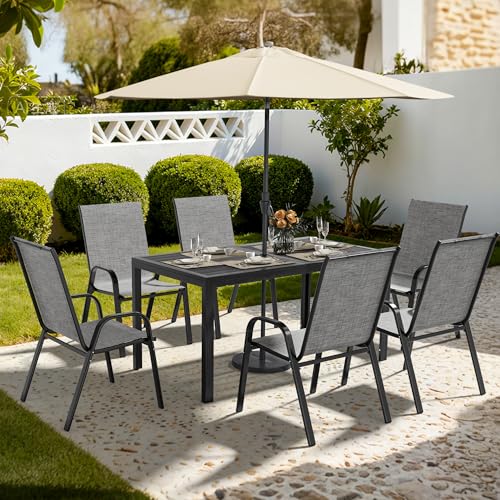
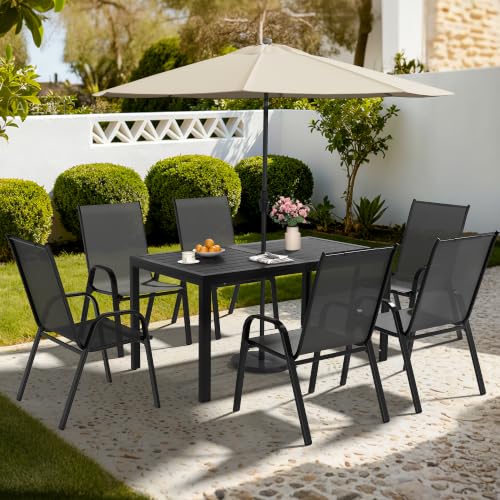
- Six-person sets fit families and frequent hosts. A patio table and 6 chairs with umbrella works well on mid-size decks.
- Eight- to ten-person sets belong on large patios and lawns; consider a patio table and chairs for 10 for serious entertaining.
- Small-space layouts benefit from a patio table and chairs for small deck that prioritizes tuck-under seating.
Round tables encourage conversation and fit well in square spaces. Rectangular tables maximize seats along a wall or railing. Oval tables split the difference. For formal seating configurations, browse six-seat dining arrangements alongside the patio dining sets category.
Table Shape, Umbrella Hole, and Tuck-Under Clearance
The umbrella hole is the detail that separates a purpose-built outdoor table from an indoor one. Most umbrella-ready tables feature a standard opening, typically around 2 inches. If you are pairing a new umbrella with an existing table, verify the pole diameter first — a patio table with a 2-inch umbrella hole accepts the most common pole sizes.
Tuck-under clearance matters more than most buyers expect. Chairs with arms need a taller apron to slide fully beneath the tabletop; armless chairs fit almost anywhere. If you want chairs to store fully out of the weather or keep the set compact when not in use, look for a patio table with chairs that fit underneath.
Also consider the umbrella's lift mechanism. Crank and tilt systems are the most user-friendly for daily shade adjustment, while pulley systems are simpler but slower. A patio table umbrella with a tilt feature helps you track the sun through the afternoon.
Materials: What Each Option Offers
Material choice drives durability, maintenance, and the visual character of your set. The comparison below uses consistent tier labels rather than absolute categories.
| Material | Best For | Durability Tier | Maintenance |
|---|---|---|---|
| Powder-coated aluminum | Humid or coastal climates; lightweight setups | Mid-range to premium | Wipe clean; rust-resistant frame |
| Teak and acacia wood | Warm, natural aesthetics; covered patios | Mid-range to high-end tier | Annual sealing; oiling for teak |
| HDPE and high-grade resin | Low-maintenance family patios; windy sites | Essential to mid-tier | Soap and water; no sealing needed |
| Steel with weather-resistant coating | Structured frames and heavy-duty bases | Mid-range to premium | Check for coating chips; touch up promptly |
| Wicker and rattan over aluminum | Traditional and coastal styling | Mid-range | Rinse and dry; cover in winter |
For a deeper look at outdoor cushions, patio table chair cushions deserve their own consideration: solution-dyed acrylic and olefin fabrics resist fading far better than commodity polyester. If your set stays outdoors year-round, pair it with a fitted rectangular patio table cover with umbrella hole so the tabletop and hole stay protected.
Umbrella Stability and Wind Management
The umbrella is often the weakest link in a bundled set, so pay attention to stability. A weighted base is non-negotiable for freestanding umbrellas, and the base should be rated for the canopy span. If you are upgrading shade separately, review patio umbrella bases and the patio umbrella base for 2-inch pole option before committing.
In exposed or gusty locations, prioritize models designed to stay put — see our notes on a patio umbrella that won't blow over and consider a heavy-duty patio umbrella. A cantilever design moves the pole out of the table center, which improves legroom and lets you position shade independently of the table footprint. Our patio shade guide compares umbrella styles against pergolas and awnings if you want to weigh alternatives.
Practical Tip: Pair the Umbrella With the Right Anchor
If you buy a set without a base, budget for a weighted option sized to the canopy. An 11-foot canopy needs a heavier anchor than a 9-foot one — check compatibility with a patio umbrella stand for an 11-foot umbrella or a patio umbrella with a weighted base included.
Layout and Placement Ideas
Where the set lives shapes how you use it. On a covered porch, the umbrella is optional and the table becomes a games or dining surface. On an open deck, center the set and angle the umbrella toward the afternoon sun. On a lawn, place the set on a level patch so the umbrella base stays upright, and use chair leg caps to prevent sinking.
If you're designing a broader space, our patio styles guide pairs dining sets with lounge zones, and patio swings with canopy offer a complementary relaxation seat nearby. For a shaded conversation corner, a patio side table with hole for umbrella or a compact patio side table can extend usable surfaces around the main set.
Care, Storage, and Seasonal Maintenance
Longevity comes down to routine. Wipe frames and tabletops with mild soap and water monthly, tighten umbrella crank hardware at the start of the season, and store cushions in a patio storage box or patio storage bench during wet weather. In winter, close and remove the umbrella canopy where the manufacturer allows, and cover the table to prevent standing water in the umbrella hole.
Wood sets benefit from annual sealing; aluminum and resin sets generally need only cleaning. If you have multiple outdoor pieces, our outdoor care resources cover weatherproofing across materials.
Common Buying Mistakes to Avoid
- Ignoring chair pull-out space. A large table crammed against a railing leaves no room to sit. Measure clearance before ordering.
- Mismatching umbrella and table. A pole that is too thick for the table hole, or a base too light for the canopy, creates instability. Verify hole size and base rating.
- Skipping the base. Many bundled sets include the table and umbrella but not the base. Confirm what is in the box.
- Overlooking cushion storage. Cushions that stay out in the rain degrade quickly. Plan storage before the set arrives.
- Choosing style over surface. Smooth decking and textured stone behave differently under chair legs. Match glides and base material to your surface.
Matching the Set to Your Lifestyle
Formal hosts often prefer oval or rectangular sets with upholstered seating and a crank-tilt umbrella. Families lean toward resin or HDPE sets that shrug off spills and need little upkeep. Renters and small-space dwellers do best with folding or stackable chairs and a modest round table. If your priority is shade coverage over seating count, compare a four-seat patio table with umbrella and four chairs against a six-seat patio table with umbrella and six chairs before deciding.
Whatever you choose, buy from a retailer with a clear return policy and confirm that replacement canopies and cushions are available — the set will outlast the fabric if you can refresh it later.
Frequently Asked Questions
What size patio table and chair set with umbrella is right for my space?
Measure your patio or deck and allow roughly 24 to 36 inches of clearance around the table for chairs to pull out and guests to move comfortably. A two-person set fits small balconies, a four-person set suits compact patios, and a six- or eight-person set works best on larger decks and lawns.
How do I keep a patio umbrella from blowing over?
Choose a heavy-duty umbrella with a weighted base, or select a cantilever model with an integrated weight. Always close the umbrella during high winds and storms, and position the base on a level surface for maximum stability.
What materials are best for an outdoor dining set?
Powder-coated aluminum offers rust resistance and light weight, teak and acacia provide natural warmth with proper sealing, and high-grade resin or HDPE delivers low-maintenance durability. Match the material to your climate and maintenance preferences.
Can I use my own umbrella with any patio table?
Most umbrella-ready tables include a standard hole, commonly around 2 inches in diameter. Verify the hole size and pole diameter before pairing a table with a separate umbrella, and use a base rated for your umbrella's canopy size.