
Portable Hammocks with Stand: Your Complete Buying Guide
Discover how to choose a freestanding hammock that travels with you. Learn about stand types, materials, weight capacity, setup tips, and the features that separate a great portable hammock from an average one.
Explore Top PicksWhy portable hammocks with stand deserve a spot on your shortlist: A freestanding hammock removes the biggest barrier to hammock ownership — not having two perfectly spaced trees. With a self-contained stand, you can set up a relaxing swing zone on a patio, balcony, campsite, or even indoors.
This guide walks you through the decisions that matter most: stand construction, portability trade-offs, fabric choices, and safety ratings. By the end, you will know exactly which type of portable hammock with stand fits your outdoor lifestyle.
What Are Portable Hammocks with Stand?
A portable hammock with stand is a complete relaxation system that bundles a hammock bed with a freestanding metal or wooden frame. Unlike traditional hammocks that require tree straps or wall anchors, these systems are self-supporting. You unfold the stand, attach the hammock, and you are ready to lounge — no drilling, no knots, no searching for the perfect tree pair.
Portability is the defining trait. Most models collapse into a carry bag that weighs between 20 and 45 pounds, making them practical for car camping, RV trips, beach houses, and apartment balconies. If you are outfitting a larger outdoor space, our guide to porch swings for sale covers fixed alternatives that pair well with a portable hammock setup.
These systems fall into two broad categories: collapsible tube stands made from steel or aluminum, and arc-style stands with curved legs. Collapsible tube stands pack smaller and are the preferred choice for travel. Arc stands are typically heavier but offer a more stable footprint for permanent patio placement.
Key Features to Evaluate Before You Buy
Not all freestanding hammocks are built to the same standard. The following features determine whether a model will serve you for a single season or for many years of reliable use.
Stand Material & Coating
Powder-coated steel offers heavy-duty support and is the most common choice. Aluminum stands are lighter for backpacking-style transport. Look for rust-proof finishes and reinforced joints.
Weight Capacity Rating
Single hammocks typically support 250 to 300 pounds; double hammocks support 400 to 500 pounds. Always choose a rating above your intended load for a safety margin.
Packed Size & Weight
The best travel models pack to roughly the size of a golf bag. Check both packed length and total weight before committing to a model you plan to move frequently.
Assembly System
Tool-free push-button or snap-fit frames assemble in minutes. Models requiring tools or complex bolt assembly are better suited to permanent placement.
Hammock Fabric
Solution-dyed synthetic fabrics resist fading and mildew. Quilted or padded options add comfort for extended lounging sessions.
Carry Bag Quality
A reinforced carry bag with a shoulder strap makes transport far easier. Flimsy bags tear at the seams after a few trips.
Portable Hammock Stand Types Compared
Use this comparison to match stand style to your primary use case. The tier descriptors below reflect market positioning and build quality, not specific figures.
| Stand Type | Tier | Best For | Portability |
|---|---|---|---|
| Collapsible steel tube stand | Essential tier | Camping and casual backyard use | High — packs compactly, tool-free setup |
| Aluminum collapsible stand | Mid-tier | Frequent travel and RV trips | Highest — lightweight and rust-resistant |
| Arc-style curved stand | Mid-range | Permanent patio placement | Low — heavy and bulky |
| Heavy-duty steel frame with quilted hammock | Premium | Double lounging and long-term outdoor use | Moderate — heavier but still collapsible |
| Wooden freestanding stand | High-end tier | Design-forward patios and porches | Low — decorative rather than travel-focused |
Buying tip: If you plan to move the hammock between patio and campsite, prioritize a mid-tier aluminum collapsible stand. The weight savings are significant, and the rust-proof finish handles humid conditions far better than entry-level steel.
Setup, Safety, and Placement Tips
Proper setup extends the life of your hammock and keeps you safe. Follow these practical guidelines:
- Level ground first. Set the stand on flat, firm surfaces. On grass or sand, use the included ground stakes or place the feet on wide pads to prevent sinking.
- Respect the capacity rating. Never exceed the manufacturer's stated weight limit, and avoid dynamic bouncing that stresses the frame joints.
- Check the hang angle. A comfortable hammock bed sits at roughly a 30-degree angle from the stand's anchor points. Most portable stands come pre-set, but verify before first use.
- Secure the stand in wind. Lightweight aluminum stands can tip in gusty conditions. Stake them down or bring the hammock indoors during storms.
- Inspect hardware seasonally. Check bolts, push-button locks, and fabric seams at the start of each season. Replace any worn straps or clips immediately.
For those who prefer a seated swing experience, our guide to porch swing with stand covers the parallel decision for porch-style seating. And if you are building a larger relaxation zone, the portable hammock chair option pairs well with a freestanding stand for a second lounging spot.
Fabric, Comfort, and Weather Resistance
The hammock bed itself deserves as much attention as the stand. The most common fabrics are solution-dyed polyester, Sunbrella-style acrylic, and cotton blends. Polyester and acrylic resist UV fading and mildew, making them the better pick for outdoor use. Cotton feels softer initially but degrades faster in rain and humidity.
Quilted and padded hammocks add comfort for reading or napping but increase packed weight. If you plan to carry the hammock any distance, a single-layer synthetic fabric is the lighter and more packable choice.
For year-round outdoor placement, pair your hammock with a weather-resistant coating and store the fabric indoors during off-season months. This mirrors the care routine recommended for quality outdoor furniture and helps you avoid premature fabric failure.
Who Should Choose a Portable Hammock with Stand?
This category is a strong fit for several distinct buyer profiles:
- Campers and RV owners who want a reliable relaxation spot without depending on tree availability.
- Apartment and balcony dwellers who cannot drill into walls or ceilings for a traditional hammock mount.
- Patio owners who want a movable lounging option that can follow the shade throughout the day.
- Beach house and vacation rental hosts who need durable, easy-to-store outdoor seating.
- Gift buyers looking for a complete, ready-to-use outdoor relaxation package.
If your priority is a fixed, design-forward patio centerpiece rather than a travel-ready system, compare freestanding options with the poolside loungers category for alternative outdoor seating formats.
Common Mistakes to Avoid
- Ignoring packed weight. A stand that feels manageable in the store can become a burden on a long walk to a campsite. Weigh the trade-off between stability and portability.
- Choosing the lowest-capacity model for two people. Double hammocks need a higher rating; undersized stands flex and wear at the joints.
- Skipping the carry bag check. A poorly sized bag makes transport frustrating. Confirm the bag fits both stand and hammock with room for the straps.
- Leaving the hammock out in winter. Even weather-resistant fabrics degrade under freeze-thaw cycles. Store the setup indoors during the off-season.
- Overlooking floor protection indoors. Rubber feet are essential for hardwood and tile floors. Check that the stand includes non-marking caps.
Ready to Find Your Perfect Portable Hammock?
Browse our curated selection of freestanding hammocks with stand, chosen for build quality, portability, and comfort. Compare features side by side and pick the model that matches your outdoor routine.
View Recommended ModelsFrequently Asked Questions
Are portable hammocks with stand easy to assemble?
What weight capacity should I look for in a portable hammock stand?
Can portable hammock stands be used indoors?
What materials are best for a portable hammock stand?
Do portable hammocks with stand come with a carrying bag?
Recommended Portable Hammocks with Stand
⚠️ AFFILIATE DISCLOSURE: This website contains affiliate links. As an Amazon Associate, we earn from qualifying purchases. If you make a purchase through these links, we may receive a small commission at no additional cost to you. Read our full affiliate policy.
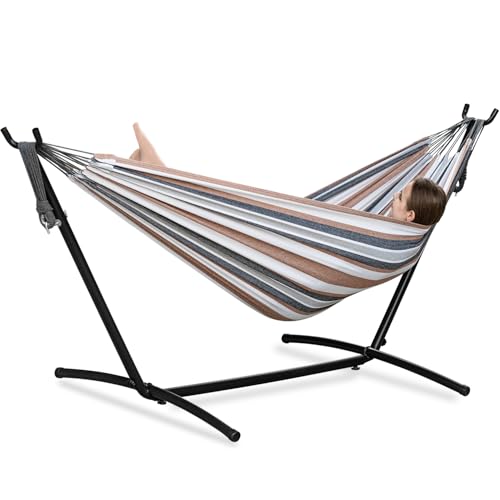
PNAEUT Double Hammock with Stand for Outside, Heavy-Duty, Portable (Coffee) | 450 lbs, 9FT, Space Saving, 2 Person, Heavy-Duty Steel Frame, Easy Assembly, Indoor Outdoor Patio
Check price on Amazon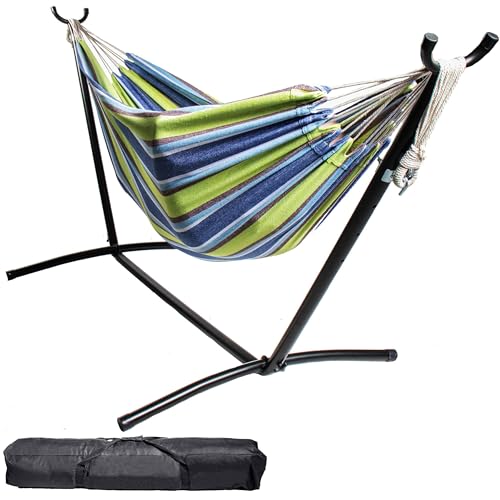
Backyard Expressions Double Camping Hammock with Steel Stand & Carrying Bag, Adjustable Height, Ultra Soft Cotton Blend, 550 lb Capacity, Indoor & Outdoor Portable Hammock
Check price on Amazon
Everyfun Double Hammock with Stand for 2 Person, 600 lb Capacity, Rainbow | Free Standing Hammock with Steel Stand, Carrying Bag Included – Hamaca para Adultos, Indoor & Outdoor Patio
Check price on Amazon
SUNCREAT Double Portable Hammock with Stand, 2 Person Hammock with Curved Spreader Bar, Balance Ropes Included, Dark Gray
Check price on Amazon
Lazy Daze Portable Hammock with Stand, Free Standing Hammocks for Indoor Outdoor Patio Yard, Has a Carrying Bag and Pillow, 9ft Steel Hamacas Heavy Duty 2 Person Amaca 450 lbs Capacity(White)
Check price on Amazon
PNAEUT Double Hammock with Stand for Outside, Heavy-Duty, Portable (Chasm) | 450 lbs, 9FT, Space Saving, 2 Person, Heavy-Duty Steel Frame, Easy Assembly, Indoor Outdoor Patio
Check price on Amazon
ANAGOO 2 Person Hammock with Stand, 500 lb Indoor Outdoor, Wide Blue | Adjustable Height | Heavy Duty Steel Stand | Anti-Tip Spreader Bars | Tool-Free 10-Min Setup
Check price on Amazon