Porch Swings for Sale: Your Complete Buying Guide
Everything you need to choose the right porch swing — styles, frames, materials, hardware, and the features that matter most for comfort and longevity.
Explore Swing OptionsWhy a porch swing is worth the research: A porch swing is one of the few pieces of outdoor furniture that genuinely changes how you use your home. It turns an unused front porch or back deck into a daily destination — a place for morning coffee, evening reading, or simply watching the neighborhood go by. Because it is a suspended or gliding structure, the purchase decision involves more variables than a chair or table: load capacity, hanging height, anchor strength, hardware quality, and material performance all matter.
This guide is written for buyers who already know they want a porch swing and are now comparing specific models. We walk through every decision point in plain language so you can evaluate listings with confidence, avoid common installation mistakes, and choose a swing that fits your porch, your climate, and your long-term expectations.
The Main Types of Porch Swings Available
Listings for porch swings for sale fall into a handful of distinct categories. Each type solves a different problem — some prioritize installation flexibility, others emphasize lounging capacity or structural strength. Understanding these categories is the fastest way to narrow a long list of listings down to the models worth a closer look. If you are still deciding between a hanging swing and a gliding motion, our comparison of a porch swing versus a porch glider explains the movement and mounting differences in detail.
Hanging Porch Swings
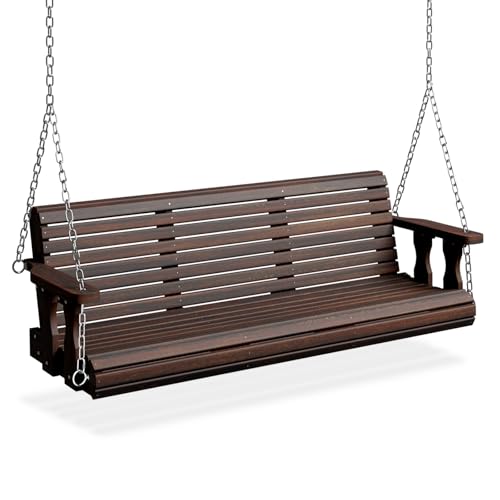
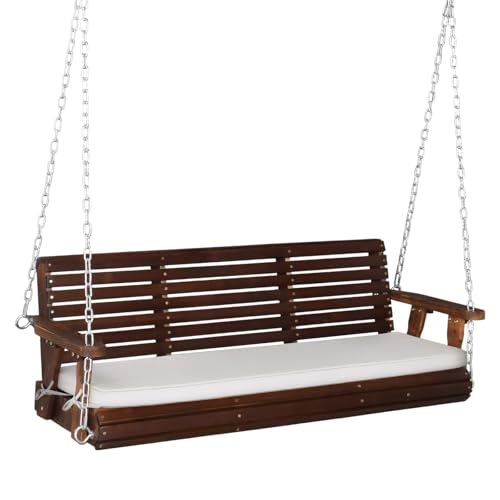
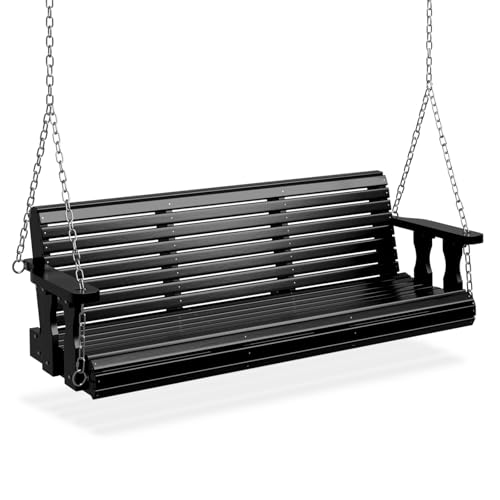
The classic suspended swing, hung from chains or ropes attached to a porch ceiling, beam, or tree branch. Entry-level and mid-range models typically use treated wood or powder-coated steel frames with standard chains. These are the most familiar and most widely available option, but they demand a structurally sound overhead anchor point and adequate ceiling height.
Porch Swings with Stand
A freestanding frame paired with a hanging swing. This is the practical answer for porches with low ceilings, concrete patios, decks without overhead beams, or renters who cannot drill into structure. Mid-range stands use tubular steel; premium and top-tier frames use reinforced heavy-duty steel with wider feet and anti-tip design. No ceiling anchor is required, and the frame sets the hanging height for you.
Porch Gliders
Gliders sit on a stationary base and move back and forth on a gliding mechanism rather than swinging in an arc. They require no overhead support and are popular on covered patios and sunrooms. Entry-level gliders use simple bearing tracks, while premium models add smoother sealed glides and reinforced bases. A porch glider swing blends the two motions and is worth considering if you want a gentle horizontal ride.
Swing Beds & Daybed Swings
Large-format swings designed for reclining or lying flat, often with a canopy or convertible backrest. These are the heaviest and most structurally demanding option — luxury-tier swing beds frequently require commercial-grade frames and professional installation. If you want a dual-purpose piece, a porch swing that converts to a bed offers seating by day and lounging by night.
Porch Swing Chairs
A single-seat suspended chair rather than a bench. Swing chairs suit compact porches and solo lounging, and their lighter frames are easier to hang and reposition. They typically use fewer chains and smaller footprints, making them a smart choice for apartments and narrow front entries. Explore dedicated porch swing chair options if seating for one is the priority.
Hanging Swing Beds
Full-size suspended daybeds with mattress-style cushions and optional canopies. These are a long-term investment in outdoor relaxation but require verified anchor ratings and generous ceiling clearance. A porch swing bed is best reserved for covered porches with substantial structural beams or a purpose-built heavy-duty stand.
Materials: Matching the Swing to Your Climate
Material choice determines how much maintenance your swing needs and how long it will hold its appearance. The table below uses consistent quality tiers — entry-level, mid-range, and premium — rather than numeric figures, because market positions stay stable while numbers constantly shift.
| Material | Tier Positioning | Best For | Maintenance Profile | Climate Fit |
|---|---|---|---|---|
| Powder-Coated Aluminum | Mid-Range to Premium | Humid, coastal, and rainy regions | Low — rinse occasionally, no repainting | Excellent rust resistance; lightweight frame |
| High-Grade Steel | Mid-Range to Top-Tier | Heavy swing beds and large frames | Low to moderate — inspect for chips yearly | Very strong; needs rust-proof finish in wet climates |
| Poly Lumber | Premium | Low-maintenance, all-weather porches | Very low — soap and water cleaning | Handles sun and rain without sealing |
| Treated Hardwood & Teak | Mid-Range to Luxury | Covered porches with classic styling | Moderate — reseal every season or two | Good when sheltered; needs protection from direct rain |
| Wicker & Rattan | Entry-Level to Premium | Coastal, bohemian, and cottage looks | Moderate to high — keep covered when idle | Best on covered porches; avoid full sun exposure |
If your swing will live in a humid or coastal environment, prioritize powder-coated metal or poly lumber. Wooden frames look beautiful but need consistent sealing to prevent cracking and rot. Cushion fabrics deserve equal attention — solution-dyed acrylic and olefin fabrics hold color far longer than standard polyester, which matters for a piece that sits in daylight all season.
What to Verify Before You Order
The difference between a swing that feels solid for a decade and one that feels shaky after a single season usually comes down to a handful of specifications. Use this checklist when comparing listings.
- Load rating with headroom Confirm the stated weight capacity and allow at least 25 percent margin above your expected combined seating weight. Commercial-grade frames and reinforced hanger straps signal higher ratings.
- Hardware completeness Check whether chains, spring snap hooks, and ceiling brackets are included. Premium models bundle heavy-duty spring hooks for smoother motion; entry-level listings may include only basic chains.
- Ceiling clearance and hang height Measure floor-to-ceiling distance before choosing. Eight feet is the practical minimum for a hanging swing; 9 to 10 feet is more comfortable. Verify the recommended seat height — usually 17 to 19 inches above the floor.
- Frame construction details Look for welded joints rather than bolted stress points, reinforced hanger plates, and a rust-proof finish. These details distinguish heavy-duty frames from lighter builds within the same category.
- Cushion and fabric specification Solution-dyed acrylic or olefin covers resist fading significantly better than standard fabrics. Confirm whether cushions are included, replaceable, and secured with ties or straps.
- Assembly and mounting support Swing stands usually assemble with basic tools; hanging swings require anchor installation into a structural beam — never into ceiling drywall or paneling alone. Check the product documentation for recommended anchor types.
- Warranty and cover options A multi-year frame warranty is a meaningful quality signal. Pair any swing with a fitted protective cover if it will be exposed during off-season months.
- Footprint and swing arc clearance Account for the swing's motion path. A two-seat swing needs roughly 4 feet of clearance front and back; swing beds need more. Measure your porch depth before committing.
Installation and Placement Considerations
Where and how you mount a swing affects both safety and comfort. Hanging models must attach to a structural beam or joist rated for the load — a decorative ceiling panel is not sufficient. Spring snap hooks reduce chain stress and produce a gentler ride than rigid connections. For porches without suitable overhead structure, a dedicated porch swing frame eliminates the anchor problem entirely and keeps the hanging height consistent.
Placement also affects longevity. Position the swing out of direct afternoon sun where possible to slow fabric fading and finish wear. On open decks, orient the swing so prevailing wind and rain hit the back rather than the seating surface. If your porch doubles as an entryway, leave a clear walking path wider than the swing's arc so the piece never becomes an obstacle.
Ready to Compare Specific Models?
Browse curated porch swing listings below. Each entry includes style, frame type, and feature highlights so you can evaluate options side by side and check availability directly.
View Recommended SwingsFrequently Asked Questions
What is the difference between a porch swing and a porch glider?
Do porch swings for sale include hanging hardware?
What weight capacity should I look for in a porch swing?
Can a porch swing be used outdoors in all weather?
How much ceiling height is needed to hang a porch swing?
What is the best material for a porch swing?
Making the Final Choice
A porch swing is a long-term piece — it anchors a porch visually and functionally, and it will be used far more often than most outdoor furniture. The buyers who end up happiest are the ones who match the type to their actual structure: a hanging swing where a proper beam exists, a stand-mounted swing where it does not, and a glider where overhead mounting is impossible. Once the type is settled, prioritize frame construction and hardware quality over cosmetic details. Those are the components that determine whether the swing still feels solid after several seasons of sun, rain, and daily use.
If you are still exploring related seating options, browse the broader porch furniture collection or compare compact alternatives in our porch bench guide. Both resources complement the swing decision and help you build a cohesive porch layout.