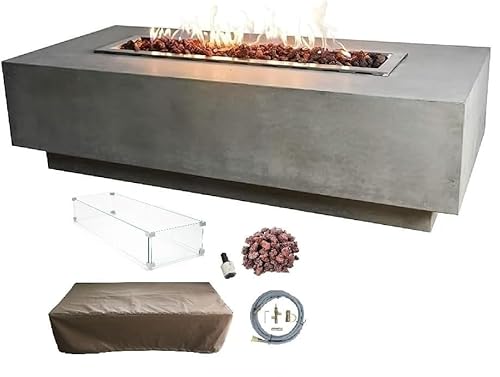
Rectangular Concrete Fire Pit Natural Gas: The Complete Buyer's Guide
A rectangular concrete fire pit running on natural gas delivers a clean, permanent flame, a sleek architectural line, and year-round warmth. Learn how to choose the right size, finish, and burner system before you invest.
Explore the GuideA rectangular concrete fire pit connected to a natural gas line is one of the most reliable outdoor features you can add to a patio. Unlike portable propane units, a hardwired natural gas model gives you a steady flame at the flip of a switch, with no refills and no tank to hide. The concrete body anchors the design, while the rectangular footprint mirrors the straight edges of most patios, decks, and seating walls.
This guide is written for homeowners who already know they want a gas fire feature and are now weighing material quality, burner configuration, and placement. You will learn how concrete grade affects longevity, how to size a rectangular pit for your seating layout, what safety and installation steps are non-negotiable, and which product tiers match different levels of ambition.
PatioFocus note: Natural gas fire pits require a licensed gas professional for the line connection. Budget your planning around permits and inspection as part of the project from the start, not as an afterthought.
Why Choose a Concrete Fire Pit for Natural Gas?
Concrete is a natural fit for a permanent gas installation. It is heavy enough to stay put in high wind, dense enough to absorb and radiate heat, and castable into clean geometric shapes. For a rectangular pit, that means crisp corners and a uniform face that reads as built-in architecture rather than as furniture.
Thermal Mass
Cast concrete holds heat and continues to radiate warmth after the burner is turned down, extending comfortable evenings on the patio.
Architectural Presence
The straight lines of a rectangular concrete pit align with patio borders, pergolas, and seat walls for a cohesive outdoor room.
Stability in Wind
The substantial weight of a concrete fire pit keeps it anchored, which matters on open decks and exposed patios.
Clean Natural Gas Flame
Natural gas burns without smoke, ash, or soot, so nearby cushions and furnishings stay cleaner between seasons.
Sizing a Rectangular Concrete Fire Pit for Your Patio
Rectangular pits are measured by length and width of the outer body, plus the depth of the burner tray. A common mistake is choosing a length that looks right on paper but crowds the seating zone. Use these guidelines to plan your layout:
- Small patios: a 36 to 42 inch rectangular pit leaves room for two chairs and a side table without blocking walkways.
- Mid-size patios: a 48 to 60 inch model anchors a four-seat conversation area with generous clearance.
- Large patios: a 72 inch or longer linear pit can separate dining and lounge zones, or run parallel to a seating wall.
- Clearance: keep at least 36 inches between the pit edge and any combustible material, including upholstered furniture and pergola posts.
If the fire pit will sit beside a dining arrangement, check that the proportions work with your table and chairs. Our guide to outdoor dining furniture covers how to balance a fire feature with a full dining layout, and the article on an outdoor dining table set with fire pit shows how integrated table-and-pit designs compare with a standalone pit.
Concrete Fire Pit Tiers Compared
Rectangular concrete pits are available across a wide quality spectrum. Rather than shopping by number, compare models by tier. The table below summarizes what each tier typically delivers.
| Tier | Best For | Typical Construction |
|---|---|---|
| Entry-level | First-time gas fire pit owners | Thinner concrete walls, basic stainless burner, simpler finish |
| Mid-range | Most residential patios | Reinforced cast concrete, upgraded burner, sealed surface |
| Premium | Custom landscaping projects | Dense cast concrete, high-output burner, refined textures |
| Luxury | Design-led outdoor rooms | Architectural concrete, commercial-grade components, bespoke sizing |
Mid-range models usually offer the strongest balance of durability and burner quality for a residential install, while entry-level pits are a reasonable starting point if the fire feature is secondary to other patio upgrades. Premium and luxury tiers make sense when the pit is a focal point and the surrounding hardscape is already refined.
Concrete Quality and Weather Resistance
Not all concrete is equal. Dense, properly cured cast concrete resists cracking and freeze-thaw damage far better than lightweight composites. When comparing models, look for reinforced interiors, sealed surfaces, and a manufacturer note on outdoor rating.
- Reinforcement: internal steel or fiber reinforcement reduces the risk of hairline cracks over time.
- Sealing: a factory or field-applied sealer slows moisture absorption and stains.
- Weight: heavier units generally signal denser concrete and better stability.
- Finish: smooth, honed, or textured faces all work outdoors, but textured surfaces hide scuffs better.
If your patio also includes metal elements, pair this guide with our notes on rust removal to keep the fire pit surround and nearby hardware looking sharp. For a wider look at durable outdoor materials, the article on outdoor waterproof material for garden furniture explains how concrete compares with other weather-resistant options.
Burner Systems for Natural Gas
A rectangular concrete fire pit for natural gas typically uses a linear burner or a pan burner fitted with a gas ring. The burner quality determines flame appearance, heat output, and how evenly the fire runs across the length of the pit.
Linear Burners
Produce an even row of flame along the pit, ideal for long rectangular footprints and modern designs.
Pan Burners
Concentrate flame in the center, suit compact rectangular pits, and are simpler to service.
Ignition Options
Match-lit, push-button, and electronic ignition each change the convenience level and the installation requirements.
Media
Lava rock, fire glass, or ceramic spheres can be used to diffuse the flame and conceal the burner hardware.
For natural gas, confirm that the burner and orifice are rated for NG rather than propane. A propane-rated burner connected to natural gas will produce a weak or unstable flame and should be avoided.
Natural Gas Installation Essentials
A permanent gas connection is the defining feature of this category, so installation planning deserves real attention. The steps below outline the typical sequence.
- Site survey: confirm the gas line route from the meter to the fire pit location and check local codes for setback distances.
- Permits: most municipalities require a permit for a new gas appliance and an inspection after installation.
- Licensed professional: a qualified gas plumber or licensed contractor should run the line and connect the burner.
- Shut-off valve: install an accessible manual shut-off valve between the supply line and the fire pit.
- Leak test: verify all connections with a proper leak test before the first use.
Placement and Patio Integration
A rectangular concrete fire pit works best when it is treated as a design element, not an accessory. Consider these layout approaches:
- Seating wall partner: run the pit parallel to a built-in bench or seat wall to create a defined conversation zone.
- Dining divider: place a long linear pit between a dining table and a lounge area to separate functions without walls.
- Corner anchor: tuck a smaller rectangular pit into a patio corner to soften the geometry of the hardscape.
- Under pergola: confirm overhead clearance and ventilation with the manufacturer before placing a gas pit beneath a structure.
Coordinating furniture makes the finished space feel intentional. Our overview of outdoor patio furniture covers seating arrangements that pair well with a central fire feature, and outdoor lounge furniture is useful if you are building a relaxed, low-seating zone around the pit.
Maintenance for a Concrete Natural Gas Fire Pit
Concrete and natural gas are a low-maintenance combination when basic care is followed. A short seasonal routine will keep the pit looking crisp and the flame burning cleanly.
- Cover the pit when not in use to limit moisture and debris accumulation.
- Clear the burner ports of dust, insect nests, and media dust before the first fire of the season.
- Reapply a concrete sealer as recommended by the manufacturer, especially in freezing climates.
- Inspect the flame color periodically. A steady blue flame indicates clean combustion; an irregular yellow flame may signal a blockage.
- Arrange an annual service check for the gas line and burner by a qualified technician.
Buying Checklist
Before you finalize a purchase, run through this short checklist. It captures the decisions that matter most and prevents the most common mistakes.
- Confirm the model is rated for natural gas, not propane.
- Measure the patio and confirm clearance around all sides.
- Verify the concrete is cast and reinforced, not a lightweight composite.
- Check burner type, ignition method, and included media.
- Review the warranty length and what it covers.
- Confirm whether the manufacturer requires professional installation.
- Plan permits and inspection before delivery.
If your patio currently centers on a different feature, comparing options is worthwhile. The guide to patio furniture set with fire pit clearance explains how much open space a fire feature needs around seating, and outdoor setting offers ideas for coordinated patio layouts.
Frequently Asked Questions
Can a concrete fire pit be connected to a natural gas line?
Yes. Many rectangular concrete fire pits are designed with a dedicated natural gas burner and must be installed by a licensed professional who can run a permanent gas line from your home to the fire feature.
How long does a concrete fire pit last?
A well-maintained cast concrete fire pit can last decades. Dense, reinforced concrete with a sealed finish resists cracking and weather damage far better than entry-level composite alternatives.
Do natural gas fire pits produce smoke?
No. Natural gas burns cleanly, so there is no smoke, ash, or soot. This makes it a comfortable option for patios near seating areas and under pergolas, as long as ventilation and clearance requirements are met.
What size rectangular fire pit fits a standard patio?
A mid-range 48 to 60 inch rectangular model suits most residential patios, leaving at least 36 inches of clearance around all sides for seating and safe foot traffic.
Final takeaway: A rectangular concrete fire pit on natural gas is a long-term addition to your outdoor space. Choose a mid-range or premium tier for the best balance of durability and burner quality, plan the gas line and permits before delivery, and keep the surrounding seating layout simple. Done right, it becomes the anchor of your patio for years.